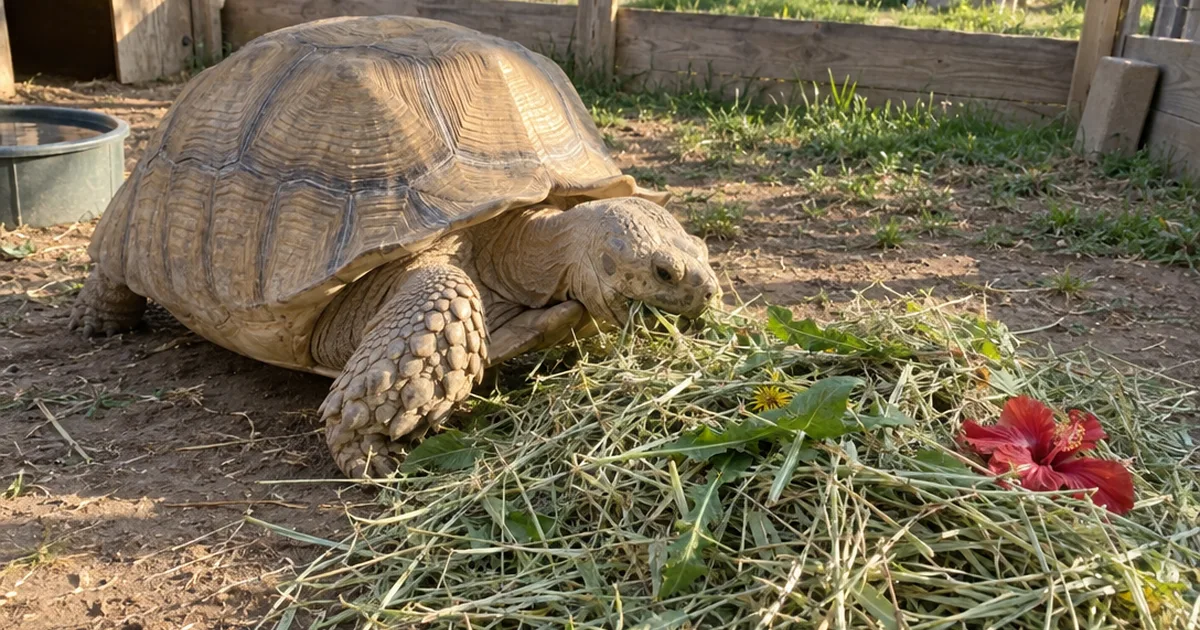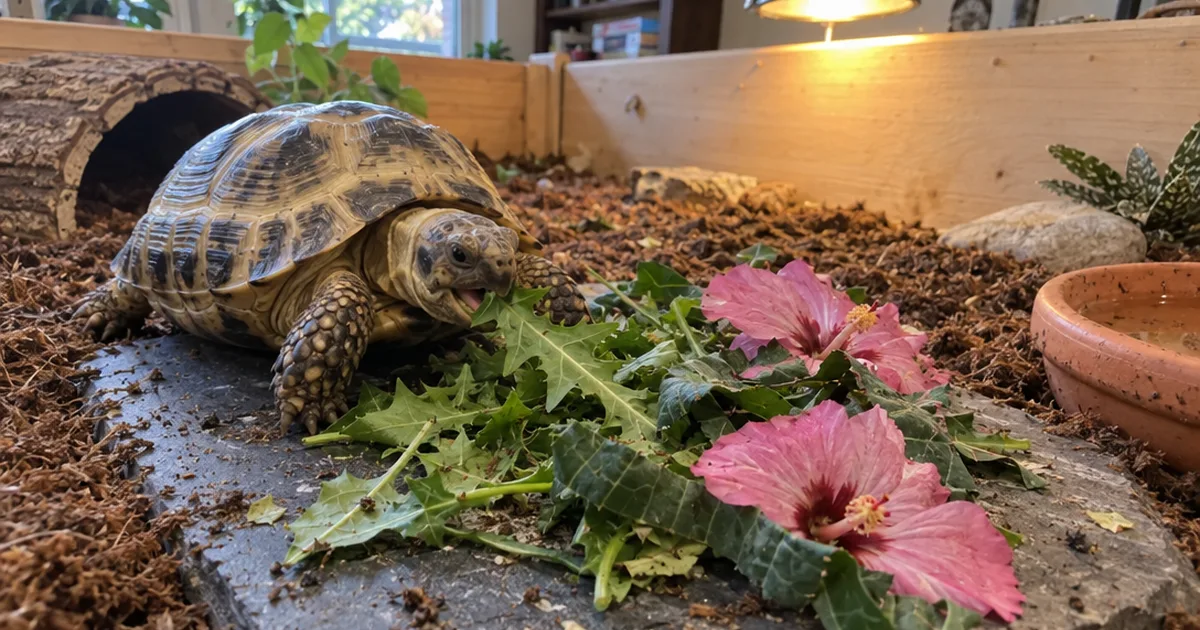
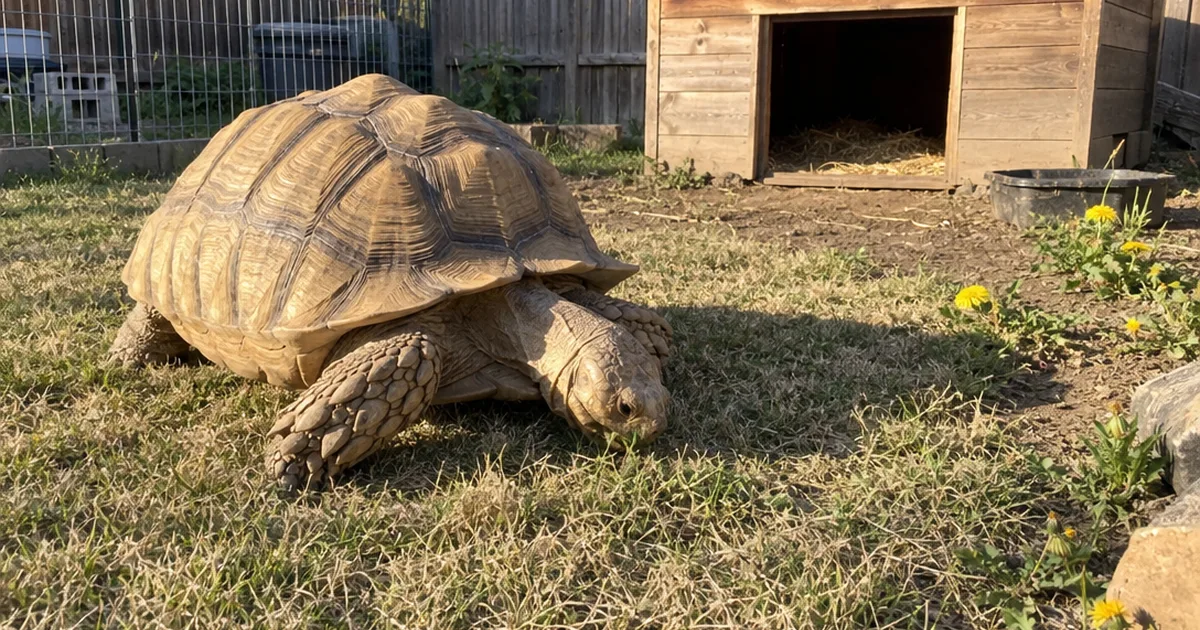
A 20-year-old sulcata tortoise can weigh 100 pounds and still be young.
That’s Donashello, who moved to a California sanctuary after his elderly owners asked for help with his care.
His story shows the part of sulcata tortoise lifespan most buyers miss: these tortoises can outlast the people who bring them home.
Below are the real lifespan ranges from 3 care sources, the oldest dated record and the care mistakes that cut a sulcata’s life short.
Sulcata Tortoise Lifespan in Captivity
A captive sulcata tortoise usually lives 50 to 100 years, and the 3 care sources behind that range all include 70 to 80 years.
The sulcata, also called the African spurred tortoise, gets different numbers depending on who you ask.
Here’s how each source puts it:
- The Animal Foundation: a care guide dated August 2025 gives lifespans reaching 50-80+ years.
- Lions Tigers & Bears: this California sanctuary wrote in June 2025 that sulcatas commonly reach 70 to 100 years in captivity.
- Reptiles Reptropolis: this Dana Point reptile store’s care sheet gives about 50-150 years.
Why the spread?
None of these sources followed a group of sulcatas from hatching to death. So each range is a care estimate, not a measured average.
In fact, a 20-year-old sulcata has lived less than a third of a 70- to 100-year life.
If you bring home a sulcata, plan for at least 70 years of care.
Other species have their own ranges, so check lifespan by tortoise species before you compare a sulcata with a smaller pet.
How Long Do Sulcata Tortoises Live in the Wild?
The sulcata tortoise’s wild lifespan is unknown. None of the sanctuary or care sources gives a measured wild figure, so any single number you see online is a guess.
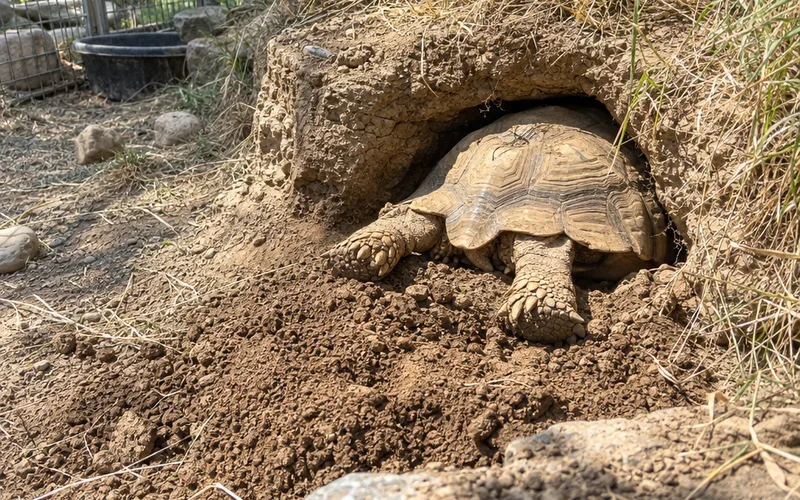
Wild sulcatas live on the southern edge of the Sahara, according to the Dana Point store’s care sheet. There, they dig burrows to escape the desert heat and graze on dry grasses and weeds.
In other words, the captive ranges are the only numbers keepers can actually use.
Can a Sulcata Tortoise Live to 100 or 150?
A sulcata tortoise might reach 100 years, but no care source names one that did. The oldest dated captive sulcata was 54 years old.
So treat 100 and 150 as possible, not proven.
The Oldest Sulcata on Record
The oldest dated captive sulcata was 54 years old, at Egypt’s Giza Zoological Gardens in 1986, says the Reptiles Reptropolis care sheet.
That’s a big gap.
On the same sheet, the store gives a lifespan of about 50-150 years. Its own record sits near the bottom of its own range.
What does that mean for you?
An age over 54 only counts when someone knows the hatch date, and none of these sources names a sulcata with one. The Giza Zoo record is simply the oldest one with a place and a year attached.
Key Takeaway: 54 years is on record, while 100-plus is still a hope.
Why Do Sulcata Tortoises Live So Long?
Sulcata tortoises live so long mostly because of a slow metabolic rate and a low-stress lifestyle, according to Lions Tigers & Bears.
A slow metabolism means the body burns energy at a slow, steady pace.
That pace suits a grazer built for a harsh, dry home. The Dana Point store’s care sheet calls the sulcata the third-largest tortoise in the world, behind only the Galapagos tortoise and the Aldabra giant tortoise.
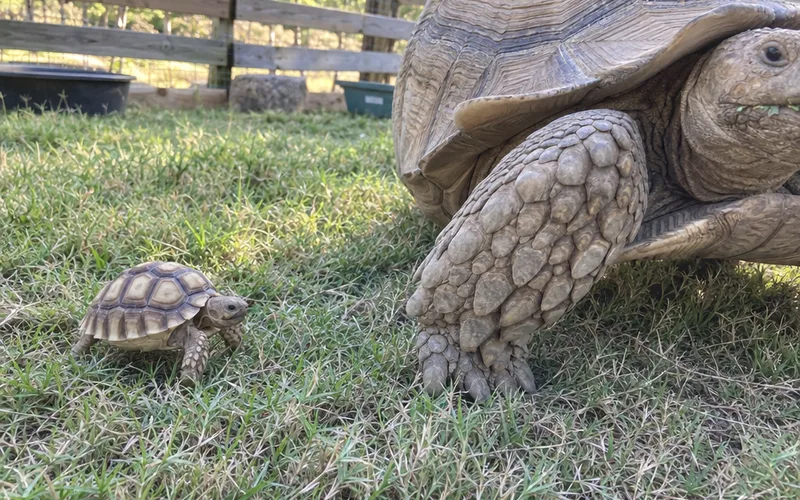
But a long life doesn’t mean slow growth. The same store says young sulcatas can easily double in size each year for their first 3 years.
So check how big sulcatas get before you pick a pen, because the hatchling you buy won’t stay small for long.
What Shortens a Sulcata Tortoise’s Life?
Care mistakes shorten a captive sulcata tortoise’s life. Too little UVB light, a high-protein diet low in calcium, and cold, damp housing all cause damage that can’t always be undone.
Here’s how each one does its harm.
UVB Light and Metabolic Bone Disease
Without enough UVB light, a sulcata can’t make the vitamin D3 it needs to use calcium.
Lions Tigers & Bears warns that sulcatas without enough UVB risk metabolic bone disease. The sanctuary calls it painful and often irreversible.
Indoors, a UVB lamp has to fill that gap, and you can learn the early warning signs in this list of common tortoise health problems.
Diet, Calcium and Pyramiding
A sulcata fed too much protein and too little calcium grows a bumpy, pyramid-shaped shell.
The Reptiles Reptropolis care sheet says that mix causes shell pyramiding. So learn the early signs of shell pyramiding and fix the diet before the bumps spread.
Cold, Damp Housing
Sulcatas don’t hibernate, so they can’t sleep through a cold winter the way some tortoises do.
The same store’s sheet says to keep sulcatas above 60F (16°C) and dry in cooler weather. If your winters get cold, read up on sulcata winter slowdowns before the first frost.
How to Help Your Sulcata Live Longer
To help a sulcata tortoise reach the long end of its range, give it daily UVB light, a grass-heavy diet with calcium, warm dry housing and a reptile vet.
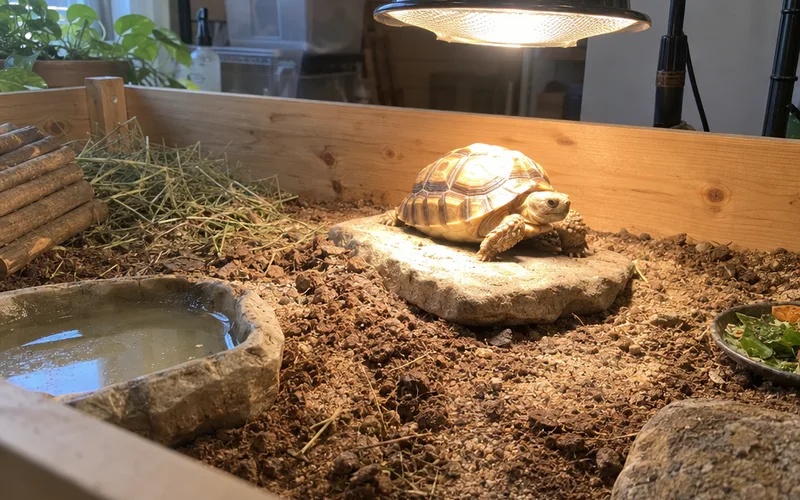
The Animal Foundation’s care guide puts real numbers on each step. Here’s the order to set them up:
- Light first. The guide calls for 12-14 hours of UVB a day, from a Reptisun 10.0 or a mercury vapor bulb, unless your tortoise lives outside in full sun.
- Keep it warm. Young sulcatas need a 95-105F basking spot, an 80-90F enclosure and nights that never drop below 70F.
- Feed grass, not treats. The Dana Point store’s care sheet says grasses should make up at least 75% of the diet, and this sulcata feeding plan shows which hays and weeds to use.
- Add calcium. The guide suggests calcium with D3 twice a week and a reptile multivitamin once a week.
- Build for the adult. An adult needs at least 20 x 30 feet outdoors, with fencing sunk 12 inches underground, so sketch out sulcata enclosure ideas while yours is small.
- Book a vet early. The guide recommends a fecal test and a physical exam soon after you bring a sulcata home.
These habits match the core rules of turtle and tortoise care for every species.
For the full daily routine, use this sulcata tortoise care checklist.
Warning Signs a Sulcata Is Sick
The warning signs of a sick sulcata tortoise are a runny nose or puffy eyes, poor appetite or lethargy, a soft or peeling shell, and pyramiding, according to The Animal Foundation.
A runny nose or puffy eyes can point to a respiratory illness. Bumpy, pyramid-shaped growth often traces back to poor diet or humidity, the guide adds.
Note: The same guide says to find a reptile vet before you need one, because emergency care for tortoises can be harder to find than for dogs or cats.
So save that vet’s number now, while your tortoise is healthy.
Do Male or Female Sulcatas Live Longer?
Male and female sulcata tortoises get the same lifespan in current care guides. None of the 3 sources gives the sexes different numbers.
The difference is size. The Dana Point store’s care sheet says males grow larger than females, and that you can’t tell the sex of a baby.
So plan for the same 70-plus years whether you end up with a male or a female.
How Long Will a Baby Sulcata Tortoise Live?
A baby sulcata tortoise has the same 50- to 100-year outlook as an adult. A hatchling can easily outlive the person who buys it.
Here’s a hypothetical: you buy a hatchling at age 30.
If it reaches 70, you’d be 100 when it dies.
That’s why your own age matters as much as the tortoise’s.
A baby also needs the right setup from day one. The Animal Foundation says a juvenile with a shell under 10 inches needs at least 8 x 4 feet indoors, 40-60% humidity and daily warm soaks.
Will a Sulcata Tortoise Outlive You?
A sulcata tortoise can easily outlive its owner. The Animal Foundation says that with proper care, sulcatas outlive many family members, outgrow small yards and weigh more than most dogs.
The same guide says some sulcatas get surrendered because adopters underestimate their needs.
What Happens If You Can’t Keep Your Sulcata
A sulcata you can no longer keep needs a new home, usually with a family member, a reptile rescue or a sanctuary.
The kindest move is to pick that next home now, while you’re healthy and the tortoise is small.
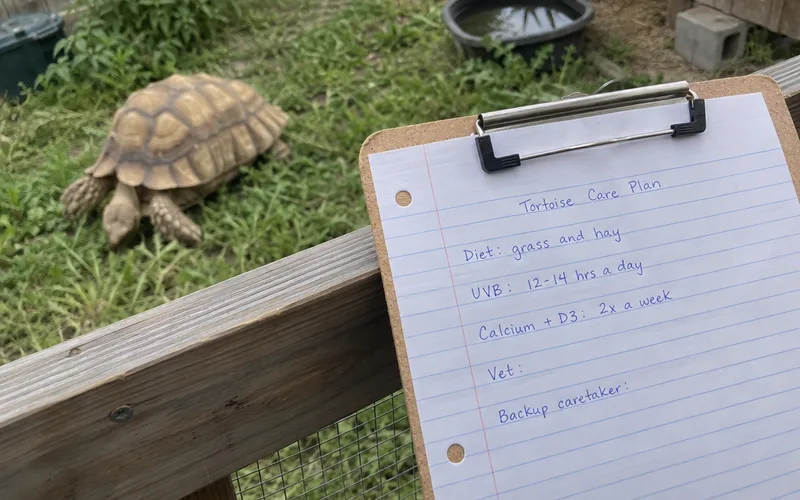
Here’s what to say to a family member:
“I have a sulcata tortoise that could live 70 years or more. Would you take over its care if I can’t? I’ll write down its diet, lighting and vet details for you.”
Then put that plan in writing, with these details:
- The tortoise’s hatch or purchase date
- Its diet, UVB and heat setup
- Your reptile vet’s name and number
- Who takes it, and who comes next
And ask yourself honestly whether a tortoise suits your life for the next 50 years.
A sulcata is a 70-year commitment.
Name its next caretaker this week.
Frequently Asked Questions
How can you tell the difference between a male and female sulcata tortoise?
Size is the clearest clue in an adult sulcata tortoise, because a Reptiles Reptropolis care sheet says males grow larger than females. The same sheet says you can’t tell the sex of a baby, so wait until yours is older and ask a reptile vet to check.
What do African tortoises eat?
African spurred tortoises eat mostly grass, and a Reptiles Reptropolis care sheet says grasses should make up at least 75% of a captive sulcata’s diet. The Animal Foundation names Bermuda, orchard and timothy hay as staples, with weeds and flowers as extras.
What are some interesting facts about sulcata tortoises?
Sulcata tortoises are the third-largest tortoises in the world, behind only the Galapagos and Aldabra giant tortoises, according to a Reptiles Reptropolis care sheet. They come from the southern edge of the Sahara, and young ones can double in size each year for their first 3 years.
How do I care for my tortoise?
Caring for a sulcata tortoise comes down to daily UVB light, steady heat, a grass-based diet with calcium and plenty of room to roam. The Animal Foundation’s care guide also says to book a fecal test and a vet exam soon after you bring one home.
Do sulcata tortoises hibernate?
No, sulcata tortoises don’t hibernate, though a Reptiles Reptropolis care sheet says they slow down in cooler weather and shorter days. Keep yours warm and dry through winter instead of cooling it down.