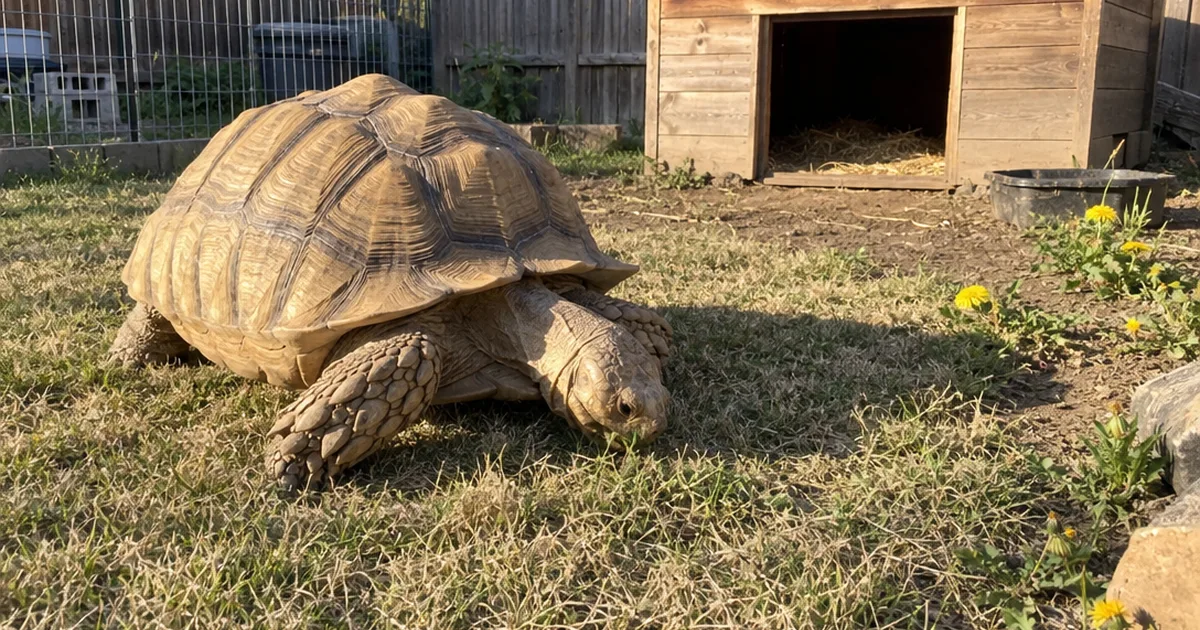
A wild tortoise can graze on around 200 different plants in a single year.
That estimate comes from The Tortoise Table, a UK tortoise plant database. And it’s the best clue to what can tortoises eat at home: lots of variety, mostly leaves.
You don’t need 200 plants. But you do need more than lettuce.
Below, every common food lands in one of 3 groups (daily staples, occasional extras and never), with the species differences that change the rules.
What Can Tortoises Eat Every Day?
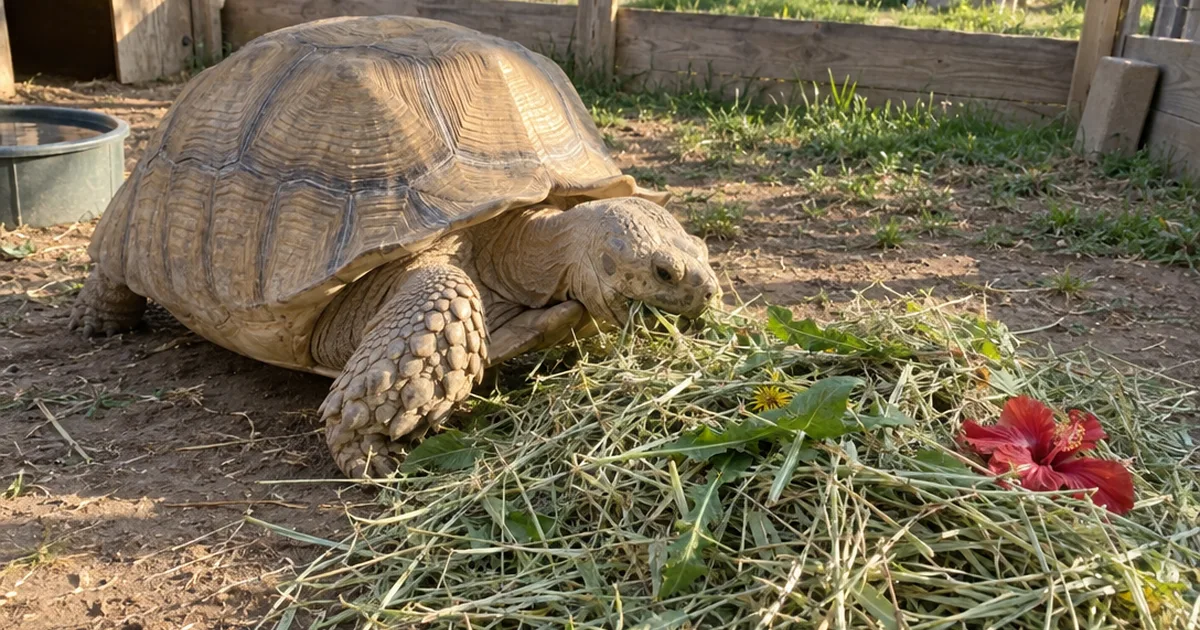
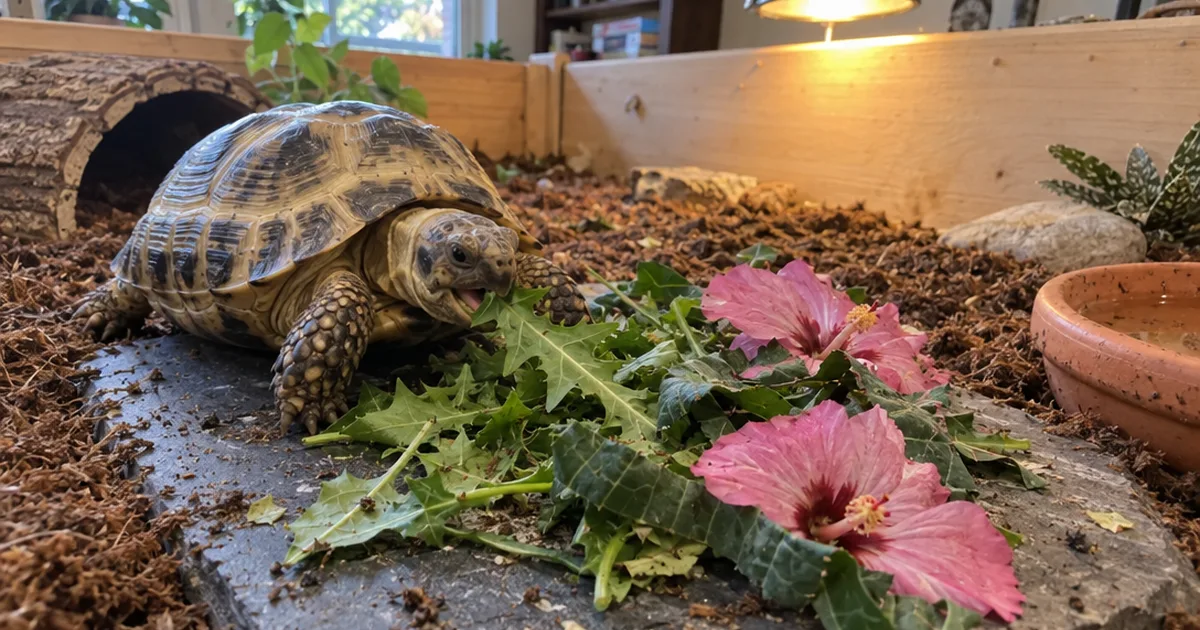
Tortoises can eat weeds, dark leafy greens, grasses and edible flowers every day, and those 4 groups should make up most of what you feed.
Here’s what a daily tortoise food list looks like in practice:
- Weeds: dandelion, clover, plantain, mallow and sow thistle
- Leafy greens: collard, mustard and turnip greens, endive, escarole and arugula
- Grasses and hay: timothy hay and Bermuda grass, most of all for grassland species
- Flowers: hibiscus, rose petals, nasturtiums and pansies
Everything else, from carrots to strawberries, is an occasional extra or a food to skip.
Build every meal from those 4 groups, then rotate what’s inside each one.
Why rotate? Because many good plants carry compounds your tortoise only handles in small doses.
So a varied plate of leaves beats any single “perfect” food.
What Tortoises Eat in the Wild, by Species
Wild tortoises eat what grows where they live, so the right diet depends on the species. Mediterranean and Russian tortoises graze weeds and flowers, sulcatas and leopards live mostly on grass, and forest red-foots also eat fruit.
That split matters at home too. The Tortoise Table notes that leopards and sulcatas are primarily grass eaters, unlike most species, which spread their diet across many plants.
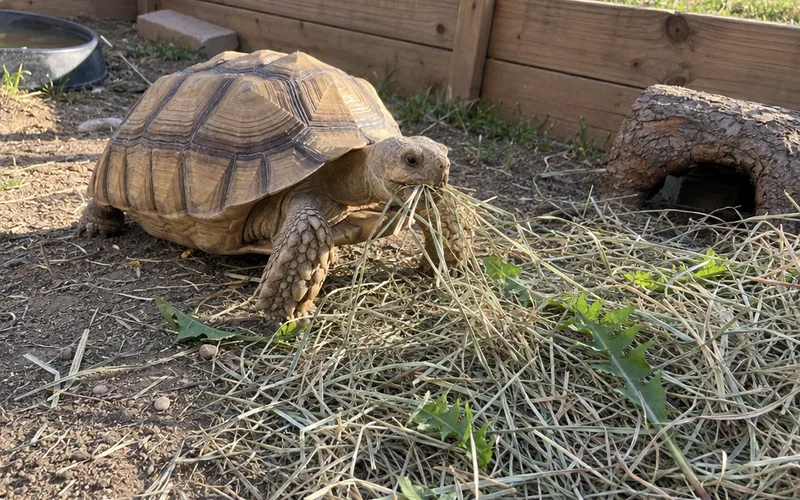
So before you shop, check which group your tortoise belongs to. If you’re not sure, a quick look at the main types of tortoise will tell you.
Still choosing a species? Diet is worth comparing too, since a grass-eating sulcata needs a very different pantry from a small beginner pet tortoise.
Mediterranean and Russian Tortoises
Hermann’s, Greek, marginated and Russian tortoises do best on weeds, leafy greens and flowers, with almost no fruit.
Keeper guides for these species also skip root vegetables and fruity vegetables such as bell peppers and tomatoes. A detailed Russian tortoise diet covers that species’ menu, and the wider basics of keeping a Russian tortoise go with it.
Sulcata, Leopard and Desert Tortoises
Sulcata, leopard and desert tortoises need grass and hay as the bulk of the diet, plus weeds and greens, and no fruit at all.
These grazers have been seen choosing dry grass even when fresh greens sit right beside it. That’s why a sulcata tortoise diet leans so hard on hay, and a desert tortoise food list looks more like a pasture than a salad.
Red-Footed and Other Forest Tortoises
Red-footed, yellow-footed and hingeback tortoises come from tropical forests, and they can eat some soft fruit and a little animal protein alongside their greens.
That makes them the exception to most of the fruit rules in this guide. Even for them, greens still come first.
Weeds and Wild Plants: The Best Everyday Food
The best everyday food for most tortoises is a mix of pesticide-free weeds, such as dandelion, clover, plantain, mallow, sow thistle and chickweed.
These plants are high in fiber and close to what wild tortoises graze. That’s why so many keepers rank them above anything from a store.
Weeds also make variety easy. The Tortoise Table estimates many wild tortoises eat around 200 plant species a year, and a patch of mixed weeds gets you far closer to that than a grocery aisle.
Here are the weeds worth learning to spot:
- Dandelion leaves and flowers
- Clover
- Broadleaf plantain
- Mallow
- Sow thistle and chicory
- Chickweed
The catch is where you pick them. Only collect from lawns and fields that haven’t been sprayed with weed killer or fertilizer, and skip roadsides.
Better still, let your tortoise graze for itself. A planted outdoor tortoise enclosure gives it fresh weeds and natural sunlight on warm days.
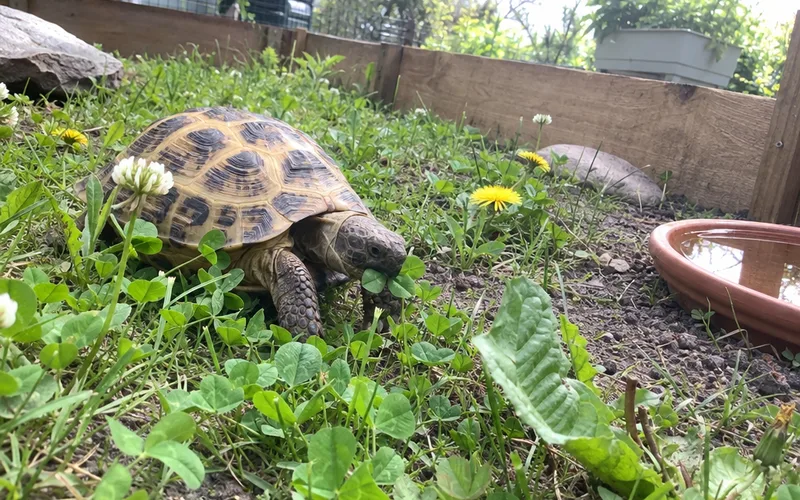
Pro Tip: Sow a tray of dandelion, clover and plantain seeds on a sunny windowsill or patio. You’ll get a steady, chemical-free supply that keeps growing back after each harvest.
Leafy Greens You Can Buy at the Grocery Store
The best grocery greens for tortoises are collard, mustard and turnip greens, endive, escarole, arugula (rocket) and radicchio. Keepers use these as everyday staples.
That answers one of the most common questions on tortoise forums: what to feed besides lettuce. Pick 3 or 4 of these greens each week, chop them together and switch the mix the next week.
Spring mixes and other bagged salad blends work as a base, too. Just top them with darker greens so the plate isn’t mostly pale leaves.
Dark, bitter greens beat pale, watery ones almost every time.
Can Tortoises Eat Lettuce?
Tortoises can eat lettuce now and then, but it shouldn’t be a regular food, because it’s low in nutrition and fiber.
The Tortoise Table says lettuce and other salad items have little nutritional value and little fiber. They pass through quickly and often cause loose stool.
Romaine and red leaf lettuce can be a small part of a mixed plate, and the full lettuce breakdown compares each type.
So if lettuce is your tortoise’s main food today, swap half of it for collards or dandelion this week.
Hay, Grass and Cactus Pads
Timothy hay, Bermuda grass and Opuntia cactus pads add fiber, which grassland tortoises like sulcatas and leopards need most. Smaller species nibble them too.
Fiber keeps digestion moving and helps firm up loose droppings. That’s why some keepers mix dry grass into the greens when a tortoise’s stool turns runny.
For grassland species, many keepers mix hay into the greens every day. Hermann’s and Greek tortoises eat less of it, often more toward the end of the season before brumation.
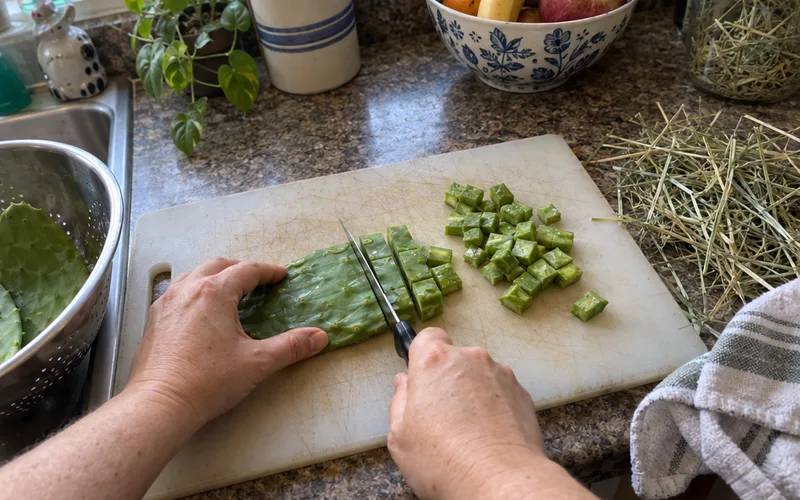
Shred or cube cactus pads before serving, so a small tortoise can bite through them.
Flowers Tortoises Can Eat
Hibiscus, rose petals, nasturtiums, pansies, dandelion flowers, calendula and violets are safe flowers that tortoises can eat as part of their regular greens.
Many tortoises enjoy the bright petals. That makes flowers a good way to get a picky eater interested in a new plate.
Note: Garden-center and florist flowers are often sprayed with pesticides that can poison a tortoise. Grow your own, or repot new plants and feed only the fresh growth.
Hibiscus is one of the easiest to keep going. Its leaves are edible too, so one plant in a pot can supply both.
What Vegetables Can Tortoises Eat?
Tortoises can eat small amounts of squash, zucchini, bell pepper, cucumber and kale, but vegetables are a side dish, not the base of the diet.
Kale is one of the better choices. The Tortoise Table rates it highly for its iodine content and calcium-phosphorus balance.
Watery vegetables add moisture but little else, so keep cucumber for tortoises as a hot-day extra. And for a variety, the kale verdict shows how often to rotate it in.
Peas and beans are a different story. The same database says they’re high in protein and phytic acid and should be avoided where possible.
That rule covers peas for tortoises and green beans for sulcatas alike.
Can Tortoises Eat Carrots?
Tortoises can eat a little shredded carrot as a rare extra, but carrots are high in carbohydrates and sugar, so they shouldn’t be fed often.
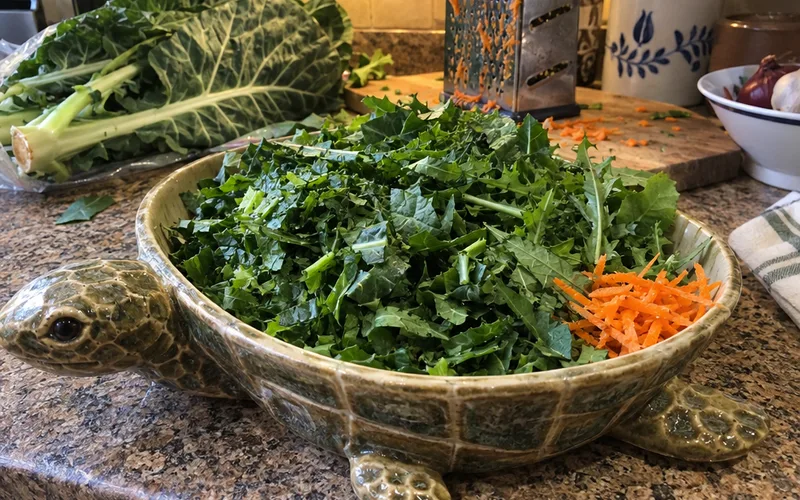
The same database advises that root vegetables such as carrots and parsnips should be limited and preferably not fed at all. One breeder’s food guide warns that a big, cheap bag of carrots does more harm than most owners realize.
If you want the details on portions, the full carrot guide covers how much is too much.
Can Tortoises Eat Cabbage?
Tortoises can eat small amounts of cabbage, but it shouldn’t be a daily food because cabbage-family plants contain goitrogens.
Goitrogens are compounds in Brassicaceae plants that can interfere with thyroid activity. A few leaves mixed into a varied plate are fine, and the cabbage guide explains how often to offer them.
Oxalates: Spinach, Parsley and Broccoli
Spinach, parsley, chard and broccoli are high in oxalates, so tortoises should only get them now and then, never as a staple.
Oxalic acid can bind with calcium and stop a tortoise from using it for bone and shell. The same database says these plants are often fine in small amounts, but not 5 high-oxalate plants at the same meal.
That’s why spinach for tortoises and broccoli for tortoises both get a “sometimes” verdict. The same goes for parsley for sulcatas.
Can Tortoises Eat Fruit?
Most tortoises should get fruit rarely or not at all, because their gut isn’t built for sugar. Red-footed and yellow-footed tortoises are the exception and can have a little fruit each day.
The Tortoise Table says the digestive system in most tortoises is not geared toward digesting fruit, so offering it should be limited. Too much sugar can upset gut balance and cause diarrhea, which leaves a tortoise dehydrated.
Give sulcatas and leopards no fruit at all. For Mediterranean and Russian tortoises, keep it to a rare bite:
- A thin slice of apple for tortoises as a rare treat
- One or two grapes for tortoises as an occasional treat
- No tomatoes for tortoises of Mediterranean species, which keeper guides rule out
Forest species are different. Keeper diets for red-foots often add melon, papaya, kiwi, guava, grapes and banana to the greens.
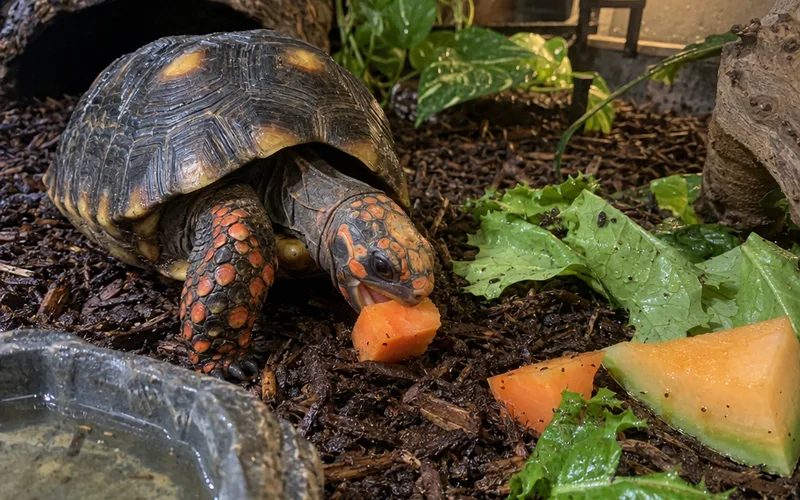
For most pet tortoises, the safest fruit plan is almost no fruit.
Foods Tortoises Should Never Eat
Tortoises should never eat avocado, onions, garlic, rhubarb or citrus fruit. Toxic garden plants like foxglove and daffodils, and human foods like bread, cheese and meat, are off the menu too.
Here’s the full list of foods to keep out of reach:
- Toxic foods: avocado, onions, garlic and rhubarb
- Toxic plants: foxglove, daffodil, buttercup, rhododendron, hydrangea and iris
- Human food: bread, rice, corn, crackers and anything cooked or seasoned
- Animal products: dairy, eggs, meat, and dog or cat food for herbivorous species
Some keepers do add a little animal protein for forest species like red-foots. That never applies to grass and weed eaters, whose diets should stay fully plant-based.
If your tortoise eats something on this list, call a reptile vet the same day.
Calcium, Supplements and UVB Light
Most pet tortoises need extra calcium from a cuttlebone or calcium powder, plus UVB light to make the vitamin D3 that lets them use it.
Without enough calcium, tortoises can develop soft shells and metabolic bone disease. A cuttlebone left in the enclosure lets your tortoise nibble when it needs to, while powder is especially helpful for fast-growing young tortoises.
UVB is the other half. The Tortoise Table points out that UVB doesn’t pass through glass, so a tortoise table under a sunny window doesn’t count as UVB.
Indoors, your tortoise care setup needs a UVB lamp over the basking spot. Outdoors on warm days, natural sunlight does the job.
How Often and How Much Should You Feed a Tortoise?
Feed hatchlings and young tortoises every day, and feed adults daily or skip one day a week. A good portion is about what they’ll eat in 20 minutes.
That schedule and the 20-minute portion guide come from The Tortoise Table. It also suggests splitting a young tortoise’s daily portion into a morning and an afternoon meal.
Watch growth instead of the plate. For Mediterranean species, the same database aims for an average gain of 1 to 3 grams a month.
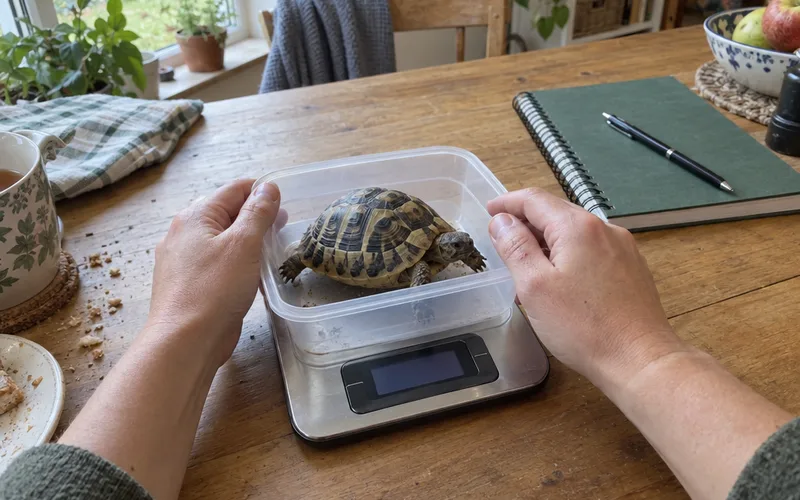
That guide doesn’t apply to leopards and sulcatas, which grow at different rates as they age.
Here’s why that matters: tortoises beg whenever they see food, so overfeeding is easy. Too much food leads to fast growth, obesity and shell pyramiding.
Underfeeding shows up the other way: slow growth, weight loss and a tortoise that seems tired or weak. Weighing once a month makes either problem easy to spot.
And if your tortoise suddenly refuses food, check its temperatures first, then work through why a tortoise stops eating.
A Sample Week of Tortoise Meals
A sample week of tortoise meals rotates 3 or 4 weeds and greens each day, adds flowers a few times and keeps vegetables to a small side once or twice.
Here’s what that could look like for an adult Russian or Hermann’s tortoise. It’s a made-up plan built from the lists in this guide, not a fixed menu:
- Monday: dandelion, collard greens and a few clover leaves
- Tuesday: escarole, mustard greens and hibiscus flowers
- Wednesday: plantain, turnip greens and a pinch of shredded squash
- Thursday: endive, arugula and rose petals
- Friday: dandelion, kale and sow thistle
- Saturday: spring mix topped with radicchio and pansies
- Sunday: no meal, since adults can skip a day
Notice that no green shows up more than twice. That’s the rotation doing its job.
For a sulcata or leopard, mix hay into every plate and drop the squash. And keep a cuttlebone in the enclosure all week, so calcium is always on offer.
What Can Tortoises Eat in Winter?
In winter, tortoises that stay awake can eat rotated bagged salad mixes with escarole, endive, radicchio and arugula. Top them with home-grown weeds and flowers and a little kale or collard greens.
Swap the bags every few days so no single mix dominates. And read the labels: skip blends with carrot, beetroot, peppers or tomato.
Indoor pots of hibiscus, pansies, dandelions and calendula keep fresh flowers coming, even in December. Opuntia cactus also grows well in a pot.
Many Mediterranean and Russian tortoises brumate instead, eating little or nothing for weeks. If yours does, plan the run-up carefully with a tortoise hibernation checklist.
Your Next Step
The most important rule for feeding a tortoise is variety: a rotating mix of weeds and dark greens matters more than any single food.
So this week, swap half the lettuce for 3 new greens or weeds from the everyday list, and add a cuttlebone if there isn’t one.
Frequently Asked Questions
What food is safe for a tortoise?
Safe tortoise foods are pesticide-free weeds like dandelion and clover, dark leafy greens like collard and mustard greens, hay and grasses, and edible flowers like hibiscus. Start with 3 or 4 of those and rotate them through the week.
What do you feed your tortoises besides lettuce?
Instead of lettuce, feed tortoises collard greens, mustard greens, turnip greens, endive, escarole and radicchio, plus dandelion leaves and other weeds when you can find them. A bag of spring mix works as a base if you add darker greens on top.
Can tortoises eat bananas?
Bananas are a treat only for fruit-tolerant forest species like red-footed tortoises, and even then in small pieces. Russian, Mediterranean, sulcata and leopard tortoises should skip bananas because their guts aren’t built for sugary fruit.
Can tortoises eat avocado?
No, tortoises should never eat avocado, and it appears on nearly every keeper’s list of foods to avoid. If your tortoise eats some by accident, call a reptile vet.
Can tortoises eat fruit every day?
Most tortoises should not eat fruit every day, because fruit sugar can upset their digestion. Red-footed and yellow-footed tortoises are the exception and can have a little fruit as a small part of their daily diet, as The Tortoise Table notes.
How do I tell if my tortoise is hungry?
A tortoise that’s hungry will walk to the food spot and eat steadily, but begging alone is a poor guide because most tortoises keep eating whenever food appears. Judge portions by slow, steady weight gain and a smooth shell instead.
What do tortoises drink?
Tortoises drink plain fresh water, and a shallow dish of it should always be in the enclosure. They also get a lot of their water from the fresh greens they eat.