

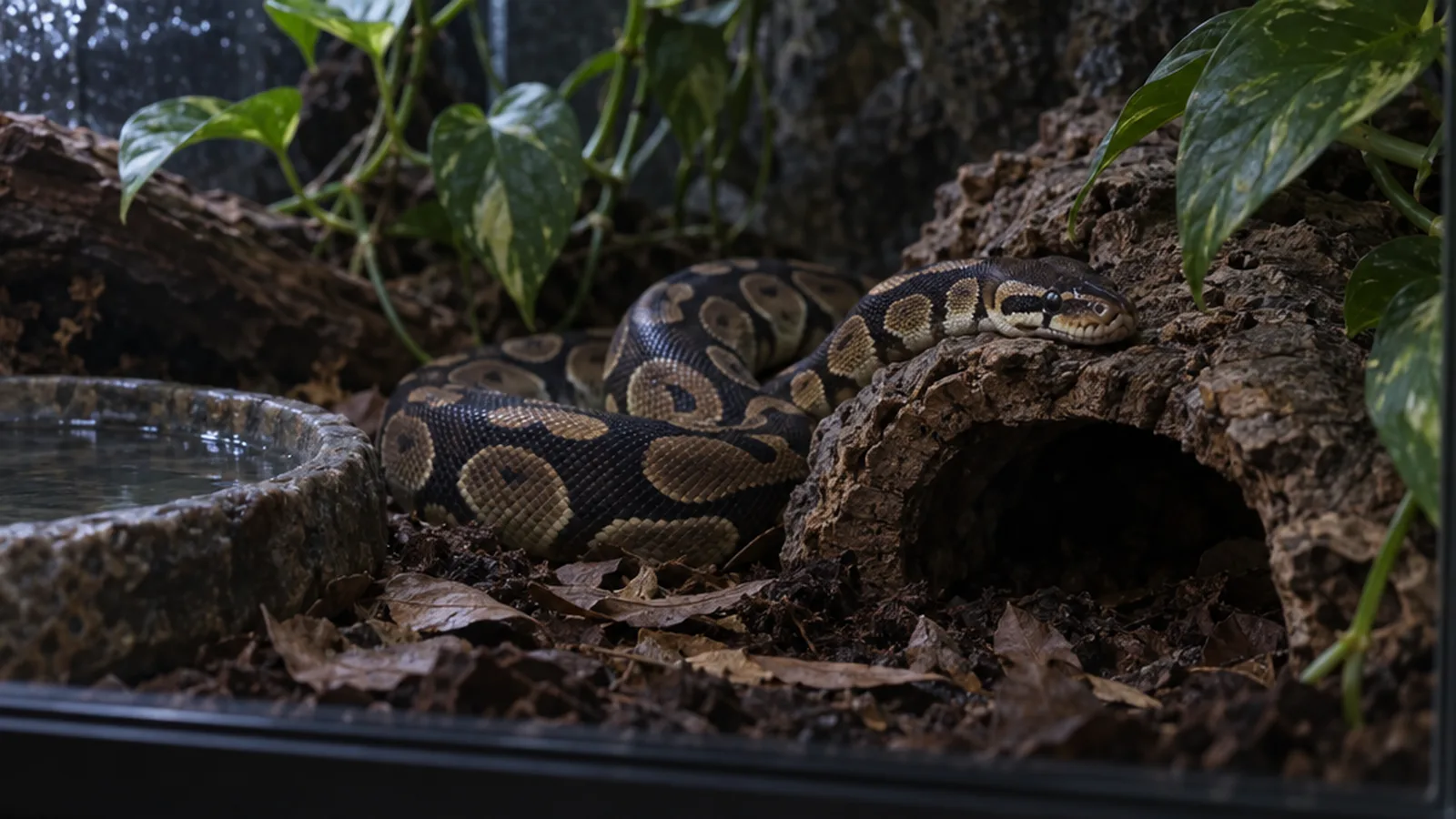
Snakes can be wonderfully low-maintenance companions, but their simplicity can hide demanding needs. Temperature gradients, humidity, secure enclosures, appropriately sized prey and a stress-free routine make the difference between a snake that thrives and one that struggles with refusals, retained shed or respiratory illness. This category explains how to get those fundamentals right and how species differ.
What this category covers
The guides cover choosing a snake, enclosure size and setup, heating and humidity, feeding and prey selection, handling, normal behavior and the full range of health concerns that come with keeping snakes. They also address morphs and breeding, including the welfare questions that sometimes get left out of the conversation.
The main sub-topic: ball pythons
Ball pythons are one of the most popular pet snakes in the US, and they have by far the largest body of guidance on this site. The topic covers enclosure size, ideas and setup, ideal temperature and humidity, feeding problems such as refusals, how long they can go without food or water, shedding, poop and eye health, and respiratory infections. It also covers lifespan, sex differences, breeding and eggs, and the huge range of morphs, from normal and champagne to clown, spider, woma and Mojave, along with questions about which combinations raise welfare concerns and what the high-end morph market looks like.
Other popular pet snakes
Corn snakes and rat snakes
Corn snakes are hardy, attractive and widely recommended for beginners. Guides here cover their size, enclosure setup, diet, breeding season, morphs such as amel and motley, and how they compare with similar species such as milk snakes and the various rat snakes.
Kingsnakes and milk snakes
Kingsnakes are active, feisty and often eager eaters. This area addresses size, temperament, bites, venom myths, morphs such as the California kingsnake and comparisons with corn snakes.
Hognose and carpet pythons
Western hognose snakes are small, charismatic and famous for playing dead, but they have specific dietary and care needs. Carpet pythons are active, arboreal snakes that grow larger and need more space and thoughtful handling.
Health and husbandry concerns
Shedding, feeding and digestion
How often snakes shed, what healthy waste looks like, why a snake regurgitates and when a missed meal is nothing to worry about are common concerns, and we explain the husbandry behind each one.
Parasites and infections
Mites, respiratory infections, eye infections, inclusion body disease and obesity all link back to enclosure conditions or stress to some degree. We explain what is known, what treatments only a veterinarian should choose, and why self-treating with antibiotics or parasite products is risky.
Breeding and genetic welfare
Responsible breeding means thinking about genetics, health and demand for the offspring. We examine pregnancy and egg-laying, breeding seasons and which morph traits are linked to neurological or other health problems.
When to see a veterinarian
Bubbles or noisy breathing, mouth discharge, stuck shed on the eyes, persistent regurgitation, swelling or marked weight loss all call for a qualified reptile or exotics veterinarian.