

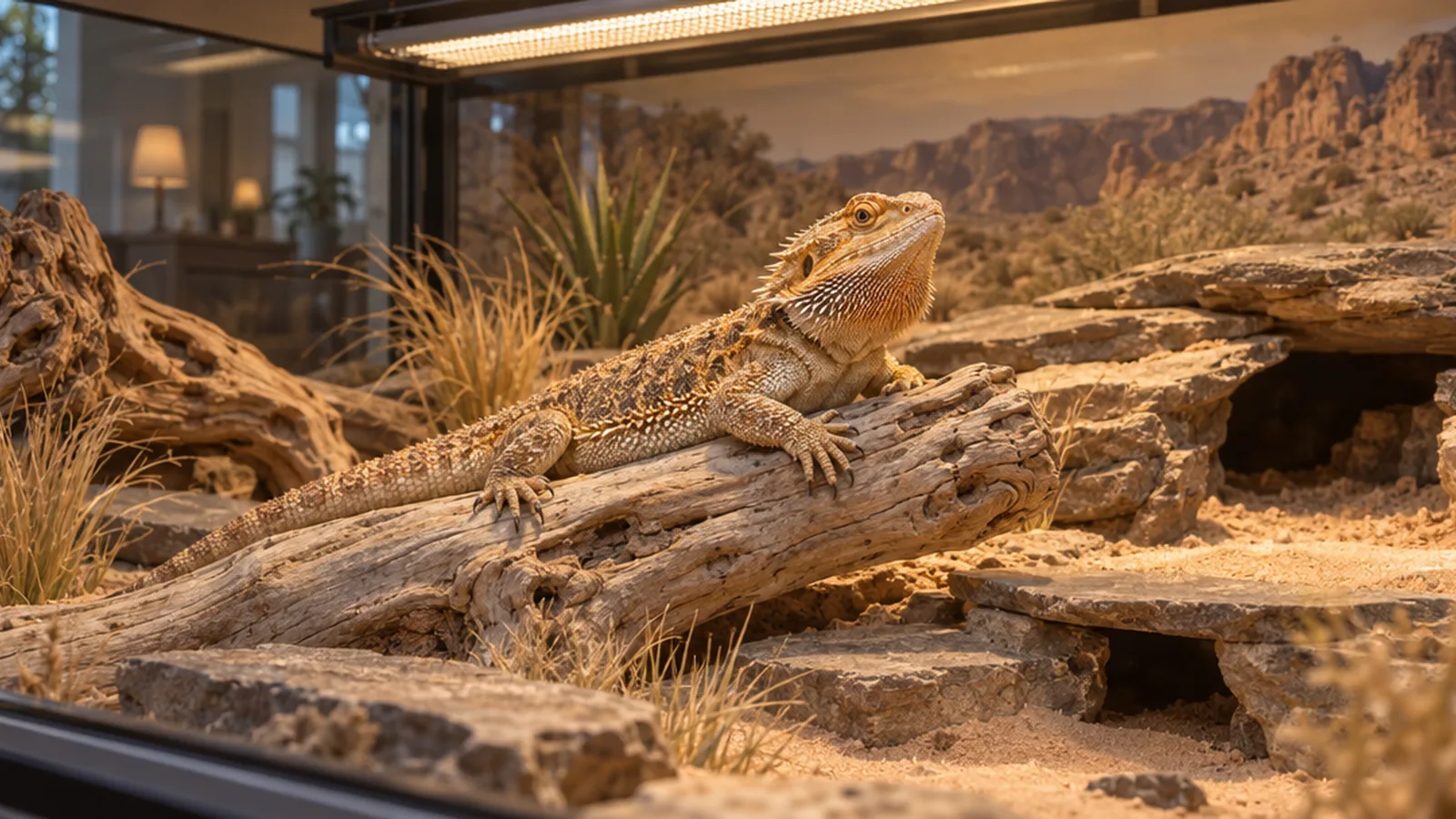
Lizards are the most varied group of pet reptiles, and that variety is exactly why one-size-fits-all advice fails them. A leopard gecko from dry scrubland, a chameleon from humid forest canopy and a bearded dragon from open Australian country all need different heat, light, humidity, space and food. This category explains those differences and connects each setup choice to the health of the animal.
What this category covers
The guides here follow a lizard through its whole life with you. They cover how to choose a species, how to set up and maintain the enclosure, how heating and UVB lighting work, what to feed and how to supplement, what normal behavior looks like, how long each species typically lives and how to approach breeding responsibly. They also explain the warning signs of common health problems so you know when to call a reptile veterinarian.
The main sub-topics
Geckos
Geckos are among the most popular beginner lizards, and the group includes species with quite different needs. Leopard geckos and African fat-tailed geckos are ground-dwelling insectivores from arid regions that rely on warm hides and a temperature gradient. Crested geckos and similar arboreal species prefer taller enclosures, moderate temperatures, humidity cycles and prepared fruit-based diets alongside insects. This sub-topic covers tank size and setup, substrate choices, temperature and humidity, diet, shedding, morphs, behavior, breeding and common health problems such as impaction, eye infections and retained shed.
Bearded dragons
Bearded dragons are popular for their calm temperament, but they are demanding in their lighting and diet needs. They need strong UVB exposure, a hot basking spot and a roomy enclosure to avoid metabolic bone disease and other problems. This sub-topic looks at tank size, habitat setup, substrate, which fruits, vegetables and insects are suitable, feeding schedules, shedding, behavior, lifespan and the symptoms that signal parasites, infection, mouth rot or impaction.
Chameleons
Chameleons are rewarding but unforgiving, because they are stress-sensitive, arboreal and dependent on precise hydration and lighting. This sub-topic explains the differences between veiled and panther chameleons, why ventilation and drinking methods matter, how to build a vertical enclosure with live plants, which feeder insects are appropriate and how to spot early signs of metabolic bone disease.
Blue tongue skinks
Blue tongue skinks are sturdy, curious, omnivorous lizards that grow larger than many beginners expect. This sub-topic covers the major types, including northern and Merauke blue tongues, along with enclosure size and setup, balanced omnivore diets and what to expect as they mature.
Other lizards worth knowing
Beyond the main groups, the category also covers other pet lizards, including smaller skinks and crocodile skinks, and larger animals such as iguanas and tegus. Bigger lizards raise hard questions about adult size and space, so we address those honestly before you commit. A general overview of brumation helps explain seasonal slowdowns in some species.
How husbandry connects to health
Heat and light
Lizards regulate their body temperature from the environment, so a proper gradient from a warm basking zone to a cooler retreat is essential for digestion and immunity. Many diurnal species also need UVB light to produce vitamin D3 and use calcium, and bulb type, distance and replacement schedules all matter.
Diet and supplements
Insect-eating lizards depend on well-fed prey, which is why gut-loading, variety and calcium supplementation come up repeatedly. Omnivores and herbivores need the right balance of greens, protein and occasional fruit, and some foods that are popular online are poor choices.
When to see a veterinarian
A lizard that stops eating, loses weight, has swollen limbs, difficulty breathing, bloody stool, sunken eyes or repeated shedding trouble needs a qualified reptile or exotics veterinarian. The guides here help you recognize those signs but do not replace an examination.