

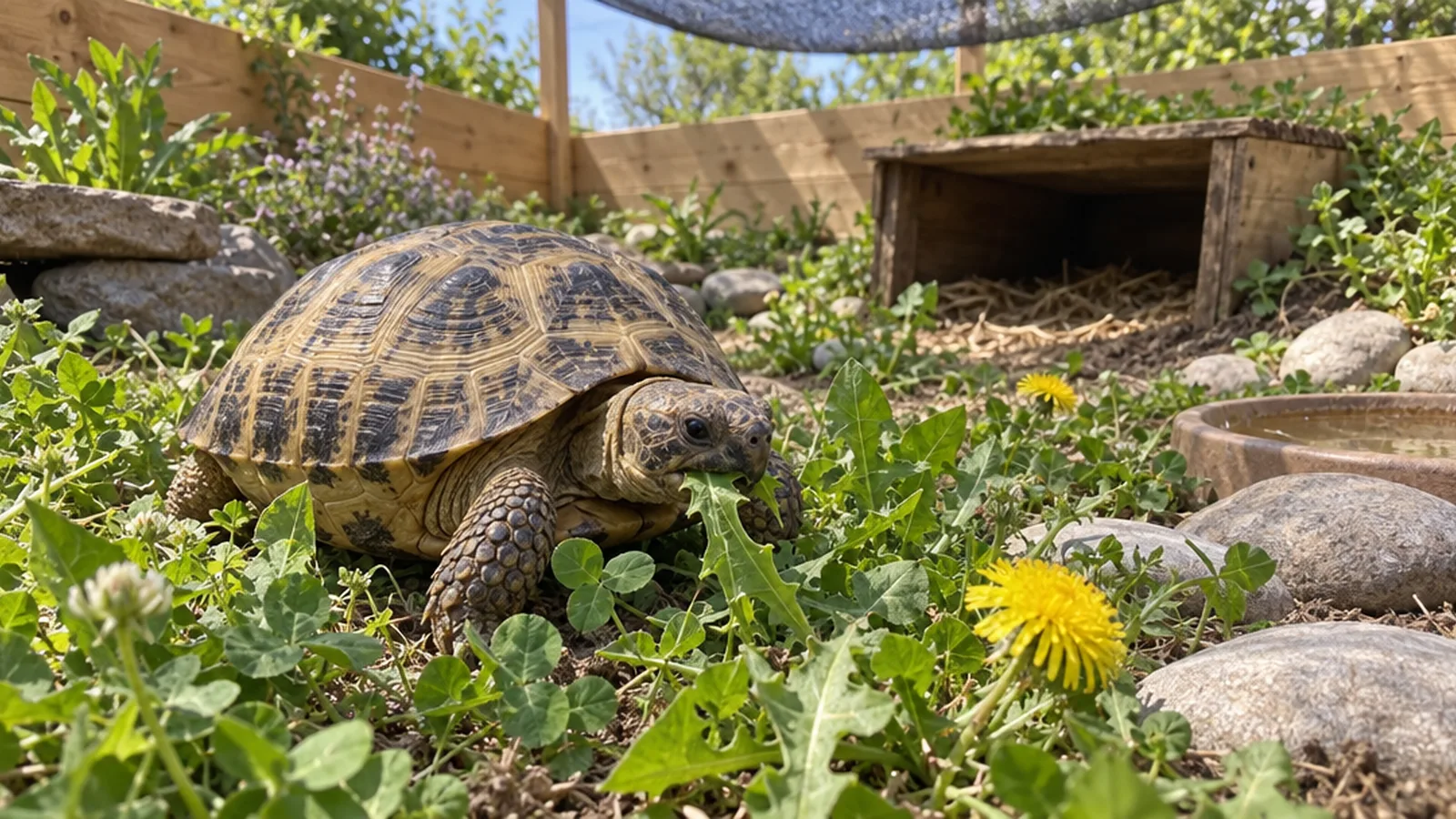
Turtles and tortoises are long-lived commitments, and many species grow much larger than the tiny animals sold in stores. Their care also splits into two very different worlds, one aquatic and one terrestrial, so mixing up the advice for the two can seriously harm an animal. This category explains both and focuses on the husbandry choices that protect shell, growth and long-term health.
What this category covers
The guides cover whether a turtle or tortoise suits you, how to build suitable indoor and outdoor housing, what each species eats, how to keep shells healthy, how fast they grow and how long they live. They also address seasonal dormancy, breeding and reproduction.
Understanding the terms
People often use turtle, tortoise and terrapin interchangeably, but the words describe different animals with different needs. Tortoises are land dwellers with sturdy, domed shells and elephantine legs. Aquatic and semi-aquatic turtles live in or near water and need swimming space, filtration and a basking area. Sorting out which one you have is the first step toward everything else.
Tortoise care
Species and size
Russian, Greek, red-footed, Sri Lankan star, desert and sulcata tortoises differ dramatically in adult size, climate needs and temperament. Sulcata tortoises in particular grow very large and are a long-term housing challenge. We cover which species suit beginners and which require outdoor space and planning many years ahead.
Diet and feeding
Most tortoises do best on a diet built around leafy greens and appropriate weeds, with limited fruit. Guides here answer the many questions about specific foods, such as carrots, kale, spinach, cabbage, lettuce and grapes, and explain why some are fine occasionally and others should be limited. A loss of appetite is a common reason owners search for help, and we explain how husbandry and illness both play a part.
Housing and substrate
Indoor and outdoor enclosures, substrates, heat and UVB, humidity and shelter are all covered. We also explain how poor humidity and diet are associated with shell pyramiding.
Aquatic and semi-aquatic turtles
Red-eared sliders and similar turtles need large tanks, strong filtration, correct water temperatures, basking platforms with heat and UVB, and a varied diet. We cover tank setup, plants, DIY basking platforms, how big sliders get, lifespan in captivity and what they eat. Box turtles are a separate case, because they are terrestrial and need their own enclosure and diet guidance.
Shell health and illness
A healthy shell is firm, smooth and evenly colored. Soft spots, foul smells, flaking and pits can signal shell rot or other infections, and we explain how to tell these apart from normal shedding of scutes. Any suspected shell disease deserves a visit to a qualified reptile or exotics veterinarian.
Outdoor housing and seasonal dormancy
Outdoor enclosures can greatly benefit many tortoises, but they must be secure against predators, weather and escape. We explain how to build and plan them, and we clarify how hibernation, brumation and estivation differ. Dormancy carries real risks, so we explain which species may be taken through it, why a veterinary health check beforehand matters, and why it should never be attempted with a sick or underweight animal.