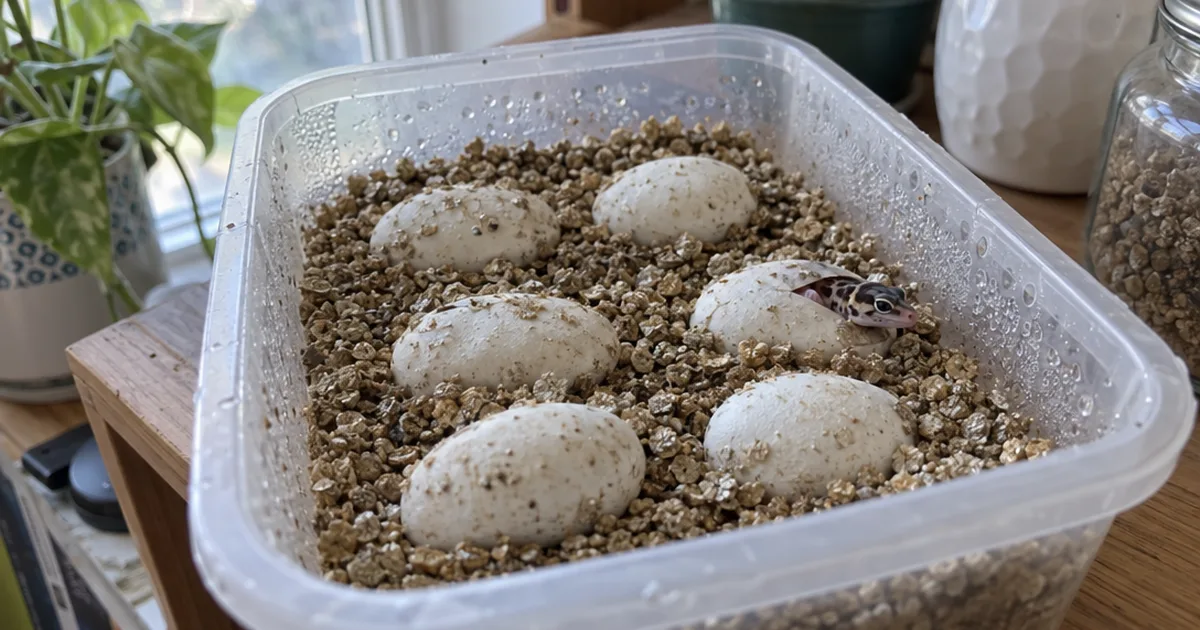
$25 buys about 1,000 crickets from one US feeder farm, The Critter Depot, while about $26 gets you just 25 medium hornworms there. Crickets give you roughly 40 times more insects for the same money.
Price is only one of the choices that shape reptile feeding, though. The most common mistakes have nothing to do with money, such as feeders that are too big, skipped calcium dusting or prey served cold in the middle.
Here are 7 feeding steps that apply to any pet reptile, from geckos to pythons, plus a schedule plan and what feeders cost to ship. The last step, a short meal log, catches a fading appetite before it turns into weight loss.
- Best for: Anyone feeding a lizard, snake, turtle or tortoise at home. Skip it if your vet has your reptile on a special recovery diet.
- Cost: About $25 per 1,000 crickets, plus a tub of calcium powder.
- Time: Same day.
- First step: Open your species’ care guide and note its diet group and meal schedule.
How to Feed a Reptile Step by Step
Feeding a reptile takes 7 steps: match the food to its diet type, size it to your reptile, gut load and calcium-dust insects, thaw frozen prey fully, serve it with tongs, then clear leftovers and log the meal.
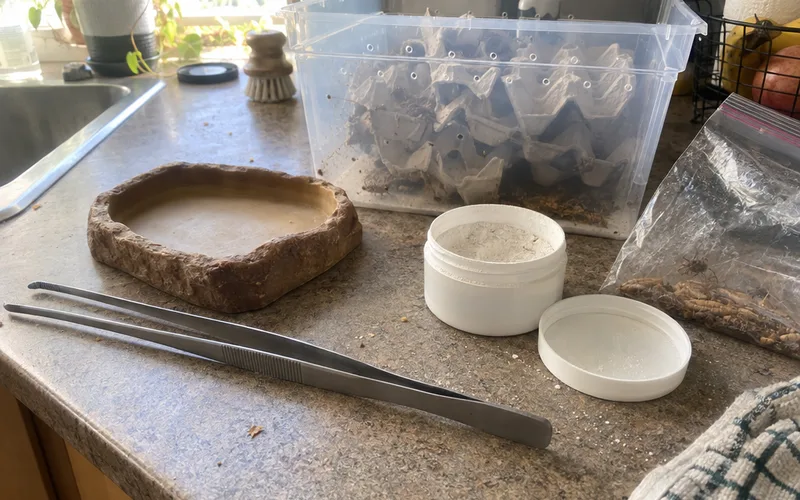
The steps run in the same order for a gecko or a python. The first 3 happen before feeding day, and the last 4 happen at the enclosure.
Step 1: Know Your Reptile’s Diet Type
Every pet reptile falls into one of 4 diet groups, and that group decides what goes in the bowl. Here’s how they break down:
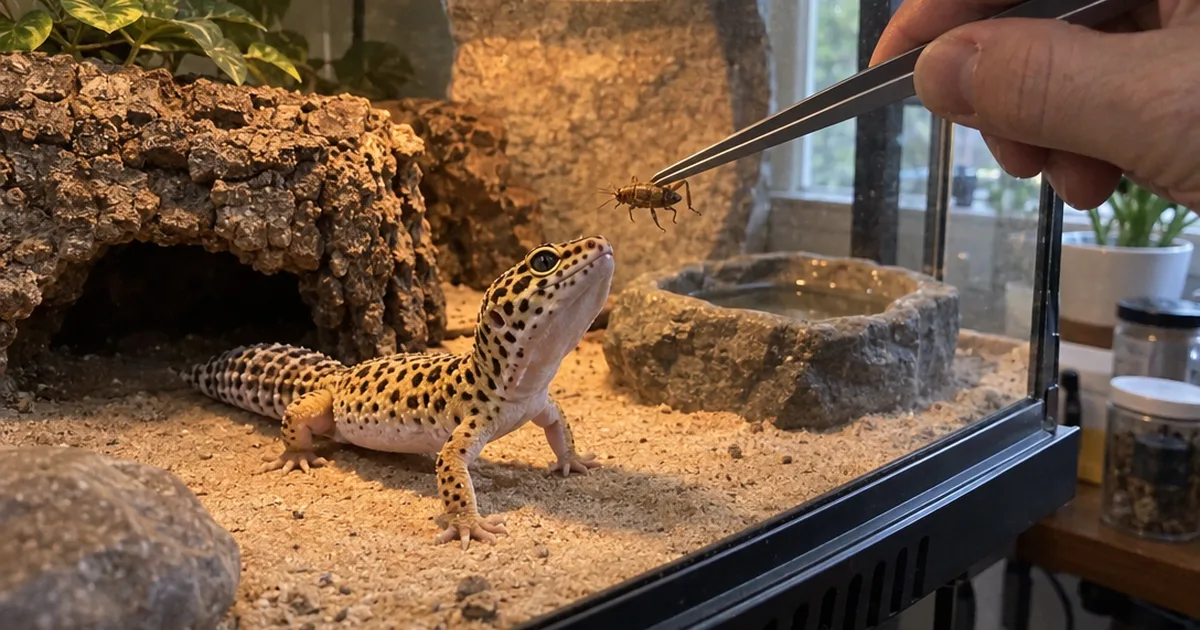
- Insectivores, such as Leopard Geckos and chameleons, eat live insects.
- Herbivores, such as a tortoise or Uromastyx, eat greens and other vegetables.
- Omnivores, such as a bearded dragon, need insects and plant foods.
- Carnivores, such as Corn Snakes and most other Snakes, eat whole prey like mice and rats.
So before you buy anything, check which group your species belongs to. The full food lists for each group are in what reptiles eat, so this guide sticks to the how.
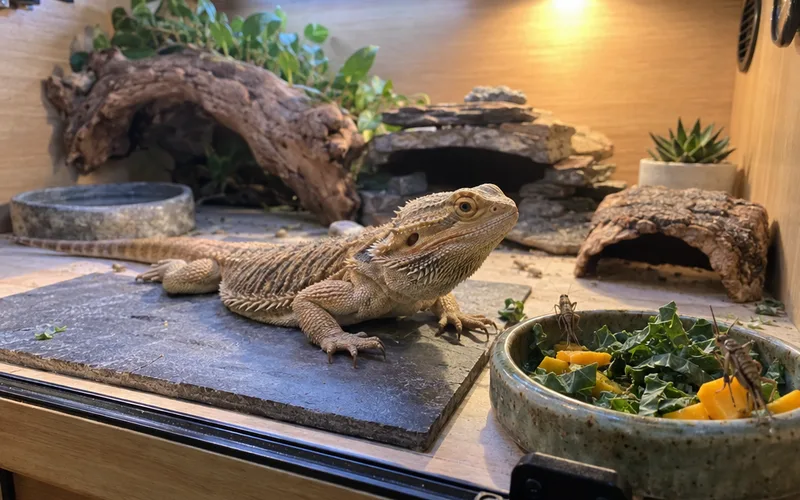
A balanced diet starts with the right group, because no amount of prep fixes the wrong food. Feeding is just one part of basic reptile care, but it’s the part you repeat most often.
Step 2: Pick Food That Fits Its Size
Feeder size should match your reptile’s size, and smaller is the safer pick when you’re unsure. Top Hat Cricket Farm sells crickets from pinhead to extra large and notes that the right size depends on your animal.
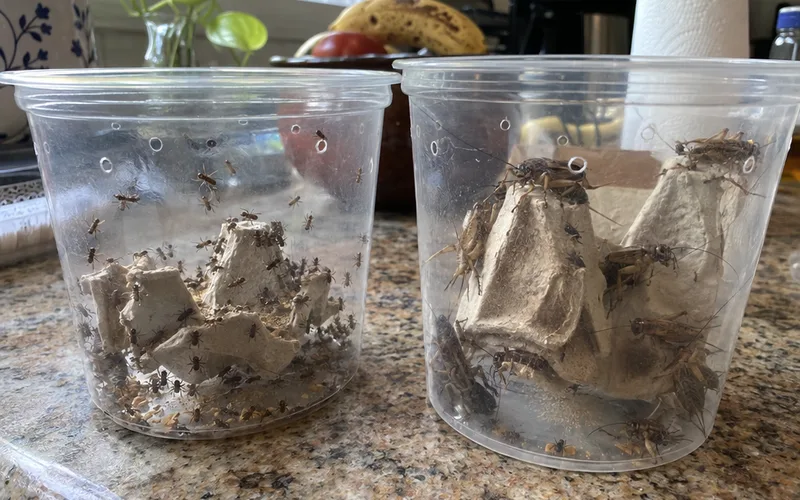
That means a hatchling or juvenile starts on the smallest feeders, and you size up as it grows into an adult. The same idea applies to mice and rats for Snakes.
Here’s a simple check: watch the first few bites. If your reptile struggles to swallow or ignores big items, drop down a size at the next meal.
Step 3: Gut Load Feeder Insects
Gut loading means feeding your insects a nutritious diet before they become your reptile’s meal, so that nutrition passes on to your pet.
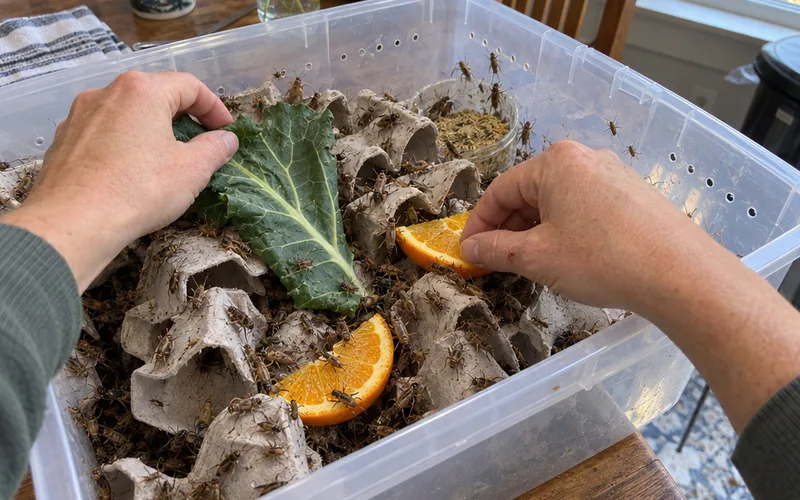
The Critter Depot raises its crickets on home grown oranges and vegetation, and it sells a dry gut-load mix for the job. At home, give your feeders fresh vegetables such as collard greens or squash and a commercial gut-load food in their bin ahead of feeding day.
Each feeder has its own quirks, so learn how to gut load insects by type, including the routine for gut loading dubia roaches.
Step 4: Dust Insects With Calcium
Calcium dusting coats feeder insects in calcium powder right before you serve them, which helps protect your reptile from metabolic bone disease.
The Critter Depot describes it plainly: lightly shake the feeders in a baggie with calcium dust. Then serve them right away, before the coating rubs off.
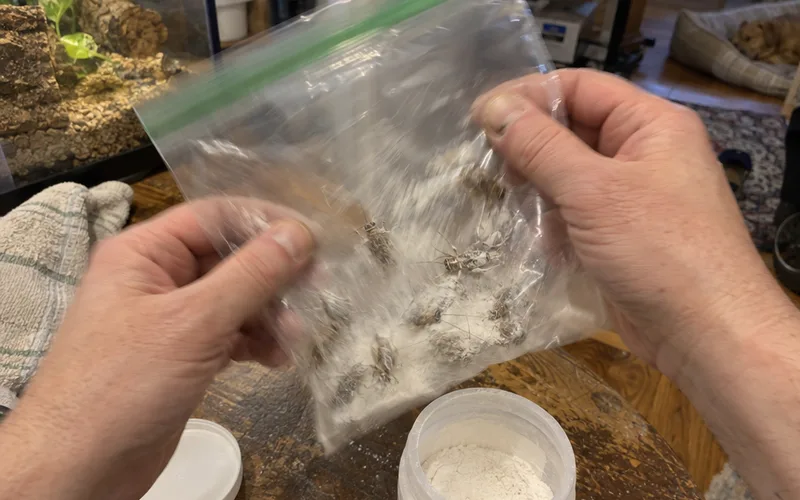
How often to add Vitamin D3 or a multivitamin depends on your species and its UVB setup. Follow its care sheet or your vet on that, since more isn’t better.
Step 5: Thaw Frozen Prey All the Way
Frozen mice and rats must be fully thawed and warmed before a snake eats them, with no cold spot left in the middle. Move the prey to the fridge to thaw, then warm it in a sealed bag in warm water until it feels warm, not hot.
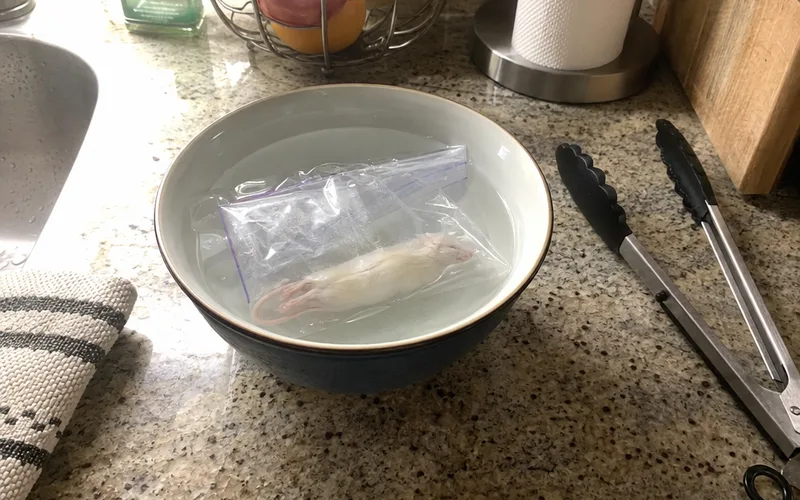
Never microwave prey or feed it while any part is still frozen.
Why not skip all this and feed live? The Critter Depot warns that rodents should never be offered as live prey, because they defend themselves with sharp teeth.
Step 6: Offer Food With Tongs or a Dish
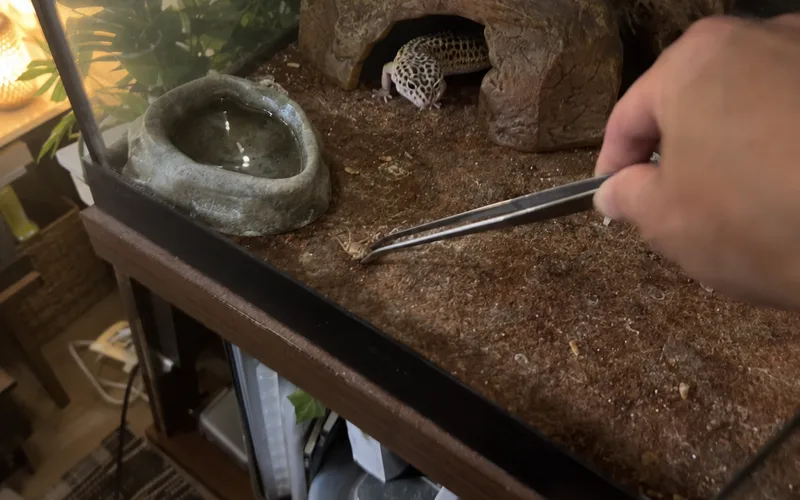
Serve food inside the enclosure with feeding tongs or a shallow dish, so your hands stay clear and the food stays off loose substrate. Tongs let a snake strike at the prey instead of your fingers.
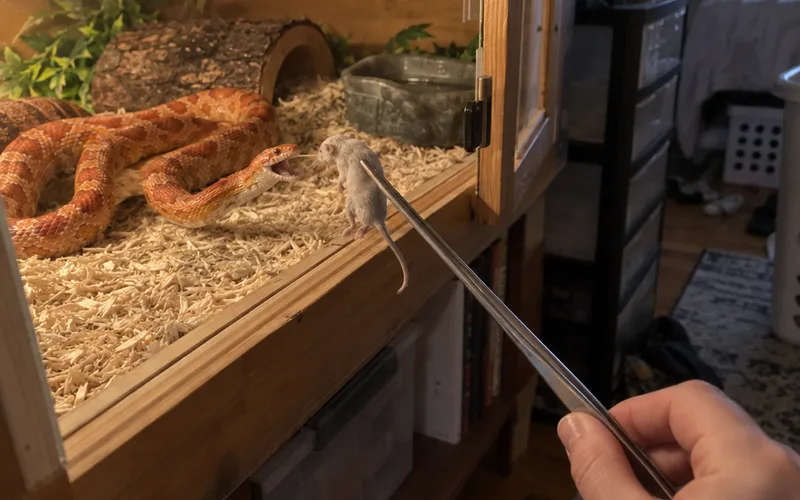
For insects, a high-sided dish stops slow movers like Mealworms from burrowing out of sight. Fast feeders like crickets can be offered one at a time from tongs.
Some keepers move their reptile to a separate tub to eat. That adds handling right before and after a meal, though, so feeding where your reptile lives is the simpler default.
Step 7: Clear Leftovers and Log the Meal
Remove uneaten insects and prey after each meal, refresh the water, then note what your reptile ate and when. Loose crickets keep crawling around a resting reptile, and thawed prey spoils if it sits.
A short log turns guesswork into a pattern. It shows you a dropping appetite early, before it turns into weight loss.
Setting a Reptile Feeding Schedule
A reptile feeding schedule depends on 2 things: your reptile’s diet type and its age. Young, growing reptiles eat more often than adults, and insect and plant eaters eat far more often than snakes.
So no single chart fits every pet, since Insectivores, Herbivores and Omnivores all eat on different rhythms. Your species guide gives the numbers, and a bearded dragon schedule and a ball python schedule look nothing alike.
Once you have them, set phone reminders for feeding day, gut-loading day and dusting. A schedule you can see is a schedule you’ll keep.
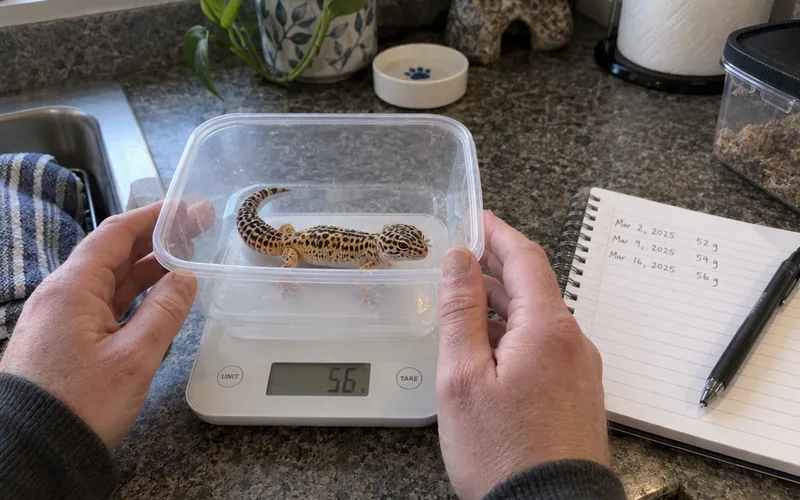
Weigh your reptile on a kitchen scale every few weeks and add it to your log. That number tells you whether the schedule is working.
Choosing and Storing Feeder Insects
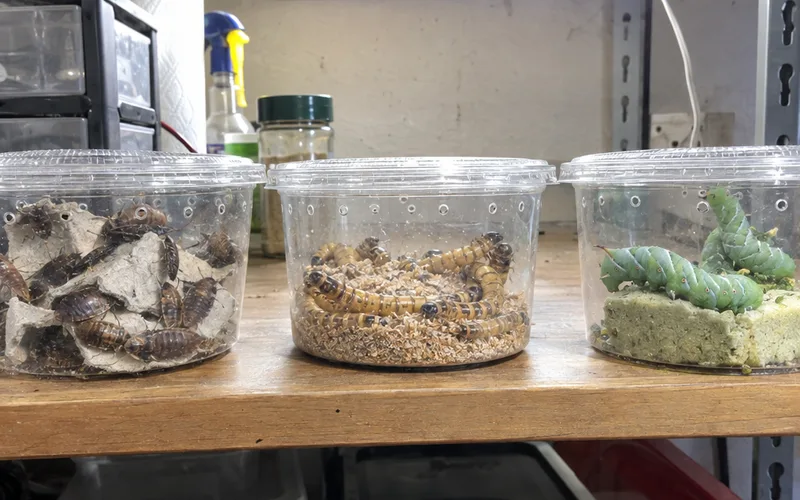
Crickets make the cheapest staple feeder for insect-eaters, while superworms, hornworms and dubia roaches each come with a storage or legal catch. Here’s what the sellers who raise them say:
- Superworms: The Critter Depot says they’re full of protein but fatty, and better served as a weekly snack. Don’t refrigerate them, unlike mealworms.
- Hornworms: The same farm says they can double in size in 5 days, so store them at about 55 degrees F to slow growth.
- Crickets: Top Hat Cricket Farm raises Gryllodes sigillatus crickets and says they’re free from the Acheta densovirus.
- Dubia roaches: Blaptica dubia roaches are outlawed in Florida, The Critter Depot notes, so Florida keepers need another roach.
That mix is why variety beats one feeder. Use crickets or roaches as the base for Insectivores and Omnivores, and treat fatty or fast-growing feeders as extras.
If you’d rather breed your own roaches, a dubia roach colony cuts repeat orders. And bearded dragon owners can compare the best feeder insects for a dragon specifically.
Buying Live Feeders Online
Live feeder insects are easy to order online from feeder farms, with shipping from $8.95 flat-rate at the Dubia.com shop to $39.99 for overnight live animals at Josh’s Frogs, per their November 2026 listings. Dubia.com ships eligible items free.
Josh’s Frogs also covers insects for 3 days after arrival under its live insect health policy. That matters if a box sits on a cold porch.
So order a few days before you run out, and buy in bulk only what you can house and gut load.
Common Reptile Feeding Mistakes
The most common reptile feeding mistakes are feeders that are too big, skipped gut loading or calcium dusting, and fatty superworms or waxworms used as daily staples. Prey served cold in the middle and live insects left in the enclosure after a meal round out the list.
A missed meal isn’t always a mistake on your part, since shedding, stress or a seasonal slowdown called brumation can pause appetite. If a gecko stops eating, work through the leopard gecko not eating checklist, and see a reptile vet if refusals continue or weight drops.
Frequently Asked Questions
What are feeders for reptiles?
Feeders for reptiles are the insects and small animals raised as reptile food, such as crickets, dubia roaches, mealworms, hornworms and frozen mice. Your reptile’s diet type decides which ones it needs.
What is the best thing to feed feeder crickets?
The best thing to feed feeder crickets is fresh vegetation plus a dry gut-load food, so the nutrients pass on to your reptile. The Critter Depot, a cricket farm, raises its crickets on home grown oranges and vegetation.
How do you tell if a snake is hungry?
A hungry snake usually gets more active, cruising its enclosure and flicking its tongue more often around its normal feeding time. Still feed on your species’ schedule, because snakes also roam when they’re exploring or too warm.
Is it better to feed reptiles live or frozen prey?
Frozen-thawed prey is the safer choice for snakes and other reptiles that eat rodents, because a live rodent can bite back. Insect-eaters still get live insects, since movement is what gets most of them to strike.
What should you do if your reptile won't eat?
If your reptile won’t eat, check its enclosure temperatures, lighting and any recent changes first, then offer its usual food on its normal schedule. If it keeps refusing meals or loses weight, book a reptile vet.
Final Thoughts
Reptile feeding comes down to prep: the right food for the diet type, sized to your reptile, gut loaded and dusted.
This week, open your species’ care guide, set reminders for feeding and gut-loading days, and order feeders before you run low.