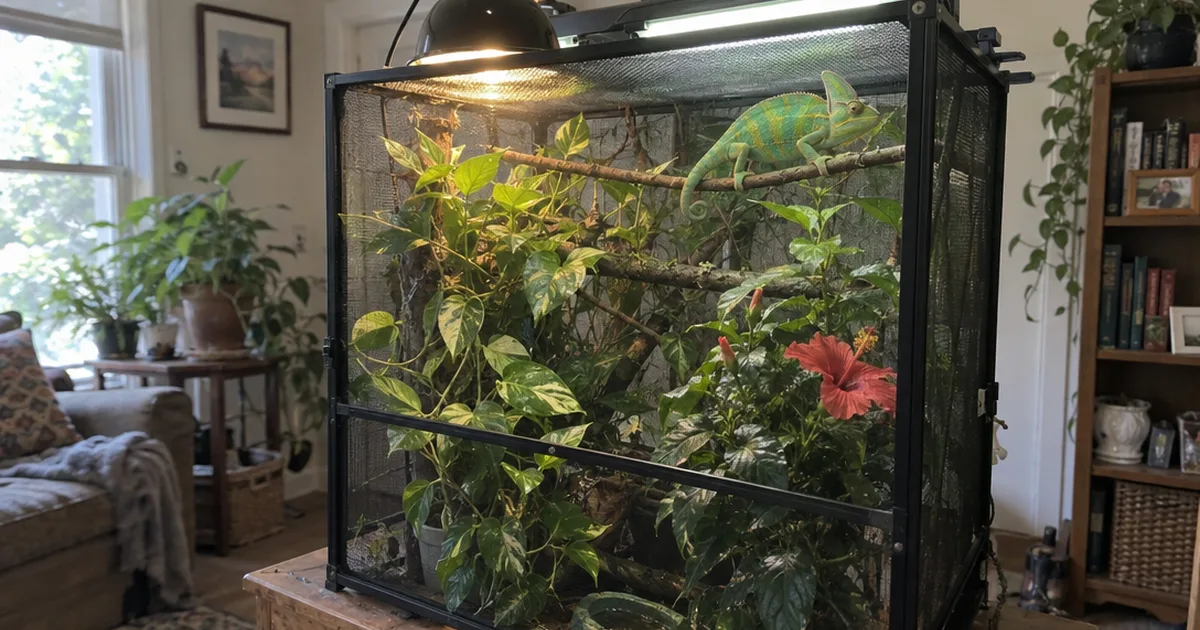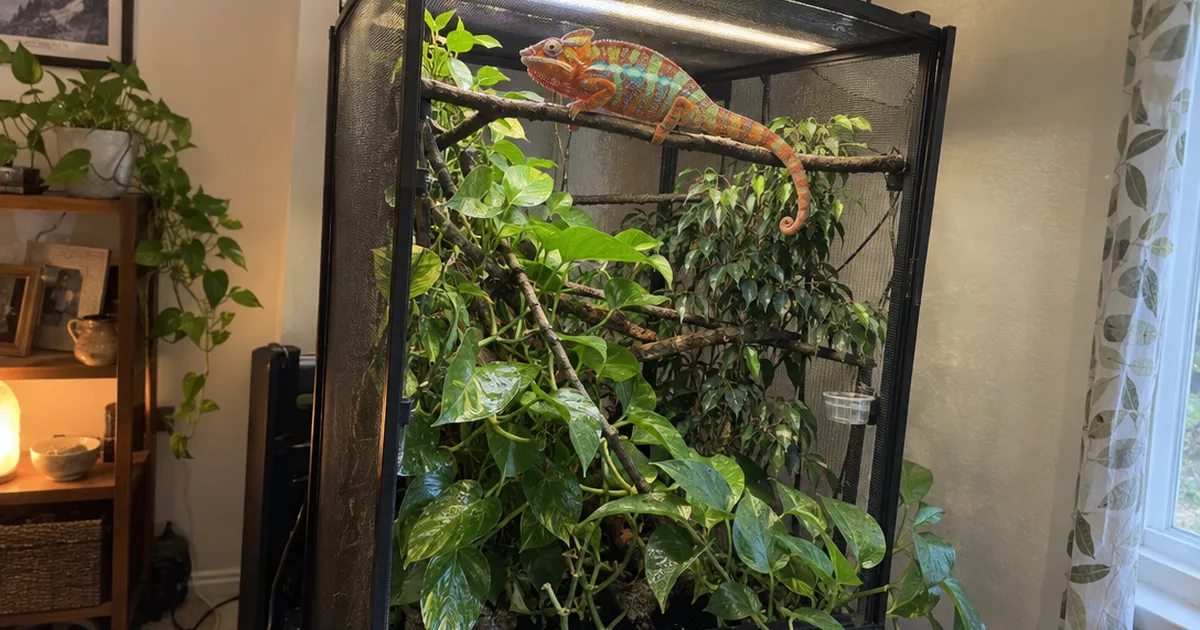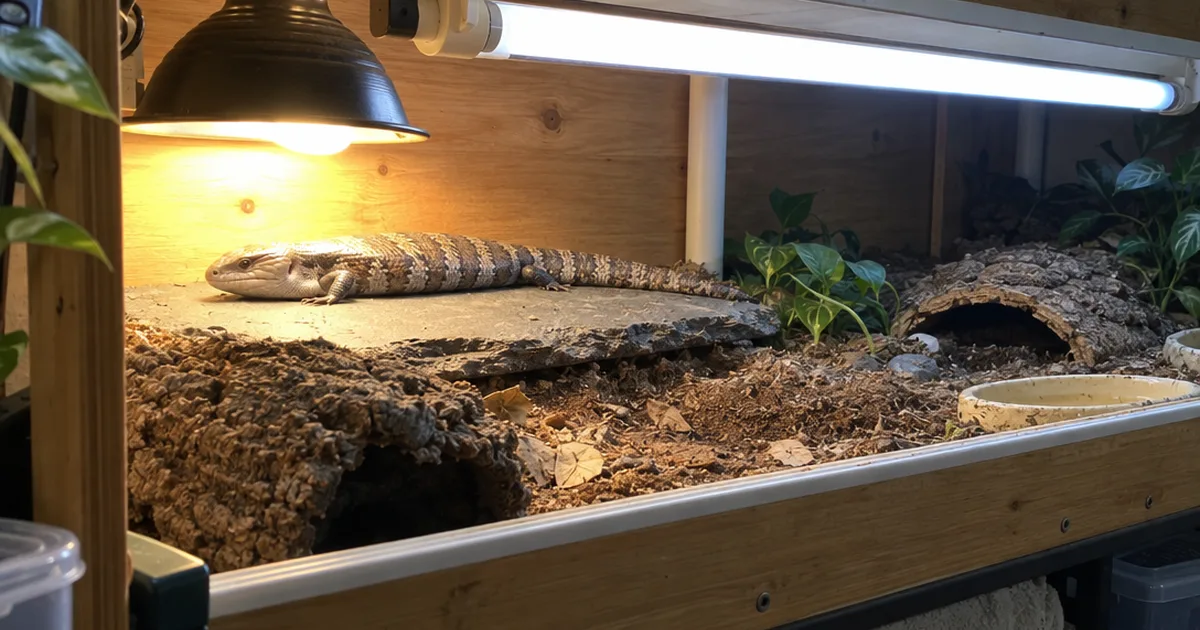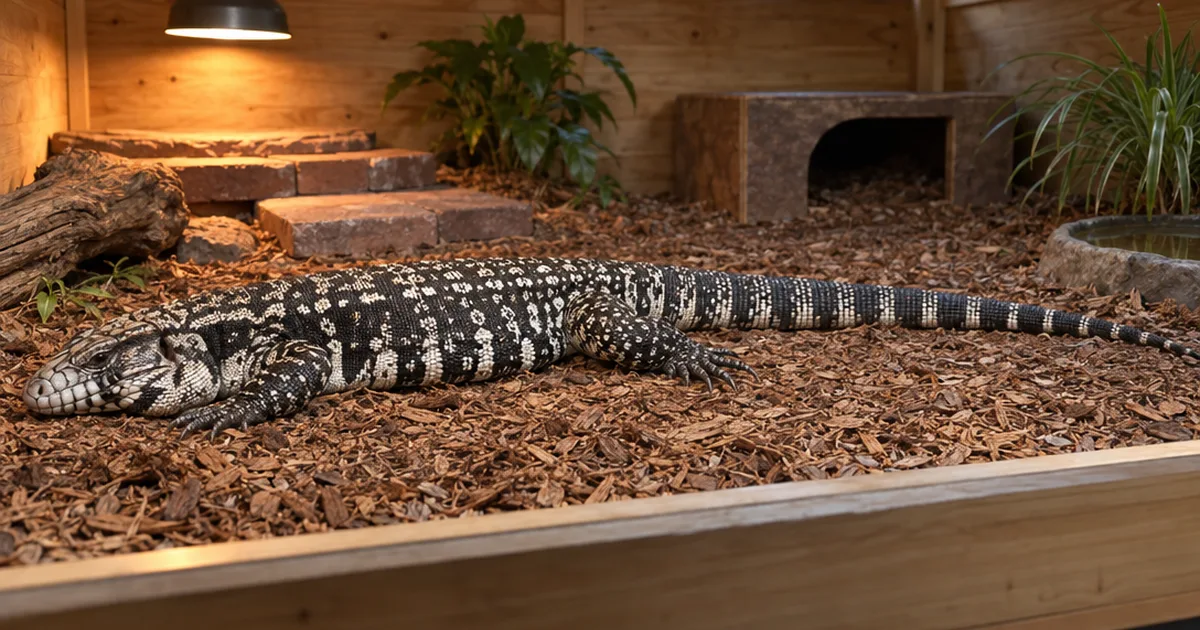
A 40-gallon tank is a third of what British herpetologists call the minimum.
The Federation of British Herpetologists’ 2022 guideline works out to about 120 gallons for an adult, which is why care sheets seem to disagree on tank size.
Good bearded dragon care isn’t hard once you know the real numbers.
Below are 12 steps, in the order you’d set things up, each with the figures vet and herpetology sources actually give.
Best for: first-time owners and anyone fixing a setup that came from a starter kit. Skip it if you keep a different species, since heat, light and diet change by species.
Time: This week, because the enclosure should be running before your dragon comes home.
First step: Measure the floor space where the enclosure will go. You need a spot at least 4 feet long and 2 feet deep.
How to Care for a Bearded Dragon Step by Step
Bearded dragon care takes 12 steps, from a big enclosure and a hot-to-cool temperature gradient to daily UVB, an age-matched diet and a yearly vet visit. Set up the first 6 before your dragon arrives, then run the rest as a routine.
Each step below gives you the number to hit and the tool that measures it.
Step 1: Start With a Healthy, Captive-Bred Dragon
Buy a captive-bred dragon and plan for a pet that lives a decade or more. According to the ReptiFiles care reference, all bearded dragons sold outside Australia are captive bred, and the species usually lives 10 to 15 years.
So you’re not choosing between wild and captive animals in the US.
You’re choosing between a healthy captive-bred dragon and an unhealthy one.
The pet you’ll most likely meet is the central bearded dragon, Pogona vitticeps. It’s one of several species in the genus Pogona, lizards native to eastern and central Australia.
That background explains almost every rule in this guide.
These lizards are diurnal, which means they’re active by day, and they spend a lot of that day basking in strong sun.
Before you buy, look at size and lifespan, because both shape the enclosure and the budget. The same reference puts adults at 18 to 24 inches (45 to 61 cm) from snout to tail, with some dragons living past 20 years.
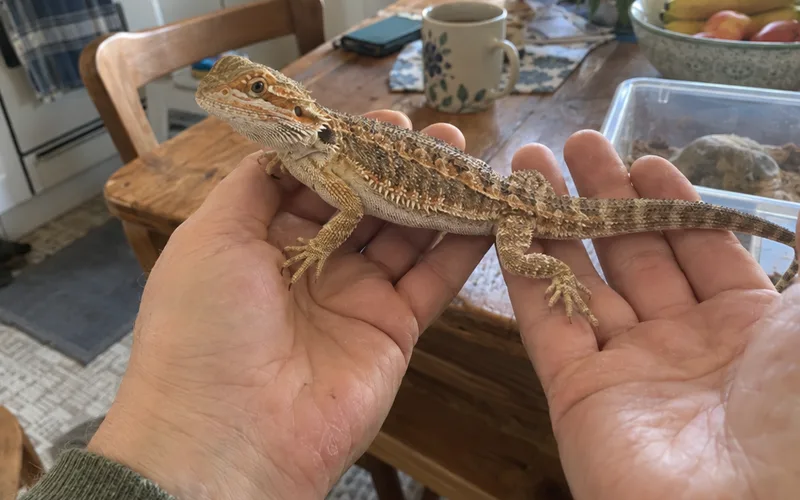
It also says bearded dragons are usually sexually mature and fully grown at 1 to 2 years old.
That means your baby will hit adult bearded dragon size fast. And if you want the full picture of how long bearded dragons live, lifespan is a long topic of its own.
Pick a dragon that looks bright and alert, with clear eyes and no stuck shed. Those are the same healthy signs PetMD tells owners to watch for at home.
Some color morphs come with problems. The reference names translucent and silkback morphs as known problem morphs, so ask the breeder about any morph you’re considering.
Males and females differ mainly in housing and breeding questions. If you’re deciding between them, the female vs male bearded dragon comparison covers it, including why 2 adult males never share a tank.
Key Takeaway: Plan for 10 or more years of care before you pick a dragon.
Step 2: Set Up a 4 x 2 x 2-Foot Enclosure
Give an adult bearded dragon at least 40 gallons, and aim for a 4 x 2 x 2-foot enclosure. PetMD’s vet-written care sheet sets the floor at 20 gallons for a juvenile and 40 gallons or more for one adult.
The 4-foot target comes from a stricter standard.
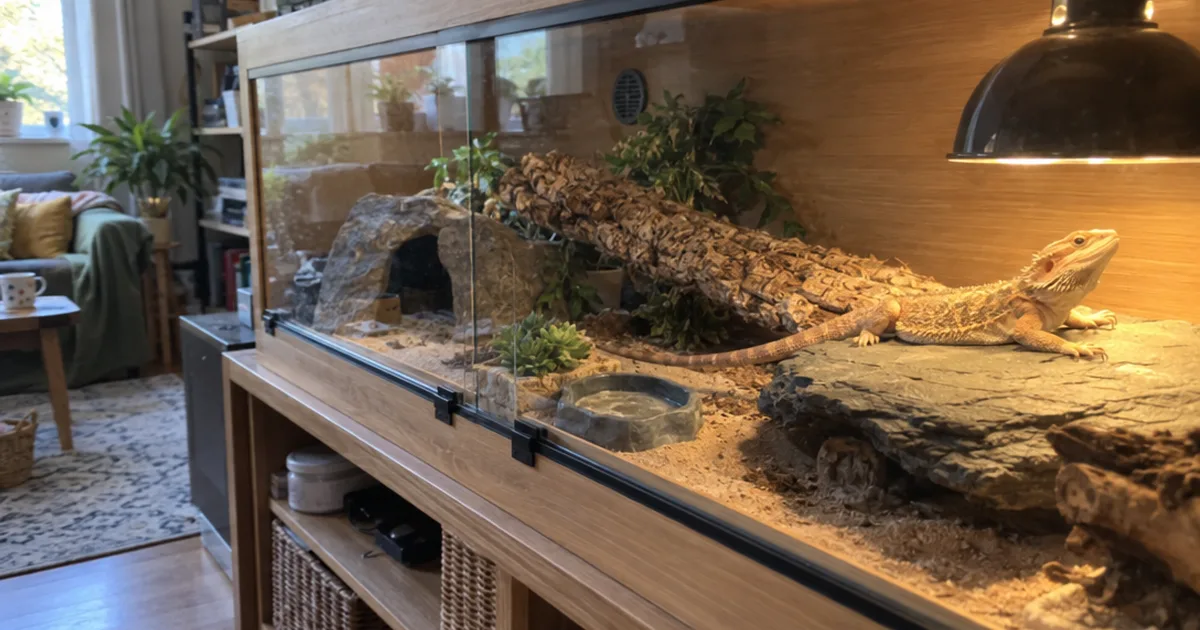
The Federation of British Herpetologists’ 2022 guideline sets a minimum of 120 x 60 x 60 cm for an adult with an 8-inch snout-to-vent length. That’s 4 x 2 x 2 feet, or about 120 gallons, and Reptiles and Research quotes the guideline in full.
So 40 gallons is roughly a third of that floor. Not great.
Here’s how the main recommendations line up:
| Dragon | PetMD minimum | FBH-based minimum |
|---|---|---|
| Juvenile | 20 gallons | Plan for the adult size |
| Adult, 8-inch body | 40 gallons or larger | 4 x 2 x 2 feet (120 x 60 x 60 cm) |
| Larger adult | Largest you can fit | 6 x 3 x 3 times its body length |
The FBH rule in the last row uses snout-to-vent length (SVL), which is the body from nose to vent, without the tail. Multiply that length by 6 for the enclosure’s length, then by 3 for its depth and 3 for its height.
Here’s an example: a dragon with a 10-inch body needs an enclosure at least 60 x 30 x 30 inches.
That’s why I recommend buying the adult enclosure first. A baby will reach adult size within 1 to 2 years anyway, and you skip buying a second tank.
The vet guide adds 2 rules that matter just as much as size:
- Every enclosure needs a secure screened lid for airflow and to stop escapes.
- Only one adult male should live in each enclosure, because males are territorial.
Females sometimes share space, but the same care sheet says to watch them closely and never mix species. It also says not to breed females until they’re at least 2 years old.
For a deeper look at dimensions by age, see the guide to what size tank a bearded dragon needs.
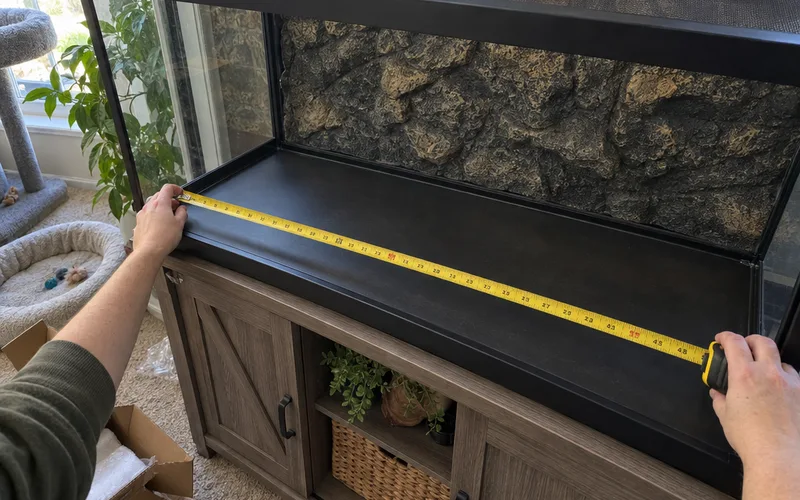
When you’re ready to put it all together, the bearded dragon habitat setup walk-through goes part by part. These bearded dragon habitat ideas help you decorate it.
In other words, measure your dragon, do the math and buy the biggest enclosure your space allows.
Step 3: Lay a Safe Floor and Add Hides and Climbing Spots
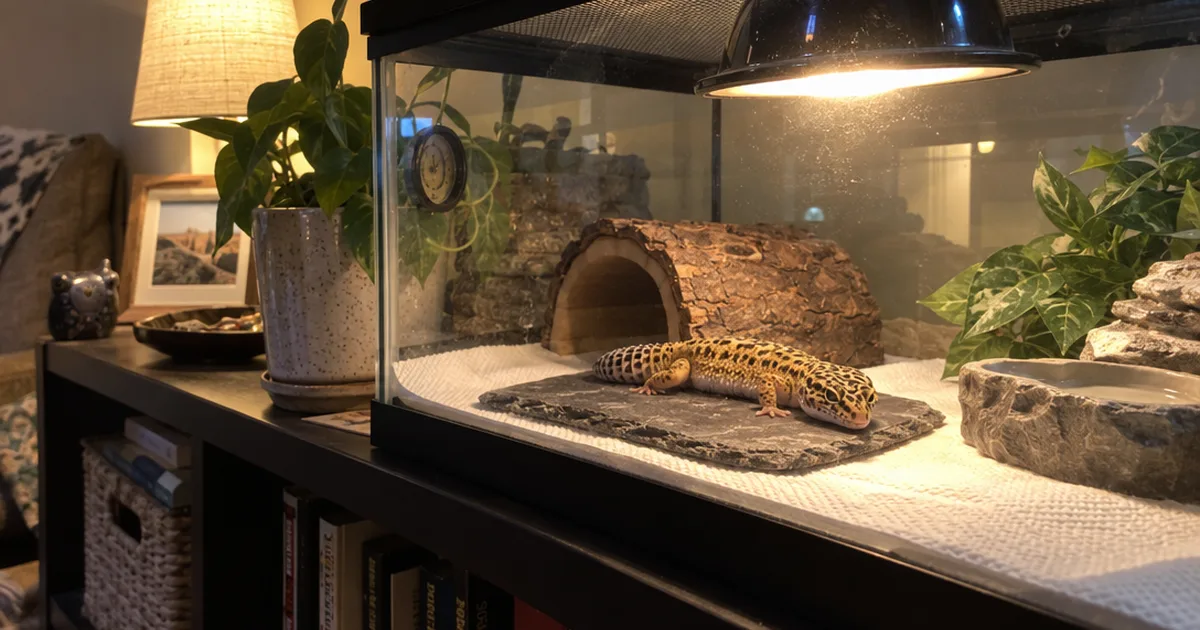
Use a solid floor such as tile, reptile carpet or paper towels, and skip loose particles a dragon can swallow. PetMD says to avoid gravel, wood chips and crushed walnut shells as substrate, because they’re indigestible and can block the gut if swallowed.
That blockage is called impaction.
And it’s why this step comes before decor.
PetSmart’s care guide adds sand (including calcium sand), corn cob, kitty litter, alfalfa pellets and wood shavings to the avoid list. For the floor, it suggests reptile carpet, a textured mat or ceramic tile, and paper towels for dragons under 6 months.
Paper towels make cleanup easy, and they show you every dropping at a glance.
If you still want a loose substrate such as sand, PetMD’s advice is to feed in a dish or separate container, never off the floor. That cuts the chance of a mouthful of sand with every cricket.
The best substrate for bearded dragons depends on your dragon’s age and how much cleaning you’ll do, so compare options before you commit.
Next, furnish the space. The same vet guide says to give at least 2 hides, one on the warm side and one on the cool side, plus at least one sturdy basking rock or climbing branch.
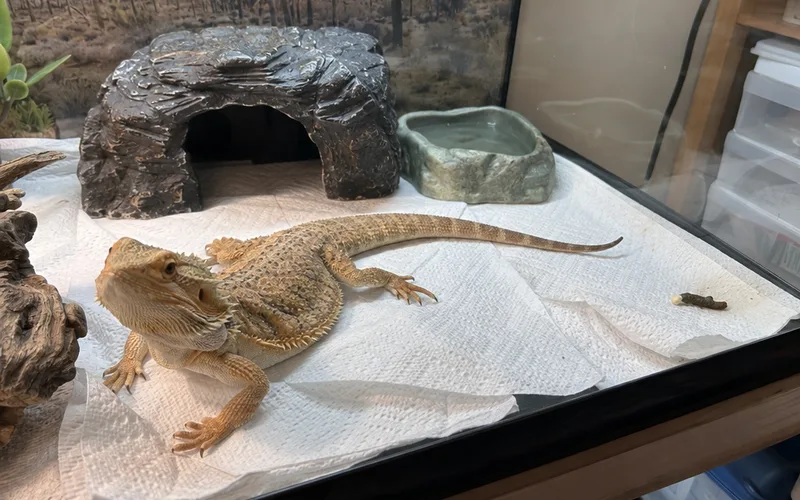
Why both sides?
Because a dragon needs somewhere safe to rest at any temperature, not just at the hot end.
Plants help too. Non-toxic live plants, according to the vet guide, enrich the habitat and help hold humidity in range.
Make sure every rock and branch is stable. Falling decor can injure a dragon, so test each piece by pushing on it before your dragon arrives.
The retailer’s guide also suggests driftwood or rocks that let a dragon climb closer to the heat lamp, as long as it can’t get close enough to burn. A few branches double as climbing gear and extra hiding spots.
Here’s the deal:
A dragon that hides all day may also miss its UVB. Too much hiding, the vet guide warns, cuts useful UVB exposure, so watch how much time your dragon spends out in the open.
Key Takeaway: Solid floor, 2 hides, 1 secure basking perch. Start there.
Step 4: Build a Warm-to-Cool Temperature Gradient
A bearded dragon tank needs a basking spot of about 95°F to 100°F and a cool side near 75°F. PetMD gives 100°F for the basking side and 75°F for the cool side, and PetSmart’s care guide gives a 95°F to 100°F basking spot.
That spread between the 2 ends is the temperature gradient.
Bearded dragons are ectotherms, so they move between warm and cool spots to control their body temperature. PetMD says proper heat is essential for digestion, so a dragon without a warm end can’t process its food well.
Here’s how the temperatures compare across sources, in Fahrenheit and Celsius:
| Zone | PetSmart range | PetMD target |
|---|---|---|
| Basking spot | 95-100°F (35-38°C) | 100°F (38°C) |
| Warm side | 85-90°F (29-32°C) | Not listed |
| Cool side | 75-85°F (24-29°C) | 75°F (24°C) |
| Night | 68-74°F (20-23°C) | Not listed |
Some sources run hotter: the ReptiFiles quick facts list a basking temperature of 105°F to 115°F.
So the safest move is to measure your own basking surface and watch how your dragon uses it.
So how do you measure it?
The vet guide recommends one thermometer on the warm side and one on the cool side, plus a digital infrared (point-and-shoot) thermometer for surface temperatures. That last tool reads the rock your dragon actually sits on.
For the heat source, it lists an incandescent heat bulb or a ceramic heat emitter over one end of the enclosure. The right bulb wattage depends on the enclosure size, the distance to the basking spot and your room temperature.
So don’t buy a wattage because a forum named it.
Start with a bulb, measure the basking rock, then go up or down until it lands in range.
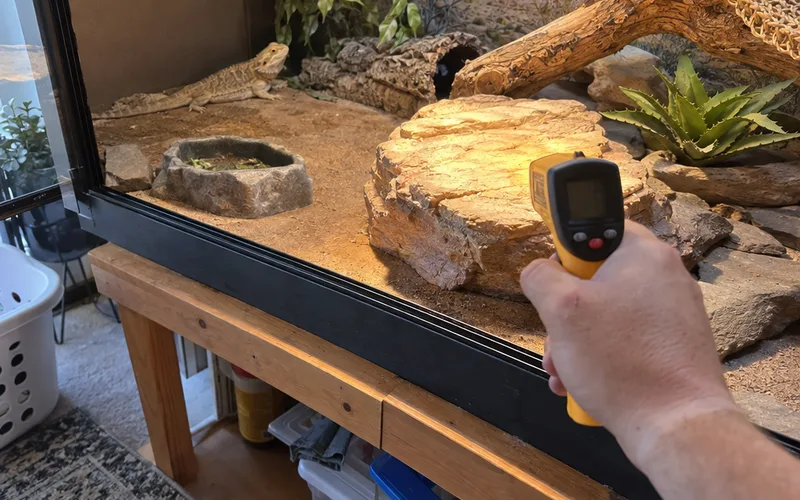
The retailer’s guide suggests mounting the lights outside the enclosure, over the screened lid, with the heat aimed at one side. That one hot end is what creates the basking area.
Check both ends every day. Daily checks keep each zone in range, and a quick look at your thermometers catches a burned-out bulb before your dragon goes cold.
Losing heat for a long stretch is a real problem, and the guide on how long a bearded dragon can go without heat explains what happens in a power outage.
Key Takeaway: Measure the basking surface, not the air, and adjust the bulb until it reads 95°F to 100°F.
Step 5: Add UVB Lighting and Run a 12-Hour Day
A bearded dragon needs 10 to 12 hours of UVB light a day from a full-spectrum UVB bulb, replaced about every 6 months. That’s PetMD’s guidance, and it adds that you should replace the bulb even if it still lights up.
UVB output drops over time, so a bulb that still glows can stop protecting your dragon.
Why does UVB matter so much?
UVB lets a dragon’s body make vitamin D3, which it needs to absorb calcium from food. PetSmart’s care guide says that without UVB, bearded dragons can develop metabolic bone disease, a serious bone condition.
The same retailer’s guide says bearded dragons need a 12-hour day and night cycle, and it recommends putting the lights on an automatic timer. A timer also means your dragon still gets its full day when you’re stuck at work.
For placement, the retailer’s guide recommends low-intensity UVB over the warm side of the enclosure. The vet guide adds one more rule: follow the bulb maker’s placement instructions, because UVB bulbs vary in strength and design.
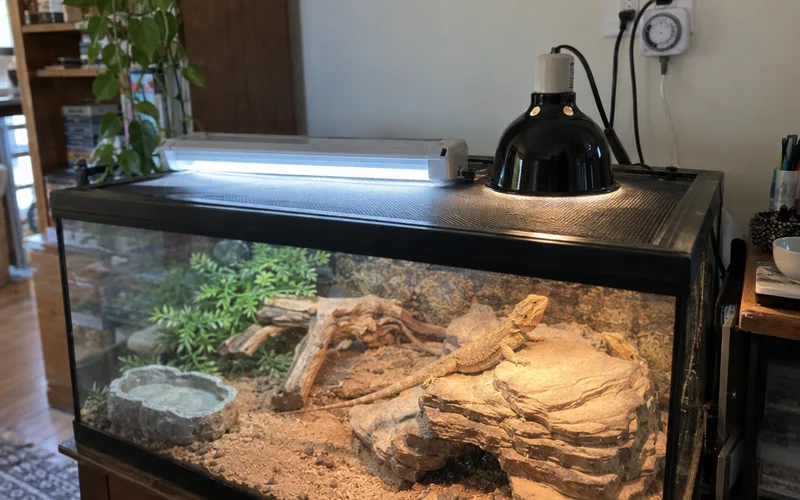
That’s a good reason to read the box before you mount anything.
Also, not every daylight bulb produces UVB. The retailer’s guide notes that some daylight bulbs are rated for UVB and some aren’t, so check the label before you count a bulb as your UVB source.
So which bulb should you buy? The roundup of the best UVB light for bearded dragons compares the options, and the guide to bearded dragon vision explains how dragons see the light you give them.
There’s even a third eye on top of the head. ReptiFiles describes a third (parietal) eye that helps detect predators, which you can read more about in do bearded dragons have a third eye.
Pro Tip: Write the install date on the UVB bulb’s base with a marker. In 6 months, you’ll know exactly when to swap it.
Step 6: Keep Humidity Between 30% and 50%
Bearded dragons do best at 30% to 50% humidity, according to PetMD, which supports healthy skin, shedding and breathing. PetSmart’s care guide lists the same 30% to 50% range.
ReptiFiles lists the species’ humidity needs as low.
Track it with a hygrometer, which is a small gauge that reads humidity, and check it every day.
If humidity runs too low, mist your dragon and the decor, or add non-toxic live plants. PetSmart’s guide recommends a daily spritz of warm water.
If it runs too high, improve ventilation so moist air can escape.
Humidity matters for breathing, since the vet guide ties the right range to respiratory health. If you notice discharge from the nose or mouth, a warning sign the retailer’s guide lists, read up on bearded dragon respiratory infection treatment and call your vet.
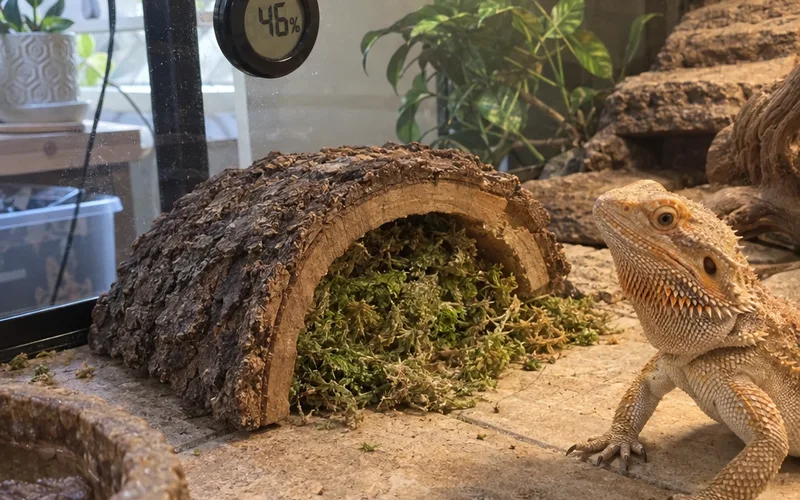
The vet guide also suggests a humid hide: moist sphagnum moss inside a hide on the warm side. That gives your dragon one damp spot to help it shed, while the rest of the enclosure stays dry.
Swap the moss out regularly so it doesn’t grow mold.
In other words, keep the tank dry, check the gauge daily and add moisture only where shedding needs it.
Step 7: Feed the Right Insect-to-Greens Ratio for Its Age
Feed a young bearded dragon mostly insects and an adult mostly greens and vegetables. PetMD puts juveniles at about 70% insects and 30% plants, and adults at 20% to 30% insects and 70% to 80% plants.
PetSmart’s care guide uses different numbers for the same shift.
Here’s how the 2 sources compare:
| Life stage | PetMD diet | PetSmart diet | PetSmart insect feeding |
|---|---|---|---|
| Juvenile (under 12 months) | 70% insects, 30% plants | 50% insects, 50% plants | Live prey once daily |
| Adult (12 months and older) | 20-30% insects, 70-80% plants | 10% insects, 90% plants | 2 to 3 times a week |
Both sources agree on the direction: protein for growth when young, then mostly plants as a dragon matures. The retailer’s guide also says to offer vegetables every day, even to juveniles that eat mostly bugs.
So start babies on greens early, even if they ignore them at first.
Bearded dragons are omnivores, so a healthy diet needs both halves. ReptiFiles notes that wild dragons eat plants and mostly insects, with the occasional small rodent or lizard.
You can read more about what bearded dragons eat in the wild.
Whether a pet dragon should ever get one is a separate question, covered in the guide to a bearded dragon eating mice.
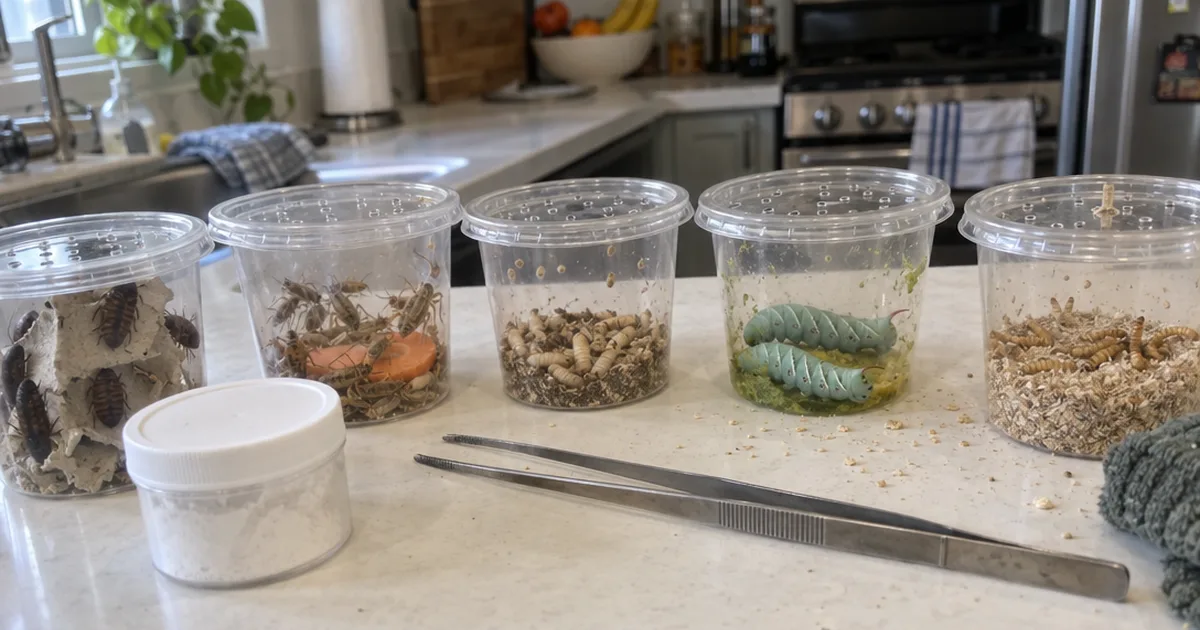
For the insect half, the retailer’s guide names gut-loaded crickets or dubia roaches as the main prey. Gut-loaded means the insects ate a nutrient-rich diet before your dragon eats them, so that nutrition passes along to your dragon.
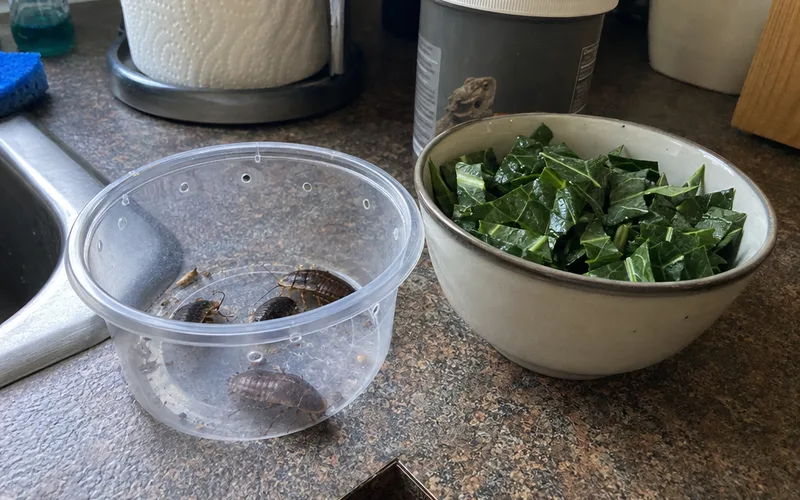
The vet guide’s list of safe feeders adds mealworms, hornworms, waxworms, calciworms and superworms. The retailer’s guide treats mealworms, superworms and waxworms as small, occasional treats, and you can see why in the guide to mealworms for bearded dragons.
Size matters too.
A feeder insect should never be larger than the space between your dragon’s eyes, and you should offer only as many as it eats in one session, the vet guide says. Remove the leftovers, because live insects can bite.
To pick a staple bug, compare the best feeder insects for bearded dragons.
Never feed bugs from the backyard, though. The retailer’s guide warns that wild insects can carry parasites or pesticides, so check whether bearded dragons can eat earthworms before you dig any up.
If your dragon skips meals, don’t panic right away. The guide to how long a bearded dragon can go without eating explains what’s normal and when it’s a warning sign.
Key Takeaway: Babies eat mostly bugs, adults eat mostly salad, and every dragon gets greens daily.
Step 8: Dust Insects With Calcium and a Multivitamin
Dust your bearded dragon’s insects with calcium on a schedule and add a reptile multivitamin about once a week. PetMD recommends alternating calcium with vitamin D and calcium without vitamin D every day, then dusting insects with a multivitamin once a week.
That means you need 3 powders on the shelf:
- A calcium supplement with vitamin D
- A calcium supplement without vitamin D
- A reptile multivitamin
PetSmart’s care guide gives a schedule by age instead:
| Supplement | Juveniles | Adults |
|---|---|---|
| Calcium with vitamin D3 | 4-5 times a week | 2-3 times a week |
| Multivitamin | Once a week | Twice a month |
PetSmart’s schedule gives juveniles more calcium than adults, since they’re still growing. Pick one schedule, write it on a card by the enclosure and stick to it.
The coating part is easy.
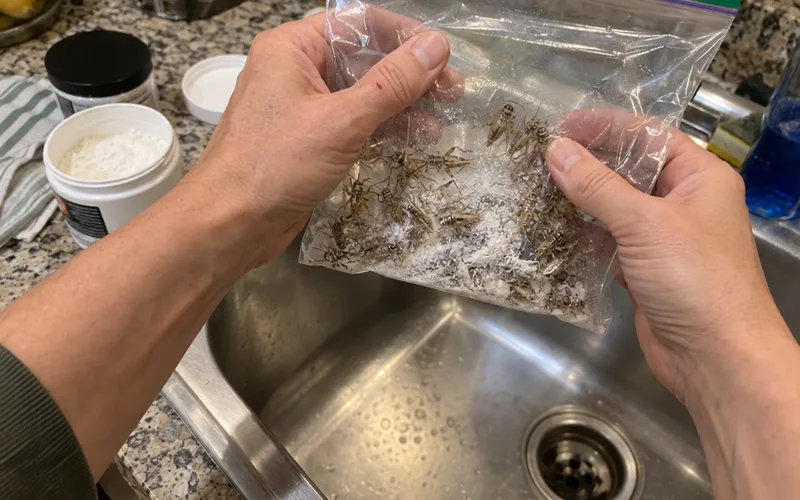
The vet guide suggests putting the insects in a bag or disposable container with the powder, then gently shaking until they’re evenly coated.
Calcium nutrition depends on UVB, which is why Step 5 and this step work as a pair. A dragon on perfect supplements but a worn-out UVB bulb still can’t absorb that calcium well.
Note: More is not better. Follow your chosen schedule, and ask your vet before adding extra vitamin D.
Step 9: Give Fresh Water and a Weekly Soak
Keep a shallow dish of fresh water in the enclosure at all times and change it every day. PetMD says the dish should be shallow but large enough for your dragon to soak in, since bearded dragons can absorb water through their skin.
A weekly soak helps too.
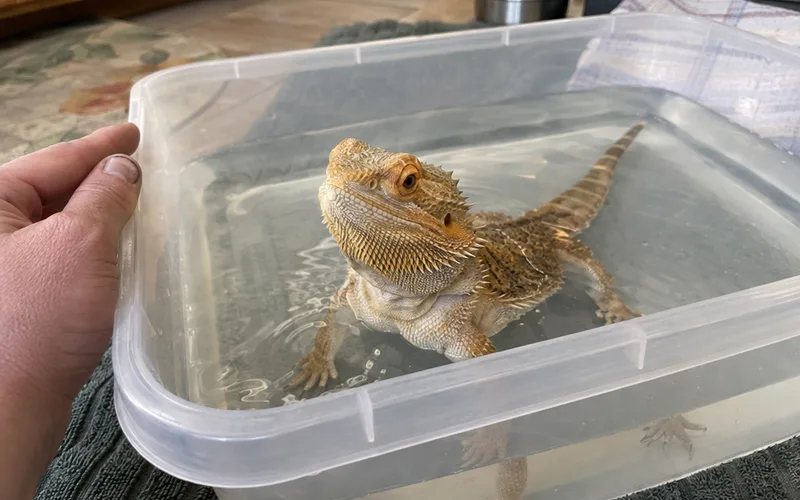
PetSmart’s care guide recommends a weekly warm-water soak in water deep enough to reach your dragon’s chest, but shallow enough that it can stand and walk. It says soaks help with hydration, digestion and shedding.
Never leave your dragon alone in the water.
Not even for a minute.
For step-by-step help, read how to bathe a bearded dragon.
Curious about deeper water? ReptiFiles says dragons can inflate their abdomen to float, and the guide on whether bearded dragons can swim explains the rest.
So how do you know your dragon isn’t drinking enough?
PetSmart lists wrinkled skin, sunken eyes and sluggish behavior as signs of dehydration. The guide to how long a bearded dragon can go without water shows how quickly that turns serious.
Key Takeaway: Fresh water daily and a supervised soak weekly keep hydration simple.
Step 10: Handle Your Dragon Gently and Often
Handle a bearded dragon daily once it’s used to you, in short sessions with its whole body supported. That’s the approach PetSmart’s care guide recommends, and it also says to skip handling during shedding or when your dragon seems stressed.
Bearded dragons tolerate handling well.
PetMD calls them curious and docile, and says they rarely bite or scratch. If you’re nervous about that, the guide on whether bearded dragons bite explains when it happens.
Here’s how to pick one up:
- Wait until your dragon is calm and not shedding.
- Slide one hand under the chest and front legs.
- Support the back legs and the base of the tail with your other hand.
- Keep the session short, then set your dragon back down gently.
Never lift a dragon by its tail. The retailer’s guide notes that bearded dragons do not regrow their tails, so a lost tail is gone for good.
Watch the body language while you hold it. The same guide says dragons wave their arms and bob their heads to communicate, and a beard that turns black can signal stress, illness, excitement or dominance.
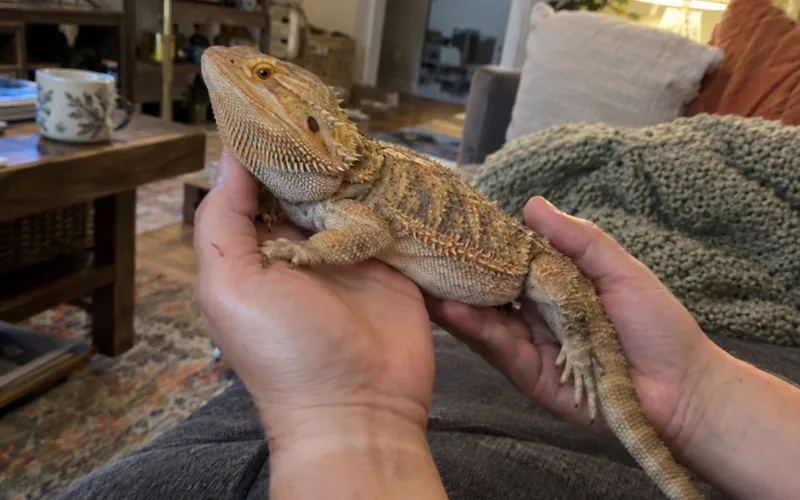
Learning those signals makes handling easier, and the guide to bearded dragon behavior decodes the common ones.
Hygiene matters as much as grip.
PetMD notes that bearded dragons, like all reptiles, can carry Salmonella bacteria, so wash your hands before and after handling your dragon or anything in its enclosure. The guide on whether all reptiles carry Salmonella explains that risk in more detail.
In other words, handle it often, keep it short and wash up every time.
Step 11: Clean the Enclosure Daily and Deep-Clean on a Schedule
Spot-clean a bearded dragon’s enclosure every day and deep-clean it on a set schedule. PetMD says to remove waste, soiled substrate and uneaten food daily, wash the food and water dishes daily, and fully clean and disinfect the whole habitat at least once a week.
PetSmart’s care guide is a bit looser, with a deep clean at least every 2 weeks. The vet guide adds that enclosures shared by more than one dragon need cleaning more often than weekly.
It also says to remove uneaten produce after about 10 hours, before it spoils. So clear the morning’s salad out by evening.
Here’s how the vet guide’s full clean works:
- Move your dragon to a secure temporary enclosure.
- Take out all substrate, decor, dishes and accessories.
- Scrub the empty enclosure and furnishings with a reptile-safe cleaner or a 3% bleach solution.
- If you use bleach, leave it on the surfaces for at least 10 minutes.
- Rinse everything well, let it dry completely, then add fresh substrate and return your dragon.
That rinse matters. The guide says to remove any remaining cleaner or bleach residue before your dragon goes back in.
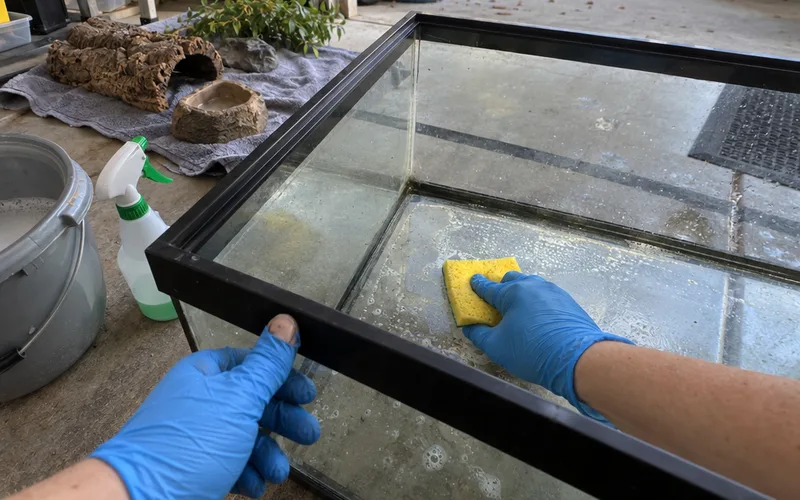
For more detail, follow the full routine for how to clean a bearded dragon tank.
Daily cleaning also gives you a daily health check. A quick look at bearded dragon poop tells you a lot, and the retailer’s guide says runny droppings for more than 2 days are a reason to call the vet.
Key Takeaway: A quick spot-clean every day keeps the weekly deep clean easy.
Step 12: Book a Yearly Vet Exam and Watch for Warning Signs
Take your bearded dragon for a veterinary wellness exam once a year. That’s PetMD’s recommendation, and yearly visits help catch problems before they turn serious.
Not every vet practices reptile veterinary medicine, so find one before you need one. PetSmart’s care guide points readers to the “find a vet” tool on the Association of Reptile and Amphibian Veterinarians’ site, arav.org.
The vet guide suggests bringing 3 things to each visit:
- Your dragon, in a secure travel cage or cat carrier
- Photos of the enclosure, lighting, heating and diet
- A fresh fecal sample, unless the vet prefers to collect one
That sample helps the vet check for intestinal parasites, which it lists among the most common illnesses. If parasites turn up, the guide to bearded dragon parasite treatment explains what to expect.

Some owners also look at pet insurance for a bearded dragon to help with vet costs. Compare plans before your dragon gets sick, not after.
Between visits, your job is to notice changes in eyes, appetite and basking.
Key Takeaway: Find a reptile vet before you need one, then book an exam every year.
What You Need to Care for a Bearded Dragon
You need an enclosure, heat, UVB, monitoring tools, food, supplements and a few furnishings before a bearded dragon comes home. PetMD says having these supplies ready first gives your dragon a safe setup from day one.
Here’s the full list, built from PetMD’s and PetSmart’s shopping lists:
- Enclosure: 40 gallons or larger with a secure screened lid, ideally 4 x 2 x 2 feet
- Heat: an incandescent basking bulb or ceramic heat emitter in a heat fixture
- Light: a full-spectrum UVB bulb and fixture, plus a timer
- Monitoring: 2 thermometers, an infrared temperature gun and a hygrometer
- Floor and decor: safe substrate, 2 hides, a basking rock or branch, and climbing decor
- Food: live feeder insects, fresh greens, a shallow food dish and a shallow water dish
- Supplements: calcium with vitamin D, calcium without vitamin D and a reptile multivitamin
The vet guide’s checklist adds a few extras that make daily care easier: moss for a humid hide, live or artificial plants and a mister. A cricket keeper with cricket food keeps live insects healthy until feeding time.
The tools matter as much as the tank. A thermometer and a hygrometer are the only way you’ll know whether Steps 4 and 6 are working.
If you’re still deciding on lights, start with the UVB bulb. It’s the one item that protects your dragon’s bones.
Your Bearded Dragon’s First Days at Home
Your bearded dragon’s first days at home go best when the enclosure is already set up, heated and lit before it arrives. PetMD says having the habitat, lighting, feeding and health supplies ready beforehand creates a safe, healthy environment from day one.
So run the setup for a few days first.
Use that time to check your thermometers and hygrometer every day. If the basking spot, cool side or humidity drifts out of range, you can fix it before a dragon is living with the problem.
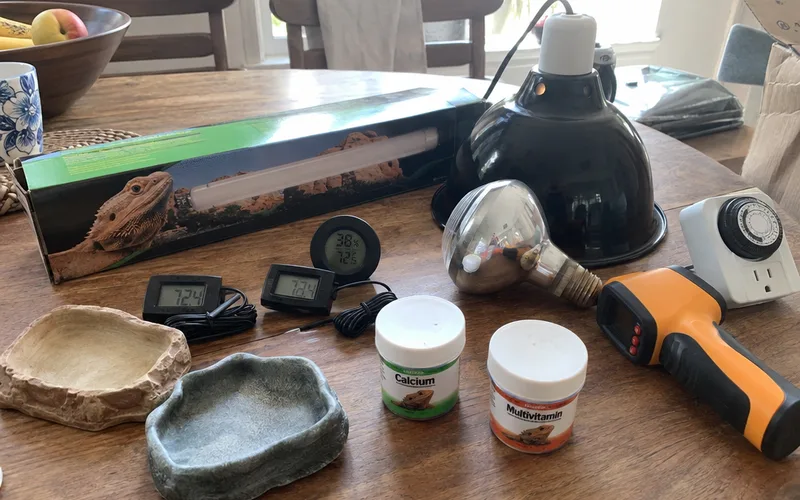
Once your dragon moves in, go slowly with handling. PetSmart’s care guide says to keep sessions short at first and build up as your dragon gets used to you.
Here’s a simple first-week plan:
- Put your dragon in the finished enclosure and leave the lights on their 12-hour timer.
- Offer greens and appropriately sized insects, then remove leftovers.
- Keep handling to short, gentle sessions with the body fully supported.
- Spot-clean daily and wash your hands after every contact.
- Find a reptile vet through arav.org and book a wellness exam.
That last step is easy to put off.
But having a vet lined up before anything goes wrong means you’re not searching for one in an emergency.
What Is a Bearded Dragon?
A bearded dragon is an omnivorous, day-active lizard from Australia, kept as a pet mainly in the form of the central bearded dragon, Pogona vitticeps. ReptiFiles notes that the same lizard also goes by the inland bearded dragon and the yellow-headed bearded dragon.
The “beard” is the giveaway.
PetMD explains that a threatened dragon can expand the skin under its chin, which darkens until it looks like a beard. The ReptiFiles reference describes the same spiky, expandable throat pouch, and says it can turn black.
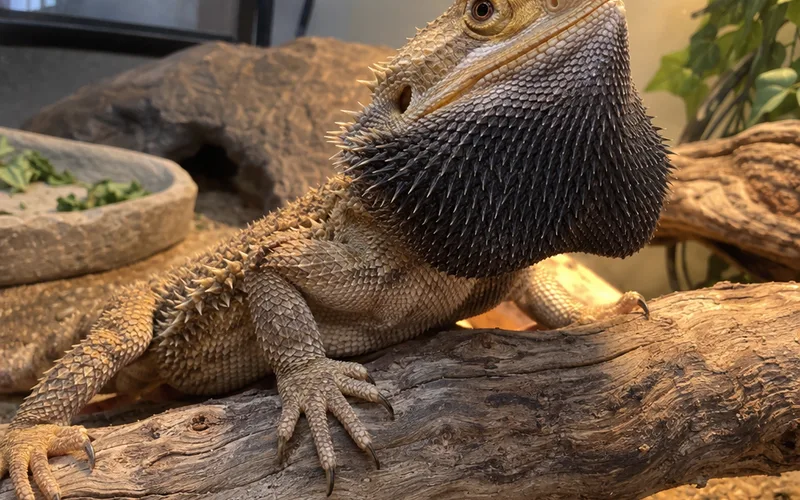
In the wild, these agamid lizards live in semiarid desert, scrubland and dry forest. They’re technically terrestrial, the reference says, but they’re also excellent climbers and skilled burrowers.
That mix explains why a good enclosure has floor space, climbing branches and hides all in one.
The same reference lists a few adaptations that help in that habitat:
- A sticky tongue for grabbing insect prey
- A third (parietal) eye on top of the head for detecting predators
- Spiky scales, usually soft, that can tighten into sharp spines for defense
- Skin that darkens to absorb heat faster
The natural color is brown or tan with red or gold highlights. Breeders have since produced color morphs from white to lemon yellow to dark red, along with scale types such as leatherbacks and silkbacks.
So the animal in your living room is still built for the Australian outback. Every heat, light and diet rule in this guide copies some part of that life.
Why Bearded Dragons Need So Much Heat and UVB
Bearded dragons need strong heat because they’re ectotherms that rely on outside heat to control body temperature. They need UVB because it lets their bodies make vitamin D3 for calcium absorption.
PetMD calls proper heat and UVB essential for digestion, calcium metabolism and overall health. Here’s why that matters.
An ectotherm can’t make its own body heat the way a dog or a person does. So a dragon warms up by basking, then moves to a cooler spot once it’s warm enough.
That’s thermoregulation, which means controlling body temperature by moving between warm and cool places.
In the wild, ReptiFiles says bearded dragons love to bask and are often found sunbathing on rocks, branches and even fence posts. Your basking rock and heat lamp stand in for that sun.
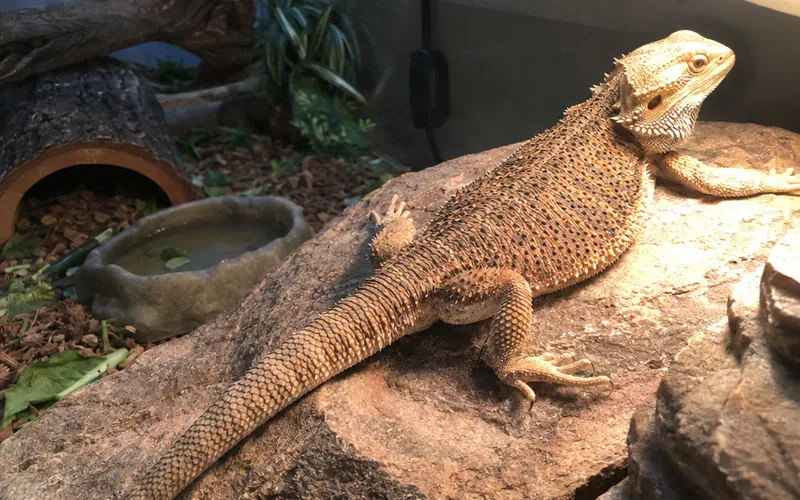
UVB is the other half of sunlight.
PetSmart’s care guide explains that UVB lets the body synthesize vitamin D3, which is critical for absorbing calcium. Without enough UVB, the calcium you dust onto insects can’t do its job.
That’s where metabolic bone disease comes in. PetSmart warns that dragons without UVB can develop it, and the same guide says to replace UVB bulbs every 6 months even if they still light up.
So heat and UVB work as a team. Heat lets your dragon digest, UVB lets it use calcium, and a basking spot that delivers both in one place covers both jobs at once.
Bearded Dragon Care by Age
Bearded dragon care changes with age: babies and juveniles need more insects, more frequent feeding and more calcium, while adults need mostly greens, fewer insects and more space. ReptiFiles says bearded dragons are usually fully grown at 1 to 2 years old, so the biggest changes happen in that first year or two.
Here’s how care shifts across those stages, using PetMD and PetSmart guidance.
Babies (under 6 months): PetSmart’s care guide says paper towels are the best floor for dragons this young, since they make cleaning easy. Feed live insects every day, offer chopped greens daily and dust insects with calcium on the juvenile schedule.
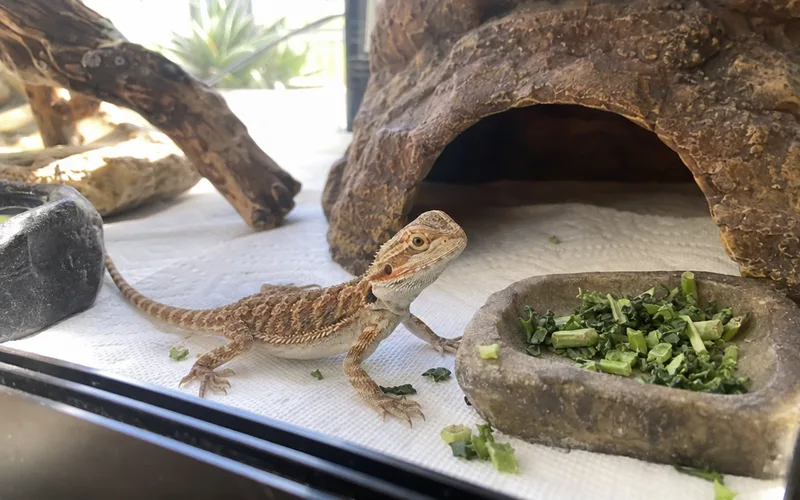
Juveniles (6 to 12 months): PetMD’s minimum enclosure is 20 gallons at this stage, but buying the adult size now saves an upgrade. Keep insects daily, since the retailer’s guide gives juveniles under 12 months about half insects and half plants.
Adults (12 months and older): shift to a diet of mostly plants. The same guide cuts insects to 2 to 3 times a week, with calcium with D3 just 2 to 3 times a week and a multivitamin twice a month.
Breeding-age females: the vet guide says females should not be bred until they’re at least 2 years old, because younger dragons may have egg-laying problems.
The biggest change is the diet. The retailer’s guide says that as dragons mature, their diet shifts toward mostly vegetables with only occasional protein.
So once your dragon turns 1, review every number in its routine, from insect days to supplement days.
What Should Bearded Dragons Eat Every Day?
A bearded dragon should eat fresh vegetables and leafy greens every day, with insects daily for juveniles and 2 to 3 times a week for adults. PetSmart’s care guide recommends daily dark leafy greens such as collard greens and dandelion greens, plus carrots, squash, yams and sugar snap peas.
PetMD’s vegetable list adds parsley, cabbage, bell peppers, broccoli, green beans, bok choy, escarole, cilantro, endive and prickly pear. The retailer’s guide also names mustard greens as a daily green.
Cut everything into bite-sized pieces before you serve it.
So what does a daily salad look like?
Say your adult dragon gets a small bowl of chopped collard greens, a little squash and a few carrot shreds in the morning. On insect days, add a few dusted crickets or dubia roaches, and pull any leftover salad by evening.
That’s it. Simple.

Fruit is a treat, not a staple. PetSmart’s guide says to feed fruit once a week at most, in small amounts, and PetMD notes that fruit is high in sugar and carbohydrates.
That sugar is why portion size matters. The vet guide says to offer fruit in moderation to help prevent unhealthy weight gain.
Its fruit list includes kiwi, mango, banana, papaya, cantaloupe, watermelon and apple. The retailer’s weekly fruit treats include melons, mango, berries and banana.
Prepared pellets have a place too, but a small one. The retailer’s guide says pelleted food can be offered daily, moistened with water, as a supplement to insects and vegetables, never as the whole diet.
Every food has its own rules, so check before you add something new. The master list of fruits and vegetables bearded dragons can eat is the best place to start.
Greens and vegetables: see whether bearded dragons can eat kale, lettuce, parsley, celery, cucumber, broccoli, carrots and tomatoes.
Fruits: check apples, bananas, blueberries, strawberries, raspberries, grapes, kiwi, mango and oranges.
Those pages give serving sizes and how often each one fits. In other words, greens daily, fruit weekly, and look up anything new first.
Foods Bearded Dragons Should Never Eat
Bearded dragons should never eat fireflies, onions or mushrooms, which PetMD says are toxic and can cause serious illness or death. The same vet guide says to avoid high-oxalate foods, which block calcium absorption: avocados, beet greens, spinach and rhubarb.
That spinach warning surprises a lot of new owners.
It’s leafy and green, so it looks like it belongs in the salad. But PetSmart also tells owners to avoid spinach and iceberg lettuce, since they have limited nutrition or may interfere with calcium absorption.
You can read the details on whether bearded dragons can eat spinach before you decide.
The other big don’ts are about insects:
- Wild-caught bugs, which can carry parasites or pesticides
- Insects bigger than the space between your dragon’s eyes
- Live insects left in the enclosure overnight, since they can bite
For the complete list, check what bearded dragons can’t eat and keep it near the fridge.
Key Takeaway: When in doubt, leave it out until you’ve checked.
Do Bearded Dragons Need Heat Lamps at Night?
Bearded dragons don’t need a heat lamp at night as long as the enclosure stays at 68°F or warmer, according to PetSmart’s care guide. Its nighttime range is 68°F to 74°F (20°C to 23°C).
So for most heated homes, the answer is no.
Turn the basking light off with the UVB on the same 12-hour timer. Darkness at night is part of the normal day and night cycle from Step 5.
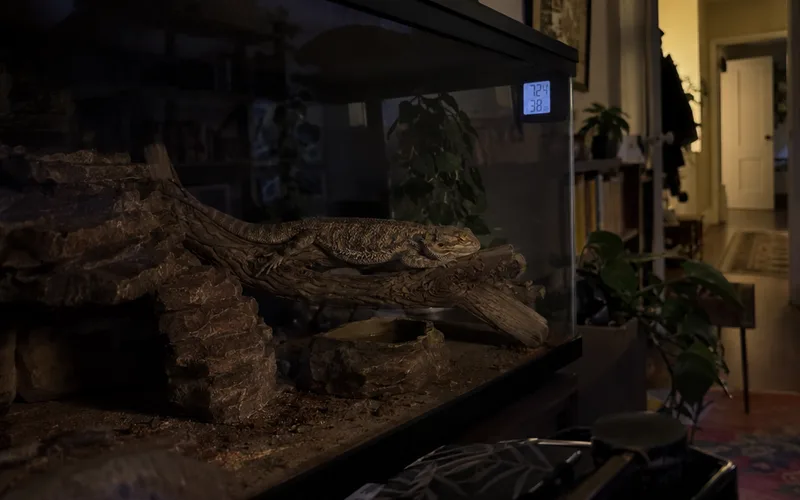
But what if your home gets colder than 68°F at night?
Then add a heat source that keeps the enclosure at 68°F or above. PetMD lists the ceramic heat emitter as one heating option for bearded dragons.
Whatever you use, check that the night temperature stays inside PetSmart’s 68°F to 74°F range.
The easiest way to know is to check. Leave a thermometer in the enclosure overnight and read it first thing in the morning, before the lights come on.
Key Takeaway: Above 68°F at night, lights off and no heat needed.
Is a Bearded Dragon Easy to Take Care Of?
A bearded dragon is one of the easier reptiles to care for, but only once its heat, UVB and diet are set up correctly. PetMD rates bearded dragons as beginner pets and one of the best pet lizards for first-time owners.
That’s the good news.
The catch is that ReptiFiles rates their care as intermediate, mainly because the setup has so many parts that must work together. Even so, the same reference still calls bearded dragons a safe, entertaining first reptile, thanks to their calm, curious temperament.
So which is it?
Both. The daily routine is easy: a salad, a few insects, water, a quick spot-clean and a thermometer check.
The setup is the hard part. A big enclosure, the right heat, a UVB bulb on a timer and a supplement schedule take real planning and some money upfront.
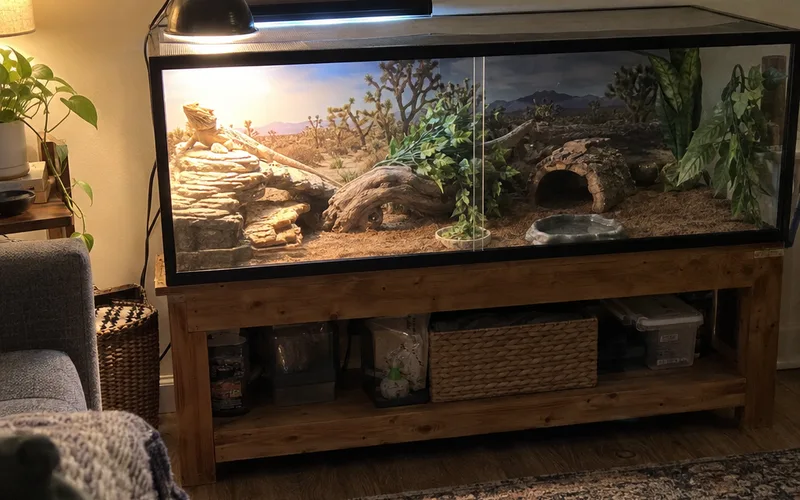
PetMD also notes that bearded dragons tolerate handling well and do well with gentle, supervised interaction. That’s a big reason they suit beginners.
There’s a time commitment, too. With a typical lifespan of 10 to 15 years, a bearded dragon you buy for a 10-year-old may still be around when that child leaves home.
If you’re still choosing a first lizard, compare this routine with gecko care and skink care before you decide.
In other words, the daily care is simple once you’ve paid for and built the right setup.
Should You Hold Your Bearded Dragon Every Day?
You can hold a bearded dragon every day once it’s used to you, as long as each session is short and its body is fully supported. PetSmart’s care guide says bearded dragons are generally tolerant of handling and can be interacted with daily.
Start small.
Keep the first sessions short and build up as your dragon gets comfortable with you. ReptiFiles says bearded dragons have full-color vision and a keen sense of smell that helps them recognize their keepers.
So daily, gentle contact helps your dragon learn who you are.
There are times to skip it, though. The same guide says to avoid handling during shedding or when your dragon seems stressed, such as when its beard has turned black.
Key Takeaway: Daily handling is fine. Short, calm and fully supported is the rule.
What Bearded Dragon Body Language Means
Bearded dragon body language is mostly head bobbing, arm waving and beard color, and PetSmart’s care guide says dragons use all 3 to communicate and establish dominance. A beard that turns black can signal stress, agitation, illness or excitement.
That makes a black beard worth a second look.
The same guide says that if a black beard keeps coming back, you should check for wrong temperatures, a poor diet or illness, and see a reptile vet if it persists. So start with your thermometers and your supplement schedule before you assume it’s just mood.
Color changes aren’t always about mood, though. ReptiFiles notes that bearded dragons can darken their color to absorb heat more efficiently.
So a dark dragon on its basking rock may simply be warming up.
Behavior around the basking spot tells you a lot too.
It lists both avoiding the basking area and spending more time basking than usual as reasons to call a vet. Either change can mean the temperatures are off or your dragon isn’t feeling well.
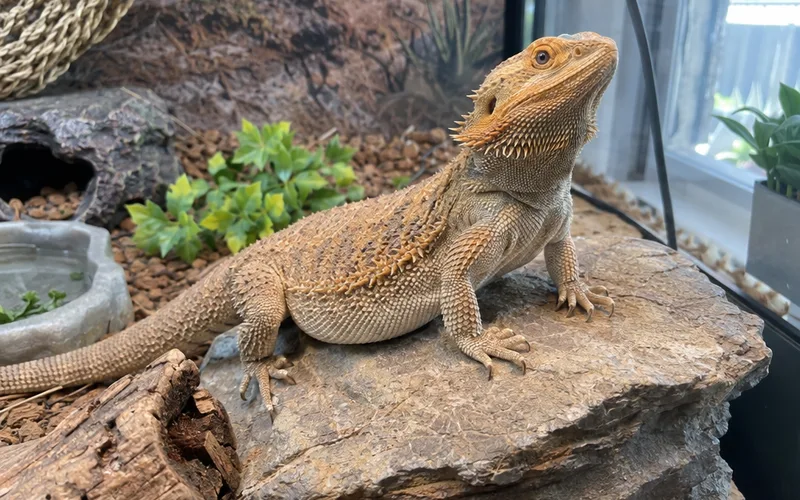
Here’s a simple way to read it: compare today with your dragon’s normal week. A one-off black beard after a loud noise is different from a dragon that’s dark, hiding and skipping meals for days.
In other words, learn your dragon’s normal, then treat any lasting change as a reason to check the setup and call your vet.
How to Tell If Your Bearded Dragon Is Healthy and Happy
A healthy, happy bearded dragon has clear eyes, a good appetite, a bright and alert manner and a regular basking habit. PetMD also lists healthy skin without ulcers or stuck shed, a clean vent, no lumps, normal posture and a healthy weight.
Basking is one of the best clues.
A dragon that basks, eats and explores is usually comfortable in its setup. One that hides all day, skips meals or avoids the warm end is telling you something’s off.
PetMD lists these warning signs and symptoms that mean it’s time to call your vet:
| Area | Healthy sign | Warning sign |
|---|---|---|
| Eyes | Clean and clear | Swollen, sunken, closed or draining |
| Appetite | Eats well | Refuses food outside normal seasonal changes |
| Activity | Bright, alert, basks regularly | Lethargic or won’t bask |
| Skin | No ulcers or stuck shed | Ulcers, sores or retained shed on swollen toes |
| Body | Healthy weight, no lumps | Sunken belly, lumps or swellings |
| Movement | Normal posture | Trouble walking or holding posture |
PetSmart’s care guide adds more red flags: runny droppings for more than 2 days, swollen joints, discharge from the eyes, nose or mouth, and “stargazing,” where a dragon arches its neck and stares upward.
A missing tail is an emergency too. The retailer’s guide says to see a vet as soon as possible if your dragon suddenly drops its tail.
For side-by-side photos and more detail, see the guide to a healthy vs unhealthy bearded dragon. And if you spot one of these warning signs, these guides help you act fast:
- Bearded dragon sunken eyes, often a dehydration clue
- A bearded dragon not eating, and what to check first
- The signs your bearded dragon is dying, and when to go to an emergency vet
Stuck shed deserves its own note. It’s common across reptiles, and the guide to why shed gets stuck explains the fix.
Key Takeaway: Watch the eyes, appetite and basking every day. Changes in any of the 3 deserve a call to your vet.
Common Bearded Dragon Health Problems
The most common bearded dragon health problems, according to PetMD, are intestinal parasites, gut impaction, metabolic bone disease, egg binding, eye infections, respiratory disease and skin infections. The same vet guide adds traumatic injuries to that list.
Several of these connect to husbandry, which means the day-to-day setup and care of your dragon.
Here’s how each one connects to that setup:
- Metabolic bone disease: tied to missing UVB and calcium. Read about treatment for MBD in bearded dragons.
- Impaction: linked to swallowed loose substrate such as gravel or walnut shells. A bearded dragon constipation treatment guide covers what to try and when to stop.
- Parasites: checked with the fecal sample you bring to a vet exam. See bearded dragon parasite treatment for next steps.
- Respiratory infections: watch for discharge from the nose or mouth. If your vet prescribes medicine, read about bearded dragon antibiotics.
- Mouth and skin infections: watch for bearded dragon mouth rot, scale rot in a bearded dragon and bearded dragon tail rot.
Egg binding is a risk for females. The vet guide lists dystocia, the medical term for egg binding, among common illnesses, and it’s one reason the same care sheet says not to breed females before 2 years old.
Eye problems are on the list too. It names eye infections and corneal ulcers, so swollen, closed or draining eyes always deserve a vet visit.
You can plan around injuries, too. Secure decor that can’t fall and the one-male-per-enclosure rule both help prevent them.
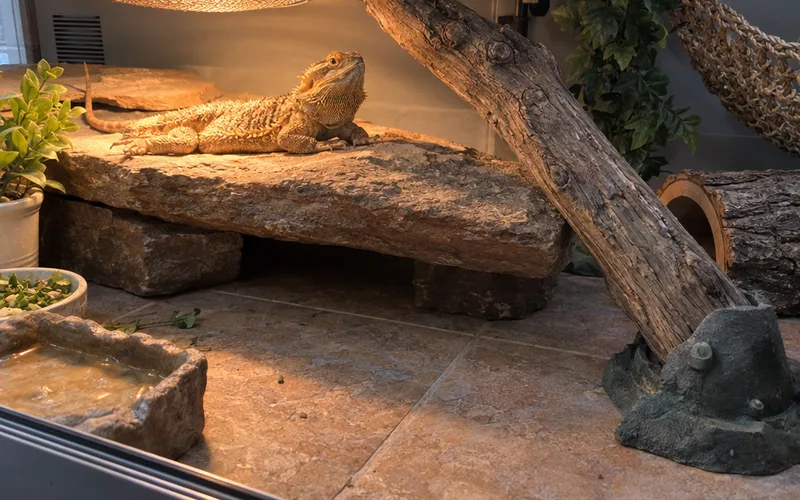
Blood is always worth a call. If you see red in the droppings, the guide to bearded dragon blood in stool explains the likely causes.
Some appetite changes are normal, though. The vet guide notes that refusal to eat can be part of normal seasonal changes.
In bearded dragons, that often means brumation, a winter slowdown similar to hibernation.
Before you assume illness, read whether bearded dragons hibernate and how reptile brumation works. Then book a vet check if you’re unsure what’s behind the change.
Note: We can help you spot warning signs, but only a reptile vet can diagnose your dragon or prescribe medicine.
Bearded Dragon Shedding and Nail Care
Bearded dragons shed their skin regularly, and PetMD says keeping enclosure humidity between 30% and 50% is one of the best ways to support healthy shedding. Most dragons also wear their nails down on their own and rarely need a trim.
So shedding is normal, not a sign of illness.
What you’re watching for is shed that won’t come off. The vet guide lists retained shed, especially around swollen toes, as a reason to call your vet.
If your dragon is struggling with a shed, it suggests a soak in a large, shallow container of warm water. The container should be wide enough for your dragon to submerge its body while its head stays safely above the water.
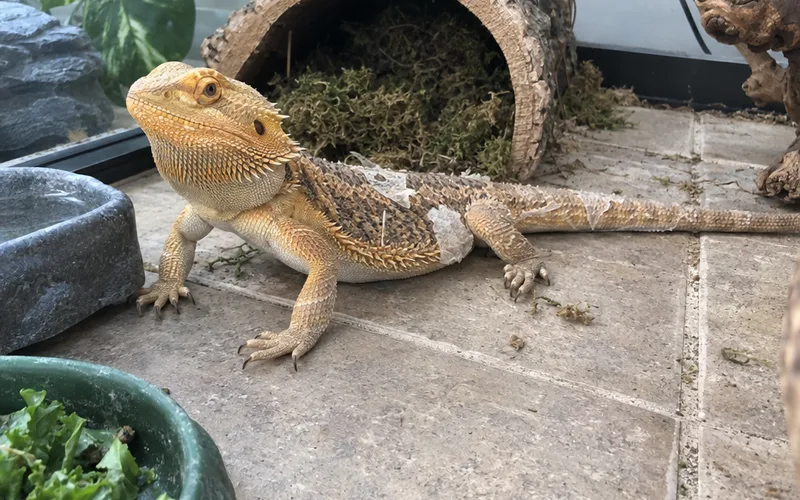
PetSmart’s care guide agrees that soaks help when there’s stuck shed. Just never pull loose skin off yourself, and never leave your dragon alone in the water.
Nails are simpler.
Most bearded dragons naturally wear down their nails, the vet guide says, though dragons that are handled often or have few rough surfaces may need an occasional trim. If a nail gets overly long, damaged or broken, ask your vet how to handle it.
Key Takeaway: Keep humidity in range, offer a soak for stubborn shed and leave nail trims to your vet when in doubt.
A Daily, Weekly and Yearly Bearded Dragon Care Schedule
A bearded dragon care schedule has daily feeding, water and spot-cleaning, a weekly deep clean and soak, a UVB bulb change every 6 months and a vet exam every year. PetMD’s and PetSmart’s care guides support every task on it.
Print this out and tape it near the enclosure:
| How often | Task |
|---|---|
| Daily | Fresh water, greens, spot-clean, wash dishes, check temperatures and humidity |
| Daily (juveniles) | Insects with supplement dusting |
| 2-3 times a week (adults) | Insects with supplement dusting |
| Weekly | Full clean and disinfect, warm soak, multivitamin dusting |
| Every 6 months | Replace the UVB bulb |
| Yearly | Veterinary wellness exam with a fecal sample |
The daily jobs are quick once you have a routine. The weekly and 6-month jobs are the ones people forget, so put reminders in your phone the day your dragon comes home.
If you travel, plan for these tasks too. The guide on how to travel with a bearded dragon covers trips where your dragon comes with you.
Are Bearded Dragons Good Pets for Kids and Families?
Bearded dragons can suit families with older children who are supervised and wash their hands, but they’re not a good fit for very young children. PetSmart’s care guide says reptiles are unsuitable pets for very young children and people with weak immune systems.
The reason is Salmonella: most reptiles carry it in their intestines and shed it in their feces.
That’s the main health trade-off.
PetMD gives the same warning and the same fix: wash your hands thoroughly before and after handling your dragon or anything inside its enclosure. That includes dishes, decor and the water bowl.
So set a house rule before your dragon arrives.
Here’s a simple one: every person who touches the animal or its tank washes their hands right after, every time. Keep a bottle of hand soap next to the enclosure so nobody has an excuse.
Temperament works in a family’s favor. PetMD says bearded dragons do well with gentle, supervised interaction and rarely bite or scratch.
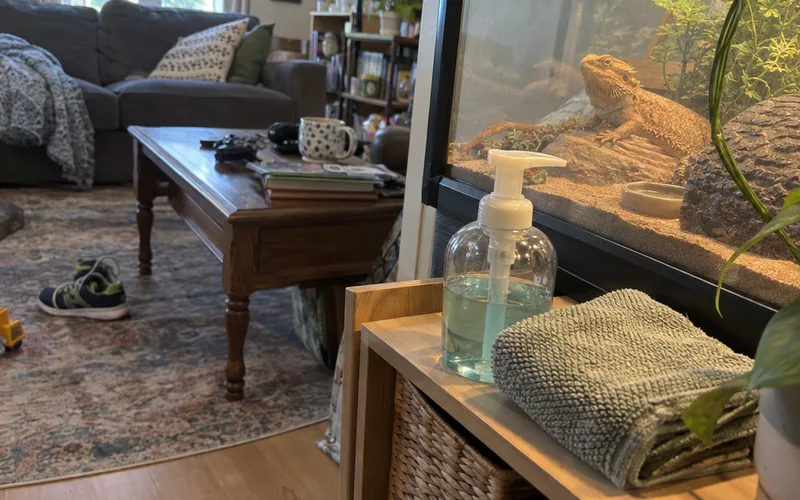
Other pets are a different story.
The vet guide says never to house different reptile species together, and one adult male per enclosure is the rule for bearded dragons themselves. Keep your dragon’s enclosure secure, with its screened lid closed, so other pets in the home can’t get in.
In other words, a bearded dragon works best in a home where an adult owns the care routine and everyone owns the hand-washing.
Bearded Dragon Care Do’s and Don’ts
The biggest bearded dragon care do’s are a large enclosure, a measured basking spot, UVB on a timer and greens every day. The biggest don’ts are loose substrate for young dragons, wild-caught insects, two males together and a UVB bulb kept past 6 months.
Here’s the quick version:
Do:
- Measure the basking surface with an infrared thermometer
- Replace the UVB bulb every 6 months, even if it glows
- Offer greens daily, even to juveniles
- Wash your hands before and after every handling session
- Book a yearly vet exam
- Feed in a dish if you use a loose substrate such as sand
- Rinse off every trace of cleaner after a deep clean
Don’t:
- Feed fireflies, onions, mushrooms or spinach
- Feed insects bigger than the space between the eyes
- House 2 adult males together or mix species
- Lift your dragon by its tail
- Leave your dragon alone in a bath
- Feed wild-caught insects from the yard
- Make fruit a daily food instead of a weekly treat
Starter kits often skip one of these. So if your setup came in a box, check it against each step before you buy anything else.
More Bearded Dragon Guides
Once the basic setup is running, you’ll probably start wondering about the odd things bearded dragons do. These guides answer the most common questions.
Body and senses: find out whether bearded dragons have teeth and whether bearded dragons have venom.
Other lizards: bearded dragons are one part of lizard care, and that overview compares their needs with other popular pet lizards.
Growth: the guide on whether reptiles stop growing explains how growth changes after adulthood across species.
Pick the guide that matches your dragon’s next stage, and come back to this page whenever you need the core numbers.
Frequently Asked Questions
How long do bearded dragons live?
Bearded dragons usually live 10 to 15 years, according to the ReptiFiles care reference, and some live past 20. PetMD gives 8 to 10 years with proper care, so plan for at least a decade.
How big do bearded dragons get?
Adult bearded dragons reach 18 to 24 inches from snout to tail, according to ReptiFiles, and PetMD says about half of that length is tail. Most are fully grown by 1 to 2 years old.
Can two bearded dragons live together?
Two adult male bearded dragons should never live together, because PetMD says males are territorial and may turn aggressive. PetSmart’s care guide goes further and says adults should be housed alone.
How often should you bathe a bearded dragon?
A bearded dragon does well with one warm-water soak a week, according to PetSmart’s care guide, in water that reaches its chest but lets it stand. Stay with your dragon for the whole soak.
How often should a bearded dragon see a vet?
A bearded dragon should get a veterinary wellness exam once a year, as PetMD recommends. Go sooner for runny droppings lasting over 2 days, sunken eyes, refusing food or a dropped tail.
Why is my bearded dragon's beard turning black?
A bearded dragon’s beard turns black from stress, agitation, illness, excitement or dominance, according to PetSmart’s care guide. If it keeps happening, check temperatures and diet, then see a reptile vet.
Do bearded dragons regrow their tails?
No, bearded dragons do not regrow their tails, according to PetSmart’s care guide. A suddenly missing tail needs a vet visit as soon as possible.
What is the best bedding for a baby bearded dragon?
Paper towels are the best bedding for a baby bearded dragon under 6 months, according to PetSmart’s care guide, because they make cleaning easy. Skip sand, walnut shells and wood shavings, which can cause impaction if swallowed.
Do bearded dragons carry Salmonella?
Bearded dragons can carry Salmonella bacteria that spread to people, according to PetMD. Wash your hands before and after touching your dragon or anything in its enclosure.
How can you tell if a bearded dragon is dehydrated?
A dehydrated bearded dragon often has wrinkled skin, sunken eyes and sluggish behavior, according to PetSmart’s care guide. Keep fresh water available, mist the enclosure and offer a weekly warm soak.
How often should you feed a baby bearded dragon?
A baby or juvenile bearded dragon under 12 months should get live insects once a day, according to PetSmart’s care guide, plus fresh vegetables every day. Offer only as many insects as it eats in one session, then remove the rest.
Can bearded dragons eat fruit every day?
No, bearded dragons should not eat fruit every day, because PetSmart’s care guide says to feed fruit once a week at most, in small amounts. PetMD adds that fruit is high in sugar and can lead to unhealthy weight gain.
Final Thoughts
Good bearded dragon care is about measured numbers: a big enclosure, a 95°F to 100°F basking spot, daily UVB and a diet that changes with age.
This week, set up the enclosure with 2 thermometers and a hygrometer, and let it run before your dragon comes home.