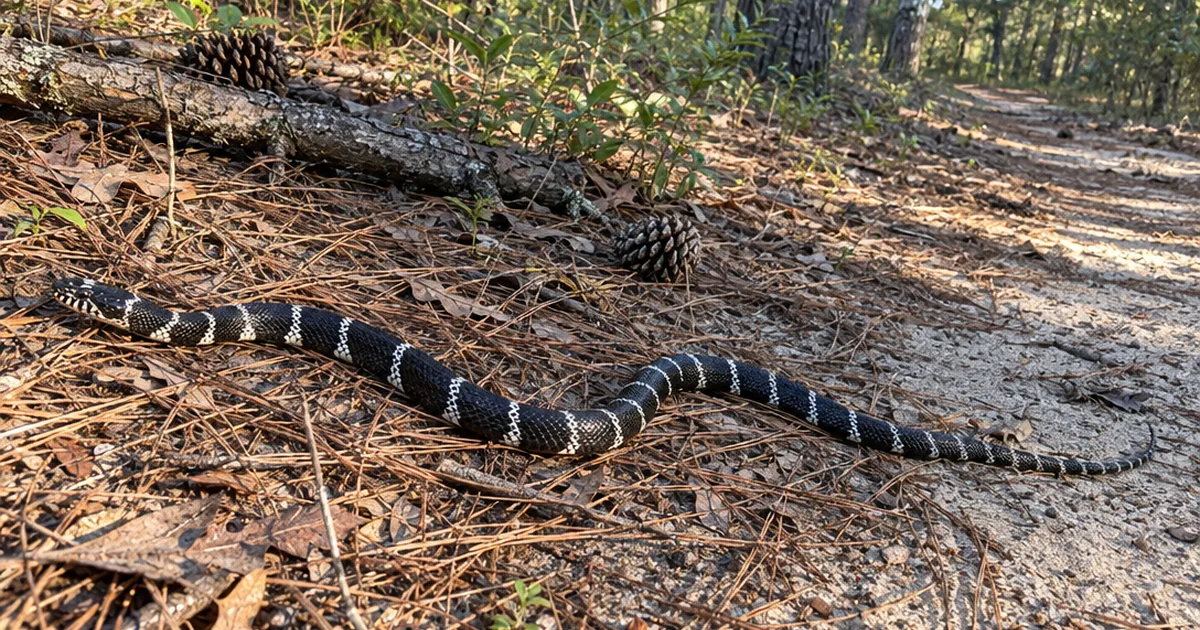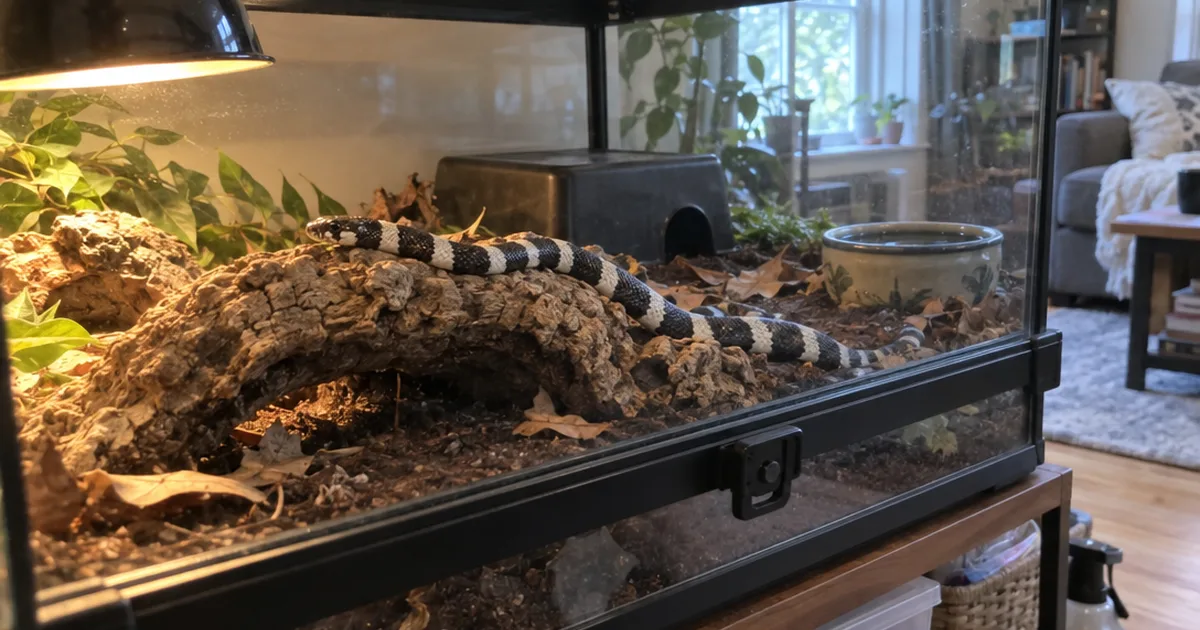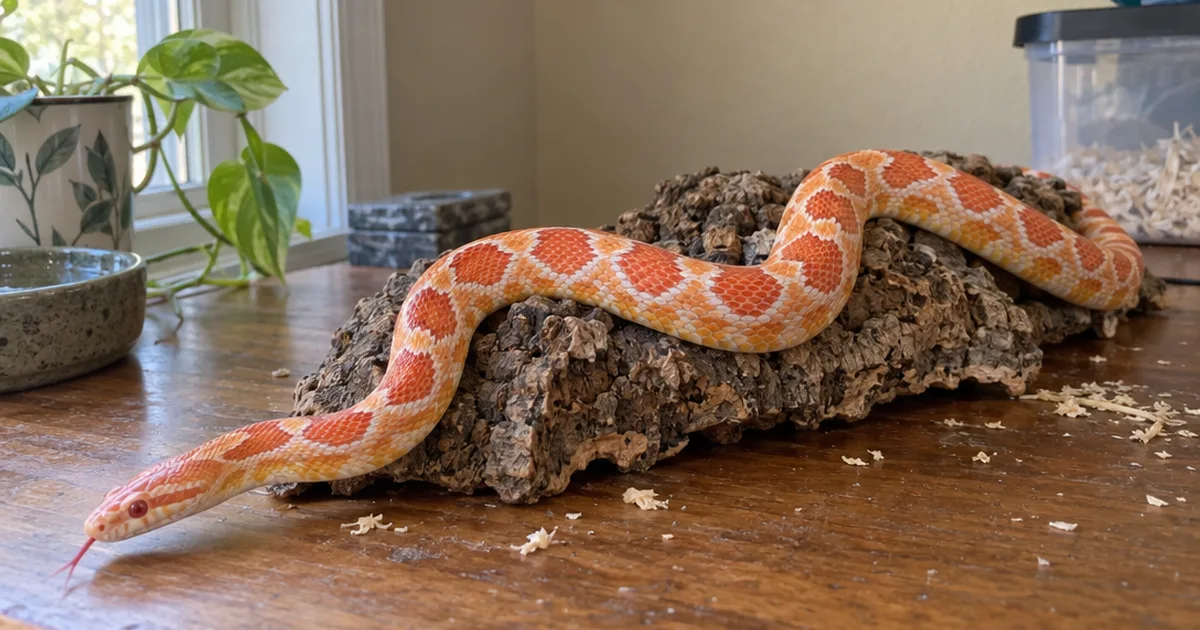
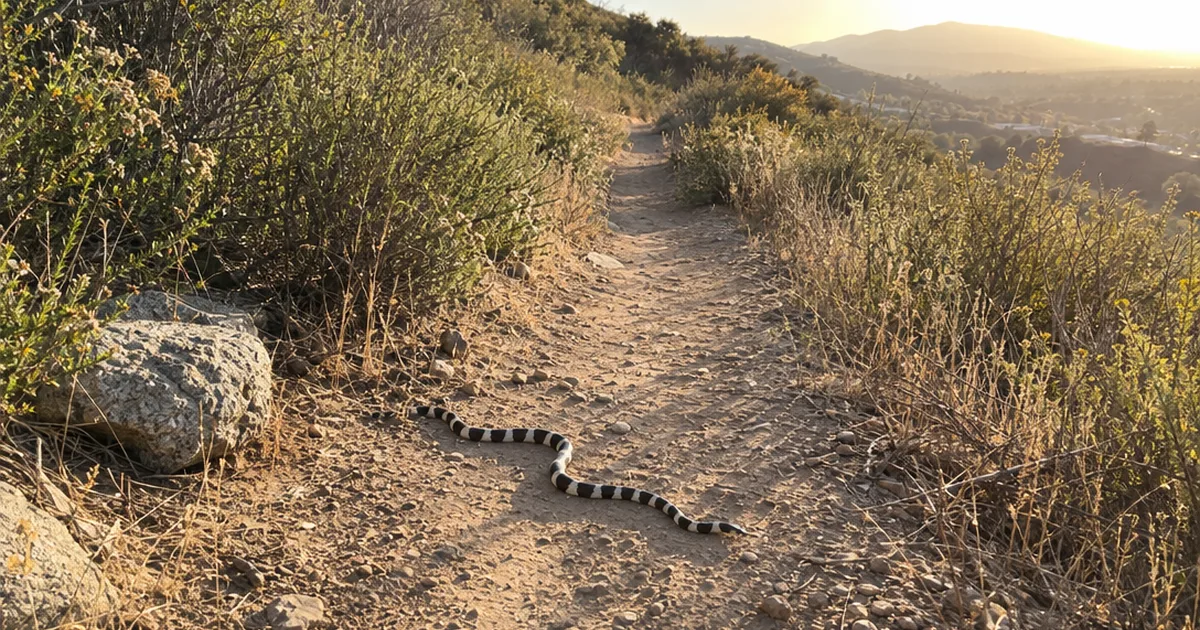
For its size, a California kingsnake squeezes twice as hard as a python.
That grip, noted in Wikipedia’s kingsnake entry, is how these snakes take down prey without a drop of venom.
So if you’re asking “are king snakes venomous?” because one just crossed your yard, the real story is how they hunt instead.
There’s also a catch: one banded US snake that looks similar does carry venom. You’ll see how kingsnakes kill, what a bite means for you and the rhyme that separates the two.
Are King Snakes Venomous to Humans?
King snakes are not venomous to humans: the Los Angeles Zoo describes them as non-venomous snakes that hunt other snakes, so a kingsnake has no venom to inject.
Kingsnakes belong to Lampropeltis, a genus in the family Colubridae with 26 species and about 45 subspecies. Wikipedia describes the group as nonvenomous.
So color, size and location don’t change the answer.
Are California and Eastern King Snakes Venomous?
California and eastern king snakes are both nonvenomous, because both species belong to the same Lampropeltis genus.
Both appear on that species list: the California kingsnake is Lampropeltis californiae, and the eastern king snake is Lampropeltis getula getula.
The same goes for pets bred in unusual colors. California kingsnake morphs and black kingsnakes are just as venom-free as wild-type snakes.
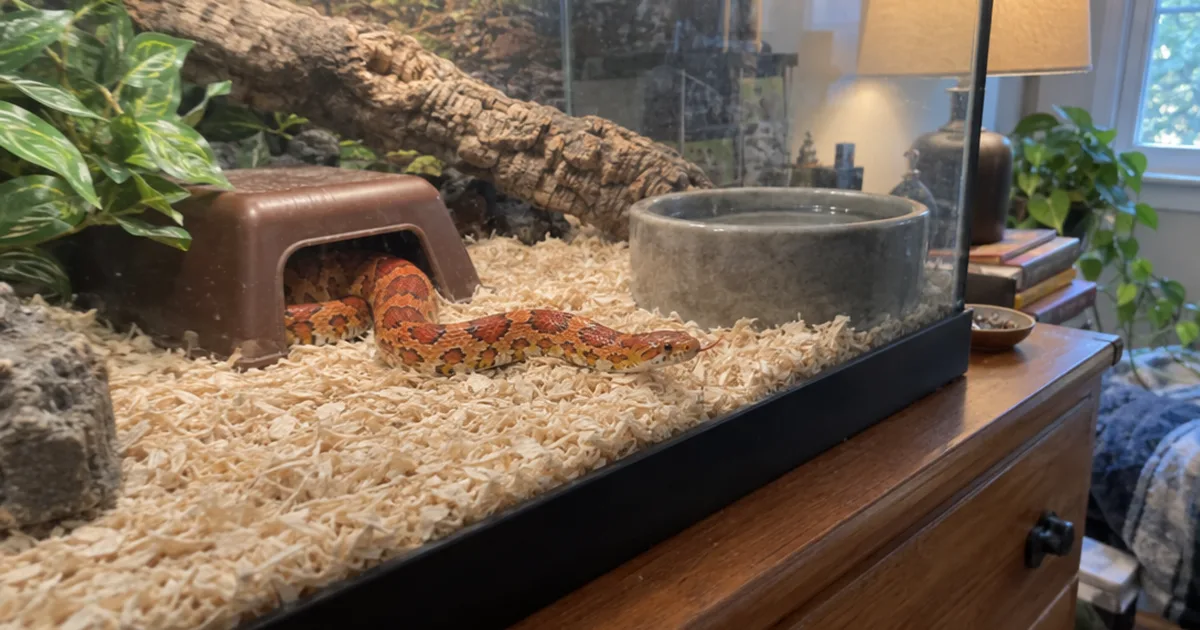
If you’re comparing pet snakes, the same venom question comes up for corn snakes and hognose snakes.
How King Snakes Kill Prey Without Venom
King snakes kill prey by constriction: Oakland Zoo describes California kingsnakes as a nonvenomous species and powerful constrictors that coil tightly around their prey.
Here’s how it works:
With each breath the prey takes, the snake tightens its hold until the animal suffocates.
When the prey is another snake, the zoo says kingsnakes coil tightly around the heart region instead.
Wikipedia notes that California kingsnakes exert twice as much constriction force, relative to body size, as rat snakes and pythons. Scientists believe those strong coils may be an adaptation to eating snakes and other reptiles.
In other words, a kingsnake’s weapon is muscle, not venom.
Why King Snakes Can Eat Rattlesnakes
King snakes can eat venomous rattlesnakes because Oakland Zoo reports they are immune to most native snake venom, so they readily eat rattlesnakes and coral snakes.
That habit gave them their name. The same zoo says hunting other snakes is where the “king” comes from.
But the protection has limits.
Wikipedia notes that the common kingsnake is not necessarily immune to the venom of snakes from distant localities.
What does that mean for you? A kingsnake’s venom resistance covers the native venomous snakes it normally meets, not every venomous snake on Earth.
What Happens If a King Snake Bites You?
A king snake bite cannot poison you, because kingsnakes are nonvenomous constrictors with no venom to deliver.
Clean the bite like any minor scrape, and see a doctor if it looks infected.
Most bites start as defense. The Los Angeles Zoo says threatened kingsnakes hiss and emit a strong musky odor while vibrating their tails in leaf litter, which sounds like a rattlesnake.
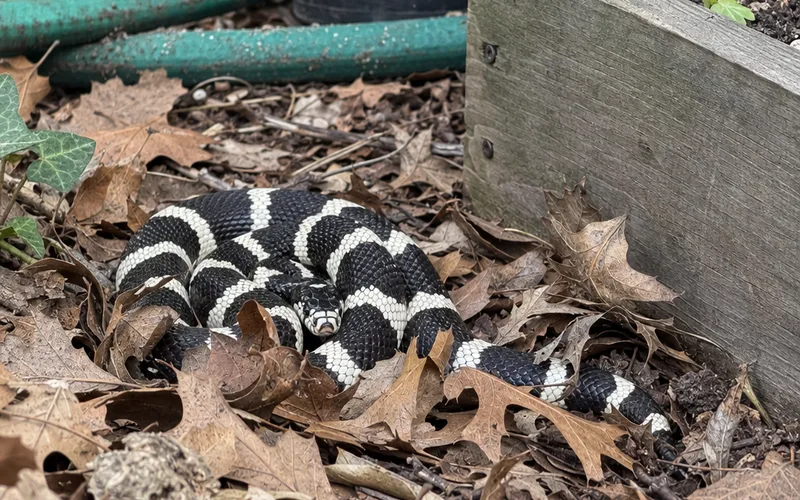
That rattle act can make a harmless kingsnake seem dangerous.
So if you meet one outside, give it space and let it move on.
If you keep one, the bite risk mostly comes down to reading its mood. Learn the signs of kingsnake temperament and what to do after a king snake bite.
King Snake vs Coral Snake: How to Tell Them Apart
Some king snakes look like venomous coral snakes: Wikipedia names the scarlet kingsnake, Mexican milk snake and red milk snake as snakes whose patterns get confused with highly venomous coral snakes.
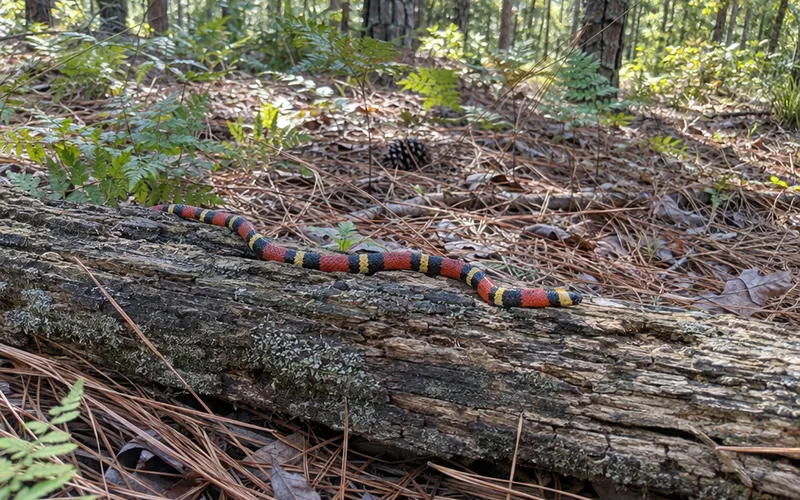
Milk snakes belong to the same Lampropeltis genus, so they’re harmless kingsnake relatives.
In the US, a rhyme from the same entry sorts them out: “red on black, a friend of Jack; red on yellow, kill a fellow.” Here’s how the two groups compare:
| Trait | Kingsnake lookalikes | US coral snakes |
|---|---|---|
| Venom | None | Highly venomous |
| Red bands touch | Black | Yellow |
| Rhyme | Red on black, friend of Jack | Red on yellow, kill a fellow |
Note: The rhyme only works in the United States. The encyclopedia says it applies to the three coral snake species native to the southern US, while coral snakes elsewhere can have red bands touching black.
Are King Snakes Good to Have Around?
King snakes are good to have around: Oakland Zoo calls them beneficial for the ecosystem because they help balance rodent and rattlesnake populations.
Their diet also includes lizards, birds and eggs, the same zoo notes. Its habitat list runs from chaparral and forests to marshes, deserts and brushy suburban areas.
The Los Angeles Zoo adds that kingsnakes eat mice and rats, doing their share to keep rodent numbers in check.
So a kingsnake in your yard is working for you. Leave it alone and let it move on.
The Bottom Line on King Snake Venom
King snakes have no venom, and their bite can’t poison you.
The banded snake to respect is the coral snake, so check which color touches red before you reach for anything striped.
Thinking about keeping one? Start with the basics of kingsnake care and the wider snake care guide before you buy.
Frequently Asked Questions
What are the different species of king snakes?
Kingsnakes include 26 species and about 45 subspecies in the genus Lampropeltis, according to Wikipedia. Well-known ones include the California kingsnake, eastern kingsnake, speckled kingsnake, scarlet kingsnake and milk snake.
Are Texas king snakes poisonous?
No, Texas king snakes are neither poisonous nor venomous, because every kingsnake in the genus Lampropeltis is nonvenomous. A bite from one carries no venom.
Do California king snakes bite?
A California king snake may bite if it feels threatened, but Oakland Zoo says the species prefers to keep to itself and usually hisses, vibrates its tail, rolls into a ball or hides its head first. Any bite is venom-free, since the zoo lists California kingsnakes as nonvenomous.