Snakes don’t pee a liquid the way you do.
Instead, they pass a white, chalky paste alongside their poop, and that one detail explains most of what you’ll see in the tank.
Once you know the 2 parts of a normal dropping, snake poop becomes one of the easiest health checks you have. A change in color, texture or timing often shows up before your snake looks sick.
Here’s how to read every dropping, and how to tell when a change means it’s time to call your vet.
What Does Snake Poop Look Like?
Snake poop looks like a soft, dark brown to black log or smear with a white, chalky lump called urates attached to one end or lying beside it. A little clear liquid often comes with it, and you may spot fur, feathers, scales or tiny bone bits from the prey.
Here’s what a normal dropping usually includes:
- The feces: dark brown or black, moist and roughly log-shaped, though it can spread into a smear.
- The urates: a white or off-white, chalky lump that firms up as it dries.
- Clear liquid: a small wet patch around the dropping.
- Prey remains: bits of fur, feathers or scales that passed through undigested.
Why the fur?
Snakes swallow their prey whole, so anything their stomach can’t fully break down rides along to the end. A rodent-fed snake often leaves a little hair in its droppings, and that’s normal.
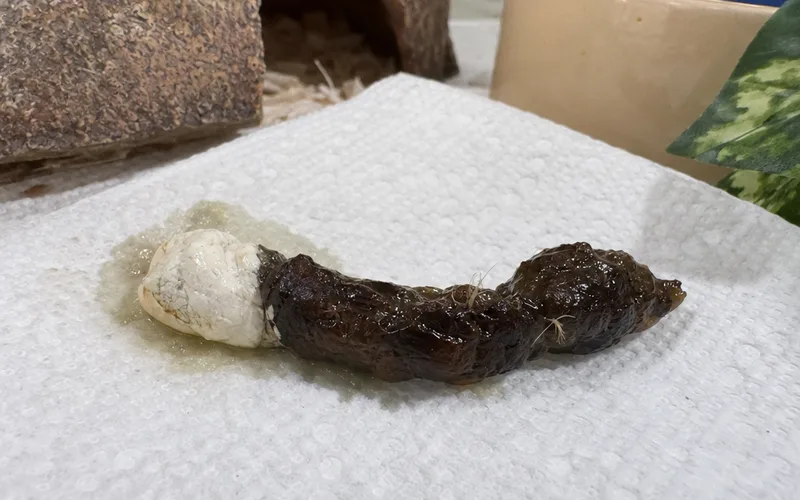
Fresh poop looks wet and shiny. As it ages, it dries into a dull, crumbly mass, so the age of a dropping changes how it looks more than most owners expect.
That’s why it pays to check the tank daily and look at droppings while they’re fresh.
What Is the White Stuff in Snake Poop?
The white stuff in snake poop is urates, a semi-solid form of urine made mostly of uric acid. Snakes turn their nitrogen waste into this paste instead of liquid urine, which lets them hold on to the water their bodies need.
In other words, the white lump is your snake’s pee.
Healthy urates are white to off-white and soft or chalky. They can look a little gritty once dry, but they shouldn’t be rock hard.
Color and texture tell you a lot. Hard, yellow or orange urates can point to a snake that isn’t getting enough water, and repeated odd colors are worth a call to your vet.
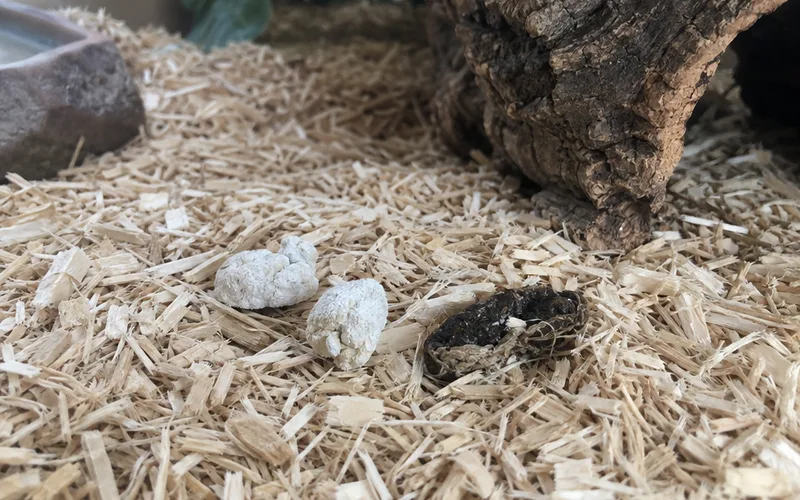
Key Takeaway: A soft white lump next to a dark, formed dropping is exactly what you want to see.
For a closer look at colors and textures, read up on what snake urates mean.
How Do Snakes Poop and Pee?
Snakes poop and pee through one opening, the cloaca, a chamber just inside the vent on the underside of the body where the tail begins. The digestive, urinary and reproductive tracts all empty into it, so feces and urates usually leave at the same time.
That’s why most droppings show a dark part and a white part side by side.
The vent is the slit you can see on the outside. If you ever find dried waste stuck there, a stuck or crusted vent is worth a closer look, because waste needs a clear exit.
Do Snakes Poop From Their Mouth?
Snakes never poop from their mouth, but they can bring a meal back up, and that’s called regurgitation. A regurgitated meal looks like a partly digested prey animal covered in slime, not a dark dropping with urates.
Prey that’s too big, a tank that’s too cool or handling too soon after a meal are the usual triggers. If it happens more than once, learn the causes of snake regurgitation and book a vet visit.
How Often Do Snakes Poop?
How often snakes poop depends mostly on how often and how much they eat, plus enclosure temperature, age and species. A young snake fed small meals often tends to go more often, while large, heavy-bodied snakes like pythons and boas can go much longer between droppings.
So is there a normal number?
Not one that fits every snake, so your own snake’s pattern is the baseline that matters.
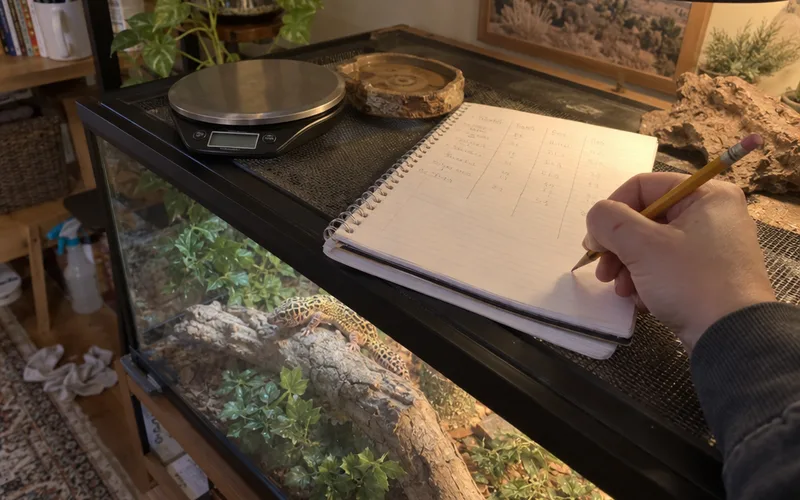
Here’s how to build that baseline in a few minutes a week:
- Write down each feeding: the date, the prey type and its size.
- Write down each dropping: the date, plus a quick note on color, texture and urates.
- Add a weight every couple of weeks if you have a kitchen scale.
- Look for the gap: after 3 or 4 meals you’ll see how many days your snake usually takes.
That log turns a vague worry (“Is this normal?”) into a clear answer. If your snake suddenly runs well past its usual gap, you’ll know right away, and you’ll have the dates your vet will ask for.
How Long After Eating Does a Snake Poop?
A snake poops once it has fully digested a meal, so the wait after eating depends on the meal’s size and on how warm the snake can get. Bigger meals take longer, and a cool enclosure slows digestion down.
Snakes rely on outside heat to run their gut.
That’s why a proper warm side matters so much after a feeding. If the warm side runs cool, the meal sits longer, and a cool enclosure is one of the usual reasons a meal comes back up.
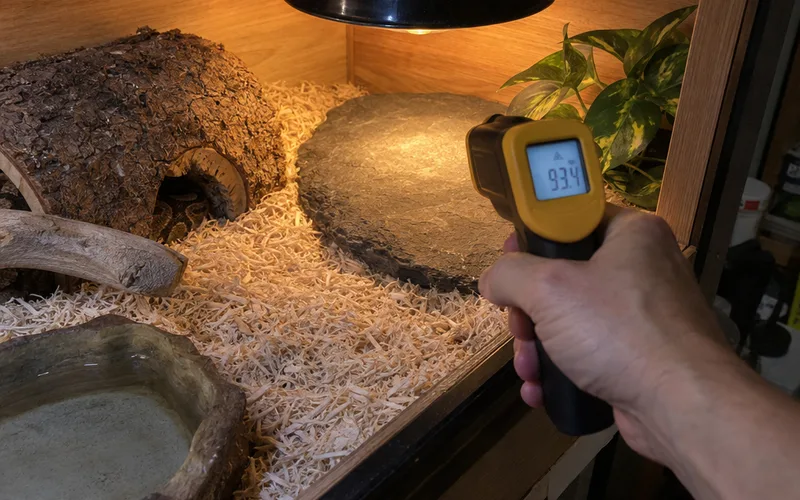
Check your temperatures with a digital thermometer or a temperature gun, not a stick-on dial. The right range differs by species, so start with the right temperature and humidity for your snake.
Then leave your snake alone for a while after it eats. Handling a snake with a full stomach is one of the classic triggers for regurgitation.
Healthy vs Unhealthy Snake Poop
Healthy snake poop is a formed, dark brown to black dropping with white, soft urates, while unhealthy poop is watery, bloody, slimy, oddly colored or very foul, or comes with hard yellow or orange urates. One odd dropping can happen, but a change that repeats or shows up with other symptoms needs a reptile vet.
Here’s a quick reference you can use at the tank:
| What you see | What it can mean | What to do |
|---|---|---|
| Dark, formed poop with white urates | Normal | Log it and move on |
| Watery or runny poop, again and again | Parasites, infection or a diet problem | Check heat, then call a vet |
| Blood or red streaks | Injury or illness in the gut | Call a vet promptly |
| Lots of slimy mucus | Gut irritation or infection | Call a vet if it repeats |
| Hard, yellow or orange urates | Not enough water | Check water and humidity |
| Whole, undigested prey | Too cool, stress or illness | Check heat, then call a vet |
| A strong, rotten smell | Infection or parasites | Call a vet if it repeats |
Use the table to decide your next step, not to diagnose.
Many of these signs overlap, which is why vets usually ask for a fecal test. Runny or smelly droppings are a classic reason to screen for reptile parasites, even in a snake that’s still eating.
Pro Tip: Collect a fresh dropping in a clean, sealed bag or container before a vet visit, and ask the clinic how they want it stored.
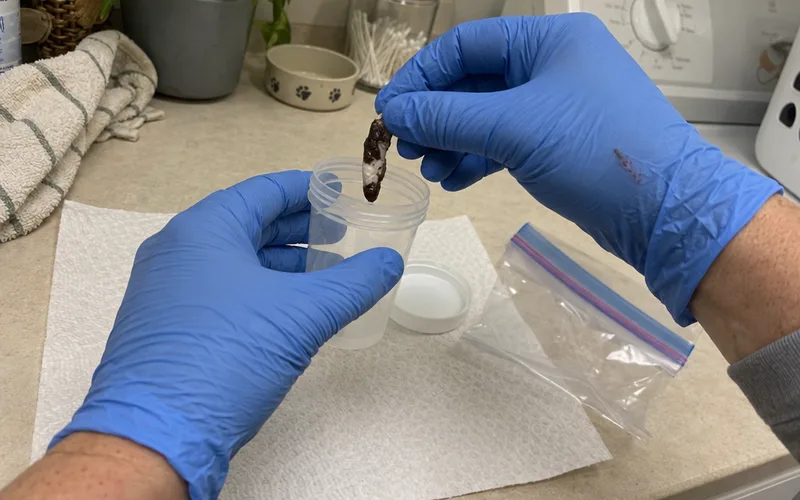
Poop is only one piece of the picture, so pair it with appetite, shedding, breathing and weight when you run a full snake health check.
What Should I Do If My Snake Hasn’t Pooped?
If your snake hasn’t pooped, first compare the gap with its usual pattern in your log, then check heat, water and humidity before you worry. A snake that’s past its normal gap but alert and comfortable usually needs better husbandry, while straining, swelling, lethargy or regurgitation need a vet.
Here’s the order I’d follow:
- Check the timeline. A big meal or a cool week can stretch the gap.
- Check the warm side. Low heat is the most common reason digestion stalls.
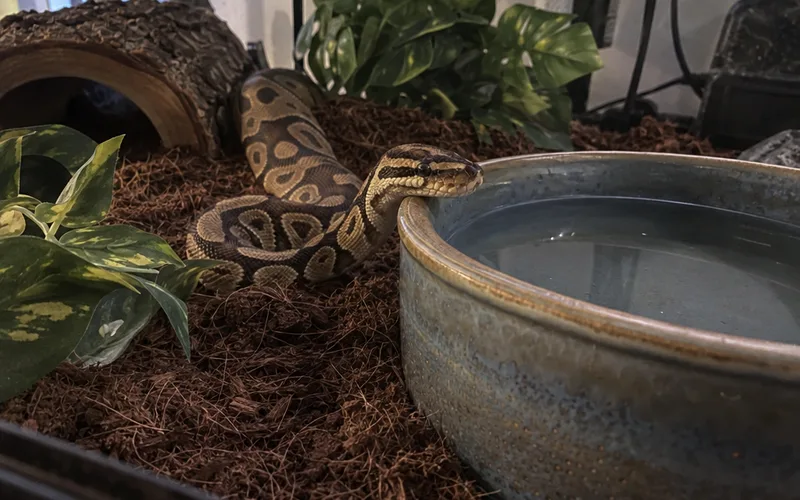
- Check the water. A full, clean bowl and the right humidity help keep waste moving.
- Check the substrate. A snake that swallows loose bedding with its food can end up with a blockage called impaction.
Dehydration is easy to miss, since snakes drink quietly and rarely. Learn how long a snake can safely go without water and keep fresh water in the tank at all times.
Note: Swelling near the vent, straining with nothing coming out, tissue sticking out of the vent or a snake that turns weak and limp is a reason to call a reptile vet the same day.
Don’t try to massage a blockage out or give home remedies. A vet can feel for a mass and may use an X-ray to find out what’s going on.
How Big Is Snake Poop?
Snake poop size depends on the size of the snake and the size of its last meal, so a small snake fed insects or a pinky mouse leaves a small dropping and a large python fed a big rodent leaves a large one. Each meal usually comes out as one deposit rather than many small pellets.
That’s also why one snake’s droppings can look different from week to week. A bigger prey item means more waste, more fur and often more urates.
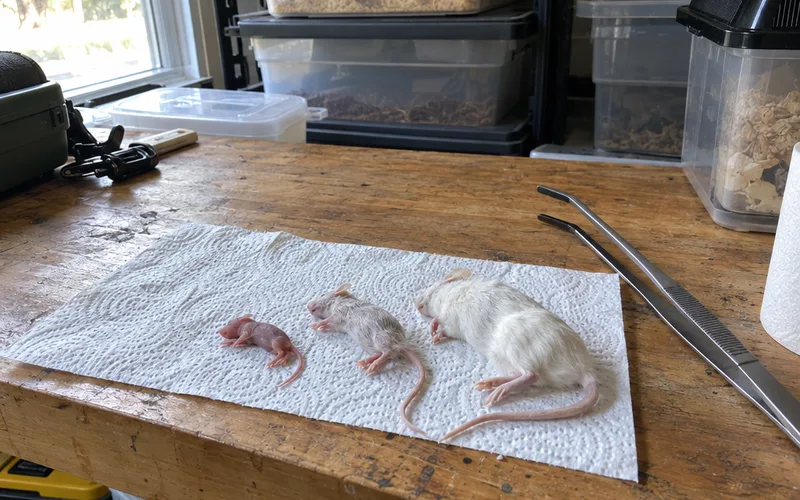
If your feeding sizes jump around, the droppings will too. Matching prey size to your snake keeps both meals and waste predictable, as you’ll see in what corn snakes eat at each age.
Ball pythons eat big meals at long intervals, and ball python poop has its own quirks worth knowing.
How Can You Tell Snake Poop From Rat or Lizard Poop?
You can tell snake poop from rat poop by the white urate cap, because rats never produce one, and from lizard poop by its size and shape, since lizards usually leave small, firm pellets with a neat white tip. Bird droppings are mostly white and splattered, while snake droppings are mostly dark.
Here’s how they compare at a glance:
- Snake: one larger, soft, dark dropping with a white chalky lump, sometimes with fur or feathers.
- Rat or mouse: many small, hard, dark pellets with no white part, often scattered along walls.
- Lizard: a small, firm, dark pellet with a tidy white tip, often with insect bits.
- Bird: mostly white and runny, with only a little dark material.
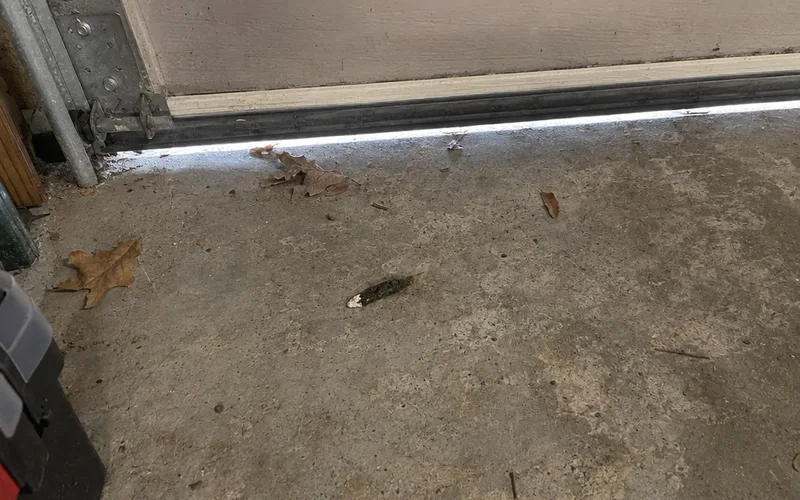
Where you find it matters too. Rat pellets cluster near food, while a single dropping near a wall, a garage door or a crawl space fits a snake better.
If a lizard is your best guess, compare it with bearded dragon poop to see how a lizard’s tip and pellet shape differ.
Does Snake Poop Smell?
Snake poop does smell, often strongly when fresh, because snakes eat meat and the dropping holds both feces and urates. A clean tank shouldn’t smell much, so a lingering odor usually means waste is sitting somewhere you haven’t found yet.
Check under hides, in the water bowl and in corners.
There’s a second smell to know about: musk. A scared snake can release a foul, musky liquid from glands near the vent, sometimes mixed with poop, and the smell can hang on your hands for a while.
Is Snake Poop Dangerous to Humans?
Snake poop can be dangerous to humans because reptiles can carry Salmonella bacteria in their gut and pass them in their droppings, even when the snake looks perfectly healthy. You can get sick if those germs reach your mouth from your hands, a surface or a cleaning tool.
The good news?
Simple habits keep the risk low:
- Wash your hands with soap and water after cleaning the tank or touching your snake.
- Keep the snake, its tools and its water bowl out of the kitchen.
- Never rinse tank items in a sink you use for food or dishes.
- Supervise young kids around the snake and its enclosure, and make sure they wash up after.
Treat every dropping as if it carries germs, because you can’t tell by looking.
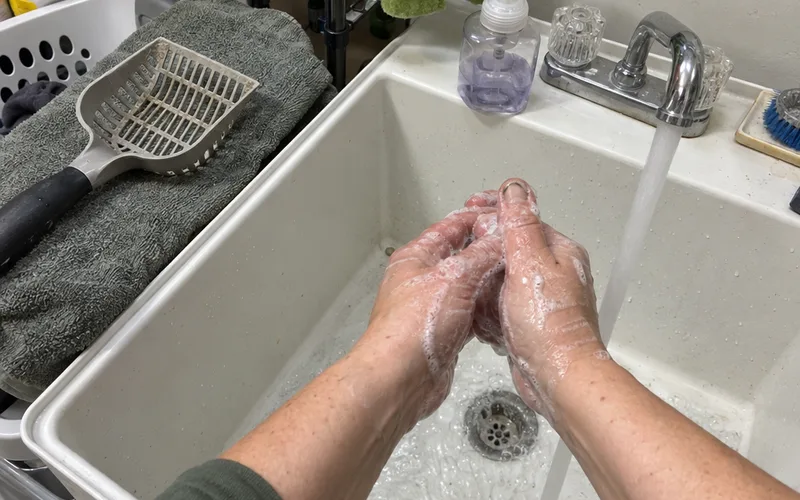
If someone in your home is very young, older, pregnant or has a weakened immune system, talk to your doctor about extra precautions.
How to Clean Snake Poop From an Enclosure
To clean snake poop from an enclosure, put on disposable gloves, lift out the dropping with a paper towel or scoop, remove the soiled substrate around it, then wipe the spot with a reptile-safe disinfectant and let it dry before your snake goes back. Spot clean as soon as you find waste.
Here’s the routine step by step:
- Move your snake to a secure, ventilated tub if the mess is big or near its hide.
- Glove up and pick up the feces and urates with a paper towel, tongs or a scoop.
- Take out the soiled substrate, plus a little around it, and top up with fresh bedding.
- Wipe the spot and any soiled decor with a reptile-safe disinfectant, following its label.
- Rinse if the label says to, and let everything dry until no chemical smell is left.
- Bag the waste, put your snake back, then wash your hands.
Waste in the water bowl means a full scrub and fresh water right away, since snakes often soak and drink from the same dish.
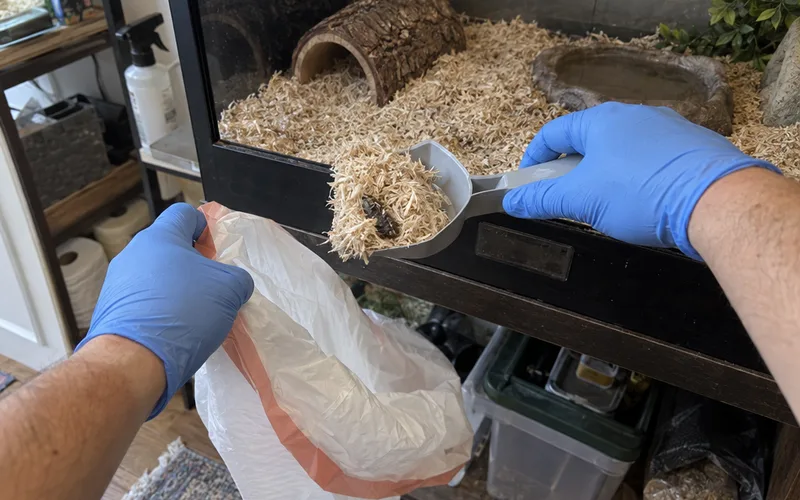
A deeper clean of the whole enclosure every so often keeps odors and germs from building up. The right schedule depends on your setup, so build it into your regular snake care routine.
Found Snake Poop in Your House or Yard?
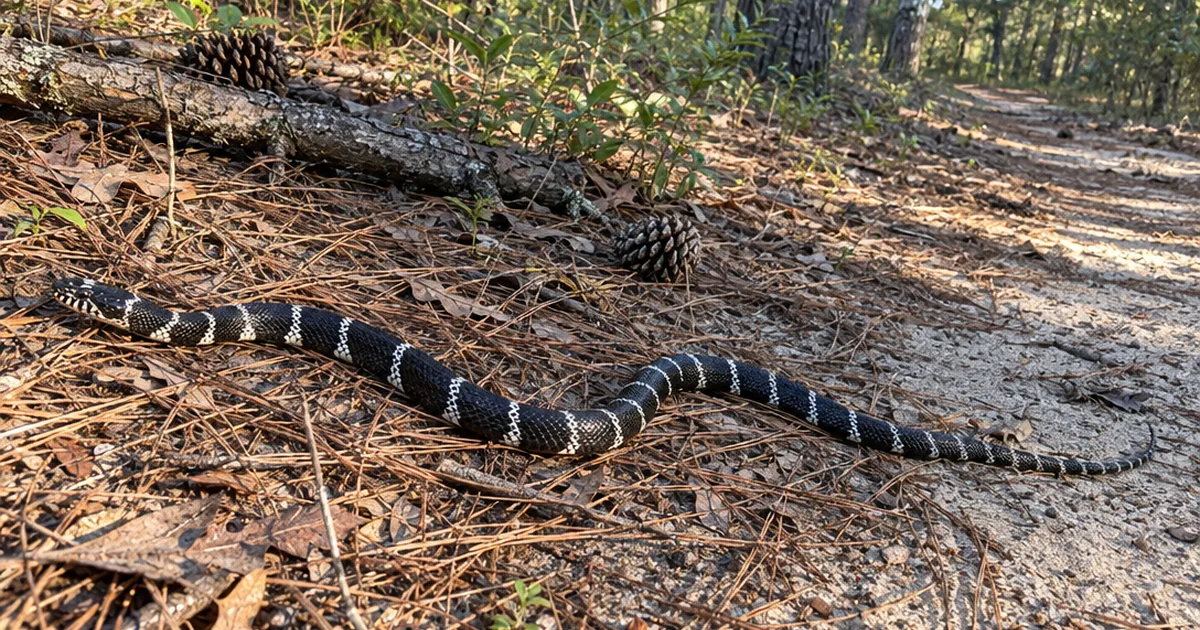
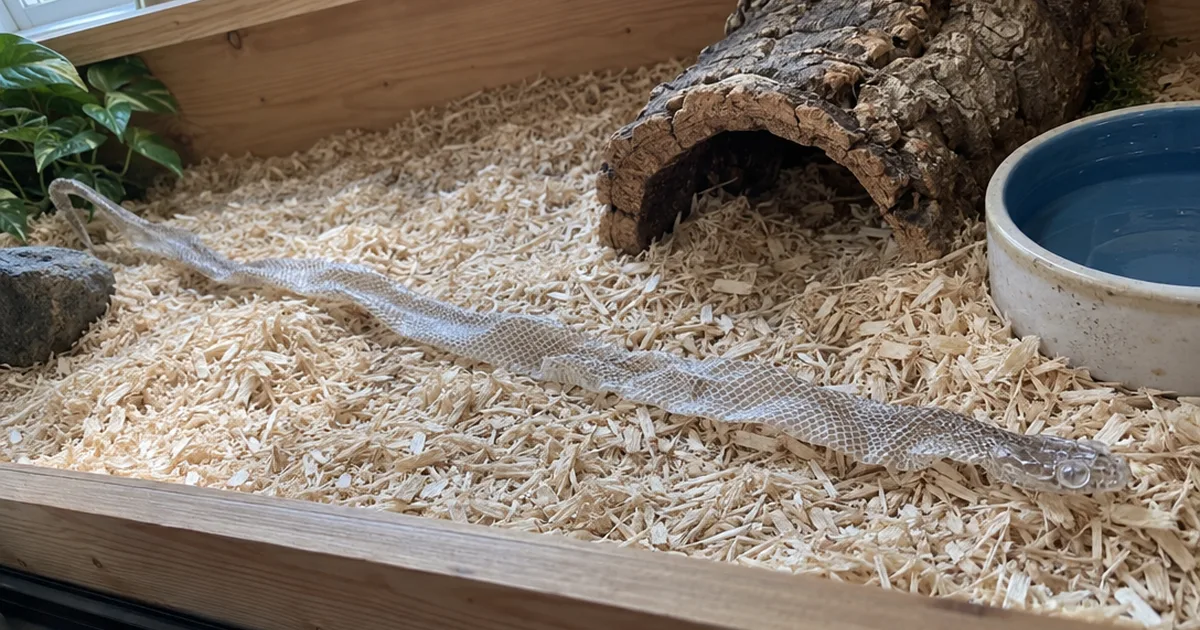
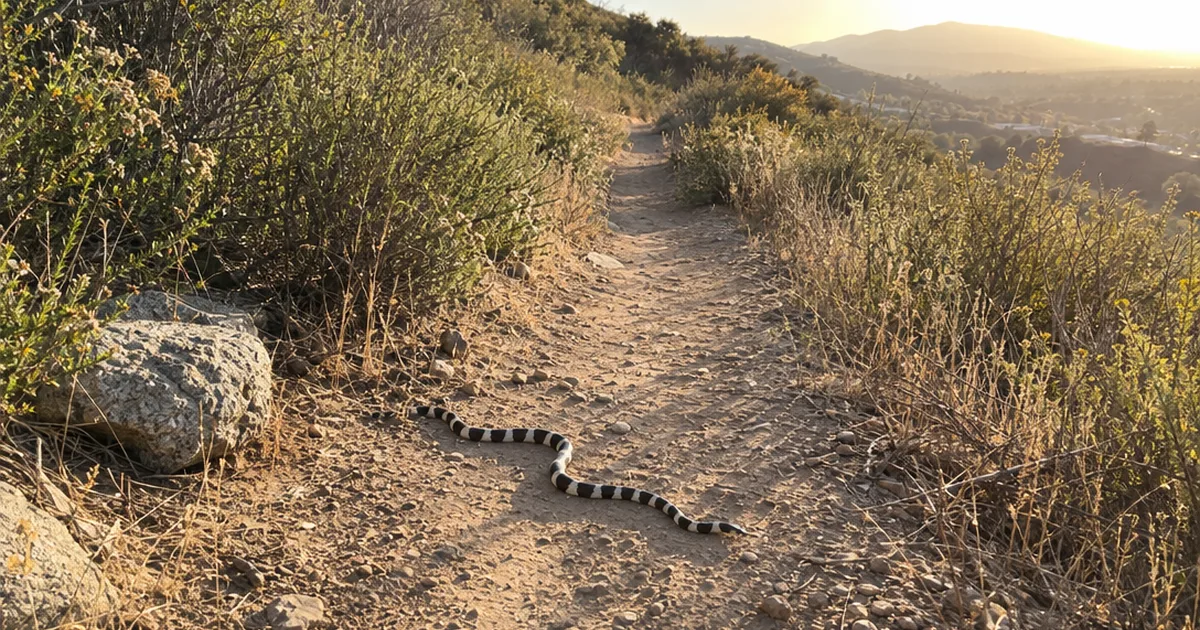
Snake poop in your house or yard means a snake has been there recently, though a dark dropping with a white tip could also come from a lizard or bird. Look for a shed skin nearby, which makes a snake far more likely.
Don’t touch the dropping with bare hands.
Wear gloves, bag it with a paper towel and disinfect the spot, and don’t sweep or vacuum dried droppings, which stirs up dust.
Then check for gaps under doors and around pipes. If you see the snake and can’t identify it, keep your distance and call a wildlife removal service.
Your Snake’s Droppings Are a Weekly Health Check
The most useful thing you can do is look at every dropping and write it down.
Start a simple feeding and poop log this week, and you’ll spot a problem days before your snake shows it.
Frequently Asked Questions
How will I know if my snake pooped?
You’ll know your snake pooped when you find a dark, moist dropping with a white, chalky lump of urates on the substrate, a hide or the water bowl. Check the cool side and the water dish first, since many snakes go away from their basking spot.
How do you know if a snake is around your house?
Snake poop is one sign a snake is around: a single dark dropping with a white cap, sometimes holding fur or feathers, near a wall, garage or crawl space. A shed skin nearby makes a snake far more likely than a lizard or bird.
Do snakes poop every day?
Snakes don’t poop every day, because they eat whole prey only now and then and pass waste once a meal is digested. How long between droppings depends on meal size, temperature, age and species, so your snake’s own log is the best guide.
Is snake pee dangerous?
Snake pee, the white urates, can carry the same germs as the feces, including Salmonella, because both leave through the cloaca together. Handle urates with the same gloves and handwashing you use for poop.