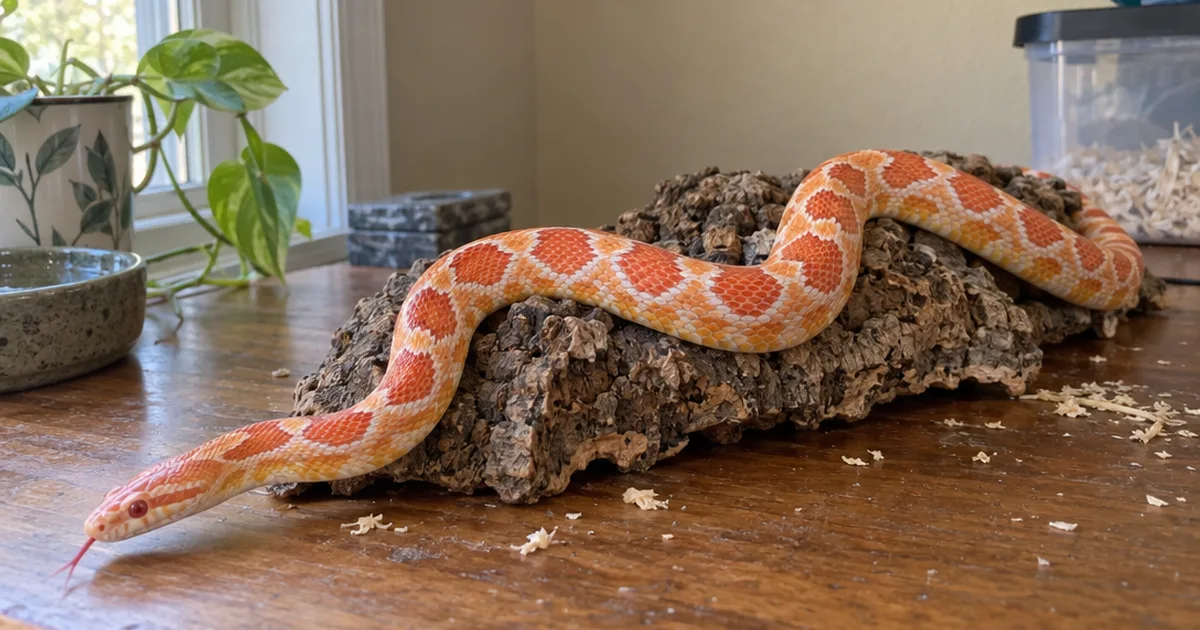
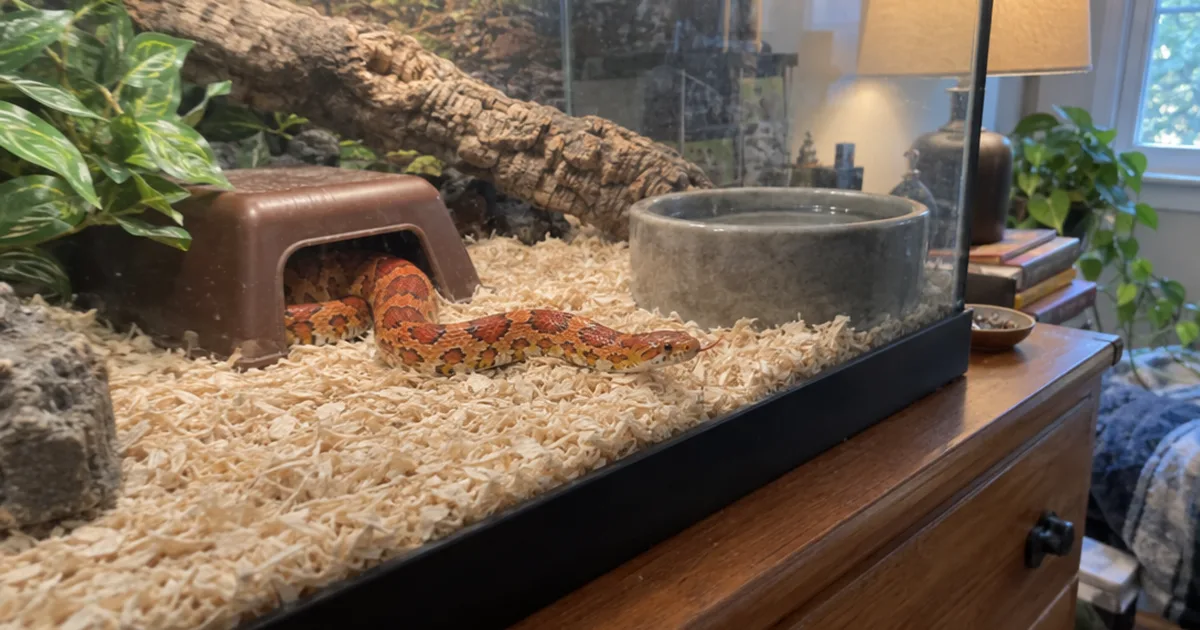
A corn snake can live 15 to 25 years, and some reach 30.
So the tank you build this month has to keep working for a decade or more.
The good news? Corn snake care is simple, because these snakes are hardy and docile once the setup is right.
This corn snake care guide gives you 8 steps, each with the number to hit, plus a feeding table and the signs that mean a vet visit.
How to Care for a Corn Snake Step by Step
Caring for a corn snake takes 8 steps: a locked tank, substrate and hides, a heat gradient, a light cycle, humidity, frozen-thawed mice, daily water and calm handling. Set up steps 1 to 5 before your snake comes home.
Step 1: Get an Enclosure Sized for an Adult (and Lock It)
An adult corn snake needs at least a 40-gallon enclosure that’s longer than it is tall, because corn snakes mostly move along the ground, according to South Pasadena Animal Hospital.
Hatchlings can start smaller. PetMD’s care sheet by veterinarian Maria Zayas says young corn snakes need at least 10 gallons.
So plan the upgrade around how big corn snakes get, and use the corn snake enclosure size chart to pick dimensions.
Whatever size you buy, it needs a lid that latches. The clinic’s vets have seen escaped corn snakes turn up inside walls weeks later.
Step 2: Add Loose Substrate and at Least Two Hides
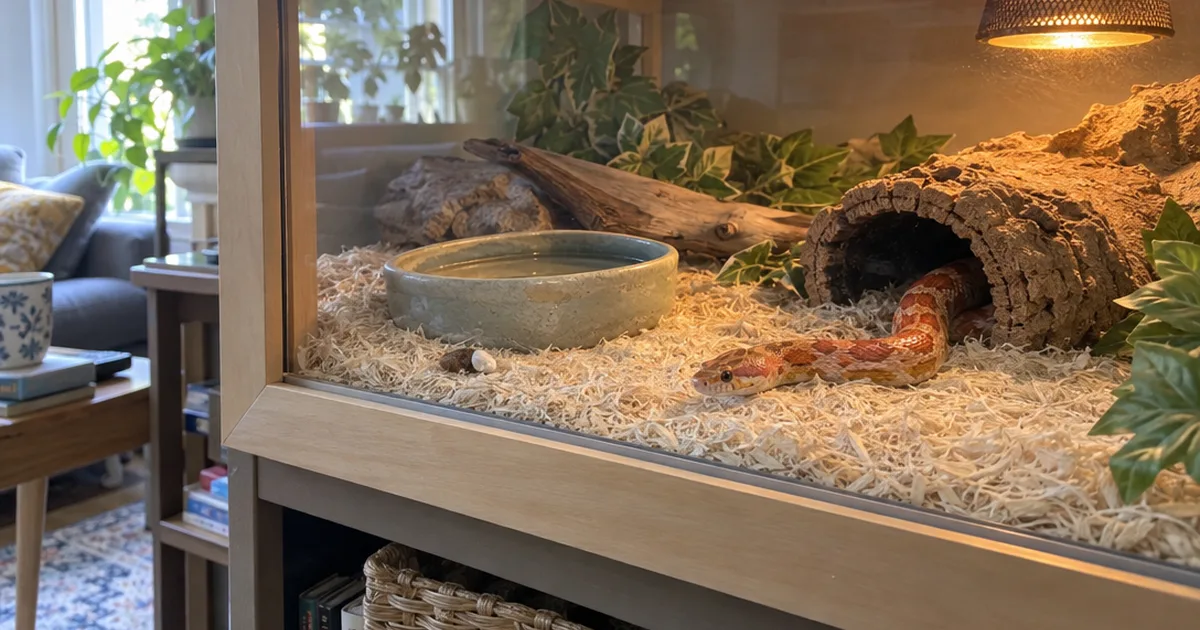
Aspen shavings are the most practical corn snake substrate for most owners, because they hold burrows and spot-clean well. Cypress mulch suits drier homes, coconut coir suits bioactive tanks, and paper towels work for quarantine.
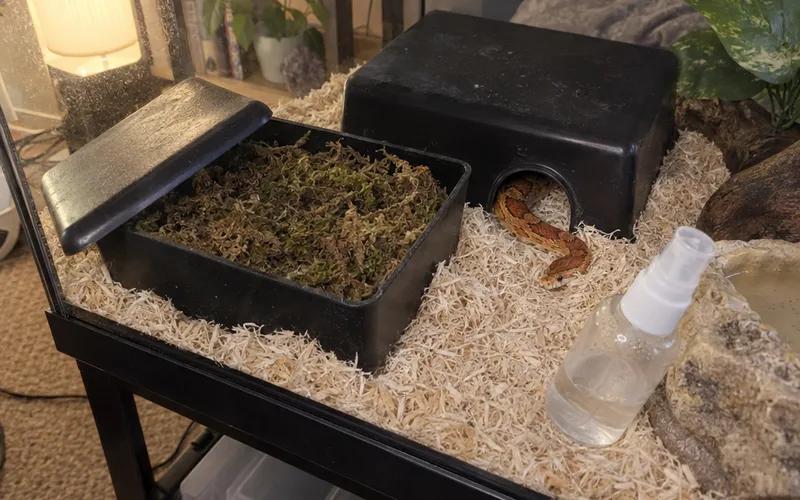
Skip cedar and pine completely. Their aromatic oils are toxic to snakes.
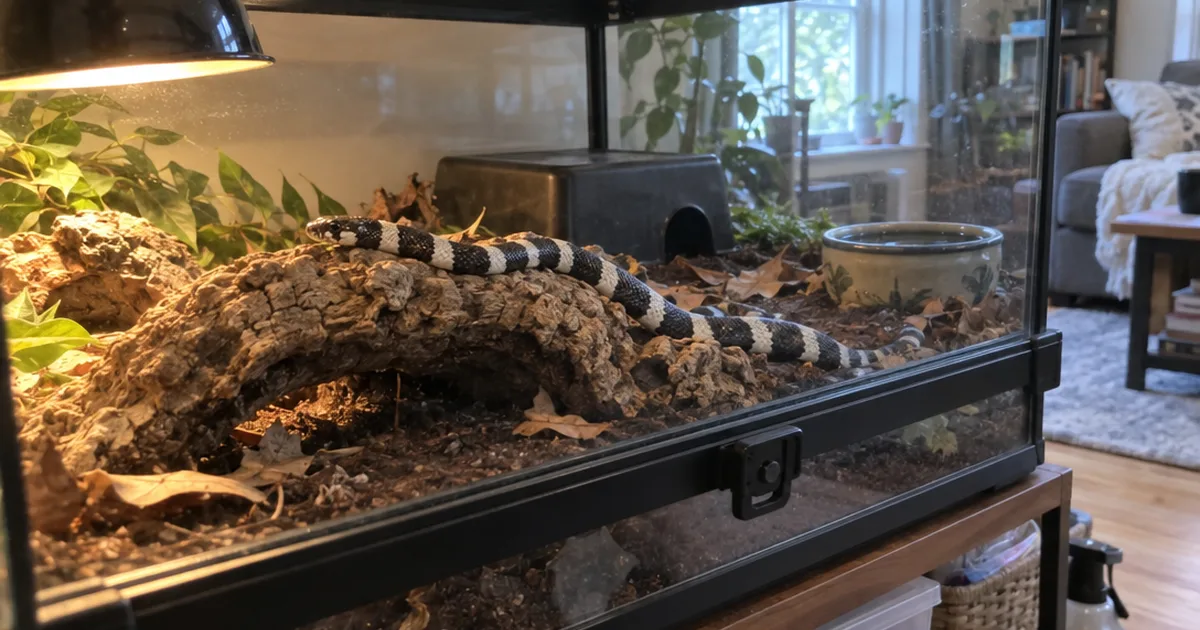
Then add 2 hides, one at each end, plus a humid hide lined with damp sphagnum moss for cleaner sheds. The full corn snake enclosure setup walkthrough shows where each piece goes.
Step 3: Set Up a Warm Side and a Cool Side
A corn snake needs a warm side around 80-85°F and a cool side around 70-75°F, so it can move between them. That movement is called thermoregulation: reptiles warm up and cool down by changing where they sit.
Heat the warm end with an under-tank heater connected to a thermostat. Without one, a heat mat can overheat and burn your snake.
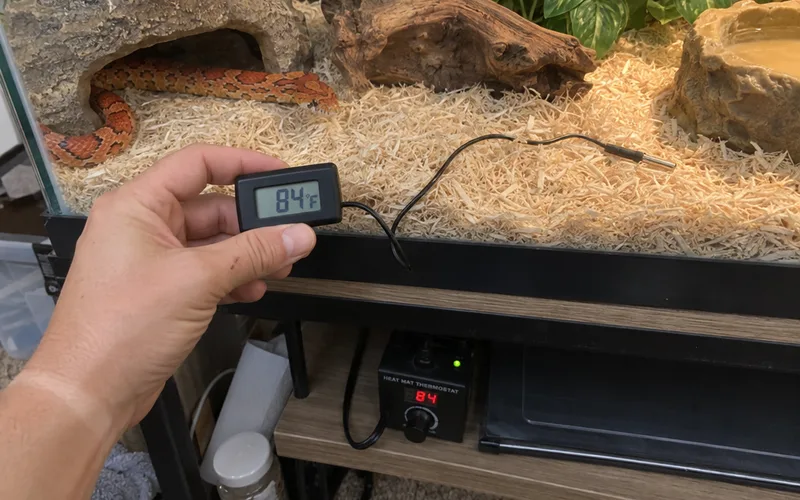
At night, a drop to 65-70°F is fine. Check both ends with a digital thermometer, not a guess.
Step 4: Run Lights on a 12-Hour Day
Corn snakes need a light on a 12-hour day/night cycle, and UVB is optional. Vets disagree on how much UVB matters.
South Pasadena Animal Hospital says corn snakes don’t need UVB lighting. PetMD’s vet says 8 to 12 hours of UV light daily can help immune function and normal behavior, with bulbs replaced every 6 months.
Either way, turn the lights off at night so your snake can rest.
Step 5: Keep Humidity at 40% to 60%
Corn snake humidity should sit between 40% and 60%, and rise to around 70% during a shed, according to PetMD. A hygrometer tells you where you are.
If the reading runs low, swap in cypress mulch or mist lightly.
Step 6: Feed Frozen-Thawed Mice on an Age-Based Schedule
Corn snakes eat frozen-thawed mice, offered less often as they grow. Live prey can bite and injure a snake, so frozen-thawed is the safer choice, says South Pasadena Animal Hospital.
Here’s the schedule the clinic’s vets give:
| Snake’s age | How often to feed |
|---|---|
| Juvenile, under 1 year | Every 5-7 days |
| Young adult | Every 7-10 days |
| Adult | Every 10-14 days |
Size each mouse to the widest part of your snake’s body. Anything that leaves a bulge bigger than about 1.5x its girth is too big, and hatchlings start on pinkies.
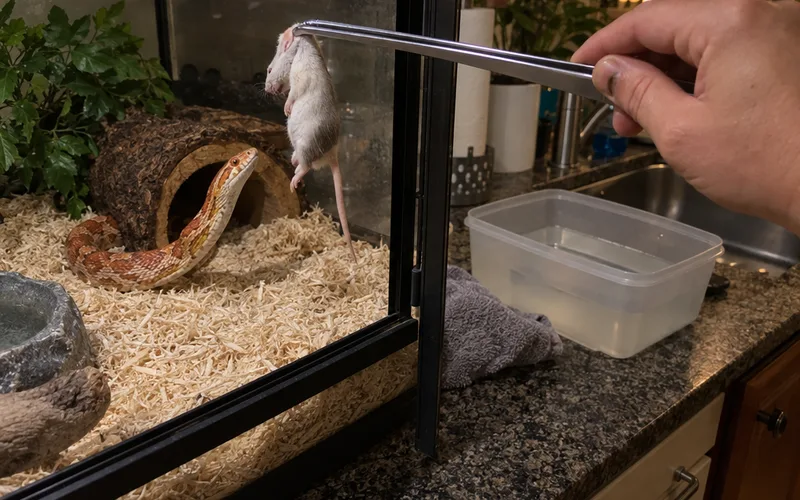
For prey sizes by age and thawing steps, the guide to what corn snakes eat covers the full diet.
Step 7: Keep Fresh Water Out Every Day
Corn snakes need fresh, clean water available at all times, replaced daily. PetMD recommends a dish large and shallow enough for your snake to soak in.
Why so big? Reptiles absorb water through their skin to stay hydrated, so a soak helps.
Step 8: Handle Gently, but Never Within 48 Hours of a Meal
Corn snakes are docile and handle well, as long as you wait 48 hours after feeding. Handling too soon is a common cause of snake regurgitation, and the clinic calls it one of its most preventable visits.
Handle less before a shed, too: cloudy eyes mean your snake can’t see well and is often more defensive.
What You Need to Care for a Corn Snake
A corn snake setup needs a locking enclosure (10 gallons for a hatchling, 40 or more for an adult), an under-tank heater on a thermostat, a thermometer, a hygrometer and a timed light. Buy them before the snake, then run the heat for a day to confirm both ends read correctly.
Corn Snake Care Sheet at a Glance
A corn snake care sheet boils down to 6 numbers. Here they are in one place:
| Care area | Target |
|---|---|
| Adult enclosure | 40 gallons or larger |
| Warm side | 80-85°F |
| Cool side | 70-75°F |
| Humidity | 40-60%, about 70% in shed |
| Adult feeding | Every 10-14 days |
| Handling after meals | Wait 48 hours |
Print it or save it to your phone. Then check the temperature and humidity against it daily, as PetMD’s vet advises.
Are Corn Snakes Easy to Take Care Of?
Corn snakes are easy to take care of as a first snake, because they’re docile, hardy and have simple care needs. The ReptiFiles corn snake care guide calls them excellent snakes for first-timers, so corn snake care for beginners is mostly about getting the setup right.
The bigger commitment is time. Captive corn snakes reach adulthood around 1.5 to 2 years and live 15 to 25 years with good care.
The snake lifespan chart shows how that compares with other pet snakes.
That adult age also matters if you ever look into corn snake breeding season timing.
Corn snakes also live alone. PetMD’s vet notes that cage mates cause stress, aggression and competition.
Before you choose one, these pages answer the next questions most buyers ask:
- Color morphs like amel corn snakes and motley corn snakes
- What makes the corn snake’s belly pattern distinctive
- How milk snakes and corn snakes differ as pets
- What a corn snake bite means for you
Corn Snake Shedding and Health Problems to Watch For
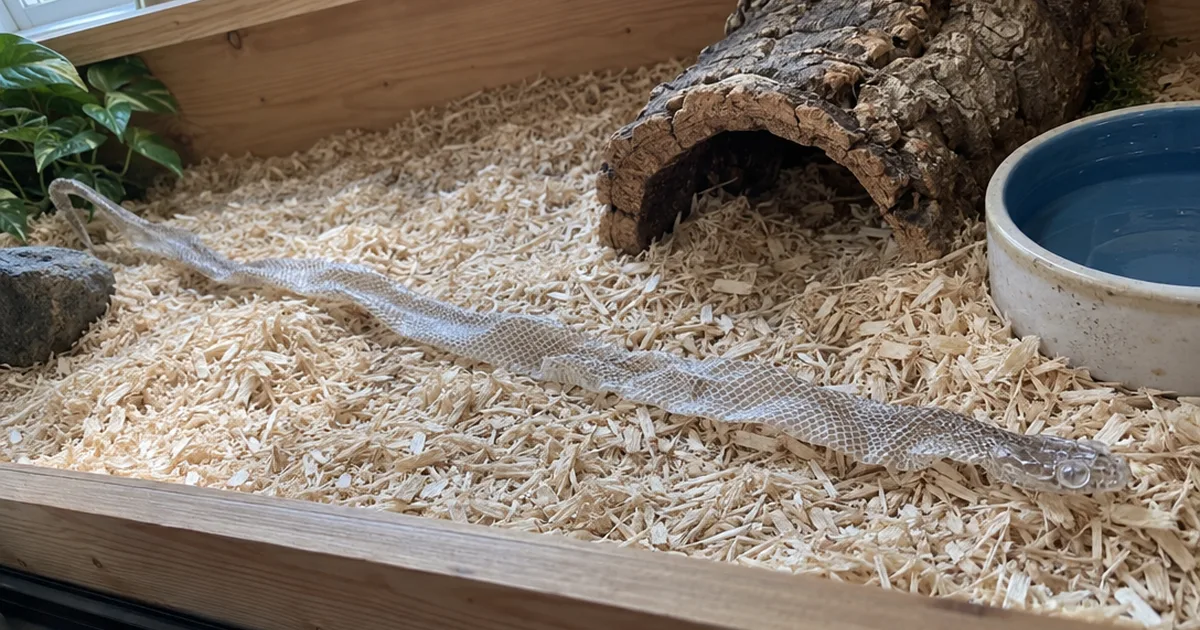
Stuck shed, respiratory infections, mites and mouth rot are the corn snake health problems South Pasadena Animal Hospital sees regularly, and each has an early sign. For shedding, cloudy blue eyes mean a shed is 3 to 7 days away.
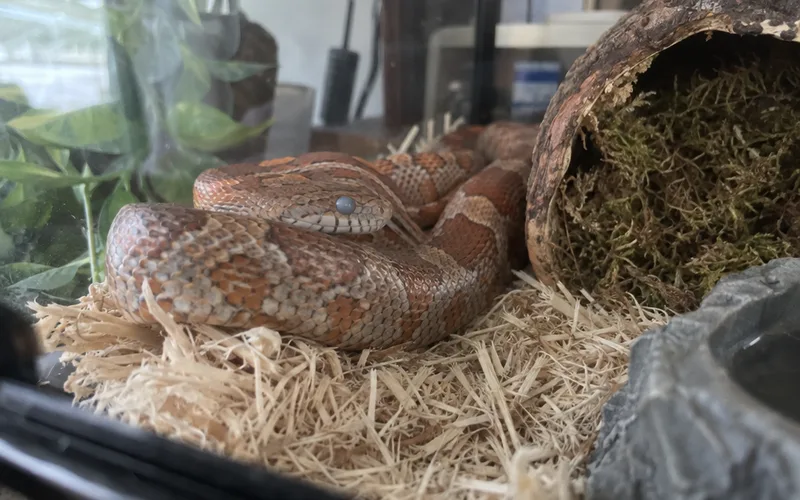
Stuck shed, especially on the eyes or tail tip, means humidity is too low. Fix the setup, never peel it yourself, and see how often snakes shed to know what’s normal.
Retained eye caps need a vet, and dysecdysis explains the full fix for stuck shed elsewhere on the body.
Watch for the other 3 early signs:
- Respiratory infections: wheezing, mucus at the mouth or nostrils, open-mouth breathing
- Mites: tiny black or red moving dots on the snake or substrate
- Mouth rot: swelling, redness or discharge around the mouth
Mites spread easily, so quarantine a new corn snake for 30 to 60 days before it goes near other reptiles. The reptile mites breakdown covers treatment.
When to Take a Corn Snake to the Vet
A new corn snake should see an exotics vet within its first few weeks, then once a year. That first wellness exam sets a baseline and catches problems early, the clinic says.
Call sooner for any breathing signs, visible mites, mouth swelling or retained eye caps. A healthy adult can skip a meal or two, but a snake off food for more than 4 to 6 weeks is worth a call.
Keeping more than one kind of snake? The snake care section covers every common pet species.
Frequently Asked Questions
Do corn snakes need a water bowl?
Yes, a corn snake needs a water bowl large and shallow enough to soak in, according to PetMD’s vet care sheet. Fill it with fresh, clean water and replace it daily.
How often should my corn snake be drinking water?
A corn snake should have fresh water available at all times, so refill its bowl every day instead of scheduling drinks. That way your snake can drink or soak whenever it needs to.
What do corn snakes like in their tank?
Corn snakes like loose substrate they can burrow in, such as aspen shavings, plus at least two hides and a humid hide with damp sphagnum moss. Give them a warm side and a cool side so they can pick their own temperature.
Can two corn snakes live together?
No, two corn snakes should not live together, because they are solitary and PetMD’s vet says shared tanks cause stress, aggression and competition. Give each snake its own enclosure.
How long do corn snakes live?
Corn snakes live 15 to 25 years with good care, and some have reached 30, according to the ReptiFiles care guide.
Final Thoughts
Good corn snake care comes down to a locked tank, a measured warm side and meals matched to your snake’s age.
This week, check your warm side and humidity against the care sheet.