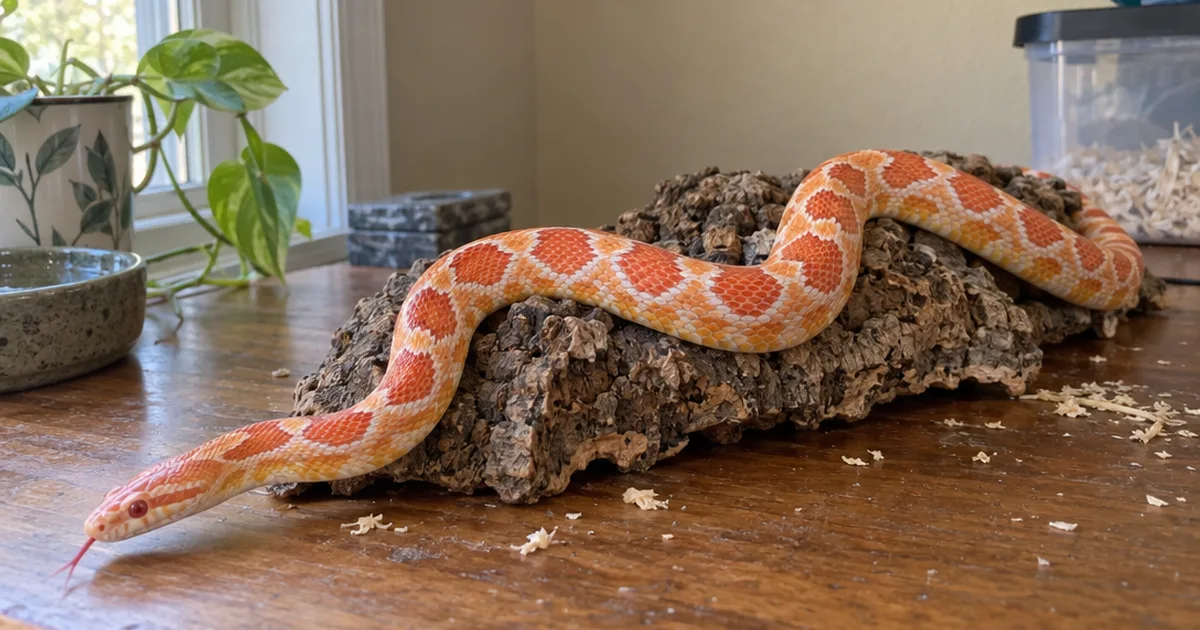
The amel was the first corn snake morph ever bred in captivity, back in 1961.
That single gene now sits under a long list of designer corn snakes, from Butter to Blizzard.
So if you’re shopping for amel corn snakes, you’re really shopping for one gene and everything breeders have stacked on top of it.
Once you see how that gene passes from parents to babies, every “het” and “66%” on a sale page starts to make sense.
What Is an Amel Corn Snake?
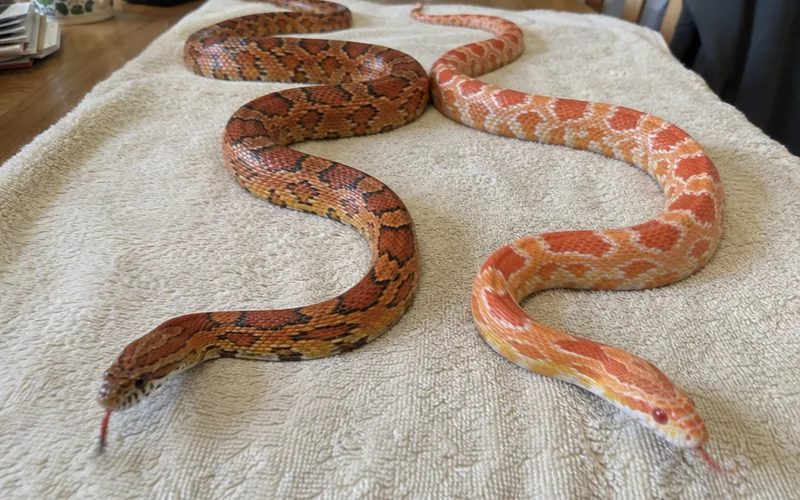
An amel corn snake is a corn snake born without melanin, the pigment that makes black and brown, so its red and orange markings show with no dark outlines. Breeder South Mountain Reptiles lists the amel as a recessive morph that removes black and brown pigment (melanin).
“Amel” is short for amelanistic.
Amelanism just means a lack of melanin.
The corn snake itself is a North American rat snake in the family Colubridae, and its scientific name is Pantherophis guttatus. It belongs to the genus Pantherophis and kills small prey by constriction.
So an amel isn’t a separate species.
It’s the same snake with its black and brown pigment switched off.
That’s what a color morph is: a color or pattern variety inside one species.
Wikipedia’s corn snake entry explains that morphs come from recombining dominant and recessive genes tied to pigment cells. New ones appear every year as breeders learn more.
You’ll also see the amel sold under other names.
The Ian’s Vivarium morph guide, a long-running hobby database of corn snake genetics, lists “Albino” and “Amel” as other names for the Amelanistic morph. So “amel,” “amelanistic” and “albino corn snake” on a listing all point to the same animal.
Here’s the amel corn snake at a glance:
| Trait | Amel corn snake |
|---|---|
| Species | Corn snake (Pantherophis guttatus) |
| Family | Colubridae |
| What the gene removes | Black and brown pigment (melanin) |
| Inheritance | Single recessive |
| Other names | Amel, amelanistic, albino |
| First found | North Carolina, 1953 |
| Adult length | 2.0 to 6.0 feet |
| Captive lifespan | 23 years or more |
Only the color and gene rows set an amel apart from a normal corn snake. Its family, size and lifespan stay exactly the same.
Is an Amel the Same as an Albino Corn Snake?
Yes, in the corn snake hobby an amel and an albino corn snake are the same morph: a corn snake with no black or brown pigment. The word albino here means only the dark colors are gone, while the reds, oranges and yellows stay.
Why do the warm colors survive?
Because red comes from a different pigment.
South Mountain Reptiles describes a separate morph, anerythristic or “anery,” which means the absence of erythrism: the red pigment in a corn snake’s skin. An anery keeps its black but loses the red, which is the opposite of an amel.
Put both genes in one snake and you lose the black and the red.
The same breeder lists that mix, with the diffused gene added, as Avalanche, also called Diffused Snow.
That’s why color words alone can confuse you.
In other words, when a listing says “albino corn snake,” read it as an amel unless the seller names another gene too.
What Does an Amel Corn Snake Look Like?
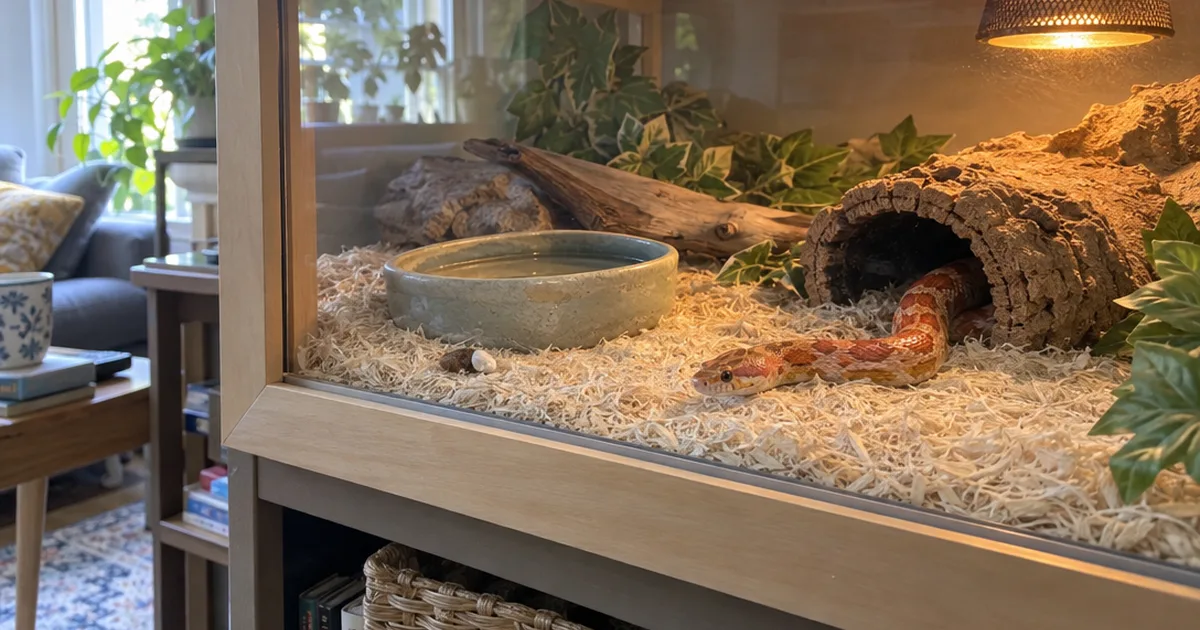
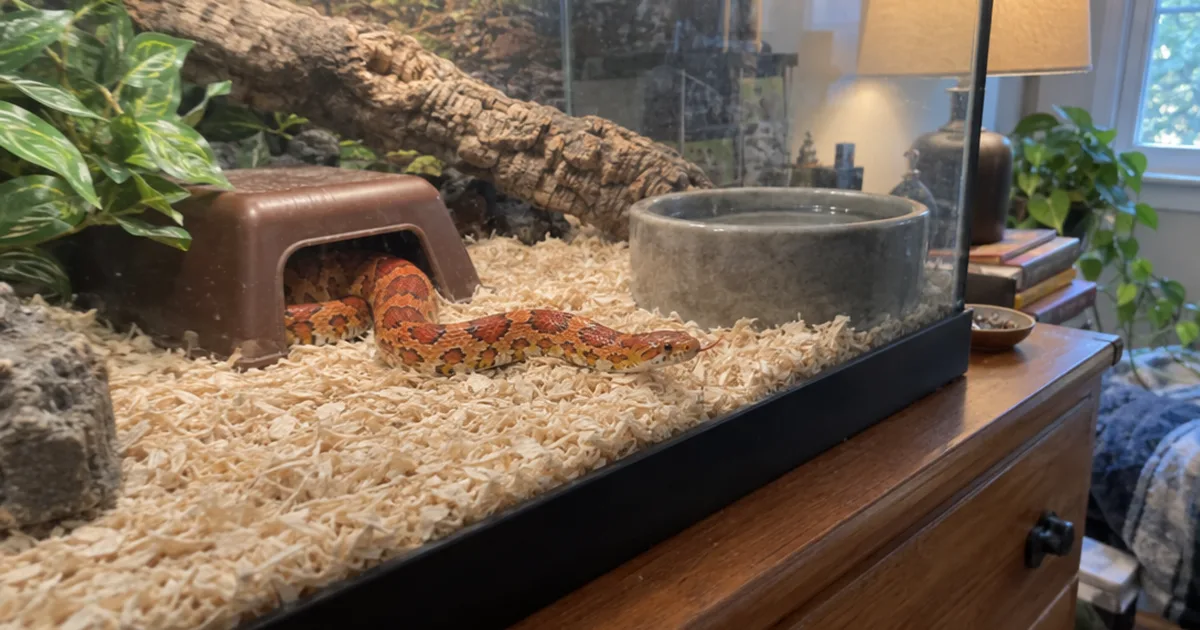
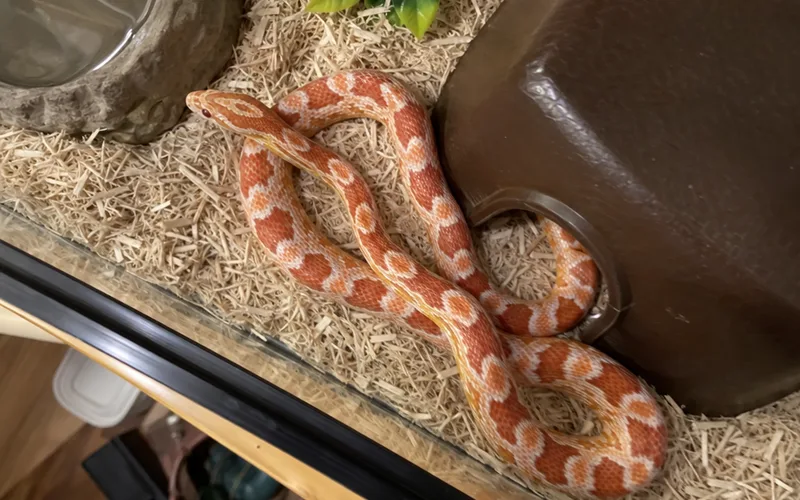
An amel corn snake shows red or orange saddle blotches on an orange, yellow or white background, with white or pale edging where a normal corn snake has black borders. The belly loses its black squares too, since melanin is the pigment that makes them.
Compare that with a wild-type snake.
Wikipedia describes the normal, or Carolina, corn snake as orange with black lines around red saddle markings and a black-and-white checkered belly. Take the black out of that picture and you have a basic amel.
The belly is the easy giveaway.
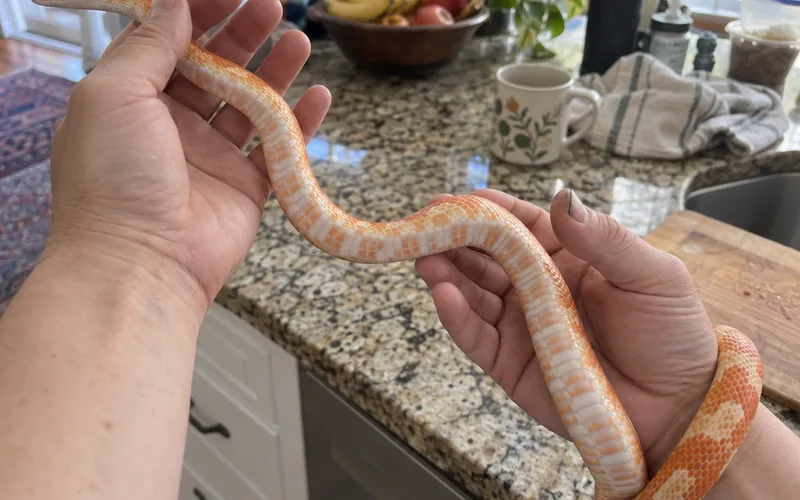
A normal corn snake’s belly has rows of alternating black and white marks. On an amel those corn snake belly checks lose their black, so only the lighter squares remain.
Here’s the part many first-time buyers miss:
A baby amel can look very different from the adult it becomes.
The same encyclopedia notes that in Candy-cane amels, the high contrast they show as hatchlings often fades with maturity. Many snakes sold as Candy-canes also develop a lot of yellow or orange in the ground color as they grow.
So the crisp red-and-white baby in a listing photo may look warmer and softer in a few years.
If you want a snake that stays high-contrast, ask to see photos of both parents as adults.
Those adult photos show you where the colors are likely heading, which a hatchling photo can’t.
How Is the Amel Gene Inherited?
The amel gene is inherited as a single recessive trait, so a corn snake only looks amel when it gets one copy of the gene from each parent. The Ian’s Vivarium guide writes the amel genotype as “a a,” meaning 2 copies of the amel gene.
What happens with only 1 copy?
The snake looks completely normal, but it can still pass the gene to its babies.
Keepers call that snake “het amel,” short for heterozygous: it carries 2 different versions of the same gene. A het has one amel copy hidden behind one normal copy.
That’s the whole system.
Every egg in a clutch gets one copy from the mother and one from the father, picked at random. The table below shows the odds for each egg in the most common pairings:
| Pairing | Amel babies | Het amel babies | Normal, non-het babies |
|---|---|---|---|
| Amel x Amel | All | None | None |
| Amel x Het amel | About 1 in 2 | About 1 in 2 | None |
| Amel x Normal | None | All | None |
| Het amel x Het amel | About 1 in 4 | About 2 in 4 | About 1 in 4 |
| Het amel x Normal | None | About 1 in 2 | About 1 in 2 |
Those are odds for each egg, not a promise for each clutch.
So a het-by-het pairing can give you more or fewer amels than one in four, the same way a coin can land heads 3 times in a row.
If you want to run the math for other genes, Ian’s Vivarium offers a free Punnett square calculator on the same site. Enter both parents’ genes and it lists the odds for every possible baby, which is what keepers mean when they search for a corn snake morph calculator.
What Does Het Amel Mean?
Het amel means a corn snake carries 1 hidden copy of the amel gene, so it looks like a normal corn snake but can produce amel babies. You can’t confirm het status from a photo, which is why keeper groups on Facebook so often get asked whether a snake is het amel.
There are only 2 ways to know.
Either you know the parents, or the snake produces amel babies when you breed it.
Now for the percentages you see in ads.
UK sellers on Pets4Homes list snakes as “66% het amel” or “50% het amel,” and those numbers are odds, not test results:
- 100% het amel: one parent was a visual amel, so every normal-looking baby carries the gene.
- 66% het amel: both parents were het. Of the normal-looking babies, 2 in 3 carry the gene.
- 50% het amel: one parent was het and the other was normal, so each baby has a 1 in 2 chance.
The 66% figure trips people up.
It comes from a het-by-het pairing: out of every 3 normal-looking babies, about 2 are hets and 1 is not, and nobody can tell which is which by looking.
Pro Tip: Ask the seller what both parents were before you pay extra for a “het.” A het with no parent records is a guess.
When Was the First Amel Corn Snake Found?
The first amel corn snake was caught in North Carolina in 1953, the Ian’s Vivarium morph guide records, and its descendants became the first captive-bred corn snake morph in 1961. That made the amel the hobby’s first corn snake morph.
The story shows the het math working in real life.
In 1959, Dr Bernard Bechtel bred the original amel to 3 normal females, and every baby from those pairings was het for amelanism. He then bred those hets back to each other, a classic het-by-het pairing.

That second step is what turned out amel babies.
From the wild-caught snake to the first captive-bred amels took 8 years.
That’s a long wait, but it proves a useful point. A recessive gene can hide for a whole generation and come back the moment 2 carriers meet.
So if you buy a het, you’re buying a gene that may stay hidden until you pair it with another carrier.
Are Amel Corn Snakes Rare?
Amel corn snakes are not rare in captivity: breeders have produced them for over 60 years, and South Mountain Reptiles lists about 20 morphs that use the gene. Low asking prices back that up, with an adult male amel listed for £20 on Pets4Homes in October 2026.
That’s the quick reply to the Reddit question, “How common are amelanistic corn snakes?”
In the pet trade, the amel is a base morph that breeders build many combinations on.
The wild is a different question.
The first amel was wild-caught, so the gene does exist in corn snakes living in their natural habitat. But none of the sources behind this guide measure how often amels turn up in wild populations, so treat any percentage you see online with caution.
What is uncommon is a specific combination.
A plain amel is easy to find, while an amel stacked with 2 or 3 other recessive genes takes more breeding to produce. In the UK listings, the snakes with extra genes carried the higher asking prices.
Key Takeaway: Don’t pay a “rare morph” premium for a plain amel. Save the bigger budget for a combination you really want.
How Much Does an Amel Corn Snake Cost?
Amel corn snake prices on UK classifieds ran from £20 for an adult male to £140 for a 3-year-old rehomed with his full setup, in Pets4Homes listings from October 2026. Juvenile amel motley stripes were listed at £60 each, and a Palmetto female listed as 66% het amel was offered for £200.
Those are UK asking prices in pounds, not US prices.
They still show you the pattern: a plain amel sits at the bottom of the range, and snakes with extra genes sit higher.
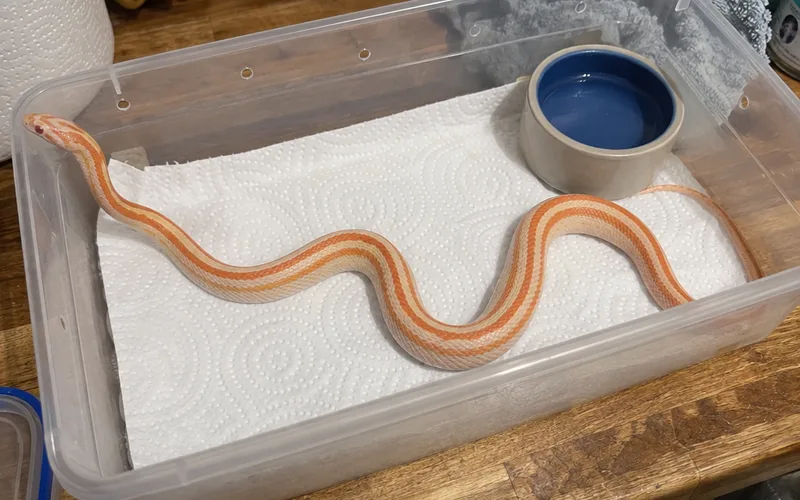
For example, the £140 rehome came with “EVERYTHING you need,” in the seller’s words. So part of that price was the enclosure and supplies, not just the snake.
What about US prices?
None of the sources here give a US price, so check the live market yourself:
- Go to MorphMarket, the reptile marketplace where many US breeders list their snakes.
- Open the corn snake category and choose the amelanistic gene.
- Sort by price and compare visual amels with listings that add other genes.
It takes a few minutes, and it gives you today’s real numbers instead of an old average.
Before you buy there, learn how MorphMarket works for shipping, seller ratings and live-arrival terms.
Then send the seller a short message. Here’s what to say:
“Hi, is this snake a visual amel or a het? Can you send photos of both parents and the snake’s last 5 feedings?”
A good seller answers all of that in one reply.
Which Morphs Are Made With the Amel Gene?
Breeders pair the amel gene with other morph genes to make combination corn snakes, such as Butter (amel plus caramel) and Avalanche (amel plus anery and diffused). Breeder South Mountain Reptiles lists these recipes on its morph photo page:
| Morph | Genes it combines |
|---|---|
| Butter | Amel + Caramel |
| Blizzard | Amel + Charcoal + Diffused |
| Avalanche | Amel + Anery + Diffused |
| Opel | Amel + Diffused |
| Fire-Cayenne | Amel + Bloodred + Red Factor |
| Motley Amel | Amel + Motley |
| Tessera Butter | Amel + Tessera + Caramel |
| Creamsicle | Amel corn x Emory’s rat snake (hybrid) |
Notice how every recipe starts with amel.
Each of those snakes needs 2 copies of amel to show it. Caramel is recessive too, so a Butter bred to a normal corn snake gives you double hets, not Butters.
If the pattern gene interests you more than color, start with motley corn snakes, the pattern behind Motley Amel.
Ultramel and the Ultra Gene
Ultramel is a corn snake that is het amel and het ultra, which the Ian’s Vivarium guide says shows a third look because amel is allelic to and codominant with ultra. Allelic means the 2 genes sit in the same spot, so a snake can carry one of each.
There’s a catch.
The same breeder says the ultra gene was borrowed from gray rat snakes, so all ultra types are interspecies hybrids. If you want a pure corn snake, skip Ultramels.
Line-Bred Amels
Some amel types aren’t new genes at all.
They’re amels selectively bred over many generations toward one look, and the corn snake’s encyclopedia entry lists these:
- Candy-cane: red or orange saddles on a white background.
- Reverse Okeetee: the black rings around the saddles become wide white rings.
- Fluorescent Orange: white borders around bright red saddles on an orange body as adults.
- Sunglow: bright ground color without the white speckling most albinos show.
Because these looks come from selective breeding, babies don’t always match their parents.
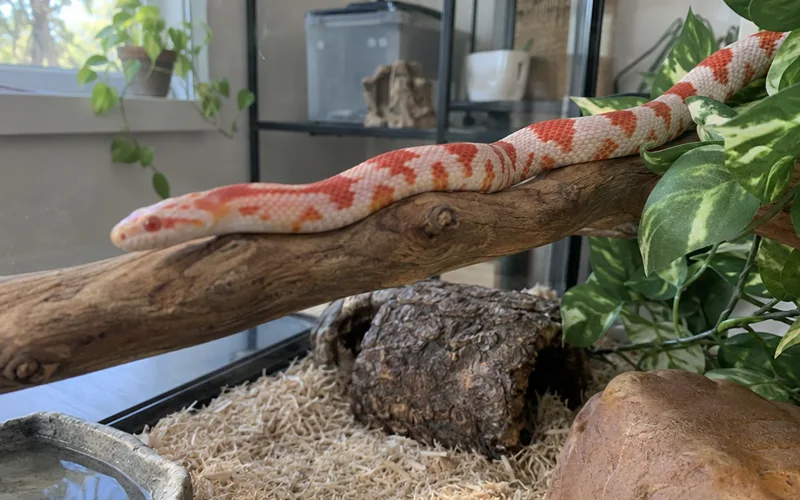
That’s one more reason to see adult photos of the parents.
Amel vs Creamsicle: How Do You Tell Them Apart?
A creamsicle is not a pure amel corn snake: it’s a hybrid of an amel corn snake and the Great Plains rat snake, also called Emory’s rat snake. Both Wikipedia and South Mountain’s morph list describe the creamsicle as an amel crossed with that rat snake.
That’s the exact question one r/snakes thread asks: “Is this an amel corn or a creamsicle?”
The honest answer is that a photo often can’t settle it.
Both snakes carry the amel gene, so both lose their black pigment. And the Great Plains rat snake, a fellow member of the genus Pantherophis, is close enough that, as the same encyclopedia notes, some hobbyists still treat it as a subspecies of the corn snake.
So what can you do?
Ask the seller for the snake’s lineage, going back at least to its grandparents. If a creamsicle is in there, the snake is part rat snake, whatever it looks like.
If you like the creamsicle look, read up on the parent side too, since rat snakes as pets have their own size and care needs.
The bottom line: buy pure amels from sellers who can show records, and treat any snake with unknown parents as unknown.
Do Amel Corn Snakes Need Different Care?
Amel corn snakes follow the same care plan as other corn snakes: breeders describe the amel gene as a change in pigment, and none of the sources here list extra care needs for it. That makes an amel as beginner-friendly as any corn snake.
That’s good news, because corn snakes have a reputation as easy first snakes.
Wikipedia ranks them second only to the ball python in popularity as pet snakes, and it credits their size, calm temperament and ease of care. Set up an amel’s habitat exactly as you would for any corn snake.
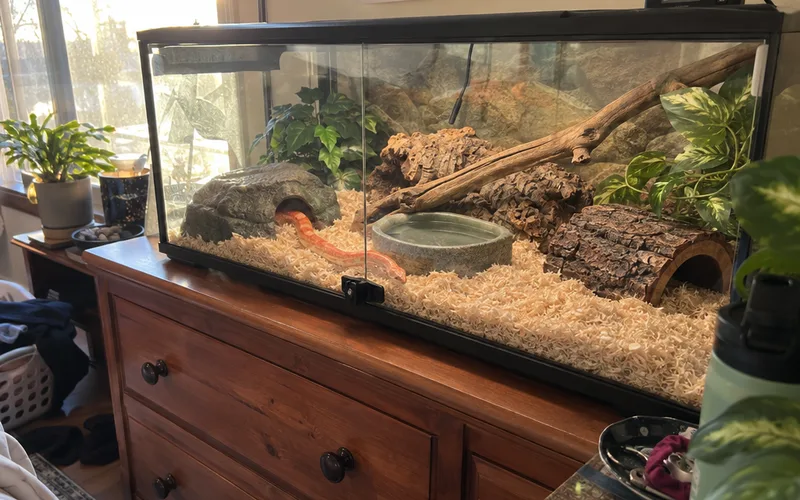
Start with the corn snake care basics for heat, hides, humidity and handling, since every corn snake in the genus Pantherophis needs the same habitat whatever its color.
Then build the tank from a full corn snake enclosure setup, and feed on the same schedule you’d use for what corn snakes eat at each age.
One UK seller’s listing on Pets4Homes adds a safety point worth copying: corn snakes need “a heat source WITH A THERMOSTAT.”
A thermostat keeps the warm spot from overheating, whatever color the snake is.
How Big Do Amel Corn Snakes Get?
Amel corn snakes grow as long as other corn snakes: 2.0 to 6.0 feet (61 to 182 cm) as adults, tail included, per the species’ encyclopedia entry. The amel gene changes color, not length.
That’s a wide range, so plan the enclosure around the bigger end.
An adult near 6 feet needs far more floor space than a hatchling tub, so check the corn snake enclosure size for each stage before you bring a baby home.
For growth by age and how to measure your own snake, see the full breakdown of corn snake size.
How Long Do Amel Corn Snakes Live?
Amel corn snakes can live 23 years or more in captivity, the same as other corn snakes, according to the same encyclopedia entry. Wild corn snakes usually live about 10 to 15 years.
That entry also records the oldest corn snake in captivity at 32 years and 3 months.
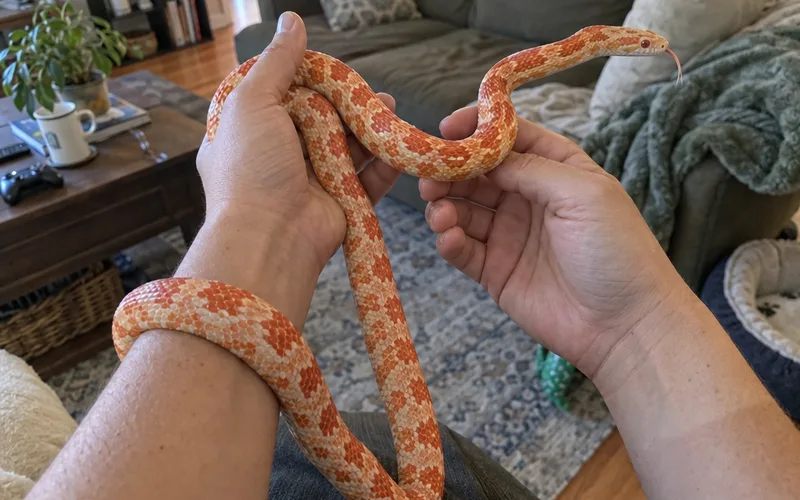
In other words, an amel bought as a baby can share your home for 2 decades.
If you’re comparing species before you commit, the snake lifespan numbers for other pet snakes put that in context.
Are Amel Corn Snakes Venomous?
No, amel corn snakes are not venomous, because the corn snake lacks functional venom and is harmless to humans, according to Wikipedia. The amel gene changes only color, so an amel bite carries no venom either.
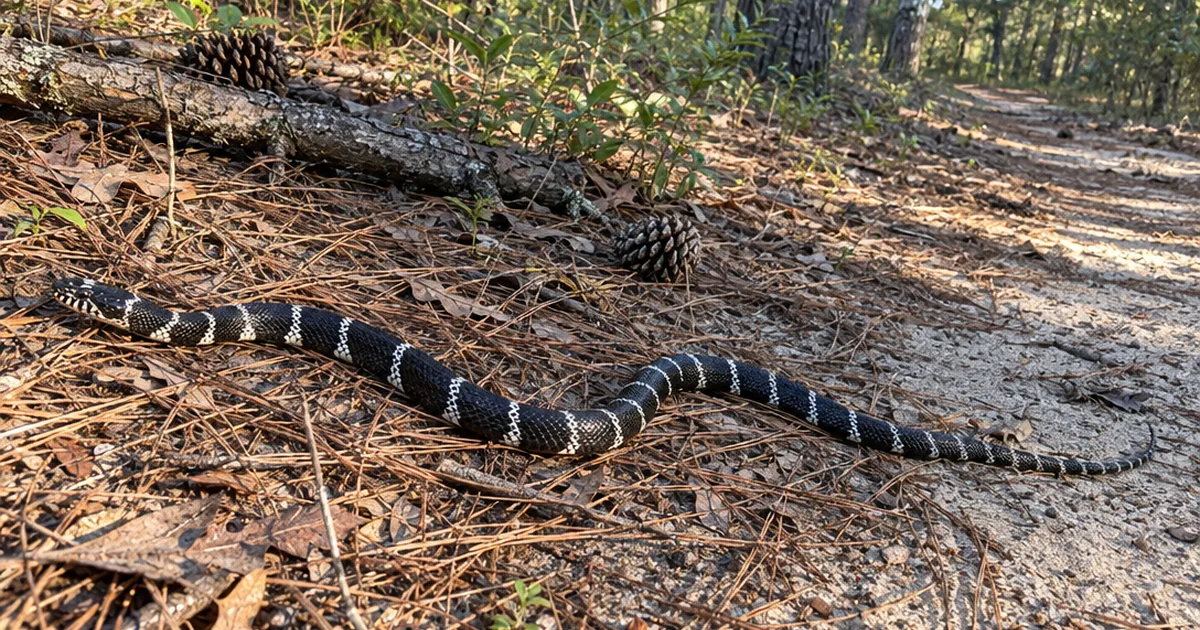
The real risk is mistaken identity in the wild.
The same entry notes that wild corn snakes look a bit like the venomous copperhead, and many are killed because of that mix-up.
So what snake is poisonous and looks like a corn snake?
The copperhead, which is venomous rather than poisonous, since it delivers its toxin by biting.
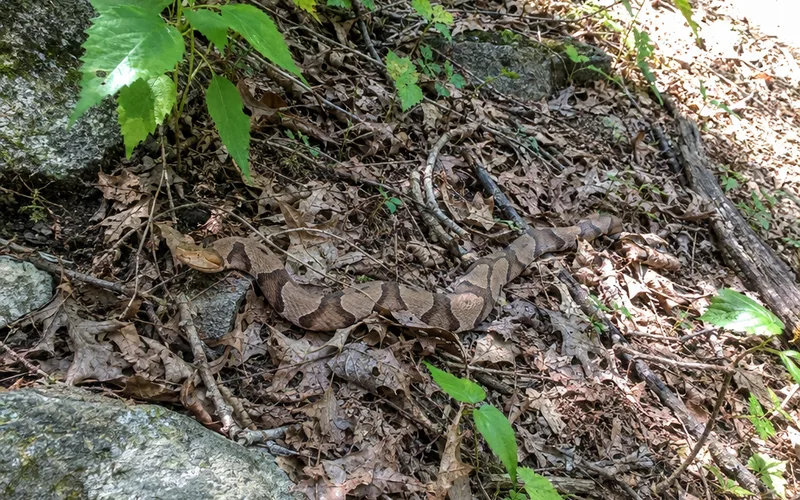
The encyclopedia lists the clues that separate a corn snake from a copperhead. A corn snake has:
- Brighter colors
- A slender build
- A slim head
- Round pupils
- No heat-sensing pits on the face
For a deeper look at bites and why corn snakes kill by squeezing, see whether corn snakes are venomous.
Note: If you see a wild snake you can’t identify, leave it alone and keep your distance.
Should You Buy a Visual Amel or a Het?
Buy a visual amel if you want the amel look now, and buy a het amel only if you plan to breed, because a het looks like a normal corn snake and its value is a gene you can’t see. Most pet buyers want the visual.
Here’s how to decide in 2 questions.
First, do you care what the snake looks like next month? If yes, buy a visual amel, since a het will never show amel colors itself.
Second, do you plan to breed? If not, a het gives you nothing extra, so don’t pay more for one.
If you do plan to breed, your pairing decides your odds:
- Amel x het amel: about 1 in 2 eggs hatch amel.
- Het x het: about 1 in 4 eggs hatch amel.
- Amel x amel: every egg hatches amel.
If you want amel babies, a pair that includes a visual amel beats a pair of hets.
And “proven” matters. A proven het has already produced amel babies, while a “possible het” or “66% het” may not carry the gene at all.
How to Pick a Healthy Amel Corn Snake
To pick a healthy amel corn snake, ask the seller for its genes, its parents and its feeding record in writing before you pay. Good listings already share this, and UK sellers on Pets4Homes post details such as “all had 7 feeds,” a date of birth and “Diet: Mouse (Frozen/thawed).”
Here’s a short checklist to work from:
- Genes: visual amel or het, and any other genes, in writing.
- Parents: photos of both parents as adults.
- Feeding: the last few meals, with prey type and frozen/thawed or live.
- Age: a hatch date, so you know how big it should be.
- Lineage: confirmation that no rat snake or creamsicle sits in the family tree.
A hatch date is easy to give. One Palmetto listing on the same UK site states a date of birth of 10 July 2024, which tells a buyer the snake’s exact age at a glance.
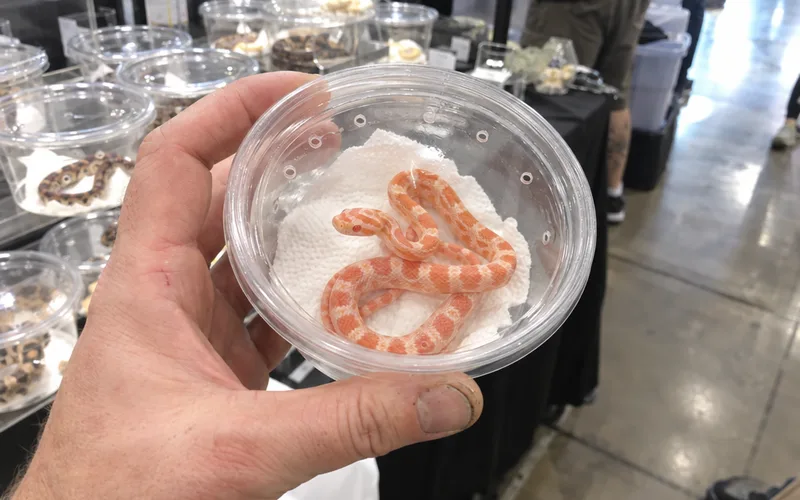
A seller who can’t answer most of these is guessing.
That matters most if you plan to breed.
If you’re buying hets to pair up later, time it with the corn snake breeding season, and keep records for every snake you buy.
The Bottom Line on Amel Corn Snakes
An amel is a corn snake with its black pigment switched off, and that one recessive gene is the base of many of the hobby’s favorite morphs.
Before you buy one this week, get the seller’s genes, parent photos and feeding record in writing.
Frequently Asked Questions
How rare is an albino corn snake?
An albino corn snake, also sold as an amel, is common in captivity rather than rare. UK sellers on Pets4Homes listed an adult male amel for £20 in October 2026, and breeder South Mountain Reptiles lists about 20 morphs built on the gene.
Are albino snakes harder to care for?
An albino (amel) corn snake uses the same care plan as any other corn snake, and none of the sources here report extra needs tied to the amel gene. Set it up from a standard corn snake care sheet and keep a thermostat on the heat source.
How big do anery corn snakes get?
Anery corn snakes reach the same adult size as other corn snakes, 2.0 to 6.0 feet including the tail, per Wikipedia’s corn snake entry. Anery removes red pigment, so it changes color, not length.
Can two amel corn snakes have normal babies?
No, two amel corn snakes can only produce amel babies, because each parent carries 2 copies of the amel gene and has nothing else to pass on. The babies can still carry other hidden genes from their parents.
Is an amel corn snake good for beginners?
Yes, an amel corn snake suits beginners as well as any corn snake does. Wikipedia’s corn snake entry credits the species’ size, calm temperament and ease of care for its place as the second most popular pet snake after the ball python.