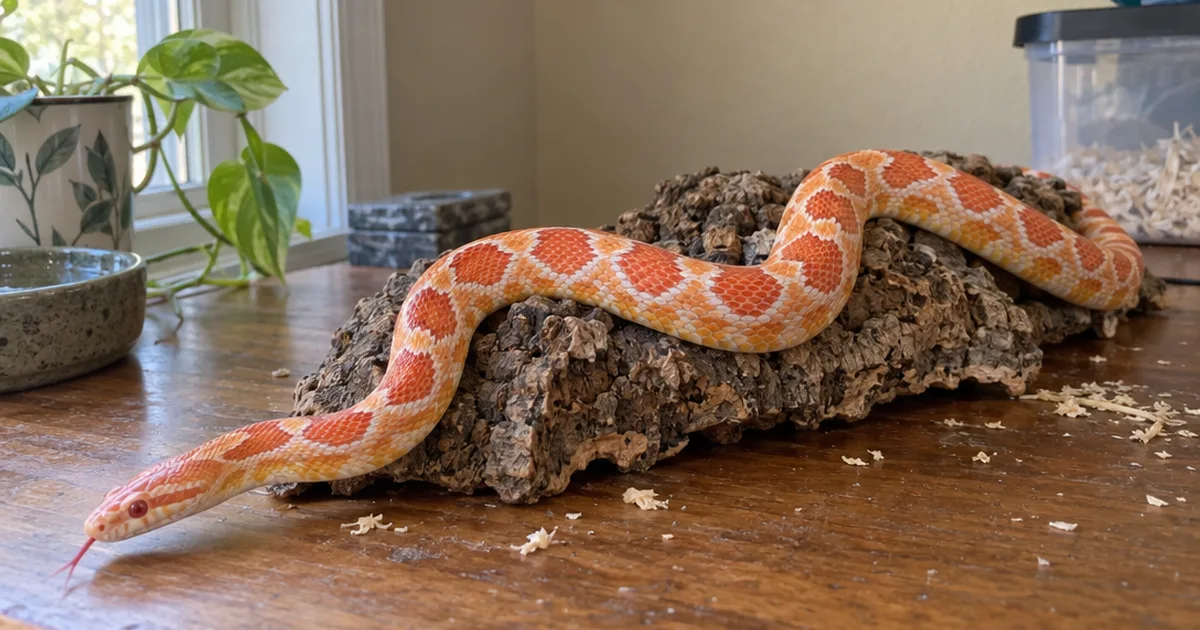
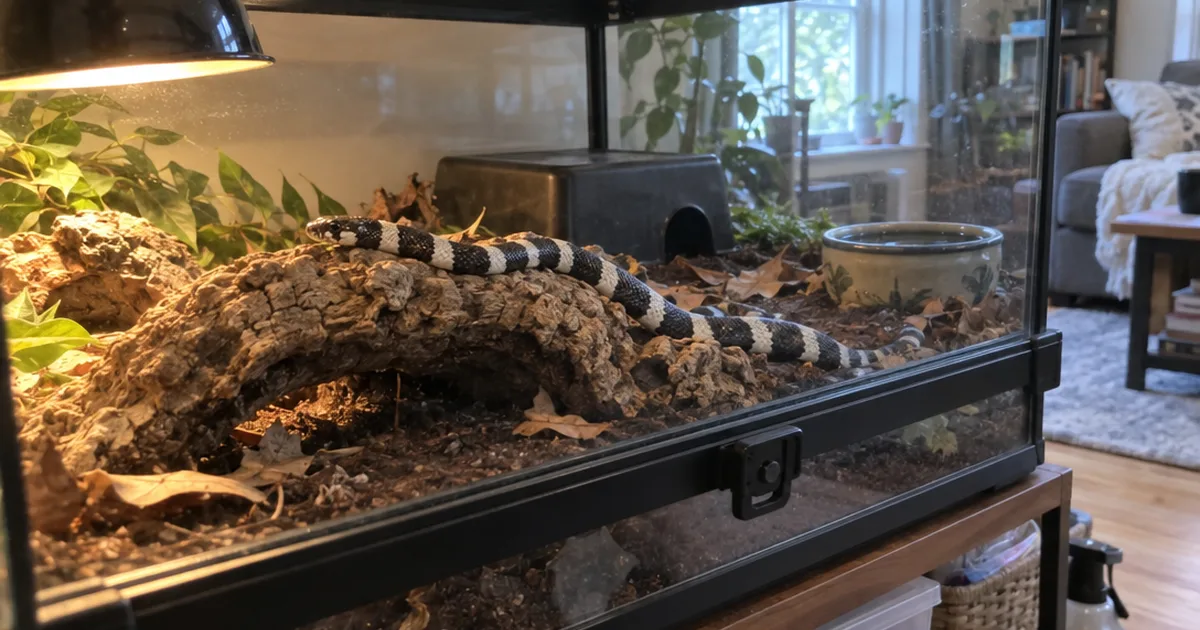
There are around 45 kingsnake subspecies, and every one should live alone.
Kingsnakes eat other snakes, so the ReptiFiles kingsnake care sheet calls one snake per enclosure the safest setup.
That rule sets the tone for kingsnake care: these are active, curious snakes.
Below are 8 steps with the numbers to hit, plus the signs that mean it’s time for a vet.
How to Care for a Kingsnake Step by Step
Kingsnake care comes down to a secure enclosure of at least 4 x 2 x 2 feet, an 85-90°F basking spot over a cooler side, UVB, 40-60% humidity and frozen-thawed prey on a schedule set by the snake’s age.
The steps use the California kingsnake, one of the most popular pet snakes in the US, as the model.
Step 1: Know Which Kingsnake You Have
Start by finding out which kingsnake you have, because its adult length decides the enclosure size you’ll need.
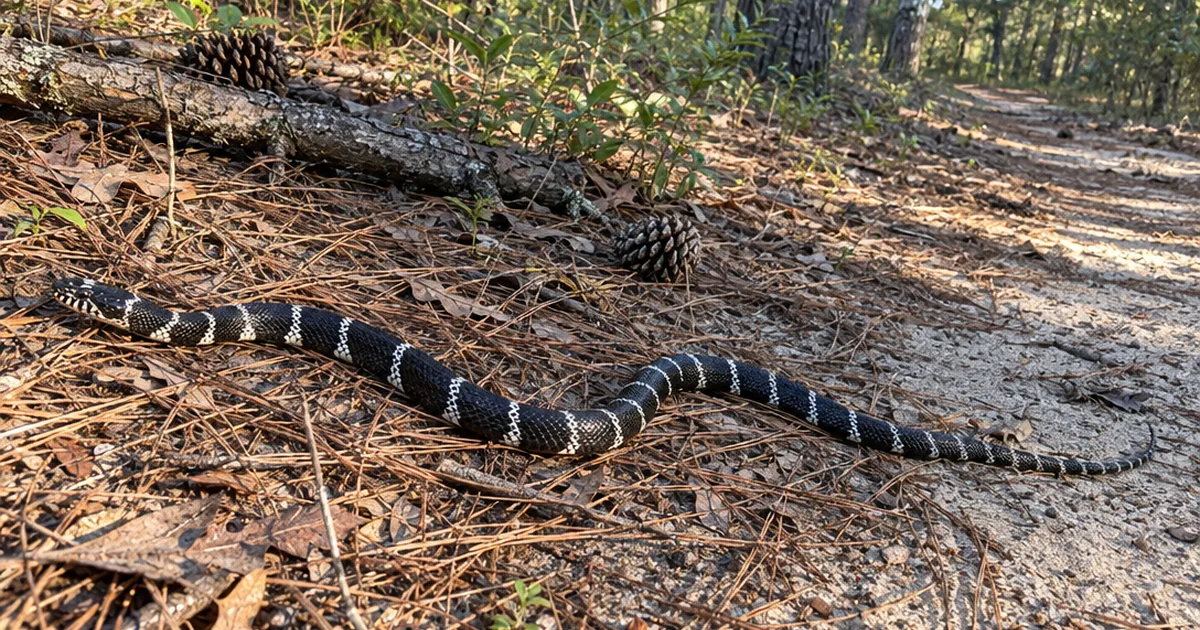
Kingsnakes are Lampropeltis snakes in the Colubridae family. The ReptiFiles care sheet counts around 45 subspecies, found across North America in habitats from forests to deserts.
The ones you’ll see for sale in the US are mostly the California kingsnake and the Mexican black kingsnake. You’ll also meet the eastern kingsnake, whose scientific name is Lampropeltis getula, and the Florida kingsnake.
Adult length varies a lot between species, and the king snake size breakdown has the numbers for each one. Black kingsnakes have their own black kingsnake size ranges, while California kingsnake morphs cover the color patterns you’ll see from breeders.
Ask the seller for the species, then plan the enclosure around its adult size.
Step 2: Set Up a Secure 4 x 2 x 2 Ft Enclosure
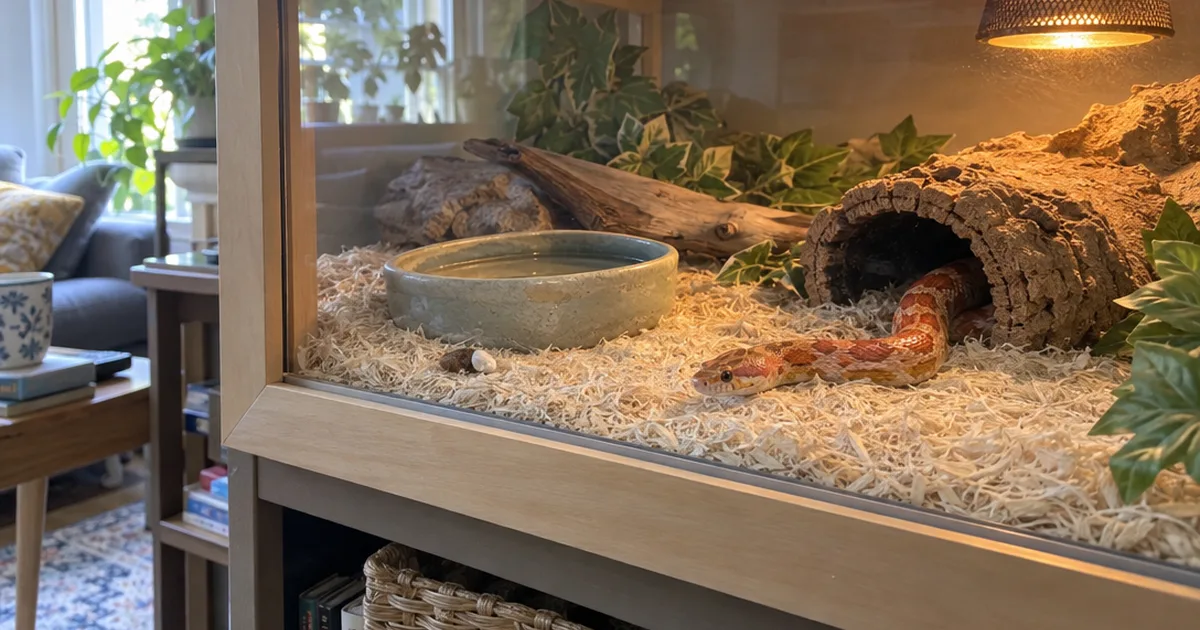
An average adult kingsnake needs an enclosure of at least 4 x 2 x 2 feet. ReptiFiles puts that minimum at 48 x 24 x 24 inches, and snakes over 4 feet long need more room.
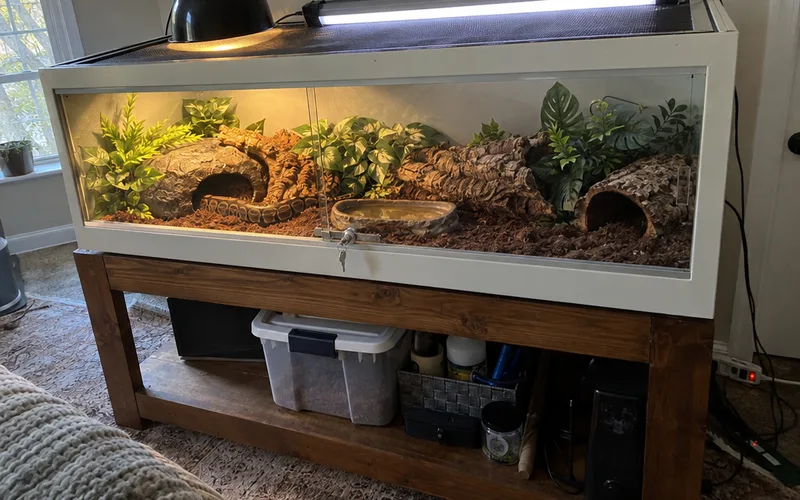
Height matters too. The care sheet wants at least 18 inches so lamps sit at a safe distance, or 24 inches for larger species.
Next, plan for escapes from the tank.
Tree of Life Exotic Pet Medical Center, a vet hospital for exotic animals, calls kingsnakes “notorious escape artists.” It tells owners to use tight-fitting lids and secure latches, and a front-opening glass or plastic terrarium with locking doors handles both.
Keep exactly one kingsnake in that enclosure. Kingsnakes eat snakes, so two together risk cannibalism.
Step 3: Add Deep Substrate and Snug Hides
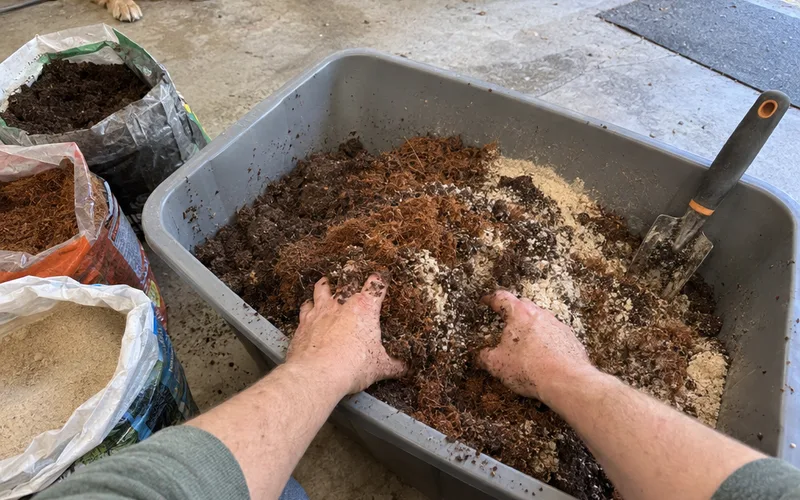
A kingsnake enclosure needs about 4 inches of loose substrate, enough for the snake to dig and burrow. In a 4 x 2 x 2 setup, ReptiFiles says that takes at least 80 quarts.
Soil works best because it holds moderate humidity. The cheapest option is a DIY mix of 40% plain topsoil, 40% Zoo Med ReptiSoil and 20% play sand.
Aspen shavings also work. Tree of Life lists aspen and paper bedding as options and says to avoid cedar or pine.
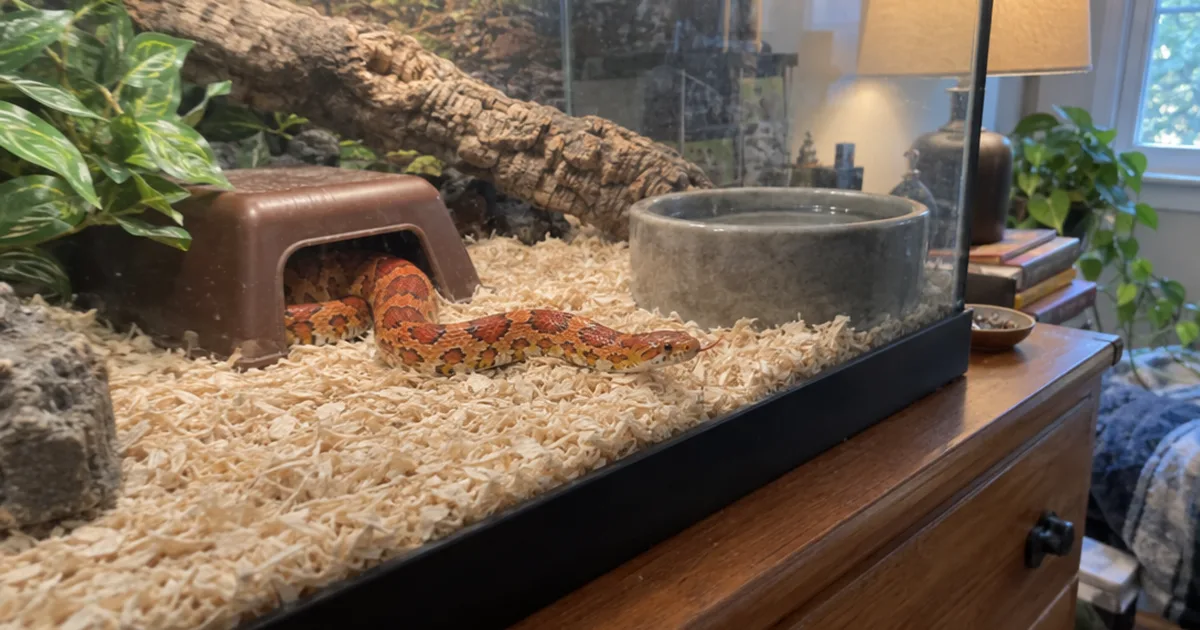
Then add hides at both ends of the gradient, each small enough to give the snake a tight fit when coiled.
That snug fit feels safe, and a kingsnake with plenty of safe hiding spots is more likely to spend time out in the open.
Put a humid hide with damp sphagnum moss on the cool side, then add cork, branches and plants around the terrarium.
Step 4: Build a Heat Gradient With an 85-90°F Basking Spot
A kingsnake needs a basking surface of 85-90°F and a cool side of 70-78°F. Those ReptiFiles temperature targets let the snake move between warm and cool spots.
That temperature gradient matters because kingsnakes are cold-blooded, or ectothermic. They can’t make their own body heat, so they warm up by basking and cool down by moving away.
To build the warm end, put halogen flood bulbs in a dome fixture over a flat stone. The care sheet says 2 bulbs are usually enough to heat the coiled body of an average kingsnake.
Tree of Life gives close numbers for California kingsnakes: an 85-88°F warm side and a 72-78°F cool side. Either way, run the heat on a thermostat and skip heat rocks, which the clinic says to avoid.
Here’s how to tell if your setup is right:
- Basking for hours every day: the snake probably needs more heat.
- Never leaving the cool end: it probably needs less.
- Moving between both ends: the gradient is working.
Check the basking surface with an infrared temperature gun, and the warm hide with a digital probe thermometer.
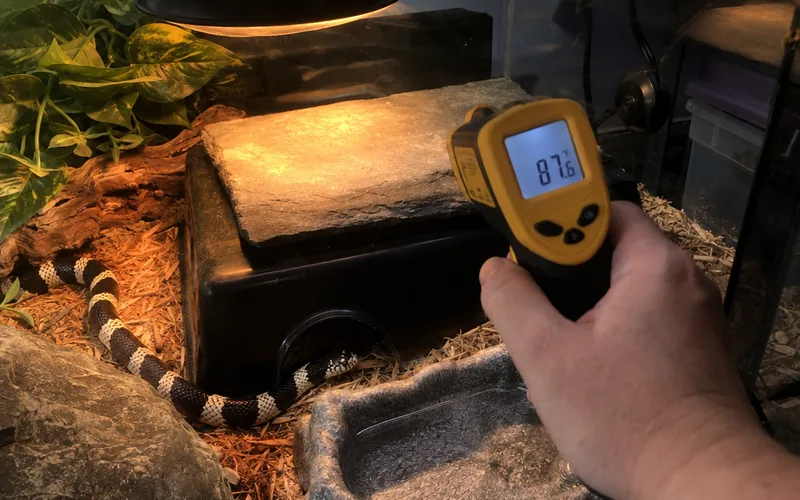
What about heat at night? The care sheet says to turn heat sources off overnight, and the clinic says a California kingsnake’s enclosure can drop to 68-72°F.
So add gentle night heat only if your room gets colder than that.
Step 5: Add UVB Lighting on a 12-Hour Day
Kingsnakes do best with low-output UVB lighting on a 12-hour day. ReptiFiles recommends a Zoo Med T5 HO ReptiSun 5.0 or Arcadia T5 HO Forest 6% tube spanning half the enclosure on the warm side.
In fact, the guide aims for a UV index of 2.0-3.0 in the basking area. A Solarmeter 6.5 is the tool that measures it.
Is that light required? Not strictly.
Kingsnakes can survive without it in captivity, but Tree of Life calls low-output UVB of 2-5% “beneficial for overall health and natural behavior.” So add it from day one rather than treating it as an upgrade.
Run the lights for about 12 hours, matching local sunrise and sunset if you can, on a light timer.
Step 6: Hold Humidity at 40-60% and Keep Fresh Water
Kingsnakes need an average humidity of 40-60%. ReptiFiles says to measure it with a digital probe hygrometer placed in the middle of the enclosure.
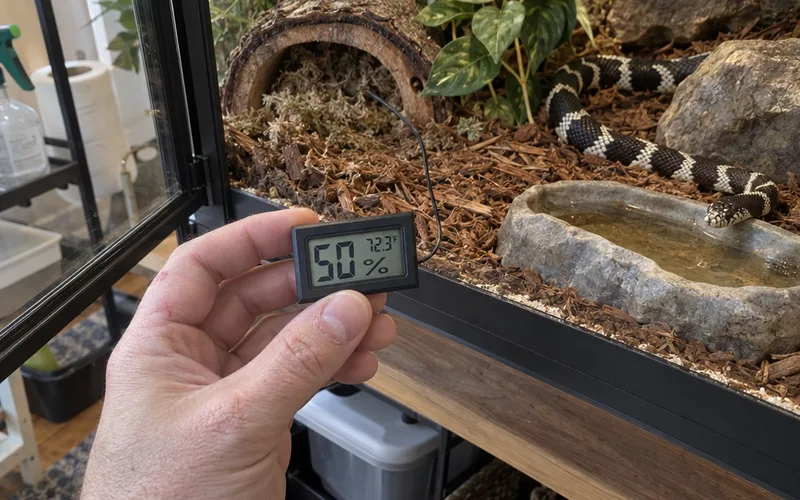
Humidity that stays outside that range can hurt a kingsnake’s health. A slightly higher reading on the cool end, or at night, is normal.
If the air gets too dry, mist the enclosure and keep the moss in the humid hide damp.
Drinking water matters just as much. Give your kingsnake a bowl big enough to curl up in, and scrub it weekly with a disinfectant such as F10SC for good hygiene.
Step 7: Feed Frozen-Thawed Prey on a Schedule
Adult kingsnakes eat every 10 to 14 days, juveniles every 7 to 10 days and hatchlings every 5 to 7 days. That feeding schedule from ReptiFiles comes with a size rule.
Prey should be no more than 1.5 times the snake’s widest point, or about 10% of its body weight.
Kingsnakes are carnivores that need a diet of whole animals. In captivity, most keepers feed mice and rats, the rodents sold frozen for snakes.
Wild kingsnakes also eat snakes, lizards, birds, eggs and amphibians, so the guide suggests some variety in the diet, such as quail.
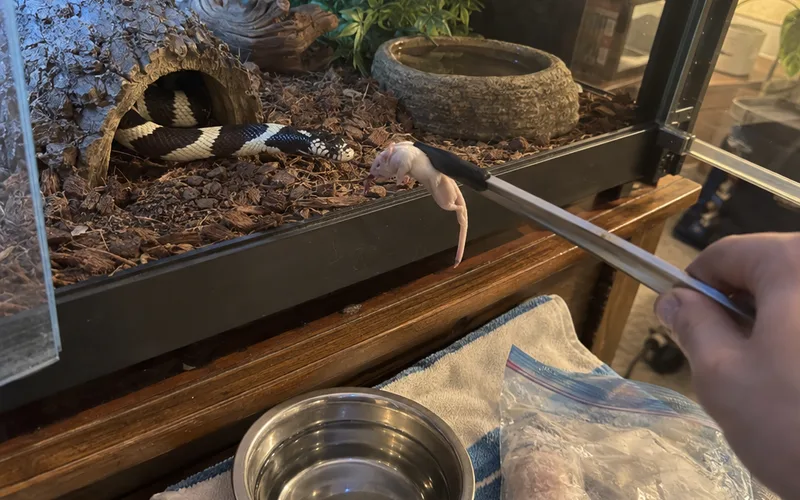
Offer prey frozen-thawed rather than live, which the guide says is safer for the snake and more humane.
Here’s how a feeding goes:
- Every so often, lightly dust the frozen prey with a 50/50 mix of calcium and a multivitamin with vitamin D, such as Arcadia Revitalise D3, before thawing.
- Thaw it completely before you offer it.
- Offer it with soft-tipped tongs, so a hungry strike lands on the prey and not your fingers.
- Leave your kingsnake alone for 48 hours to digest.
If your kingsnake starts to look fat, cut back on meal size or how often you feed. Prey size grows with the snake, and the basics of what reptiles eat show how that works across species.
Step 8: Handle Gently and Keep a Cleaning Routine
A new kingsnake needs about 2 weeks to settle in, and you shouldn’t handle it until it’s eating regularly, according to ReptiFiles.
Once it’s eating, keep the first sessions under 5 minutes. Work up to longer ones, handling at least weekly but no more than once a day.
Let it crawl onto your hand instead of grabbing it, and support its body from below. Young kingsnakes can be defensive, so learning whether king snakes are friendly and what a king snake bite feels like helps you stay calm.
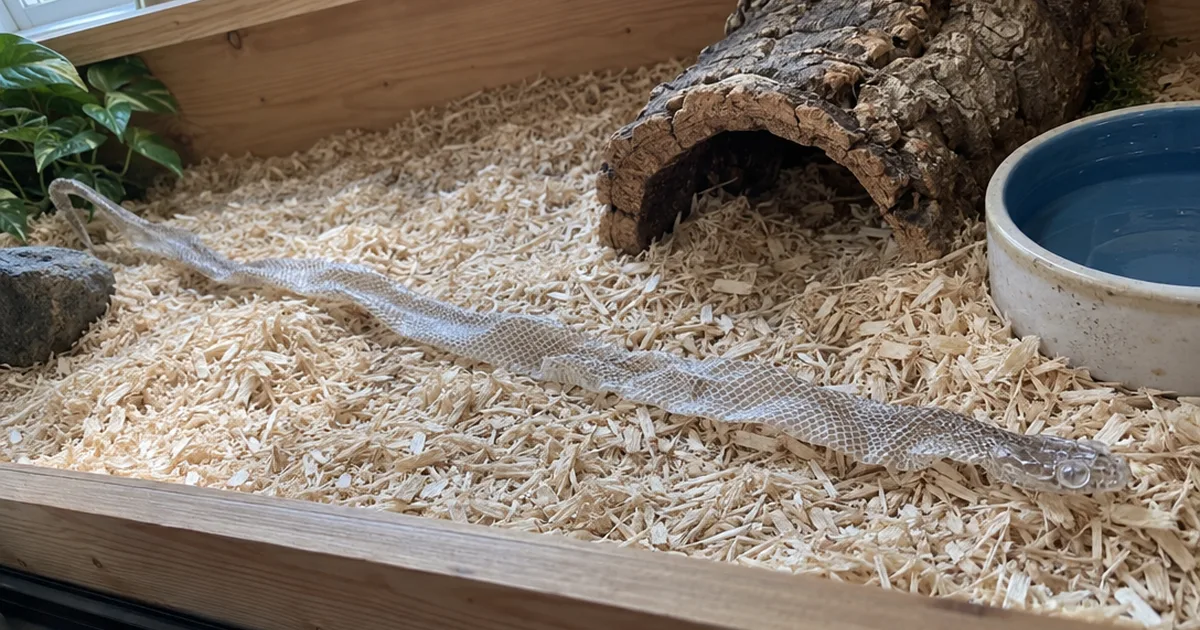
Skip handling during a shed and for 48 hours after a meal, as Tree of Life advises. A scared kingsnake may musk, releasing a smelly liquid, but the clinic says that usually fades with handling.
Cleaning is simple:
- Daily: remove feces, urates and dirty substrate.
- Weekly: scrub and refill the water bowl.
- Every 3 to 4 months: replace all the substrate.
What You Need for Kingsnake Care
A kingsnake care kit has 4 parts: the enclosure and substrate, heat and UVB lights, measuring tools, and food. Buy it all before your kingsnake comes home, so you can run the setup for a few days and check your numbers.
The two tools people skip matter most: a temperature gun for the basking surface and a digital hygrometer for humidity.
Kingsnake Care Sheet at a Glance
This kingsnake care sheet pulls the ReptiFiles and Tree of Life targets for an average adult into one list:
- Enclosure: 48 x 24 x 24 inches minimum, bigger for snakes over 4 feet.
- Substrate: about 4 inches of soil, aspen or a soil mix.
- Basking surface: 85-90°F.
- Cool side: 70-78°F.
- Night: heat off, down to about 68-72°F.
- UVB: 5-6% T5 HO tube over the warm half, 12 hours a day.
- Humidity: 40-60%.
- Adult feeding: every 10 to 14 days.
- Supplements: a light calcium and vitamin dusting now and then.
- Handling: weekly to daily, never within 48 hours of a meal.
Print it, then tape it near the enclosure so the daily check takes a minute.
Are Kingsnakes Good for Beginners?
Kingsnakes are a good first snake for most new keepers, because ReptiFiles says they stay a manageable size, cope with imperfect setups and usually handle well. The California and Mexican black kingsnakes are the most popular picks.
They’re also harmless to people, since king snakes aren’t venomous and have no venom to deliver in a bite.
The catch is commitment. Tree of Life Exotic Pet Medical Center gives a California kingsnake 15-20+ years, and the care sheet says 20 years or more is possible.
Compare that with other species in the snake lifespan breakdown before you buy.
Like the look but want something a little different? The milk snake is a close relative in the same genus, so check milk snake size for the type you want first.
Still choosing your first reptile? The snake care basics cover what every pet snake needs before you narrow it down.
When to Take a Kingsnake to the Vet
Take your kingsnake to a reptile vet if it refuses food for more than 3 to 4 weeks or shows breathing trouble, weight loss or stuck shed. Those are among the warning signs Tree of Life lists for California kingsnake owners.
The full list from Tree of Life Exotic Pet Medical Center:
- Refusing food for more than 3 to 4 weeks
- Wheezing, open-mouth breathing or nasal discharge
- Lethargy, bloating or sudden weight loss
- Retained shed or stuck eye caps
The clinic also recommends a wellness exam soon after you buy a kingsnake and an annual checkup to track its weight and health.
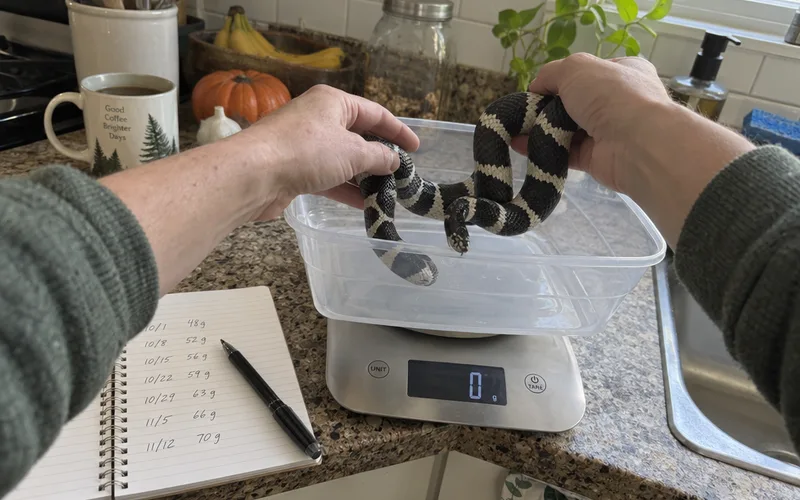
Weigh your snake on the same kitchen scale every few weeks, because a slow drop is easier to spot on paper than by eye.
For stuck shed, check humidity and the water bowl first, since the clinic wants a bowl big enough to soak in during shedding. If shed still sticks, the dysecdysis breakdown explains why and how vets treat it.
Frequently Asked Questions
Do kingsnakes need heat at night?
Kingsnakes don’t need their heat lamps at night, because ReptiFiles says heat sources should be turned off overnight. Tree of Life Exotic Pet Medical Center says a California kingsnake’s enclosure can drop to 68-72°F at night, so add gentle heat only if your room gets colder than that.
How often should you feed a kingsnake?
An adult kingsnake should eat every 10 to 14 days, a juvenile every 7 to 10 days and a hatchling every 5 to 7 days, according to ReptiFiles. Cut back on meal size or frequency if your snake starts looking fat.
Can two kingsnakes live together?
No, two kingsnakes should not share an enclosure, because kingsnakes eat other snakes and cage mates risk cannibalism. ReptiFiles says one kingsnake per enclosure is the safest setup.
How long do kingsnakes live as pets?
Pet kingsnakes usually live 15 to 20 years or more with good care. Tree of Life Exotic Pet Medical Center gives 15-20+ years for California kingsnakes, and ReptiFiles says 20 years or more is possible.
Final Thoughts
Good kingsnake care is mostly about a few measured numbers: a big, escape-proof enclosure, a warm basking surface with a cooler end, steady humidity and a meal every 10 to 14 days for an adult.
This week, buy an infrared temperature gun and a digital hygrometer, then check your setup against the care sheet above before your kingsnake moves in.