A chameleon’s UVB bulb can start failing at 6 months while it still glows.
A veterinary clinic’s care sheet warns about exactly that, because chameleons need that light to use the calcium they eat.
Chameleon care is full of traps like that.
Below are the 8 steps that matter, in the order you’d set them up, each with the numbers vets give for it.
Here’s the short version:
- Best for: owners ready for daily care and a tall cage. Skip it if you want a pet to hold often.
- Cost: $30 to $300 for the chameleon, per The Spruce Pets in June 2025.
- Time: run the cage for 2 days before your chameleon arrives.
- First step: decide on a species, then size the cage for it.
How to Care for a Chameleon Step by Step
Chameleon care follows 8 steps, starting with picking a species, building a tall screen cage, then adding heat, UVB and dripping water. The last 3 steps are feeding live insects, dusting them with calcium and keeping the cage clean.
Step 1: Pick a Beginner-Friendly Species
Start with a captive-bred veiled chameleon if this is your first one.
Pender Veterinary Centre calls veiled chameleons “one of the hardiest and easily kept species of chameleons,” though they still need careful husbandry.
Wild-caught animals are usually stressed and carry a heavy load of parasites, warns veterinarian Lianne McLeod at The Spruce Pets. So ask the seller if yours was bred in captivity.
Two other species are common pets.
A panther chameleon has similar needs to a veiled but jumps when startled, while a Jackson’s chameleon needs cooler temperatures. The veiled chameleon care guide covers the beginner favorite in full.
Step 2: Set Up a Tall Screen Cage
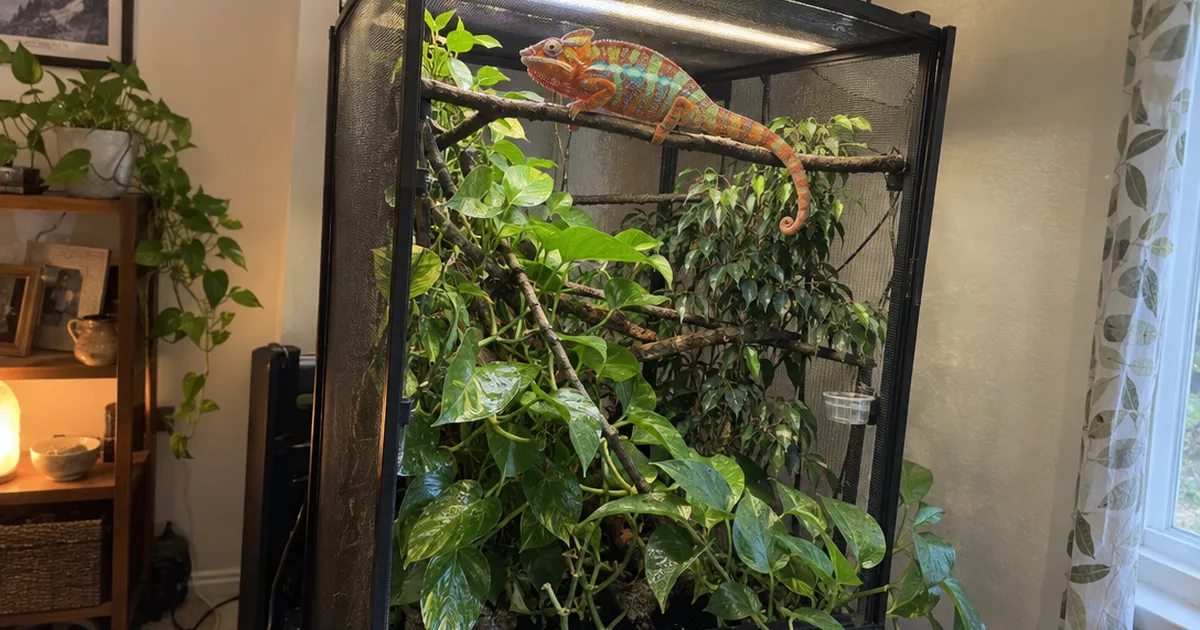
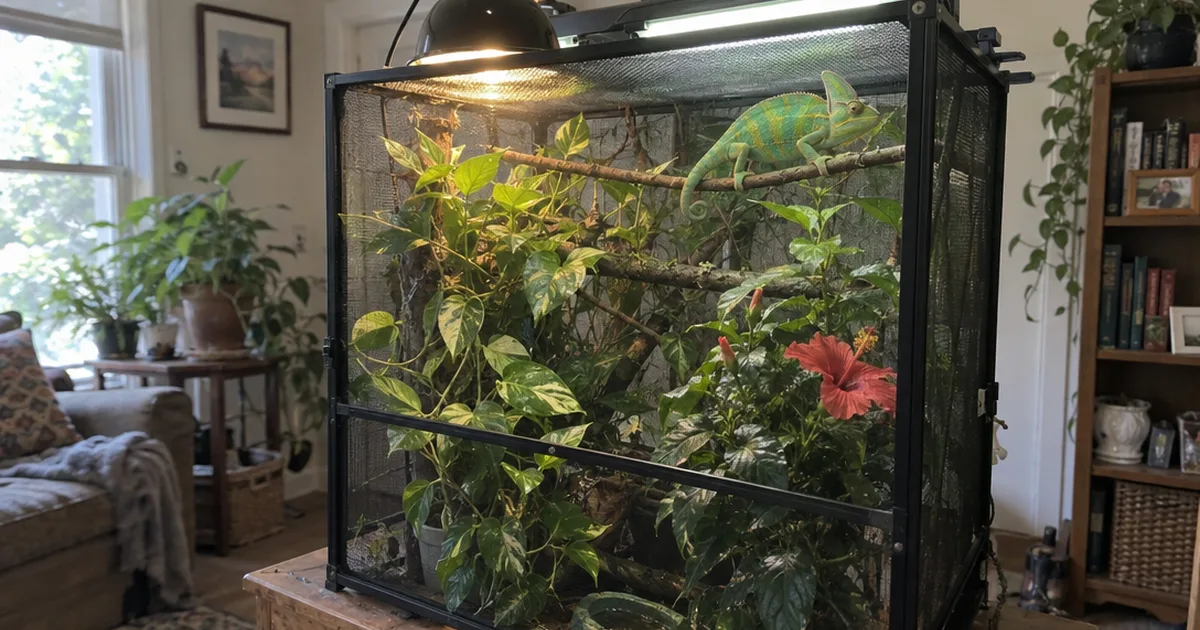
A chameleon needs a tall cage with mesh on most sides, because it lives in trees and needs moving air.
Pender Veterinary Centre lists a minimum of 1.5 x 1.5 x 3 feet tall and says larger is better. For larger chameleons, The Spruce Pets recommends 3 x 3 x 4 feet tall.
Skip the glass aquarium.
Glass walls don’t give enough ventilation or climbing room, and a chameleon’s reflection can look like a rival. Fill the cage with branches of different thicknesses and non-toxic plants such as pothos, hibiscus and schefflera.
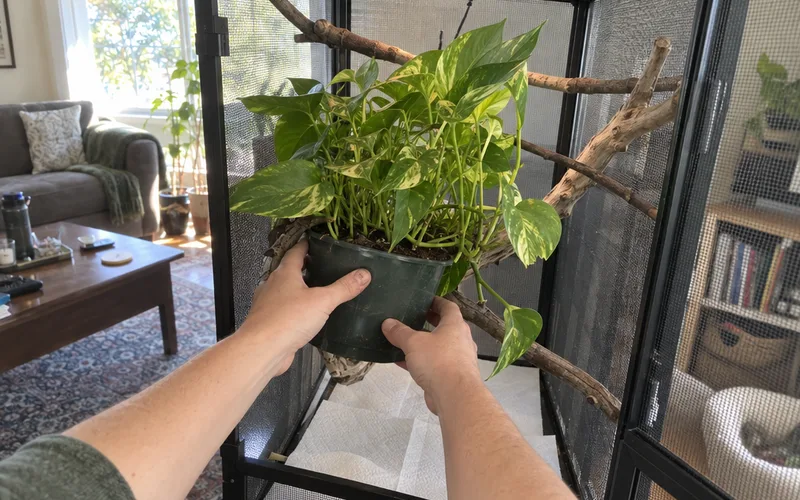
Keep the floor bare or use paper towels or reptile carpet, and skip loose substrates.
One chameleon per cage. Cage mates lead to fighting and stress.
The chameleon enclosure setup walkthrough shows a full build, and the best chameleon enclosure picks compare cages you can buy.
Step 3: Heat a Basking Spot for Your Species
Chameleons need a warm-to-cool gradient, with a basking spot up top and a cooler zone lower down, and the right numbers depend on the species.
Here are the ranges from the same clinic’s care sheet:
- Veiled: 84 to 92°F, basking near 94 to 100°F
- Panther: 75 to 85°F, basking near 100°F
- Jackson’s chameleon: 70 to 80°F, basking near 86°F
Put the heat bulb above a top branch, then check that branch with a thermometer. At night, temperatures can drop by 10 to 15 degrees; add a night heat source only if your room gets much colder.
Step 4: Add UVB Lighting on a Daily Cycle
Chameleons need UVB light to make vitamin D3, which lets them absorb calcium.
Without it, they can develop metabolic bone disease, where bones turn brittle and fracture. Learn the early signs of MBD so you catch it early.
Here’s how to set up the lighting:
- Mount a linear UVB tube across the top of the cage, within 8 to 10 inches of the basking spot.
- Run it about 10 hours a day, the schedule McLeod gives.
- Write the install date on the fixture and replace the tube every 6 to 8 months.
That last step matters because Pender’s care sheet says UVB output drops off at about 6-8 months even while the bulb still lights up.
Step 5: Give Water the Way Chameleons Drink
Chameleons drink moving droplets from leaves, so most will ignore a water bowl.
The same vet clinic says a drip system works when it runs about 3 drops per second. Hand misting alone is not enough water, the clinic adds.
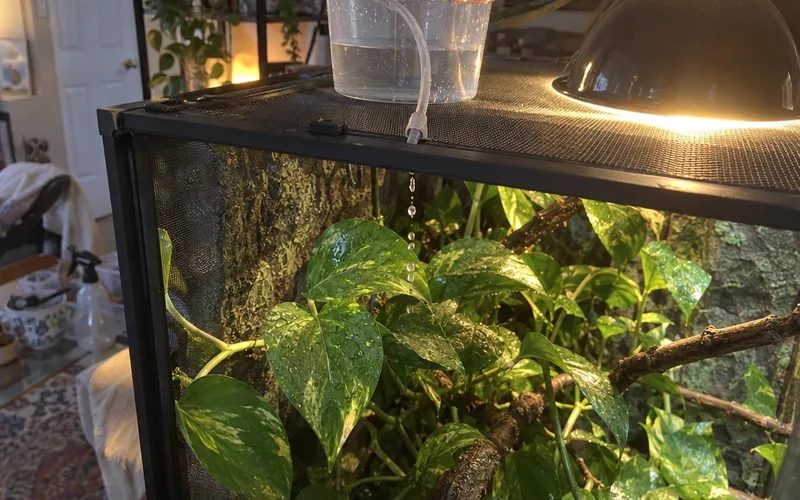
Set the drip above a plant so drops land on leaves your chameleon can reach. Then mist the habitat 2 to 3 times a day as well, which keeps leaves wet and helps humidity.
Step 6: Feed Gut-Loaded Insects Every 1 to 2 Days
Pet chameleons eat live insects, and Pender’s care sheet says to feed them every 1 to 2 days.
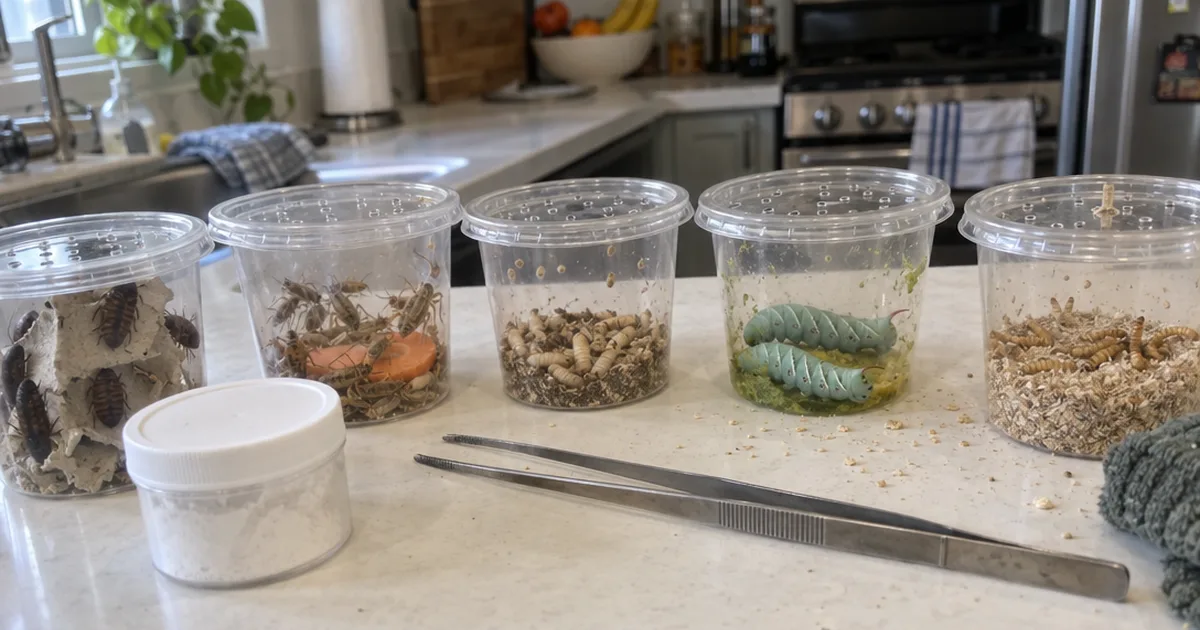
Pick insects about 1/3 the size of your chameleon’s head. Good choices include crickets, roaches and silkworms for chameleons, and you can check whether chameleons can eat mealworms before adding them.
Store-bought insects lack the nutrition to feed alone, so give them leafy green vegetables first, which is called gut-loading.
Never feed fireflies, wild insects or anything with a stinger. The full list of what pet chameleons eat and the veiled chameleon diet cover safe foods by species.
Step 7: Dust Insects With Calcium and Vitamins
Chameleons need calcium dusted on their insects 2 to 3 times a week, plus a multivitamin once a week.
Use calcium without vitamin D3 if your chameleon has UVB. The clinic’s supplement advice warns that D3 on top of UVB upsets the calcium and phosphorus balance.
Shake the insects in a cup with a pinch of powder right before feeding.
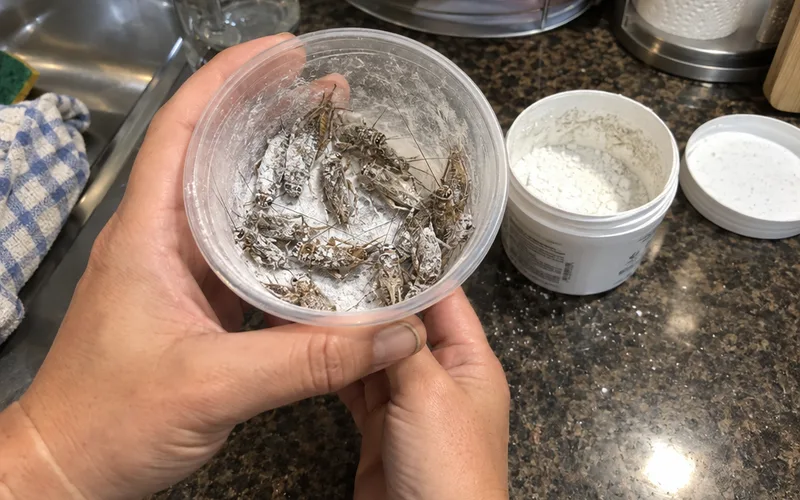
Key Takeaway: Dusting only works while the tube from Step 4 still puts out its light.
Step 8: Clean Often, Handle Less and Watch for Illness
Remove uneaten insects every day, and disinfect the cage and everything in it at least every other week.
Handle your chameleon as little as possible. The clinic recommends waiting until it’s 5 to 6 inches long, and all reptiles can carry salmonella, so wash your hands after.
Watch for these warning signs from the clinic’s list, and call a reptile vet if you see one:
- Not eating for a long stretch
- Retained shed on the toes, tail or eye caps
- Discolored spots, swelling, bleeding or discharge
- A female that can’t pass her eggs (egg binding)
Are Chameleons Easy to Take Care Of?
Chameleons are not the easiest reptiles to keep, according to veterinarian Lianne McLeod at The Spruce Pets. They need a large, tall cage full of plants and water they can drink from leaves.
Daily water and close temperature control add to the work. If you’d rather start with simpler daily care, compare other lizards in the lizard care guides first.
How Much Does a Chameleon Cost?
A chameleon costs from $30 to $300 depending on where you live, according to The Spruce Pets guide updated in June 2025.
That covers the animal only, so price the cage, lights, drip and insects before you buy.
How Long Do Pet Chameleons Live?
Pet chameleons live 3 to 10 years in captivity, according to McLeod, while Pender Veterinary Centre lists 5 to 8 years.
Where yours lands depends on its species and its care. The panther chameleon lifespan breakdown shows the numbers for one popular species.
What Makes Chameleons Happy?
A chameleon is happiest with plenty of leaf cover, the right warmth, steady water and time alone.
Color is the easiest way to tell, since chameleons change color to hide, control heat and signal each other.
A dark brown to black chameleon is usually stressed, according to McLeod.
Common Chameleon Care Mistakes
The most common chameleon care mistakes are a glass tank, a water bowl as the only water and a UVB tube past 8 months. Calcium with D3 on top of UVB and 2 chameleons in one cage round out the list.
Each one looks fine to you but not to your chameleon, so fix these before you change anything else.
Frequently Asked Questions
Do chameleons need warmth?
Yes, chameleons need a warm basking spot because they can’t regulate their body temperature at room temperature. Pender Veterinary Centre lists 84 to 92°F with basking near 94 to 100°F for a veiled chameleon, and a cooler 70 to 80°F for a Jackson’s chameleon.
How much sun do chameleons need?
Chameleons need about 10 hours of UVB light a day, according to a guide by veterinarian Lianne McLeod, DVM, at The Spruce Pets. Window glass filters out nearly all of that UV, so a chameleon behind a closed window still needs its UVB tube.
Do chameleons change color for camouflage?
Chameleons change color for camouflage, but also to regulate their temperature and to communicate with other chameleons. A dark brown to black chameleon is usually stressed, while brighter colors point to a calmer mood.
Can you hold a pet chameleon?
You can hold a pet chameleon briefly, but most don’t enjoy it, and Pender Veterinary Centre recommends waiting until it is 5 to 6 inches long. Let it walk onto your hand instead of pulling it off a branch, and wash your hands afterward.
Final Thoughts
Good chameleon care comes down to 4 numbers: the basking temperature for your species, about 10 hours of UVB, water that drips onto leaves and powder on insects 2 to 3 times a week.
This week, set up the cage and run it for 2 days with a thermometer before your chameleon comes home.