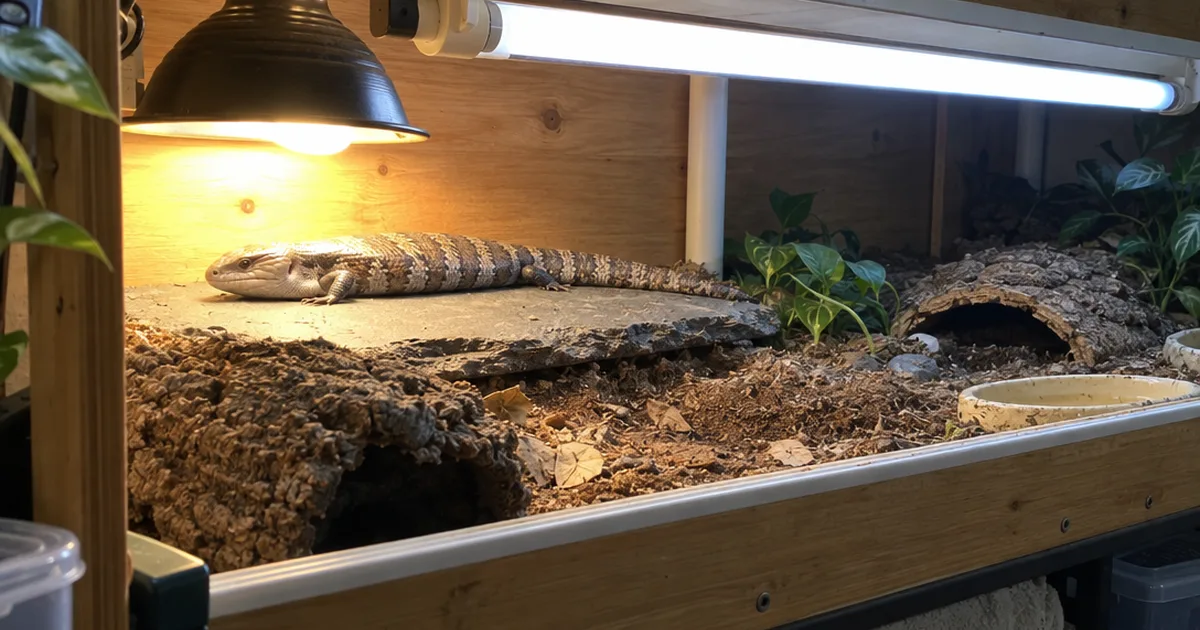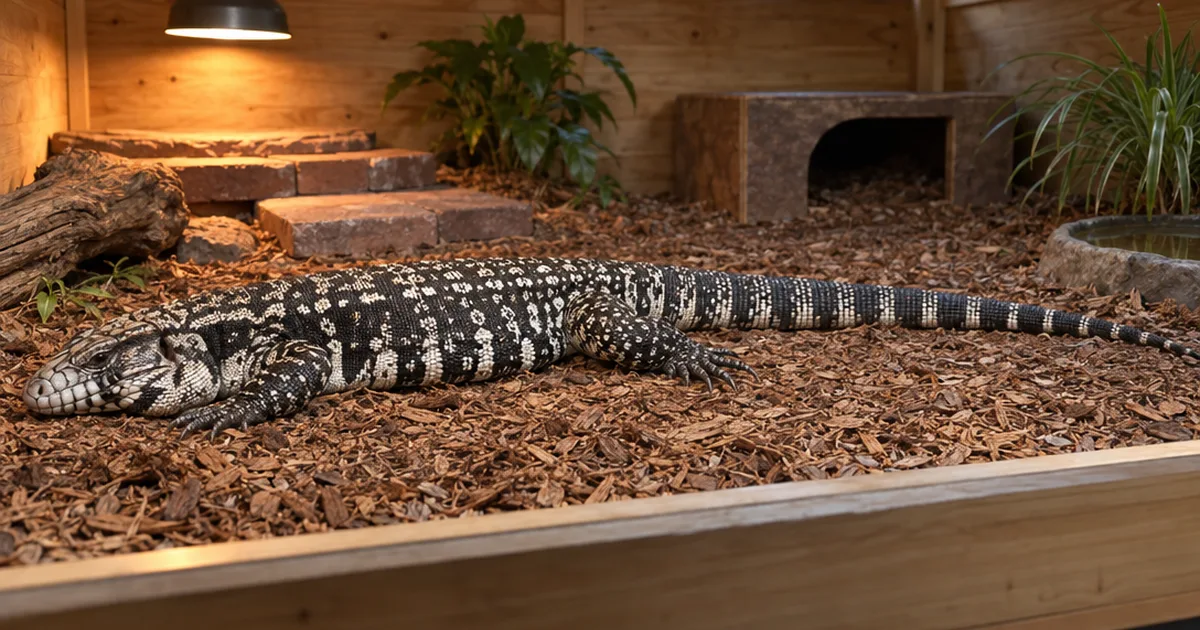
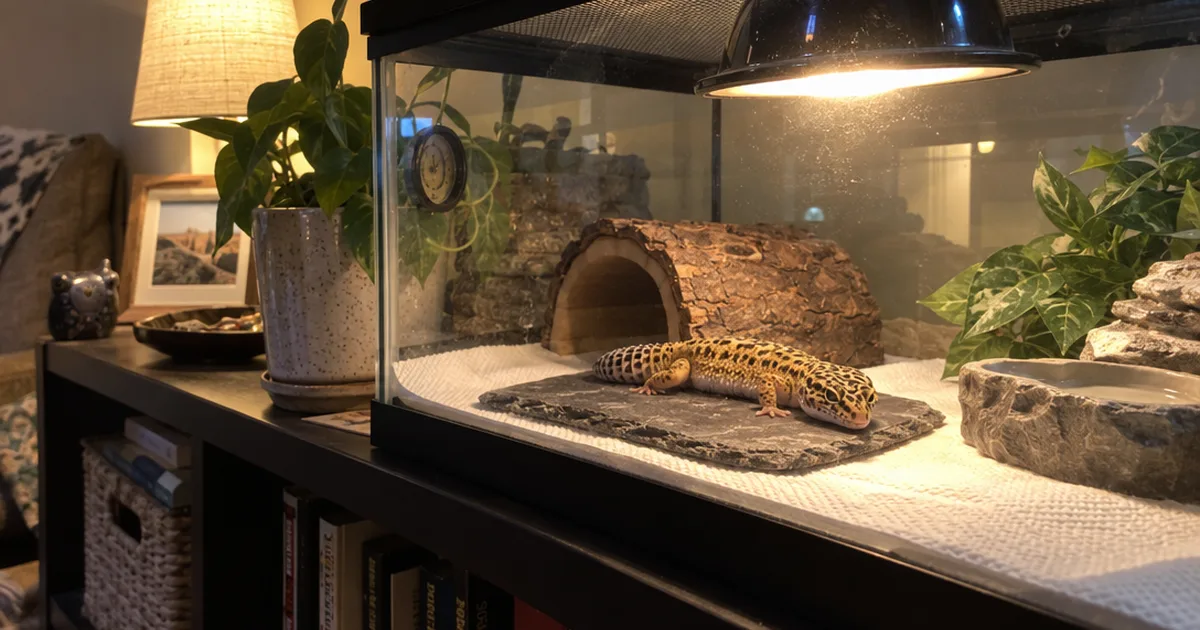
Over 1,600 gecko species exist, and their care needs don’t match.
The Spruce Pets gives 70 to 80% humidity for geckos in general, while PetMD puts a leopard gecko under 50%.
So good gecko care starts with one question: which gecko do you have?
Below are 8 steps in the order you’d set them up, with the vet-written numbers for each and a link to the full guide for your species.
Best for: new and soon-to-be owners of a leopard gecko, crested gecko or another common pet gecko. Skip it if you already keep one and only need a single number; the guides linked in each step go deeper.
Cost: about $10 for a common house gecko and from about $15 for a leopard gecko, per The Spruce Pets, before the tank and gear.
Payoff: a pet that commonly lives 10 to 20 years.
Time: This week: set up and test the tank, then bring your gecko home.
First step: ask the seller for your gecko’s exact species before you buy any equipment.
How to Care for a Gecko Step by Step
Caring for a gecko takes 8 steps: confirm the species, set up a secure tank, lay a safe floor with 3 hides, build a heat gradient, add UVB on a timer, match humidity, feed live insects on schedule and handle gently.
Each step builds on the last, so get the tank running before your gecko comes home.
Step 1: Find Out Which Gecko You Have
Most pet geckos are night animals, but not all of them.
The Spruce Pets says most pet geckos are nocturnal, including the leopard gecko, the crested gecko, the tokay and the African fat-tailed gecko. Day geckos, such as the gold dust day gecko, are awake in daylight instead.
Why does that matter?
Night and day species need different lighting, and the right humidity changes with the species too, so one generic care sheet can steer you wrong.
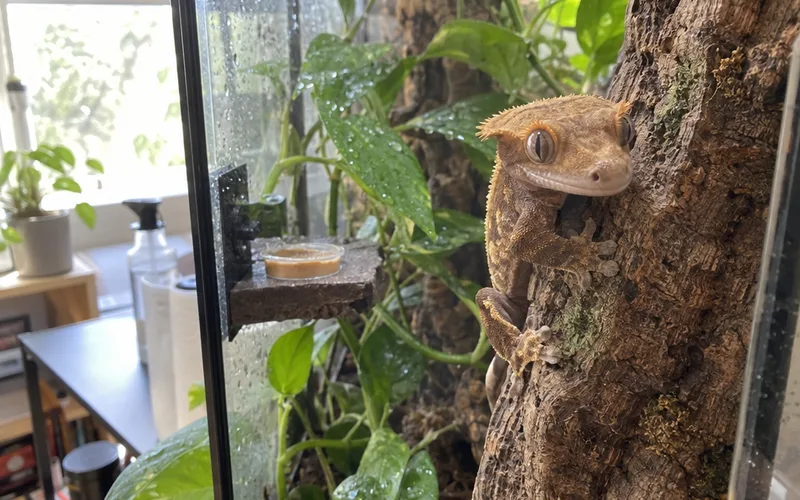
Here are 3 popular pet geckos, each with its own full care guide:
- Leopard gecko: a night-active insect eater, covered step by step in leopard gecko care.
- Crested gecko: another night-active favorite, covered in crested gecko care.
- African fat-tailed gecko: another insect eater, covered in African fat-tailed gecko care.
Torn between the 2 insect eaters? The fat-tailed vs leopard gecko comparison sets them side by side.
Ask the seller for the species and for a captive-bred animal. The Spruce Pets says captive-bred geckos are preferable to wild-caught ones because they carry less risk of disease.
Before you pay, look for clear eyes, skin without dry patches, all its fingers, toes and tail, and a healthy appetite.
If you’re still deciding between lizards in general, the broader lizard care basics cover how other species compare. Either way, the species you pick now sets every number in Steps 2 to 7.
Step 2: Pick a Secure Tank Sized for Your Gecko
Geckos are small reptiles, so the terrarium doesn’t need to be huge.
According to The Spruce Pets, most geckos need only a 10- or 20-gallon aquarium, with more room for larger species.
PetMD is more specific for leopard geckos: a single adult needs 20 gallons or more, and they reach adulthood within 1 to 2 years.
So if you start a baby in a 10-gallon tank, plan the upgrade before its second birthday.
The lid matters as much as the size. Geckos can slip through small holes, which is why the same guide recommends an aquarium with a tight-fitting lid.
Exact sizes by species are in leopard gecko tank size and crested gecko tank size. Rarer geckos have their own numbers too, in chahoua gecko enclosure size and chameleon gecko enclosure size.
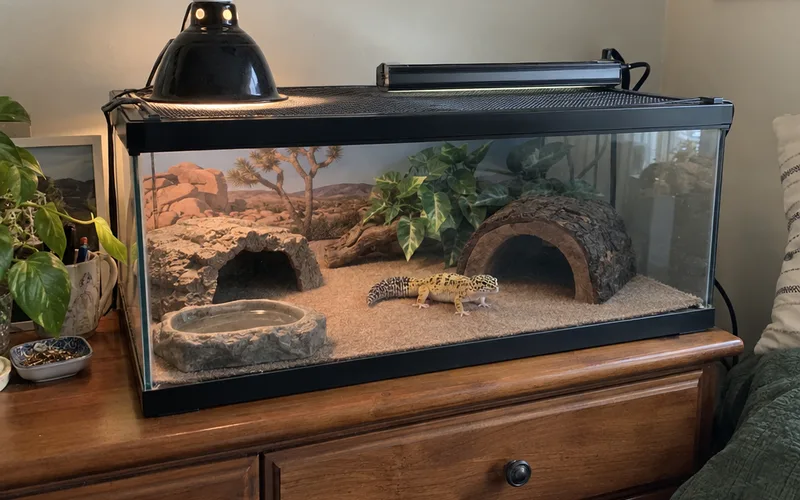
Once you have the tank, the full builds walk you through every item: the leopard gecko tank setup, the crested gecko tank setup and the fat-tailed gecko tank setup.
Step 3: Lay a Safe Floor and Add 3 Hides
Substrate is the material that covers the tank floor, and it’s the one choice in this step that can hurt your gecko.
PetMD warns that loose substrate isn’t digestible and can cause a fatal gut blockage if a leopard gecko swallows it.
Solid floors such as paper towels, reptile carpet or ceramic tiles remove that risk, because there’s nothing loose to swallow.
I’d start with paper towels, since they’re easy to swap while you learn. You can compare every option in the best leopard gecko substrate breakdown.
Next come the hides, the small caves your gecko sleeps and shelters in.
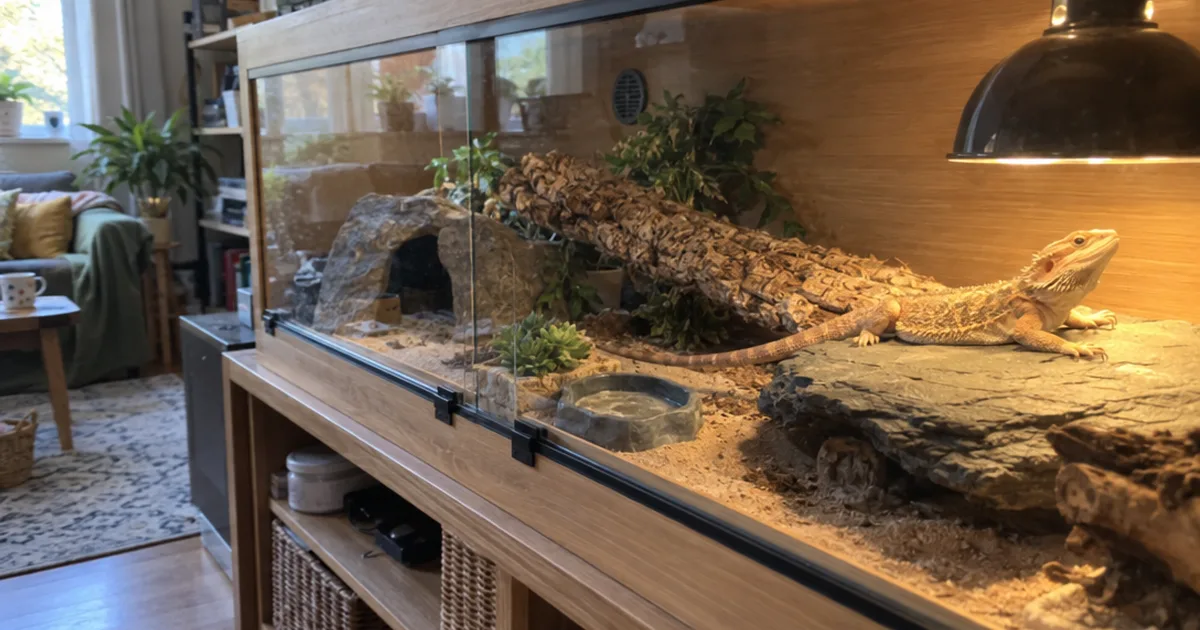
The same sheet says leopard geckos need 2 hiding areas, one at the warm end and one at the cool end. That way your gecko never has to choose between feeling safe and getting the right temperature.
Then add a third, humid hide on the warm side, filled with moist sphagnum moss.
That damp hide is what helps your gecko shed its skin cleanly. Re-dampen the moss whenever it dries out.
Step 4: Build a Warm-to-Cool Temperature Gradient
A temperature gradient means one end of the tank is warm and the other is cooler, so your gecko can move to whichever spot it needs.
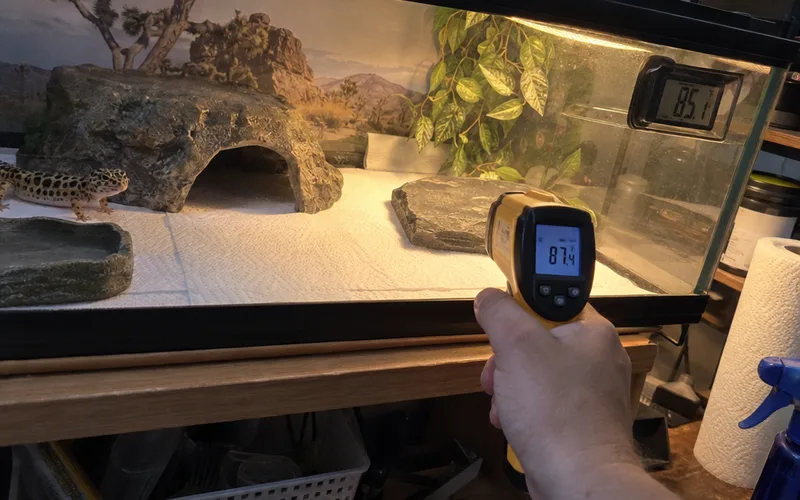
For a leopard gecko, PetMD recommends 80 to 90 F on the warm end and 75 to 80 F on the cool end.
Here’s how to set it up:
- Put the heat source at one end of the terrarium only, so the far end stays cooler.
- If you use an under-tank heating pad, plug it into a thermostat. The same sheet says pads must run on one to keep temperatures safe and prevent burns.
- Place 2 thermometers, one in the warm area and one in the cool area, and check both every day.
Crested geckos and other species run on different numbers, listed in crested gecko temperature and humidity and leopard gecko temperature and humidity.
And if your power ever goes out, read up on how long a leopard gecko can go without heat before you panic.
Key Takeaway: heat from one end, a thermostat on every pad and a daily look at both thermometers.
Step 5: Light the Tank on a Day-Night Cycle
This is the step where vet sources disagree.
The Spruce Pets, updated in 2025, says nocturnal species typically don’t need UVB, the invisible light many reptiles need, but day-active geckos do.
PetMD’s leopard gecko sheet, updated in May 2026, goes further: leopard geckos need about 10 to 12 hours of UV light daily.
I’d follow the newer advice for a leopard gecko, and treat UVB as required for any day gecko.
That same sheet says to replace bulbs every 6 months, even if they still light up, because their UV output fades over time.
Pro Tip: write the install date on the bulb’s base with a marker, so you know when the 6 months are up.
Put the lights on a timer, too. That 2025 guide also says a gecko needs a proper day and night cycle, or it may become stressed and confused.
Curious about your gecko’s daily rhythm? This look at how nocturnal leopard geckos are explains when they’re most active.
Step 6: Match Humidity to Your Species
Humidity is the amount of moisture in the air, and it’s where general gecko advice can go badly wrong.
The Spruce Pets gives 70 to 80% for geckos in general. PetMD sets the ideal for a leopard gecko at under 50% humidity.
So check your species’ own number before you start misting.
Measure it with a hygrometer, a small gauge that reads humidity.
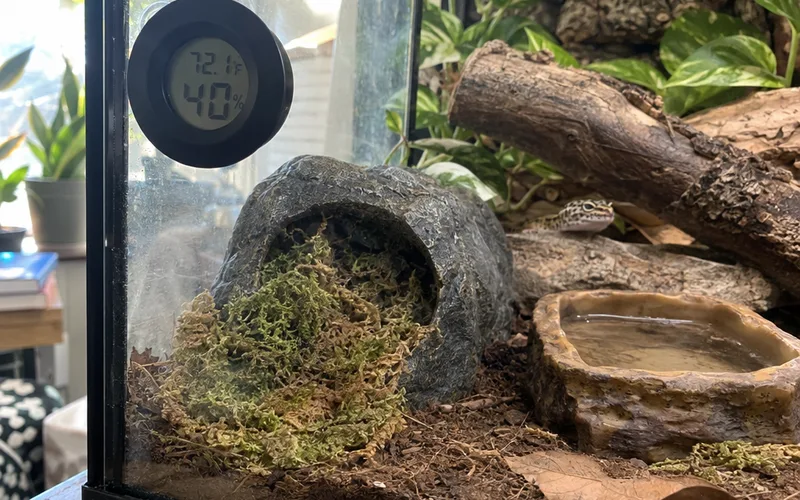
If you need more moisture, mist the tank or add live plants. That sheet says non-toxic live plants can raise humidity and make the habitat more interesting, and crested gecko keepers can pick from the crested gecko safe plants list.
Humidity also shows up at shedding time. Most leopard geckos shed every 4 to 8 weeks, according to the same sheet.
If you catch yours eating its old skin, here’s why geckos eat their shed.
The full shedding routine is in leopard gecko shedding. If bits of skin stay stuck on the toes, follow the steps for stuck shed in reptiles.
Step 7: Feed Live Insects on a Schedule
Most geckos don’t eat plants or vegetables, so The Spruce Pets warns that you’ll need to be comfortable with live insects to keep one.
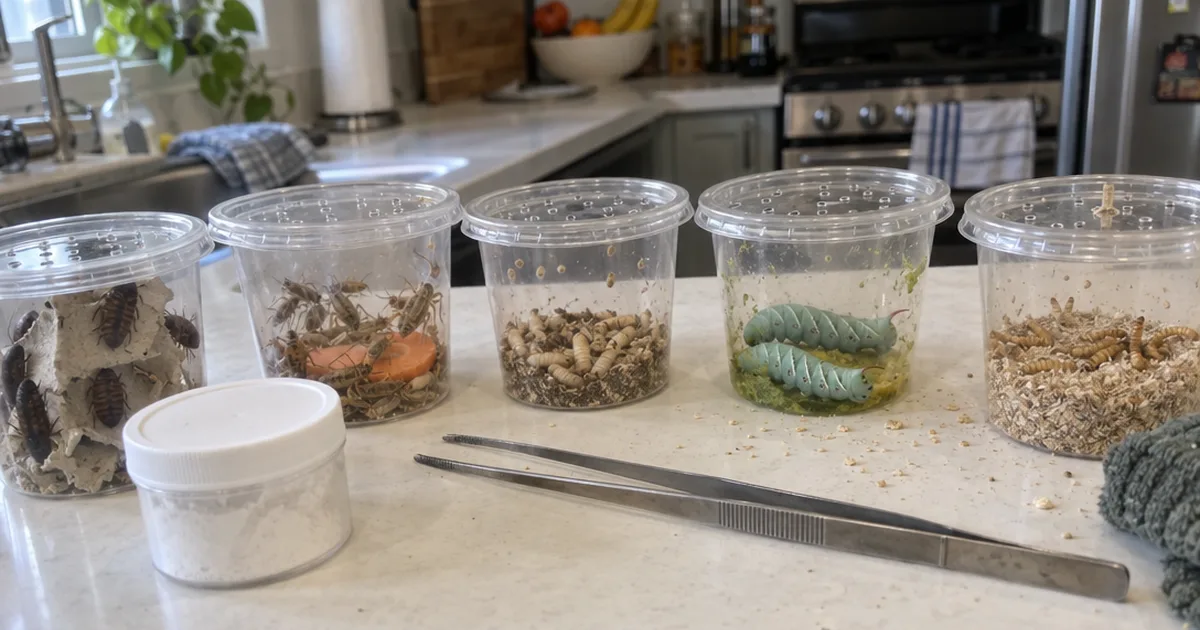
The same guide names crickets and mealworms as the usual staples, with superworms and waxworms as treats.
Feed those insects well first. Insects fed a nutritious diet before mealtime are called gut-loaded, and they give your gecko better nutrition.
For a leopard gecko, PetMD gives this schedule:
- Young geckos: feed every day.
- Adults: feed every other day.
- Insect size: no bigger than the space between your gecko’s eyes.
- Water: fresh and clean, replaced daily.
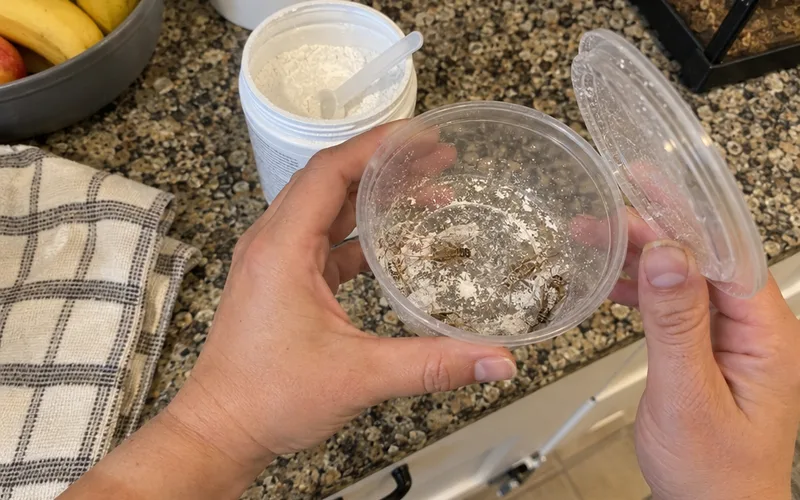
Supplements fill the gaps insects leave. The same sheet lists 3 supplement powders: calcium with vitamin D, calcium without vitamin D and a reptile multivitamin.
Use the multivitamin once or twice a week, the same sheet says. To dust insects, put them in a bag or cup with the powder and shake gently.
Diet is where species can split again. The Spruce Pets says some gecko species eat fruit and get a formulated diet, so crested gecko owners should start with what crested geckos eat and the best crested gecko food options.
Fruit questions come up a lot. The answers depend on the species, covered in can geckos eat fruit and can crested geckos eat grapes.
For leopard geckos, the leopard gecko diet guide goes deeper on what to feed. It’s backed up by deep dives on dubia roaches for leopard geckos and feeding earthworms.
And if your gecko suddenly refuses food, work through the causes in leopard gecko not eating.
Step 8: Handle Gently and Keep a Cleaning Routine
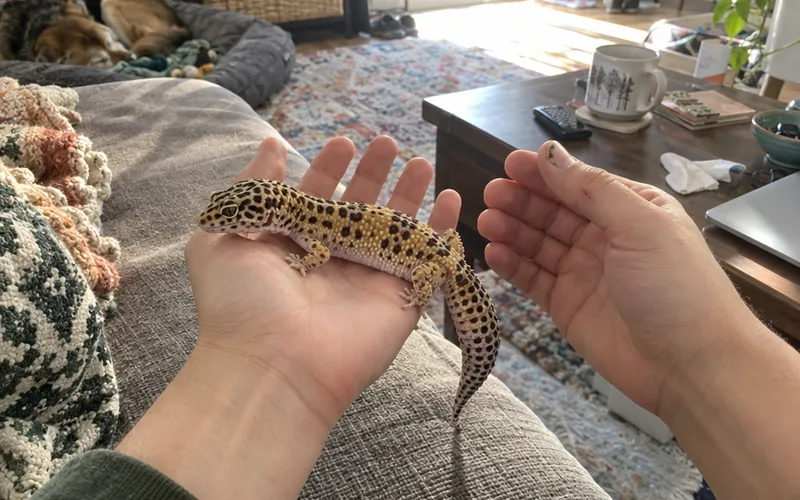
Geckos put up with handling more than they enjoy it.
The Spruce Pets says geckos don’t love to be petted or handled, but tolerate it if you’re gentle.
Here’s the one rule that matters most: never pick up a gecko by its tail.
PetMD says a leopard gecko can drop its tail if a predator grabs it. The tail regrows in about 30 days, but the new one looks different from the original.
The sheet also says they shouldn’t be handled regularly until they’re at least 6 inches long.
What about bites? The Spruce Pets says it’s rare for a gecko to bite a person, though some species, such as the tokay gecko, are more likely to.
The species guides cover the details, in do leopard geckos bite, do crested geckos bite and whether leopard geckos have teeth.
Sharing a tank is a separate decision. The same guide says geckos usually aren’t aggressive, unless 2 males are housed together, so keep males apart.
Before you pair any geckos, learn to sex a leopard gecko, compare a male vs female leopard gecko and check whether crested geckos can live together.
Cleaning keeps all of this healthy. PetMD recommends this routine:
- Spot-clean the habitat every day, removing waste and leftover food.
- Wash the water and food bowls every day.
- Disinfect and clean the whole habitat at least once a week, using the deep-clean steps further down.
It also notes that all reptiles can carry Salmonella bacteria, which can pass to people. So wash your hands before and after you touch your gecko or anything in its tank.
To make sense of what your gecko does from day to day, leopard gecko behavior explains the common habits.
What You Need to Care for a Gecko
Gecko care gear comes down to a 20-gallon tank with a tight lid, controlled heat and UVB lighting, 2 thermometers and a hygrometer, plus hides, a solid floor, dishes, feeder insects and supplements.
Gather everything before your gecko comes home, so the tank can hold steady temperatures for a day or two first. Here’s the core kit for a typical insect-eating gecko:
- A 20-gallon tank with a tight-fitting lid, enough for one adult leopard gecko
- A heat lamp or under-tank heating pad, plus a thermostat
- A UVB bulb and a light timer
- 2 thermometers and a hygrometer
- 3 hides, plus sphagnum moss for the humid one
- A solid floor such as paper towels, reptile carpet or tile
- Water and food dishes
- Live feeder insects, plus 2 calcium powders and a multivitamin
Swap the details for your species, since a crested gecko or day gecko needs a different setup.
Your Gecko’s First Week at Home
A new gecko needs a quiet, hands-off first week: run the daily tank checks, but skip handling while it settles in.
PetMD says to give a newly homed leopard gecko at least a few days to settle in before you try to handle it.
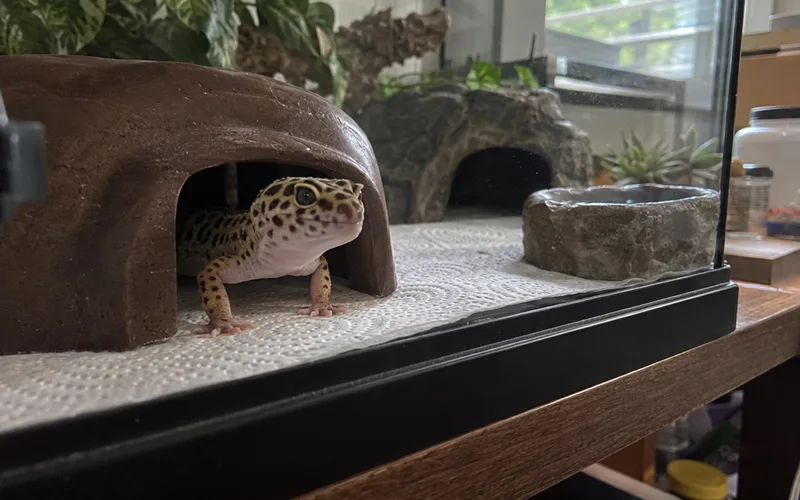
So during that first week, your work is quiet and hands-off:
- Read both thermometers every day, and adjust the heat if either end drifts.
- Offer food on schedule, then remove anything left uneaten.
- Refresh the water every day.
- Watch from a distance to see where your gecko hides, basks and drinks.
Don’t worry if it stays hidden for a while at first. That’s the hides doing their job.
Handling time should stay short around shedding, too. The same sheet says to minimize handling while a gecko is shedding.
When it’s time for a vet visit, the sheet suggests carrying your gecko in a right-sized plastic container with air holes and a grippy surface on the bottom.
Which Gecko Is Best for Beginners?
The leopard gecko is the go-to gecko for beginners: PetMD says leopard geckos make great pets and are a common choice for people new to reptile care.
The Spruce Pets lists the geckos people keep most often: leopard, tokay, day, African fat-tailed, crested and common house geckos.
Price isn’t much of a barrier. The same guide, updated in June 2025, says common house geckos cost about $10, and leopard geckos start around $15 and go up to the thousands.
The bigger commitment is your gecko’s longevity. That guide says pet geckos live 10 to 20 years, and PetMD gives leopard geckos up to 10 to 20 years with proper care.
So plan for a pet that may be with you for 1 to 2 decades. Species-by-species numbers are in leopard gecko lifespan and crested gecko lifespan.
Are Geckos Easy to Take Care Of?
Geckos are easy to take care of once the setup is right: PetMD says that after a leopard gecko’s diet and enclosure are set up properly, daily upkeep is very easy.
The hard part comes first. You have to get the heat, light and humidity right before your gecko moves in.
The other hurdle is food. If buying and handling live insects turns your stomach, that’s a real reason to pick a different pet.
After that, your gecko asks for very little attention. The same sheet says geckos don’t need human interaction to be happy, and some species are more stressed by it than others.
In other words, a gecko suits someone who likes a steady routine more than daily cuddles.
How to Deep-Clean a Gecko Tank
Deep-cleaning a gecko tank once a week means taking everything out, scrubbing with a reptile habitat cleaner or diluted bleach, rinsing thoroughly and letting it all dry before your gecko goes back in.
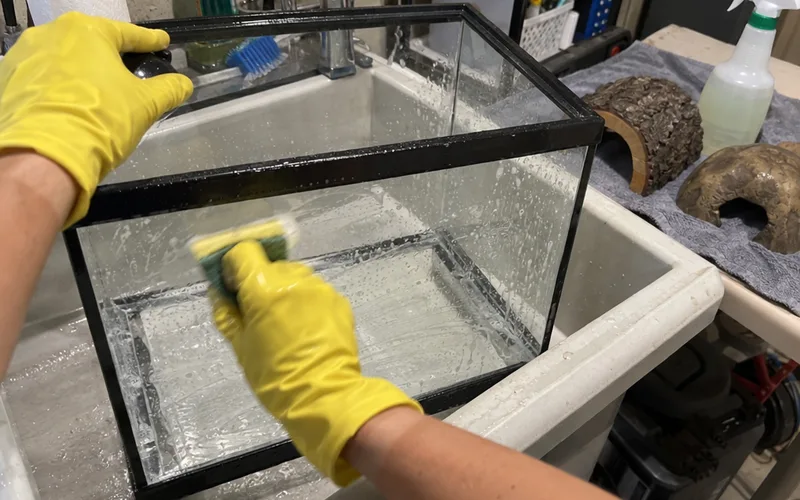
A set order makes the job quicker. Here’s the process PetMD lays out for a leopard gecko’s habitat:
- Move your gecko to a secure, temporary container.
- Take out all the old substrate, decor and accessories.
- Scrub the empty tank and furnishings with a reptile habitat cleaner or a 3% bleach solution, leaving bleach on for at least 10 minutes.
- Rinse everything thoroughly with water until no trace or smell of the cleaner is left.
- Let it all dry completely, then add fresh substrate and the clean accessories.
- Return your gecko to its clean home.
The rinse is what makes the deep clean safe, so keep rinsing until you can’t smell the cleaner at all. Then give everything time to dry before your gecko goes back in.
Do Geckos Make Noise?
Most geckos are quiet: The Spruce Pets says geckos aren’t very vocal and are usually completely silent.
Some species do chirp, bark or click, though, mostly when they’re defending territory or attracting a mate.
So a quiet gecko is normal, and the odd chirp at night isn’t unusual either.
How to Tell If Your Gecko Is Healthy and Happy
A happy, healthy gecko looks alert, eats well, basks normally and has clear eyes and clean, intact skin.
PetMD lists the signs of a healthy leopard gecko:
- Clean, clear eyes and clean ears
- Intact skin with no stuck shed
- A good appetite and a bright, alert personality
- A clean vent and no swellings or bumps
- Normal basking and a good body condition
The same sheet recommends a vet visit once a year, even when everything looks fine.
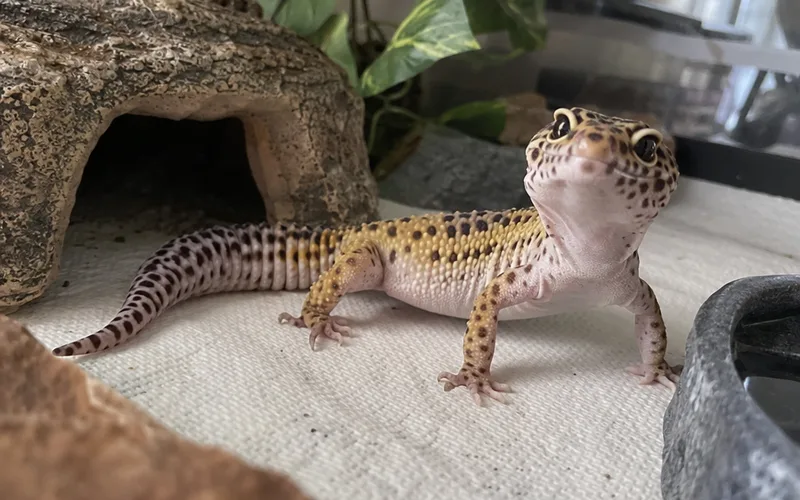
Book sooner if you see warning signs. The same sheet lists swollen, sunken or stuck-shut eyes, refusing food, not basking, lethargy, a sunken belly and stuck shed on the toes.
For specific problems, see leopard gecko eye infection, leopard gecko impaction treatment and leopard gecko stick tail.
Before the appointment, take photos of the tank, heat and light setup and diet, so your vet can check your husbandry along with your gecko.
Common Gecko Health Problems
Common gecko health problems include mouth rot, parasites, respiratory infections and stuck shed, and several trace back to a cold tank or dry air.
The Spruce Pets names a few of the problems vets see most often:
- Mouth rot (stomatitis): a reddish color around the mouth, sometimes with pus that looks like cottage cheese. It needs treatment as early as possible.
- Parasites: worms or eggs in the droppings, or mites on the skin that look like a red rash. Internal parasites can also cause sluggishness, appetite changes and unusual droppings.
- Respiratory infections: wheezing or drooling, usually from a draft or a tank that’s too cold.
- Stuck shed: a big problem for geckos kept without proper humidity, which is why Step 6 matters.
None of these are things to treat at home. If you spot any of them, book a vet visit and bring your setup photos.
Common Gecko Care Mistakes
Gecko care mistakes that are easy to miss include using a hot rock, leaving live insects in the tank and feeding fruit to a leopard gecko.
- Using a hot rock. PetMD says hot rocks shouldn’t be used, because they can get too warm and cause injury.
- Leaving crickets loose overnight. It also says live insects your gecko doesn’t eat can injure it, so remove them after each meal.
- Feeding fruit to a leopard gecko. The same sheet says they can’t digest fruit or vegetables, so keep those for species that eat them.
Each one is a quick fix you can make today.
More Gecko Guides: Breeding, Morphs and Seasons
Once you’re comfortable with daily care, you may get curious about color morphs or breeding.
Both are big topics, so each has its own guide.
Leopard gecko morphs: start with the overview of leopard gecko morphs. Then go deeper on the bell albino leopard gecko, rainwater albino leopard gecko, super hypo leopard gecko, tangerine tornado leopard gecko, lemon frost leopard gecko and enigma leopard gecko.
Other morphs: fat-tailed geckos come in their own colors, shown in African fat-tailed gecko morphs.
Breeding leopard geckos: read how to breed leopard geckos, the leopard gecko breeding season, how to care for a gravid leopard gecko and what to do with leopard gecko eggs.
Breeding other geckos: see how to breed crested geckos, whether female crested geckos lay eggs without a male, and African fat-tailed gecko breeding.
Seasons: if your gecko slows down in winter, check whether leopard geckos brumate before you change anything.
Frequently Asked Questions
Does a gecko need sunlight?
A gecko needs daily UV light, which a UVB bulb supplies indoors: PetMD says leopard geckos need about 10 to 12 hours of UV light a day, and The Spruce Pets says day-active species need UVB too. Put the bulb on a timer and replace it every 6 months.
Do geckos like being held?
Most geckos don’t love being held, but The Spruce Pets says they tolerate gentle handling. Keep sessions short, never lift a gecko by its tail, and wait until a leopard gecko is at least 6 inches long before handling it regularly.
How do you tell if a gecko is happy?
A happy, healthy gecko has clear eyes, intact skin, a good appetite, a bright and alert manner and normal basking, according to PetMD. If it stops eating, stops basking or turns lethargic, book a vet visit.
How long do pet geckos live?
Most pet geckos live 10 to 20 years, according to The Spruce Pets, and PetMD gives leopard geckos up to 10 to 20 years with proper care. Plan for a long commitment before you buy.
How much does a pet gecko cost?
A common house gecko costs about $10 and a leopard gecko starts around $15, according to The Spruce Pets, though some leopard geckos sell for thousands. Budget separately for the tank, heat, UVB and thermometers.
How often should you feed a gecko?
Feed a young leopard gecko every day and an adult every other day, according to PetMD, with insects no bigger than the space between its eyes. Other species differ, so check your gecko’s own care guide.
Can two geckos live together?
Two male geckos should not live together, because The Spruce Pets says males may attack each other with little warning. Keep each male in its own tank, and check your species’ guide before housing any geckos together.
How often should a gecko see a vet?
A gecko should see a vet once a year, which is what PetMD recommends for leopard geckos. Go sooner for swollen or sunken eyes, refusing food, lethargy or stuck shed on the toes.
Final Thoughts
Good gecko care means knowing your species, then getting its heat, light, humidity and food numbers right.
This week, confirm your gecko’s species and get the tank running with 2 thermometers before your gecko comes home.