
A pet box turtle can live 30 to 40 years, or even longer. That’s the figure in “Care of the Box Turtle,” a veterinary care handout from LafeberVet, so the setup you build now has to work for decades.
Most common box turtle health problems trace back to that setup, since LafeberVet ties them to poor husbandry such as a cramped tank, missing UVB or water that’s too deep. The upside is that box turtle care isn’t complicated once you know the numbers.
The 12 steps each give the number to hit from veterinary sources, and the first 8 are setup you can finish before your turtle comes home. After that, your turtle’s own behavior tells you if a number is off, since a struggling one hides constantly, skips meals or never leaves the warm spot.
How to Care for a Box Turtle Step by Step
Box turtle care takes 12 steps: pick a captive-bred turtle, house it well, set up substrate, heat, UVB, humidity and water, then feed, clean and handle it with care. Steps 1 to 8 are the setup, so finish them before your turtle comes home.
Here are the core numbers from the veterinary sources in this guide:
- Basking spot: 85-90°F
- Daytime enclosure range: 75-85°F
- UVB: 12-14 hours a day, bulb replaced every 6-12 months
- Humidity: 60% to 80%
- Water depth: under 3 inches
- Calcium: 2 to 3 times a week
Each step below explains what to buy, where to put it and why it matters.
Step 1: Pick a Captive-Bred Box Turtle (and Know Its Species)
Start with a captive-bred box turtle from a breeder or a rescue, never one taken from the wild. Then find out its species, because temperature, humidity and water needs shift from one box turtle to the next.
Box turtles belong to the genus Terrapene, the North American box turtles. According to LafeberVet, the Eastern box turtle and the three-toed box turtle are the subspecies most commonly kept as pets.
The same handout lists the others you’re likely to meet:
- Eastern box turtle (Terrapene carolina carolina): Maine south to Georgia and west to Michigan, Illinois and Tennessee
- Three-toed box turtle (Terrapene c. triunguis): Missouri into the Southeast and eastern Texas, usually with three toes on each hind foot
- Gulf Coast box turtle (Terrapene c. major): the largest of the group, from the Florida panhandle into eastern Texas
- Florida box turtle (Terrapene c. bauri): throughout Florida into the Keys
There’s also the ornate box turtle, Terrapene ornata, a western species. Orange Grove Animal Hospital, a veterinary practice in Tucson, notes that the ornate and desert box turtles are the two native to Arizona.
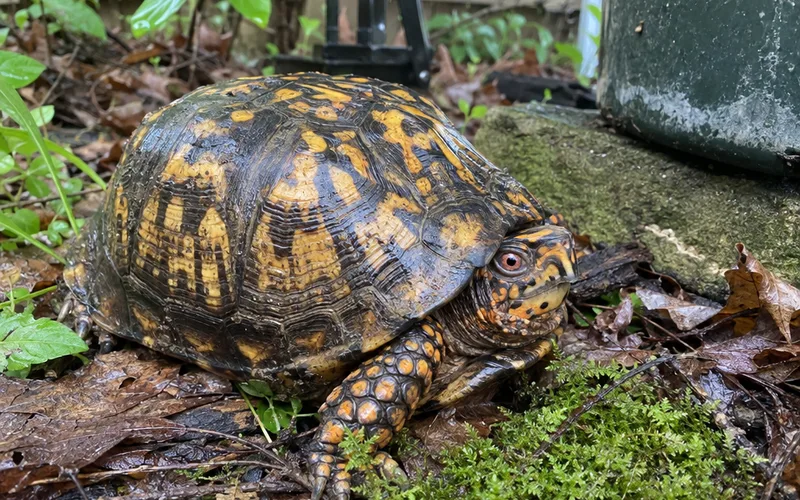
Why does the species matter? Ranges, sizes and care details differ, so read a species sheet such as our three-toed box turtle care guide once you know what you have.
Asian box turtles are a different story. LafeberVet says the Malayan or Amboina box turtle (Cuora amboinensis) is far more aquatic, with water covering at least 50% of its enclosure.
The Chinese box turtle sits between the two.
Everything in this guide is for the land-dwelling North American box turtles, not the Asian Cuora species.
How big will yours get? LafeberVet gives adult length as 4.5-8 inches (11-20 cm), while Orange Grove Animal Hospital puts typical adults at about 5-6 inches with a domed carapace.
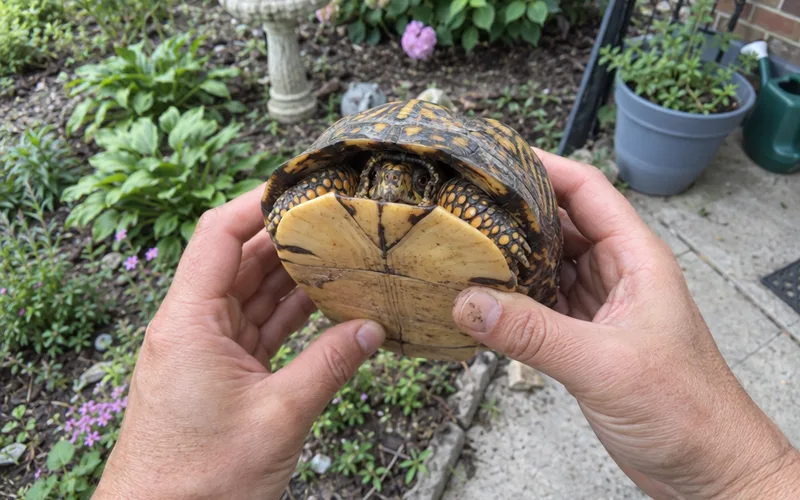
That domed top shell and a hinged plastron (the bottom shell) are what let a box turtle close up tight. Its life on land makes it more like a tortoise than a pond turtle, as our tortoise vs turtle vs terrapin breakdown explains.
Now check where your turtle came from. Sulcata Rescue Ranch, a tortoise rescue, says box turtles are heavily collected from the wild for the pet trade, and most die before they can be sold.
That’s a strong reason to adopt from a rescue or buy captive-bred. Wild box turtles may also be protected where you live, so call your state wildlife agency before you pick up one you find.
In other words, the right turtle is a captive-bred one whose species you can name.
Step 2: Build a Secure Outdoor Pen If Your Climate Allows
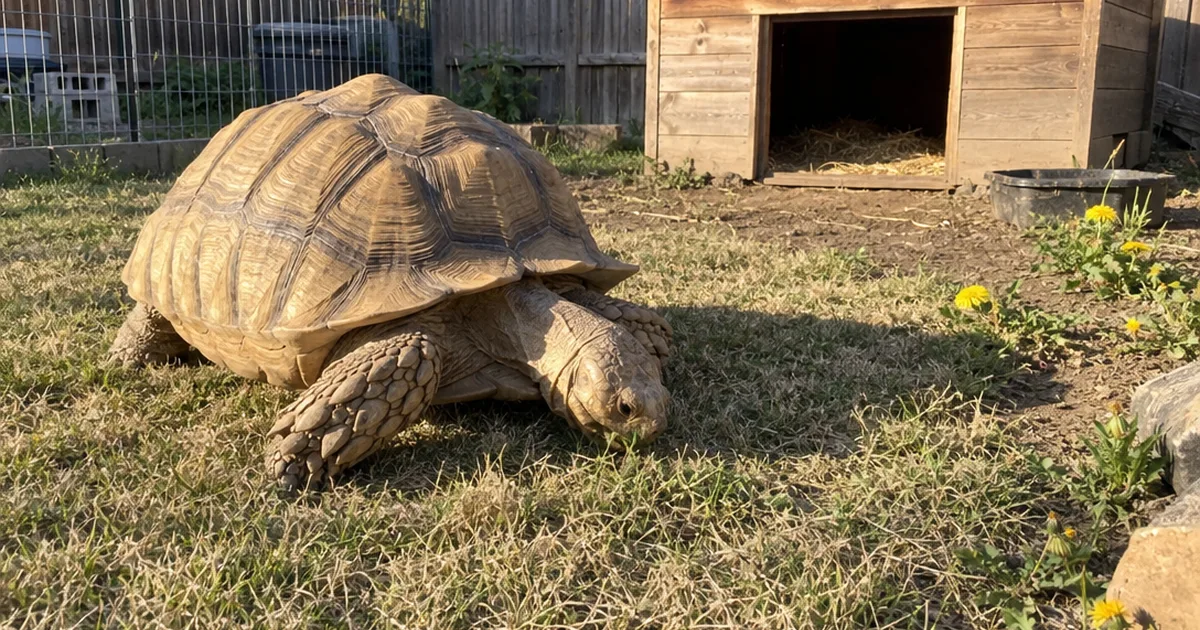
An outdoor pen is the best home for most box turtles, because it gives them real sunlight, natural light cycles and room to roam. Orange Grove Animal Hospital says box turtles are best housed outdoors to meet their UV light needs and keep normal light cycles.
When does that work? LafeberVet says many box turtles do well in a fenced outdoor enclosure or yard during warm months, when temperatures stay above 60°F (16°C).
The catch is security.
Box turtles dig and climb, and plenty of animals in a yard will eat them. LafeberVet warns that dogs will readily chew on box turtles, and raccoons and opossums will eat them.
Sulcata Rescue Ranch adds cats, coyotes, rodents and large birds to that list. So the pen has to stop turtles getting out and predators getting in.
Here’s what the sources say to build:
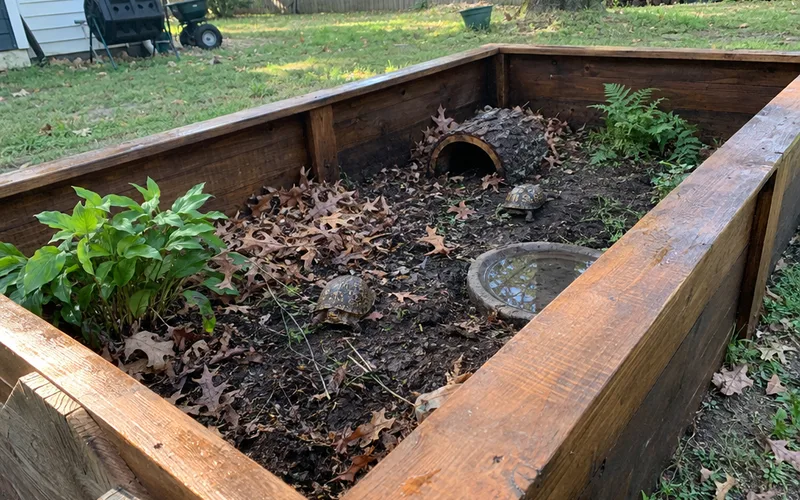
- Walls over 12 inches tall. LafeberVet says the fence should be more than 12 inches (30 cm) high. The rescue builds solid walls at least 18 inches high with an overhanging ledge.
- A buried edge. LafeberVet says to bury the fencing 8-12 inches (20-30 cm) deep, or bury rocks or bricks under it, so your turtle can’t dig out.
- Solid, not see-through, walls. The rescue says turtles easily climb chain link and chicken wire. It also tops corners with triangular pieces, since turtles climb each other to escape there.
- A cover where predators roam. The rescue locks its turtles in a house at night where raccoons or foxes live, or screens the whole pen above the walls like an aviary.
How big should the pen be? Sulcata Rescue Ranch builds outdoor pens at a minimum of 10 by 10 feet.
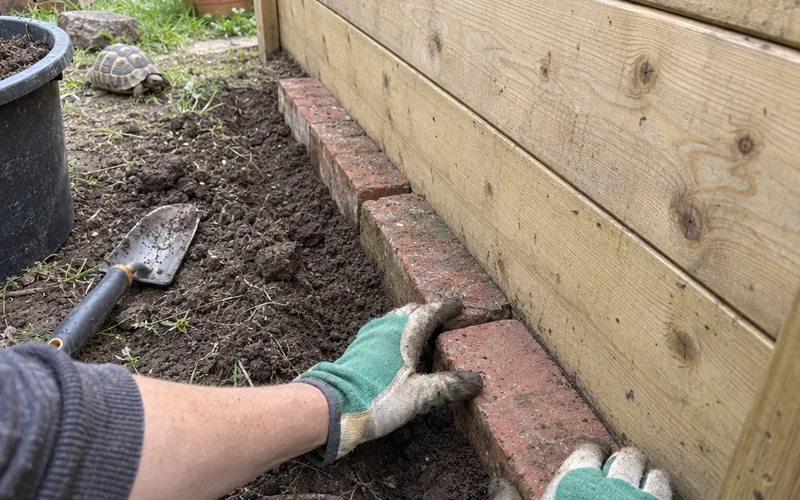
Bigger is better outdoors, because a box turtle uses every foot of it to forage, burrow and find the right temperature.
Inside the walls, add shade and cover. LafeberVet says your turtle needs dense shrubbery or dry leaves to burrow into during the warmest part of the day.
What should you plant? Sulcata Rescue Ranch fills its pens with fountain grass, grape vines, hibiscus, geraniums, gazanias and spider plants, which give a mix of sunny spots, shade and hiding places.
The rescue also adds a secure, solid house with a locking door ramp to every pen. That gives your turtle a dry retreat, and gives you a way to shut it in at night.
Orange Grove Animal Hospital adds that outdoor box turtles need extra humidity in summer. Planting shrubs you water often does that job, and an insulated shelter protects your turtle from extreme heat and cold.
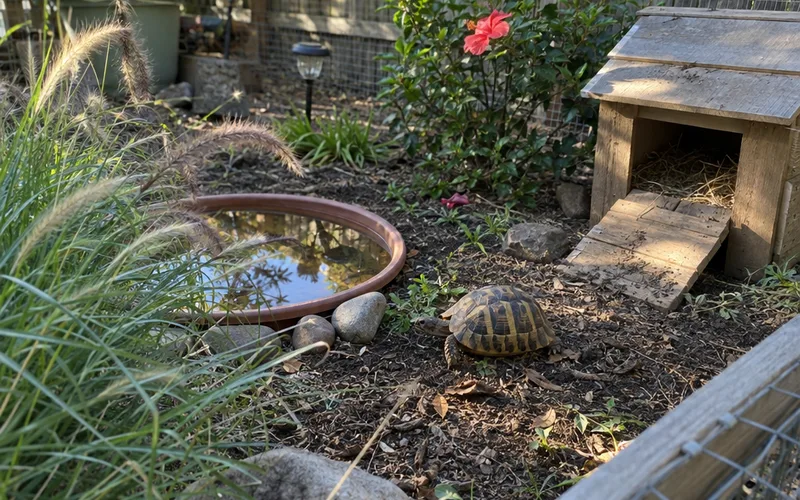
Keep chemicals out entirely. The rescue warns never to use snail bait, poisons or fertilizers in the pen, or on the plants and insects your turtle eats.
So if your summers stay above 60°F, start with a predator-proof pen and treat indoor housing as the backup. The box turtle enclosure guide shows how to build one in more detail.
Step 3: Give an Indoor Turtle as Much Floor Space as You Can
Indoors, a box turtle needs a large enclosure with tall sides and lots of floor space, not a small glass terrarium. The LafeberVet handout sets the bare minimum at a 20-gallon (75-L) aquarium for one adult.
Treat that number as a floor, not a goal.
Sulcata Rescue Ranch goes further and says box turtles should not be kept in aquariums at all. In its view, a small glass box can’t hold the range of temperatures a turtle needs to regulate its own body heat.
That’s the real issue with small tanks. A box turtle controls its body temperature by walking between warm and cool spots, a process called thermoregulation.
A short tank leaves no room for a cool end.
So go as long and wide as your space allows.
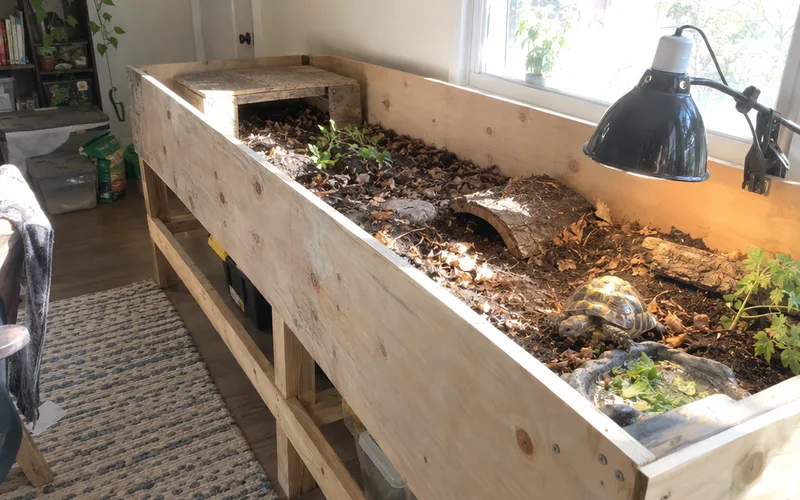
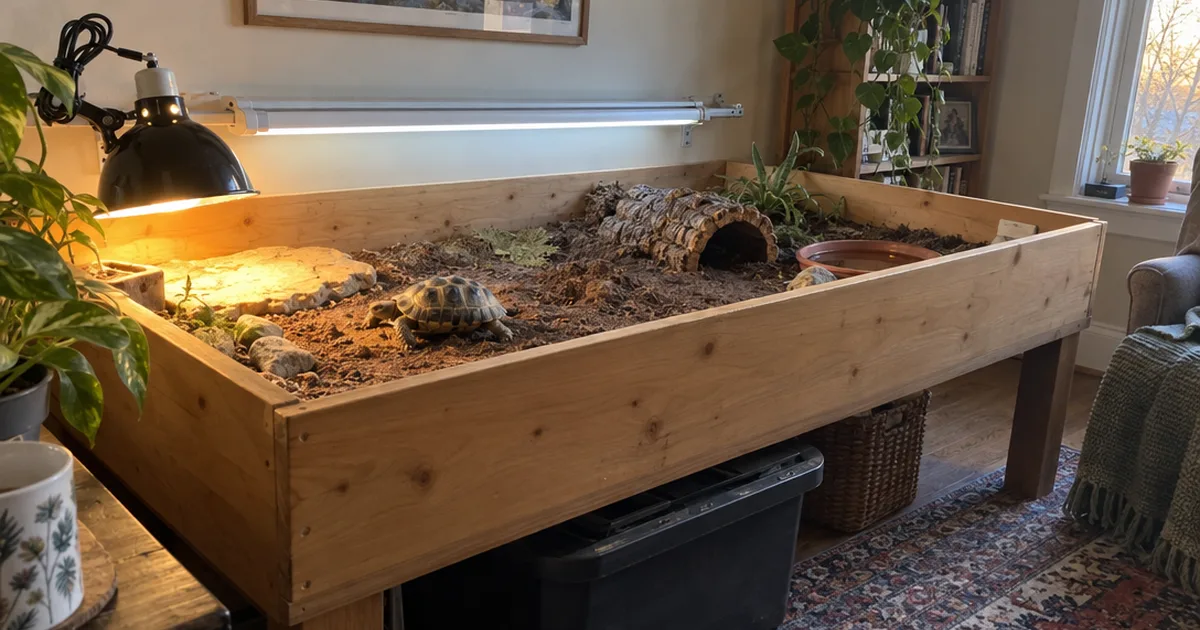
LafeberVet says box turtles can live in an enclosure with tall sides and no top, which opens up options like a large tub, a stock tank or a wooden tortoise table. A walk-in floor pen works too, as long as the sides are tall enough that your turtle can’t climb out.
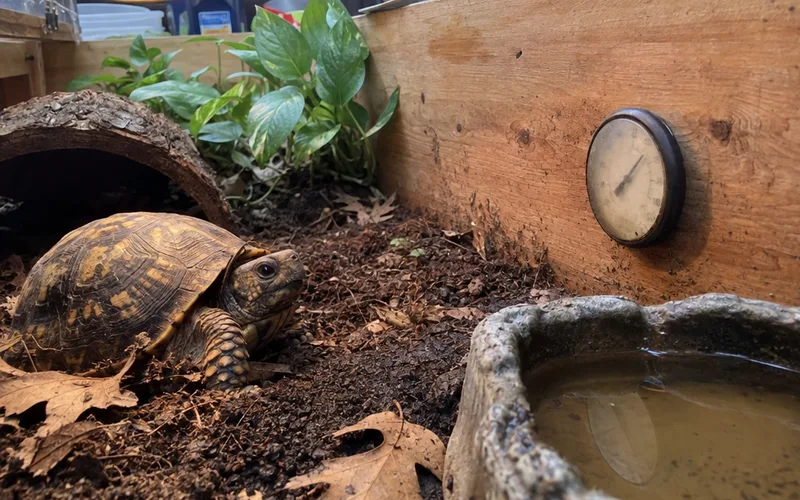
Then add a hide. LafeberVet says box turtles need a hiding area such as a wooden box, cork bark or a cardboard box with a cut-out doorway.
Give your turtle at least one hide on the warm side and one on the cool side. That way it never has to choose between feeling safe and being the right temperature.
What if you have more than one turtle? Plan more floor space and more hides, because Sulcata Rescue Ranch says a female needs places to hide and eat without being pestered by a male.
Take your turtle outside on warm days if you can. Real sunlight is the best UVB source there is, as Step 6 explains.
The takeaway: measure your floor space before you buy anything, and pick the biggest enclosure that fits.
Step 4: Lay Down a Deep, Damp Substrate
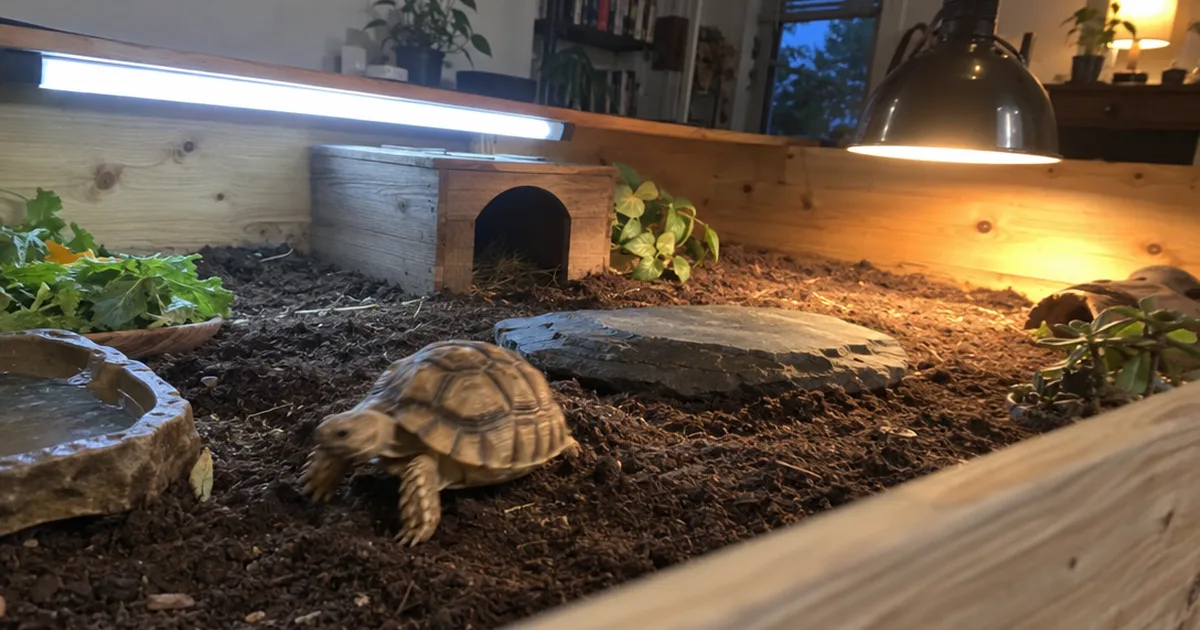
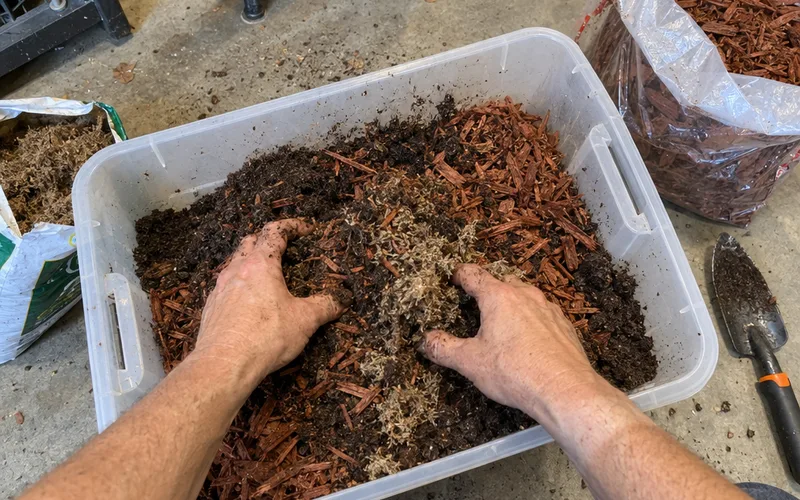
The best box turtle substrate is a damp, loose mix your turtle can burrow into, such as topsoil and leaf litter, or cypress mulch or orchid bark mixed with peat moss and soil. LafeberVet says to make it at least 2-3 inches (5-8 cm) deep.
Why so deep?
LafeberVet says North American box turtles spend much of their time burrowing in mud or hiding under rocks. A deep layer lets your turtle dig down to cool off, hold moisture and feel hidden.
Sulcata Rescue Ranch uses humid bedding such as leaves, plant material and topsoil, or medium to large orchid bark or cypress mulch mixed with peat moss and soil. Its rule is to never let the bedding dry out completely.
A layer of leaf litter on top helps too. It holds moisture, gives your turtle cover and gives it something to push through while it forages.
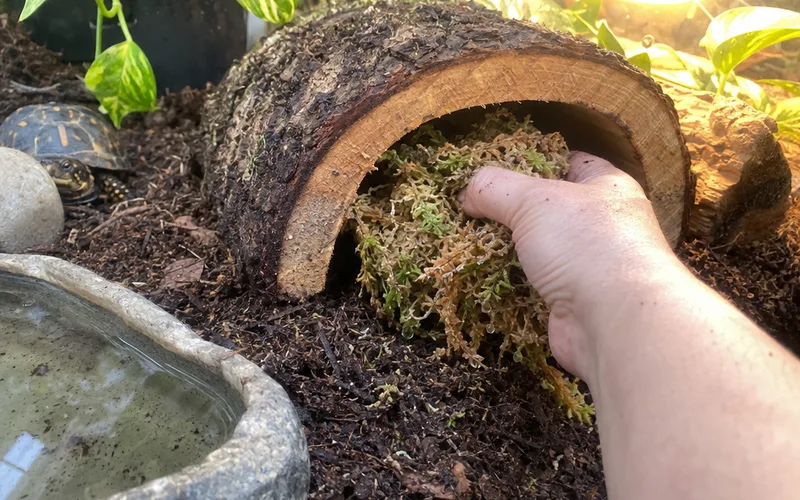
For a humid patch, tuck a handful of damp sphagnum moss into one hide. Your turtle can sit in it whenever the rest of the enclosure feels too dry.
Now the substrates to avoid:
- Gravel and sand: LafeberVet says they can cause intestinal blockage if eaten, and the rescue says rough gravel and rock can damage the plastron.
- Crushed walnut shells and cat litter: both can cause blockage if swallowed, per LafeberVet.
- Potting soil: LafeberVet lists it with the blockage risks, so pick a plain topsoil with no added fertilizer or perlite.
Note that the sources don’t fully agree. LafeberVet suggests woodchips, while the rescue prefers soil and leaf mixes, so choose a mix that stays damp without turning to mud.
Whatever you choose, it should hold moisture and let your turtle dig.
Step 5: Add a Basking Lamp and a Temperature Gradient
Box turtles need a basking spot of 85-90°F (29-32°C) inside a daytime enclosure range of 75-85°F (24-29°C), with humidity at 60% to 80%. Those are the LafeberVet figures, and the gap between the warm and cool ends is what lets your turtle regulate its own temperature.
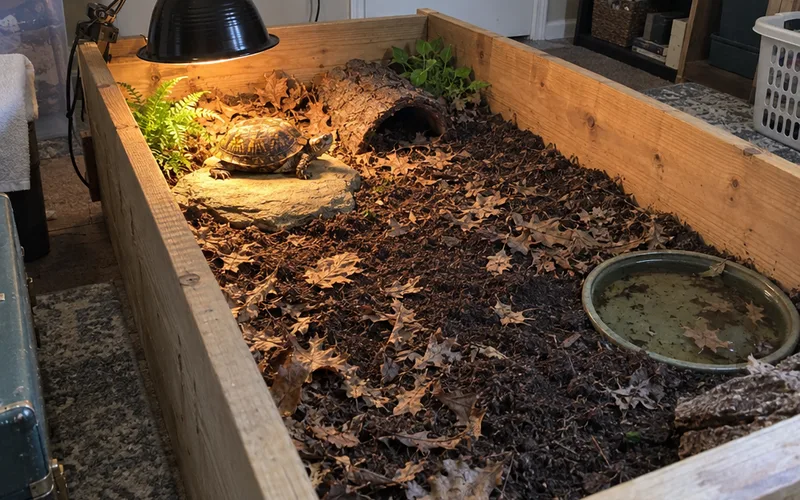
Here’s how to set it up:
- Put an overhead heat lamp over one end. LafeberVet says to use an overhead heating lamp to make a basking area that reaches 85-90°F.
- Add a baseline heat source. The same handout suggests a second heat source, such as an under-tank heater or heat tape, to set the baseline temperature.
- Keep the room at 70-80°F. LafeberVet gives that as the room temperature to hold.
- Measure, don’t guess. LafeberVet says to use 2 thermometers, one at the cool end and one under the basking area.
The rescue adds a useful detail: place thermometers at turtle level, where your turtle actually sits.
What kind of lamp works? A dome fixture over the screen is the usual choice, but always check its wattage rating against the bulb.
For example, a reptile supply store listing for the Zoo Med Combo Deep Dome Dual Lamp Fixture shows two separately switched sockets rated at 160 watts each and 300 watts combined. The listing suggests a daytime bulb in one socket and a ceramic heat emitter in the other for nighttime warmth.
The same listing showed a $60.99 sale price on November 11, 2026, with bulbs not included. Use it as a rough budget for the fixture alone.
Why does heat matter so much? Sulcata Rescue Ranch says, in its view, that keeping a turtle too cold is the number one cause of turtle and tortoise death in captivity.
So check your basking spot with a thermometer before your turtle moves in, then check it again every week.
Step 6: Run a UVB Light 12-14 Hours a Day
Yes, an indoor box turtle needs both a UVB light and a heat lamp. LafeberVet says to provide a full-spectrum ultraviolet light 12-14 hours daily for good absorption of dietary calcium, and to replace the bulb every 6-12 months.
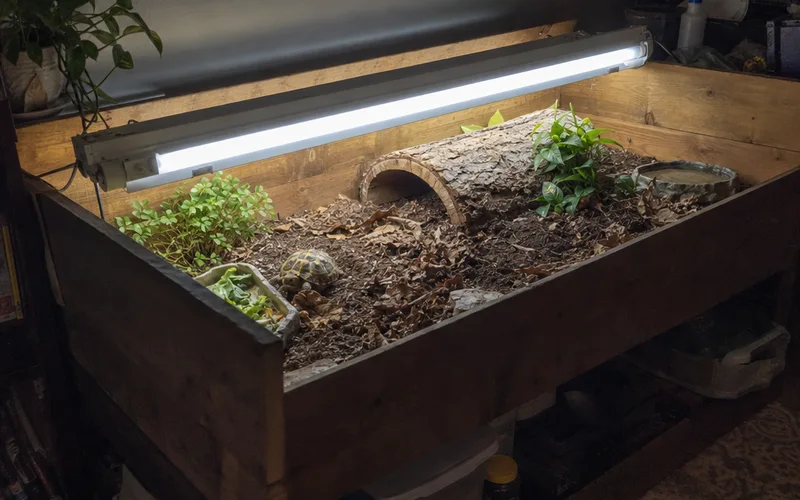
Why the replacement date? A UVB bulb can keep glowing after its useful UVB output has dropped, so you can’t judge it by looking at it.
Sulcata Rescue Ranch is stricter and replaces its UVB bulbs about every 3 months, or when the ends of the tube darken. Its notes also say many exotic pet stores will test a bulb’s UVB output for you.
So write the install date on the bulb’s base. Then replace it within the 6-12 month window LafeberVet gives, or sooner if a test shows weak output.
Which bulb? Orange Grove Animal Hospital says a mercury vapor lamp is a good source of both extra heat and UVB for an indoor box turtle.
A separate UVB tube paired with a basking bulb is the other common setup.
One rule matters most here: UVB has to reach your turtle directly. The rescue warns that the sun’s UV rays can’t pass through glass, so a tank by a sunny window doesn’t count.
Real sunlight is still the best source. That’s why Orange Grove Animal Hospital prefers outdoor housing for box turtles in the first place.
Put the UVB light and the basking lamp on timers. That keeps the 12-14 hour day steady even when you’re away.
The bottom line: buy a UVB light and a timer together, and treat the bulb as a part you replace on a schedule.
Step 7: Keep Humidity at 60% to 80%
Box turtles need a relative humidity of 60% to 80%, according to LafeberVet. The handout says to mist the enclosure once or twice a day and check it with a hygrometer.
So plan to add moisture every day.
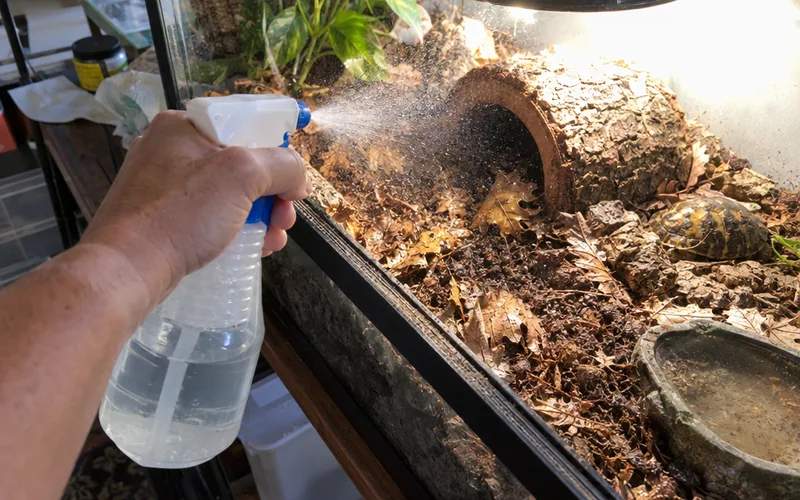
Here’s what keeps humidity in range:
- A damp substrate. The deep, moist layer from Step 4 does most of the work.
- Daily misting. A spray bottle or pump mister once or twice a day, per LafeberVet.
- A humid hide. A hide packed with damp moss gives your turtle a wetter spot.
- A hygrometer at turtle level. It tells you when to mist instead of guessing.
Humidity isn’t only about skin and shell. Sulcata Rescue Ranch notes that moisture and humidity stimulate activity and eating, so a dry enclosure can mean a sluggish turtle that skips meals.
Species matter here too, so check an eastern box turtle or ornate box turtle care sheet before you push humidity to the top of the range.
Damp, not soggy, is the goal. If the soil smells sour or water pools on top, cut back on misting and stir the substrate.
Step 8: Give Your Turtle a Shallow Soaking Dish
Yes, a box turtle needs a water dish it can climb into and soak in, kept shallow. Sulcata Rescue Ranch says box turtles can easily drown in water deeper than 3 inches, and they must be able to get in and out easily.
That surprises a lot of new owners.
But North American box turtles are land animals. LafeberVet says they are not good swimmers, so the water should be a flat pan they can walk into and out of.
Orange Grove Animal Hospital says box turtles are terrestrial but require daily access to fresh water. So the dish stays out all day, every day.
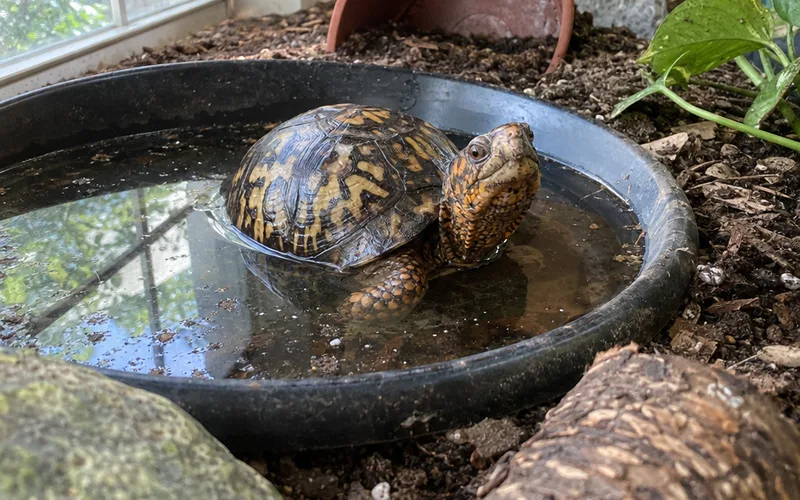
What do they use it for? The rescue says turtles use water for drinking, cooling down and cleaning their nostrils, eyes and vent, and that bathing helps them pass waste.
Here’s a setup that works:
- Sink a wide, shallow dish into the substrate so the rim sits at ground level.
- Keep the water under 3 inches, and below your turtle’s chin for a small one.
- Outdoors, the rescue uses an 18-inch plastic or terra cotta flower pot saucer sunk into the soil.
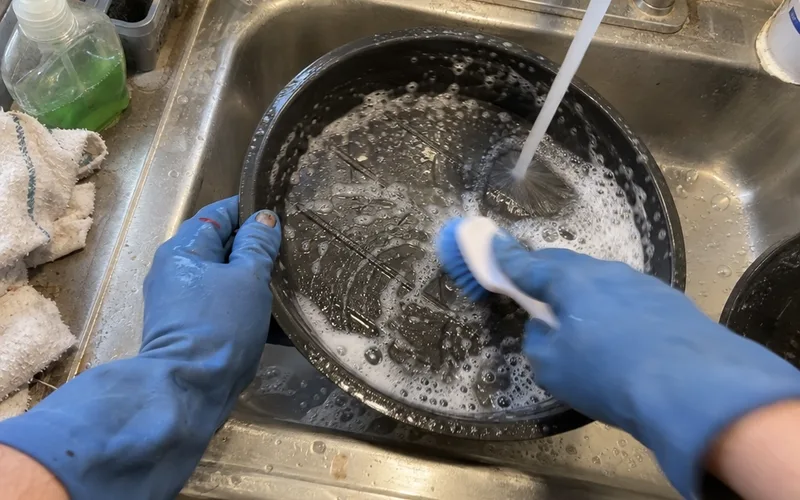
Because turtles often soak and eliminate in the same dish, plan to clean it daily. LafeberVet says to scrub water dishes every day.
If you’re curious which reptiles really do need swimming water, our look at semi-aquatic reptiles covers the turtles that need it. A box turtle just needs a clean place to soak.
Step 9: Feed a Varied Omnivore Diet
Box turtles are omnivores, so they eat both plants and animal foods, and variety matters more than any single food. The LafeberVet handout puts the adult diet at 60-80% vegetables by volume, 10-20% fruit and about 10% insects.
But here’s the thing: veterinary sources don’t agree on the split.
Orange Grove Animal Hospital describes box turtles as primarily carnivorous scavengers that browse on fruits and berries by season. Its clinic feeds mostly animal items, with plant items as an occasional addition.
So which is right? Both sources are vets, and wild box turtles eat what each season offers.
Start with a mix of both food groups and watch your turtle’s weight and appetite. Then ask your reptile vet to fine-tune it.
The one thing every source agrees on is variety. Sulcata Rescue Ranch puts it bluntly, saying in its view that inadequate diet is the number two cause of turtle and tortoise death in captivity.
Here’s what goes in the bowl.
Greens and vegetables. LafeberVet says about half the vegetables should be dark, leafy greens such as collard, mustard and turnip greens, kale, escarole, Swiss chard, romaine, watercress, parsley, carrot tops and beet tops.
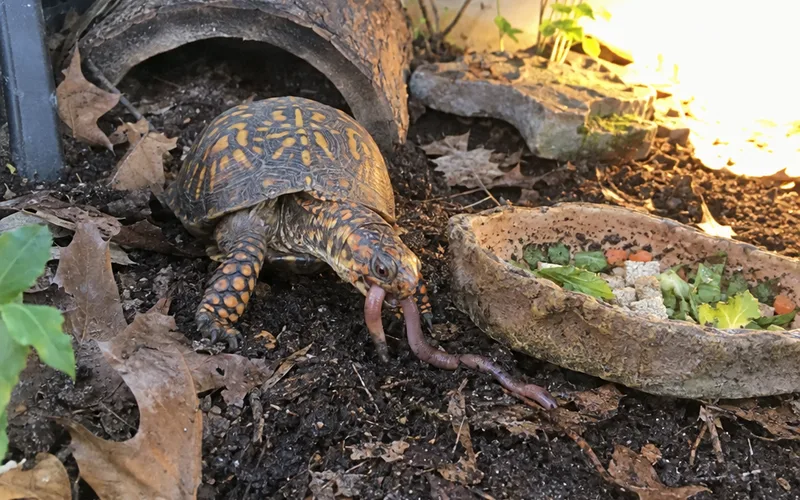
The rest can be broccoli, peas, beans, carrots, beets, corn, squash or thawed frozen mixed vegetables. LafeberVet calls sweet potatoes a special favorite of most box turtles, and says to avoid canned vegetables.
Unsprayed dandelion leaves and flowers, nasturtium and hibiscus blossoms make excellent treats, per the same handout.
Fruit. LafeberVet lists papaya, melon, berries, kiwi, mango, oranges, peaches, pears, tomatoes, figs and grapes.
It also notes that box turtles are especially fond of red foods.
The Orange Grove Animal Hospital plant list leans on blueberries, prickly pear fruit, raspberries, strawberries and tomatoes. Wash and chop everything into bite-size pieces.
Animal foods. Orange Grove Animal Hospital lists beetles, low-fat canned dog food, crickets and mealworms, earthworms, grasshoppers, grubs, isopods (pill bugs), moths, pinky mice, raw fish chunks, slugs, snails and waxworms.
LafeberVet treats insects as a treat for adults, naming mealworms, waxworms, bee moth larvae and earthworms. It adds one limit: offer earthworms no more than once a week.
And two hard no’s. Orange Grove Animal Hospital says never to offer scorpions or lightning bugs (fireflies).
Sulcata Rescue Ranch, a tortoise rescue, widens the menu further. It feeds hard-boiled eggs (shell and all), beef heart and beef liver, and says a good veterinary-grade dry turtle food or a low-fat canned dog or cat food also works as a protein.
Its list of favorite produce adds bananas, cantaloupe, apples, cherries, yams, peas and mushrooms. Rotate through these so your turtle never eats the same few foods week after week.
Before feeding crickets or mealworms, gut-load them so they carry more nutrients. Orange Grove Animal Hospital says to feed the insects a calcium-enriched cricket diet, or a mix of four parts chicken or turkey starter mash to one part calcium carbonate, for 2 or 3 days.
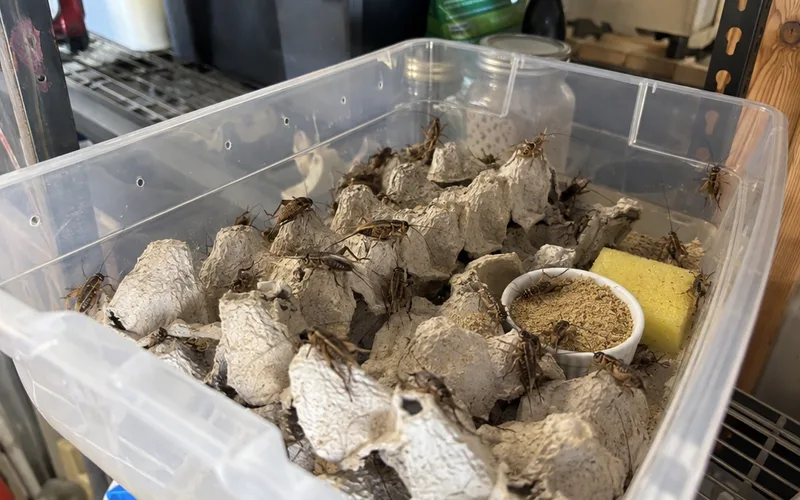
Longer doesn’t help. The clinic says gut-loading beyond 2-3 days isn’t beneficial and can shorten the insects’ lives, and our gut-loading insects guide walks through the full method.
Remove leftovers within 30 minutes. Sulcata Rescue Ranch says ants drawn to food can kill turtles, so it clears uneaten food after half an hour.
For an eastern box turtle specifically, the eastern box turtle diet guide goes deeper on portions and food lists.
Step 10: Dust Food With Calcium 2 to 3 Times a Week
Pet box turtles need a calcium supplement on their food 2 to 3 times a week. LafeberVet says to choose a calcium powder with no phosphorus or vitamin D3 and sprinkle it lightly over the food.
Why calcium? Your turtle uses it to build bone and shell, and the UVB light from Step 6 is what lets it absorb that calcium.
Here’s how to do it:
- Put the day’s food on the plate.
- Shake a light dusting of calcium over the top, like salt.
- Serve it, and repeat on 2 or 3 days of the week.
A cuttlebone helps between meals. Sulcata Rescue Ranch keeps a cuttlebone and a mineral block in the enclosure at all times, and says cuttlebones help keep the beak trimmed while supplying calcium.

What about vitamins? The sources disagree here as well.
Orange Grove Animal Hospital says vitamin supplements are unnecessary on its mostly animal-item diet, and often harmful. The rescue, by contrast, gives veterinary-grade vitamins and minerals once a week.
So stick with plain calcium and a cuttlebone, and add a multivitamin only if your vet recommends one.
Step 11: Keep a Cleaning Schedule
A clean enclosure prevents a lot of the disease box turtles get in captivity. LafeberVet gives a 3-part schedule: daily dish scrubbing and spot cleaning, fresh substrate every 2-3 weeks and a full disinfection every 2-3 months.
That breaks into 3 simple routines:
- Daily: scrub the water dish, refill it and pick droppings and old food out of the substrate and the food bowl.
- Every 2-3 weeks: swap out all the substrate for fresh material.
- Every 2-3 months: empty the enclosure, then clean and disinfect the walls, floor and hides.
Why does this matter so much? LafeberVet says common health problems in box turtles are often the result of poor husbandry.
Outdoors, the job is lighter but not zero. Keep the soaking saucer clean, rake out old food and watch for ant trails around the feeding spot.
Ants are a real threat, not a nuisance. Sulcata Rescue Ranch says ants swarm vegetables and meat and can kill turtles.
Its fix is simple: pour boiling water on the nest. Never use ant poison or any other toxic product inside the pen, since your turtle walks and eats there.
Put the three routines on your calendar the day you set up. In other words, the schedule is part of the setup.
Step 12: Handle Rarely and Wash Your Hands Every Time
Handle your box turtle as little as possible, and wash your hands every time you do. LafeberVet says reptiles are often asymptomatic carriers of Salmonella, meaning they can carry it without looking sick.
Our explainer on whether all reptiles carry Salmonella covers that risk in full.
Kids need extra care here. Orange Grove Animal Hospital says children should not handle box turtles, both to prevent Salmonella infections and to prevent bites.
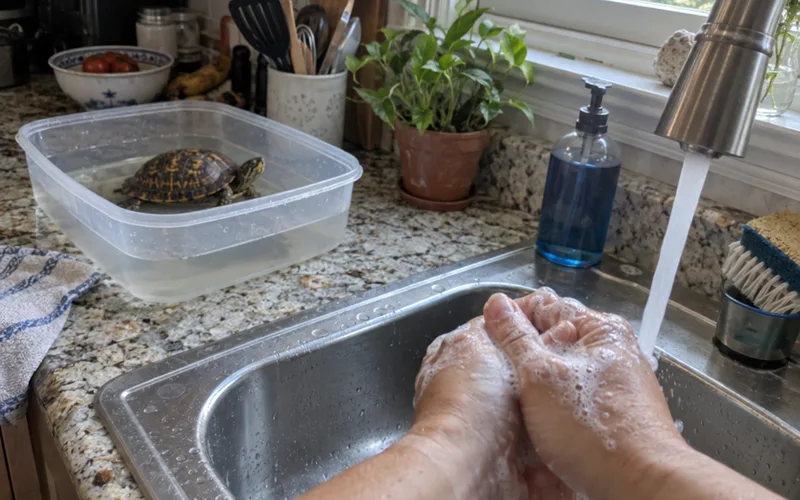
The clinic gives a memorable reason for the bites: small fingers and toes look like a favorite box turtle food. Sulcata Rescue Ranch also says box turtles are not recommended as pets for small children.
Too much handling also stresses the turtle. The rescue says box turtles are easily stressed by over-handling and by being moved to new surroundings.
So when you do need to move yours, keep it quick:
- Lift with both hands on the sides of the shell, close to the ground.
- Set it down where it can walk away.
- Wash your hands with soap and water right after.
The same caution applies to a new arrival. Give a new turtle a few quiet days to settle before you start any routine handling.
What You Need for Box Turtle Care
Before your turtle comes home, you need housing, heat, UVB, humidity tools, a water dish, substrate, a hide and the right food and supplements. Most of it is a one-time setup, while bulbs, substrate and food are ongoing costs.
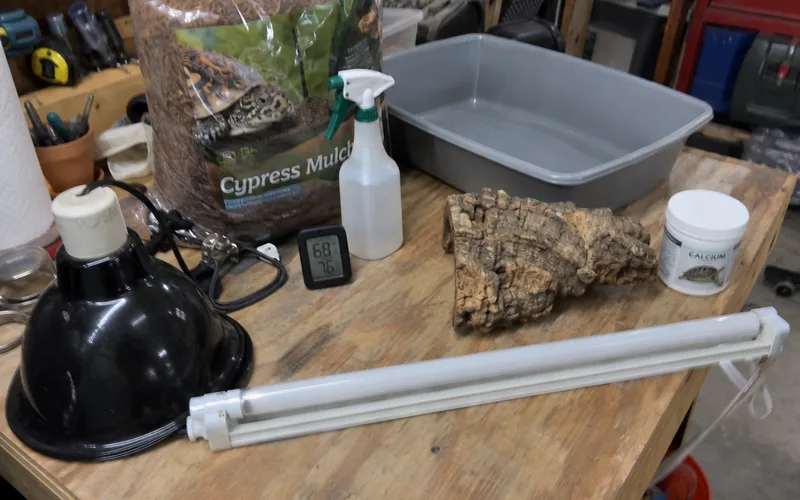
Here’s the shopping list in one place:
- Housing: a predator-proof outdoor pen, or a large indoor enclosure with tall sides
- Heat: an overhead basking lamp plus an under-tank heater, as LafeberVet suggests
- UVB: a reptile UVB light or mercury vapor lamp, on a timer
- Monitoring: 2 thermometers and a hygrometer
- Water: a flat, shallow pan or a sunken plant saucer
- Substrate: topsoil, leaf litter, cypress mulch or orchid bark, plus moss for a humid hide
- Hides: a wooden box, cork bark or covered shelter
- Supplements: calcium powder with no phosphorus or vitamin D3, and a cuttlebone
The fixture is often the biggest single purchase. As one example, the dual dome lamp fixture in Step 5 was listed at $60.99 on sale in November 2026, before bulbs.
Budget for a reptile vet too. Sulcata Rescue Ranch says anyone keeping turtles should be prepared to spend money on vet care when it’s needed.
Set up and run the enclosure for a few days before your turtle arrives, so you can confirm every number.
Indoor vs Outdoor Box Turtle Care
Outdoor box turtle care is the better choice wherever your climate allows, and an indoor enclosure is the fallback. Orange Grove Animal Hospital says box turtles are best housed outdoors to meet their UV light needs and keep normal light cycles.
So how do the two compare? Outdoors, the sun supplies UVB and heat for free, and the ground holds moisture.
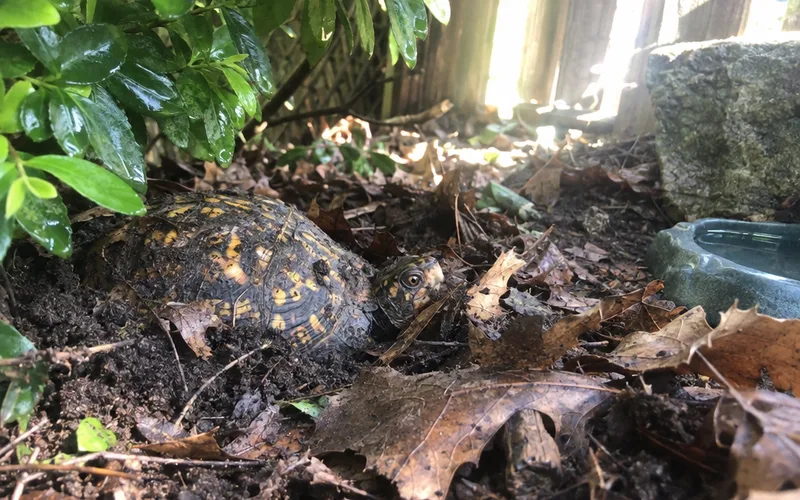
Indoors, you replace all of that with equipment. You’ll run the basking lamp, the UVB light, the misting and the thermometers yourself, every day.
Here’s the trade-off at a glance:
- Outdoor pen: natural sunlight and space, but it needs predator-proofing, shade and a plan for cold weather
- Indoor enclosure: full control over temperature, but it needs a UVB light, a heat lamp and daily misting
- Both: a shallow soaking dish, damp substrate, hides and a varied diet
Many keepers use both. LafeberVet says many box turtles do well outdoors during warm months above 60°F (16°C), which means an indoor setup can cover the cooler months.
If you do split the year, move your turtle gradually. The rescue says box turtles are easily stressed when moved to new surroundings, so expect a few quiet days after each move.
Either way, sunlight through a window doesn’t count, since the rescue says UV rays can’t pass through glass.
Pick the habitat your climate supports for most of the year, then plan the other season around it.
How Often Should You Feed a Box Turtle?
Feed an adult box turtle at least 3 times a week, and feed babies and juveniles every day. That’s the schedule Sulcata Rescue Ranch, a tortoise rescue, uses for adults and young turtles.

Young turtles need more than frequent meals. LafeberVet says growing turtles require a higher proportion of protein than adults, so a juvenile’s plate should carry more insects and worms.
The rescue also gives its juveniles and babies vitamin and calcium supplements at least 3 times a week. Ask your reptile vet to set exact amounts for a growing turtle.
Give it some privacy at mealtime. The rescue says many box turtles won’t eat in front of people or other turtles, and need a hidden spot where they feel safe eating.
And keep the bowl clean. Clear uneaten food within 30 minutes, as Step 9 explains, so it doesn’t spoil or draw ants.
So a simple rule works for most keepers: adults 3 or more times a week, youngsters daily.
Baby Box Turtle Care
Baby box turtles need the same setup as adults, but with daily meals, more protein and extra supplements. LafeberVet says growing turtles require a higher proportion of protein, and Sulcata Rescue Ranch, a tortoise rescue, feeds juveniles and babies every day.
The rescue also gives young turtles vitamin and calcium supplements at least 3 times a week. That’s more often than an adult needs, because a growing turtle is building bone and shell fast.
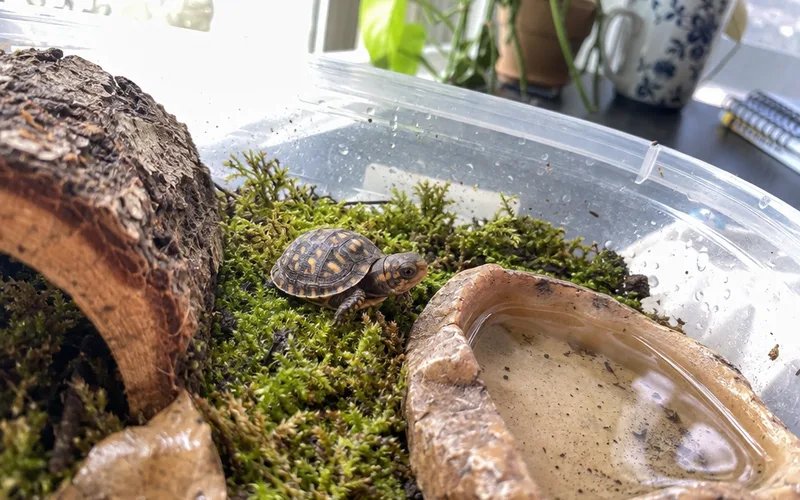
Here’s how baby care differs from adult care:
- Meals: every day instead of 3 or more times a week
- Protein: a bigger share of worms and insects on the plate
- Supplements: calcium and vitamins at least 3 times a week, per the rescue
- Water: a very shallow dish the baby can climb out of easily
Humidity matters just as much for a baby, so keep the substrate damp and give it a moist hide.
Hatchlings and babies are also easy prey. Keep a young turtle in its own secure enclosure, away from adult turtles, dogs and other pets.
Ask a reptile vet to set exact portions and supplements for a growing turtle, and weigh it regularly so you can see it’s growing.
Do Box Turtles Need to Hibernate in Winter?
Box turtles do need to hibernate in the winter months, according to Orange Grove Animal Hospital, but only a healthy turtle a vet has checked should. The clinic says to have your box turtle examined before hibernation, and never to hibernate one with signs of illness such as eye or nasal discharge.
Turtle keepers often call this winter rest brumation, the reptile version of hibernation. Our reptile brumation explainer covers how it works across species.
When does it start? Orange Grove Animal Hospital says box turtles begin to slow down about mid-September.
That’s your cue to book the vet check. A turtle going into winter underweight or sick may not come out of it.
If your vet clears it, you have two options.
Outdoors. Orange Grove Animal Hospital says to put moistened, but not wet, peat moss, straw or leaf litter in the den.
That encourages your turtle to burrow and keeps it from drying out. Check the den every 2-3 weeks.
Indoors. The clinic’s method is a plastic container filled about two-thirds with straw or moist leaf litter, set in a cool room such as a garage.
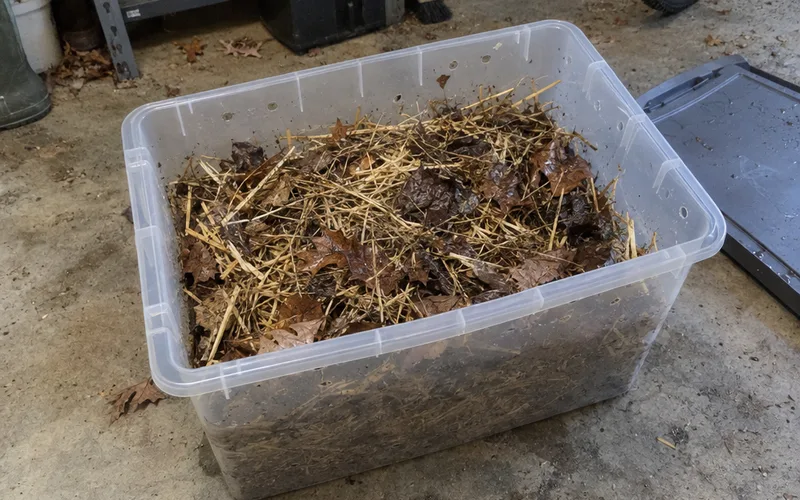
Check your turtle every 2-3 weeks and soak it for 20-30 minutes in tepid water.
How cold should it be? Sulcata Rescue Ranch keeps its hibernating box turtles at a steady 40-60 degrees from November to March, in a rodent-proof bin with small air holes.
Note: the rescue protects the bin from rain and from temperatures below 40 degrees.
In a mild-winter area, the rescue sometimes sets the bin inside the turtle’s outdoor house, in the least sunny corner of the yard. Some owners there add reusable ice packs to keep the house cool enough.
What if your turtle lives indoors all year? Decide with your vet whether to hibernate it at all, and never cool down a turtle that isn’t eating well or looks unwell.
Signs of a Sick Box Turtle
The most common signs of illness in a box turtle are runny or clogged nostrils, swollen or filmy eyes, wheezing, lumps near the ear and not eating. That’s the list Sulcata Rescue Ranch, a tortoise rescue, gives, along with a white or black tongue or mouth, which should normally be light pink.
The LafeberVet handout names the problems behind those signs, and says they often come from poor husbandry.
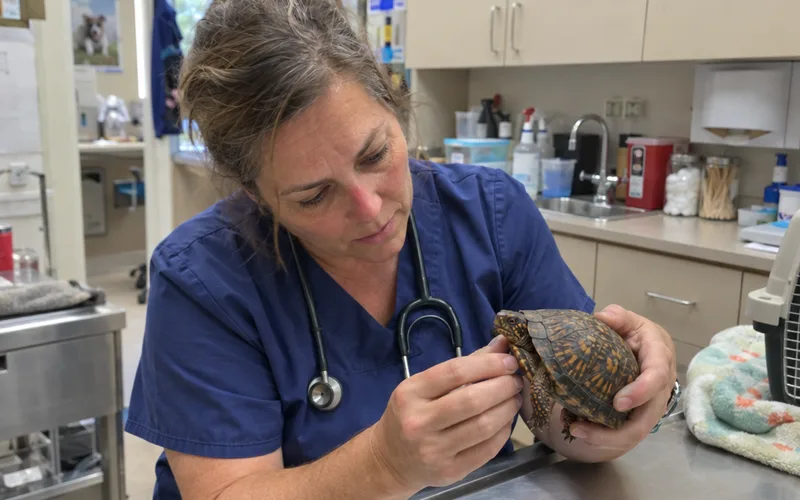
The list includes swollen eyelids, ear infection, metabolic bone disease, flystrike, retained eggs, penile prolapse and intestinal parasites.
Here’s what to watch for, grouped by where you see it:
- Eyes: swollen, puffy, runny or filmy eyes, or eyes held shut
- Nose and breathing: runny or blocked nostrils, wheezing
- Head and ears: a large lump or swelling on the side of the head behind the eye
- Mouth: a white or black tongue or mouth instead of light pink
- Appetite: skipping meals outside the winter slowdown
- Shell and skin: soft or misshapen areas, wounds or anything foul-smelling
Many of these trace back to the setup. Metabolic bone disease, for example, is tied to calcium and UVB, which is why Steps 6 and 10 matter so much.
Shell problems deserve a close look too. Our guide to turtle shell rot shows what an infected shell looks like.
Weight is another clue. The rescue says some overweight box turtles can’t close their shell entirely, so a turtle that can’t shut up tight needs a diet check.
If you see any of these signs, book a visit with a vet who treats turtles. Bring photos of your enclosure and your thermometer and hygrometer readings, since the cause is often in the setup.
Are Box Turtles Good Pets for Beginners?
Box turtles can work for a committed beginner, but they’re not low-maintenance and not a good pet for small children. They need precise heat, UVB and humidity, a lot of floor space, a varied diet and a commitment that can run for decades.
Are box turtles easy to take care of, then? Sulcata Rescue Ranch, a tortoise rescue, calls them a somewhat hardy species, and most problems trace back to the setup rather than the turtle.
So the work is front-loaded. Get the heat, UVB, humidity and space right, and the daily routine stays short.
Start with the lifespan. LafeberVet says box turtles can live 30 to 40 years or more in captivity, so this is a pet that may move house with you several times.
Then the space. A box turtle does best in a predator-proof outdoor pen, and an indoor turtle needs much more room than a starter tank, as Steps 2 and 3 explain.
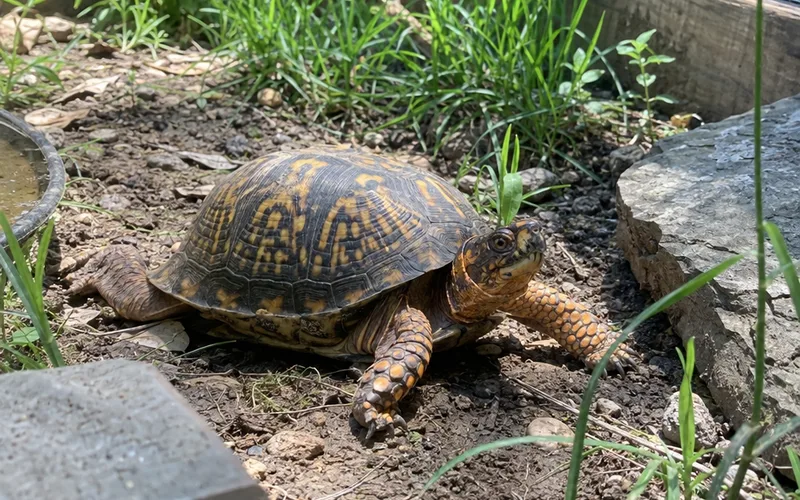
Then the daily routine: fresh water, misting, food a few times a week and spot cleaning. None of it is hard, but none of it can be skipped for long.
And the handling. Box turtles are watch-and-enjoy pets, and the rescue says they stress easily when handled too much.
Who are they a good fit for? Someone with a yard or a spare room, a steady daily routine and patience for a quiet animal.
If you want a pet to hold every day, look at other options.
If you’re weighing a box turtle against other species, our guide to whether turtles make good pets compares the options. Whatever you choose, plan the whole setup before you bring a turtle home.
How Long Do Box Turtles Live?
Pet box turtles can live 30 to 40 years or longer with proper care, according to LafeberVet.
Other sources put it higher. Sulcata Rescue Ranch gives an average adult lifespan of 40-60 years, and Orange Grove Animal Hospital says 50 to 100 years.
That’s a wide range. But every source points the same way: a box turtle can outlive a dog, a cat or even its first owner.
Orange Grove Animal Hospital notes that box turtles, like desert tortoises, are often passed from generation to generation within a family. So it’s worth deciding now who would take yours.
Can you tell a box turtle’s age by its shell? Not reliably.
Sulcata Rescue Ranch says the growth rings on the scutes can’t accurately tell a box turtle’s age, because growth depends on food, water, sun and space.

What shortens a box turtle’s life? The rescue blames cold first and poor diet second, which is why the basking heat in Step 5 and the varied diet in Step 9 matter more than any gadget.
In short, plan for a box turtle to live as long as you do.
Box Turtle Mating and Eggs
Female box turtles can lay eggs in captivity, and keeping a male with a female adds real risks. Sulcata Rescue Ranch, a tortoise rescue, gives a normal clutch size of 1-7 eggs and says captive box turtles can lay more than one clutch a year.
The bigger issue is stress on the female. The rescue warns that constant mating can stop a female from eating and can cause a prolapse, which can be fatal if it isn’t treated.
So a breeding pair needs more space and more cover. The rescue says the enclosure must have hiding places where a female can hide and eat without being disturbed.
Egg problems are a health issue too. LafeberVet lists retained eggs among the common health problems in box turtles.
If a female stops eating, call a vet who treats turtles.
How can you tell males from females? Orange Grove Animal Hospital says males are most easily recognized by deep red eyes, but only after sexual maturity, around 7-8 years.
If you don’t plan to breed, house adult males and females apart.
How to Tell a Healthy Box Turtle Setup From a Struggling One
A healthy box turtle is active in the warm part of the day, eats readily, soaks and burrows, and has clear eyes and a firm shell. A struggling one hides constantly, skips meals, has puffy eyes or never leaves the warm spot.
Use your turtle’s behavior as a check on your numbers:
- Always under the lamp: the enclosure may be too cold, so check the cool-side thermometer.
- Always buried on the cool side: the basking spot may be too hot.
- Sluggish and not eating: check humidity, since the rescue says moisture stimulates activity and eating.
- Pacing the walls: the enclosure may be too small, or there may be too few hides.
Each reading points back to a step you can fix.
A daily look takes 2 minutes. Glance at both thermometers, the hygrometer, the water dish and your turtle’s eyes when you refill the water.
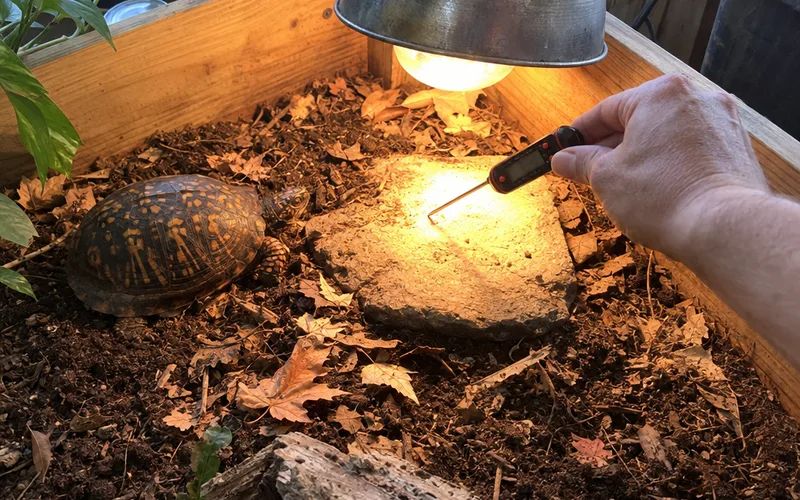
That daily check is the habit that catches problems early.
Common Box Turtle Care Mistakes to Avoid
The biggest box turtle care mistakes are a cramped tank, no UVB, deep water, a dry or dusty substrate and a diet built on one food. LafeberVet ties most common box turtle health problems to poor husbandry like this.
Here are the ones to avoid:
- A small glass tank. The LafeberVet 20-gallon figure is a bare minimum, and the rescue rules out aquariums entirely.
- A UVB bulb that’s never replaced. LafeberVet says to replace it every 6-12 months, even if it still lights up.
- Water that’s too deep. The rescue says box turtles can drown in more than 3 inches.
- Gravel, sand or cat litter. LafeberVet links these to intestinal blockage.
- One-food diets. Variety is the rule in every source, from greens to worms.
- Feeding fireflies or scorpions. Orange Grove Animal Hospital says never.
- Garden chemicals. The rescue warns against snail bait, poisons and fertilizers anywhere near your turtle or its food.
- Hibernating a sick turtle. Orange Grove Animal Hospital says a turtle with eye or nasal discharge should not be hibernated.
Most of these come down to skipping a measurement. A thermometer, a hygrometer and a dated UVB bulb prevent half of them.
For the wider family of turtles and tortoises, our turtle and tortoise care hub covers species beyond the box turtle.
Get the setup right first, and the daily care gets much easier.
Frequently Asked Questions
What do you put in the bottom of a box turtle tank?
The bottom of a box turtle tank needs a damp, burrowable substrate at least 2-3 inches deep, such as topsoil and leaf litter, or cypress mulch or orchid bark mixed with peat moss and soil. Skip gravel, sand, potting soil, crushed walnut shells and cat litter, which LafeberVet says can cause intestinal blockage.
What makes a box turtle happy?
A box turtle does best with room to roam, damp soil to burrow in, a hide, a shallow soaking dish and a private spot to eat. Sulcata Rescue Ranch, a tortoise rescue, notes that many box turtles won’t eat in front of people and that moisture and humidity stimulate activity and eating.
Do box turtles need water to live in?
No, box turtles live on land, but Orange Grove Animal Hospital says they need daily access to fresh water. Give them a shallow pan they can walk into, because Sulcata Rescue Ranch, a tortoise rescue, says they can drown in water deeper than 3 inches.
Is it okay to keep a wild box turtle as a pet?
No, leave a wild box turtle where it lives. Sulcata Rescue Ranch, a tortoise rescue, says box turtles are heavily collected for the pet trade and most die before they can be sold, and wild box turtles may be protected where you live, so check with your state wildlife agency first.
Do box turtles like to be held?
No, most box turtles only tolerate it. Sulcata Rescue Ranch, a tortoise rescue, says they are easily stressed by over-handling, so keep handling short and close to the ground, and wash your hands afterward because reptiles often carry Salmonella without symptoms.
How can you tell if a box turtle is male or female?
A male box turtle is easiest to spot by its deep red eyes, once it is mature. Orange Grove Animal Hospital says that eye color only appears at sexual maturity, around 7-8 years of age.
Can you keep two box turtles together?
Two box turtles can share a pen only if it is big enough to give each turtle its own hiding and feeding spots. Sulcata Rescue Ranch, a tortoise rescue, warns that constant mating can stop a female from eating and can cause a prolapse, so separate a pair if the female is being pestered.
Final Thoughts
Good box turtle care rests on space, a measured warm spot, daily water and a varied diet.
This week, put a thermometer under your basking lamp and a hygrometer in the enclosure, and write down the date your UVB bulb went in.