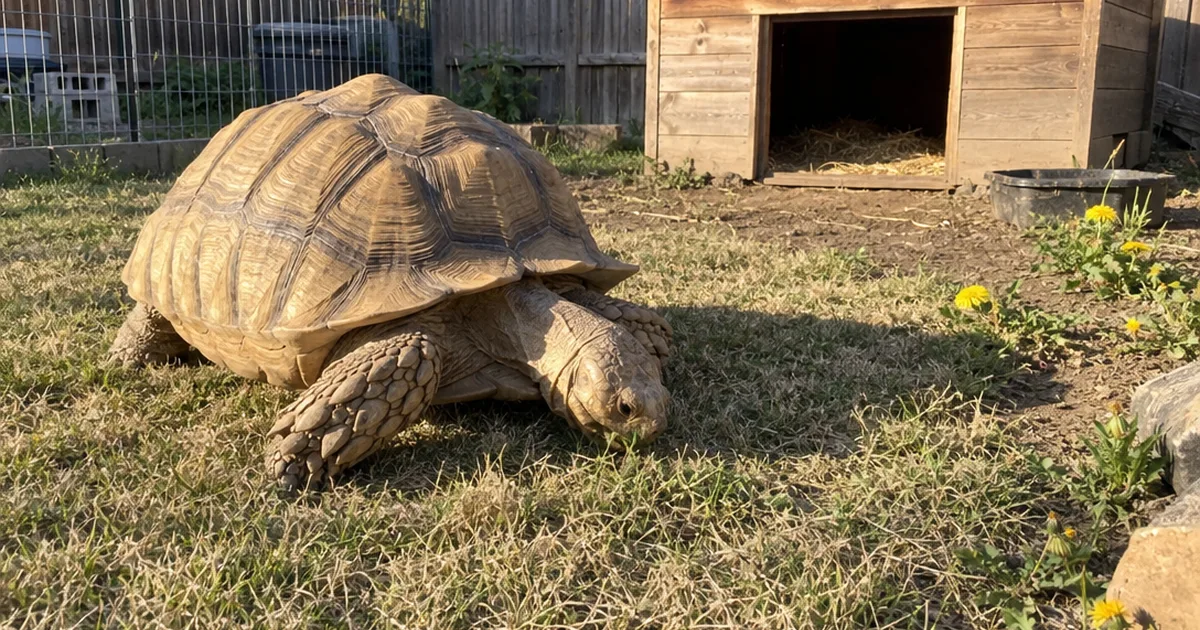
A healthy Russian tortoise can live 50 years or more. The setup you build this month may house your pet for decades, so the numbers matter from day one.
ReptiFiles calls the Russian tortoise a fairly high-commitment pet for that reason, along with its space, heat and UVB needs. The hard part comes up front, since one adult needs a pen of at least 24.5 square feet and a 95°F basking spot.
The 8 care steps each come with the exact size, heat or schedule to hit. Wherever winters stay above 25°F, an outdoor pen can then take over from the heat lamp and UVB tube, since natural sunlight does both jobs.
How to Care for a Russian Tortoise Step by Step
Russian tortoise care comes down to 8 steps, starting with a pen of about 24.5 square feet and a 95°F basking spot. Then add UVB light, deep substrate, a humid hide, a weed diet, water with soaks and a vet check.
Step 1: Build an Enclosure With Enough Floor Space
Give one adult Russian tortoise at least 7 feet by 3.5 feet of floor, 2 feet high.
That’s 24.5 square feet, the minimum in the ReptiFiles care sheet. It comes from a German Society for Herpetology rule: 8 times the adult length long, 4 times wide and 2 times high.
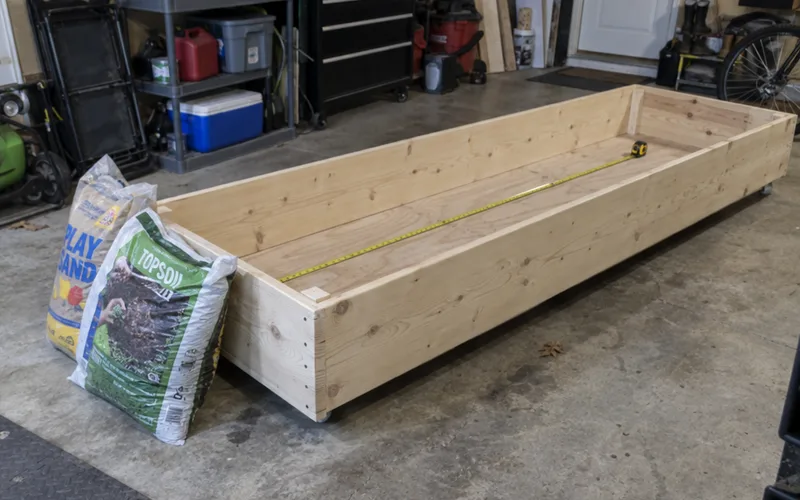
Whether you buy a cage or build a tortoise table, floor space matters far more than height, because this tortoise lives on the ground.
A young tortoise can live in a 4 x 2 x 2 foot cage until it reaches about 6 inches. After that, it needs the full-size pen, and the Russian tortoise size timeline tells you roughly when to plan the move.
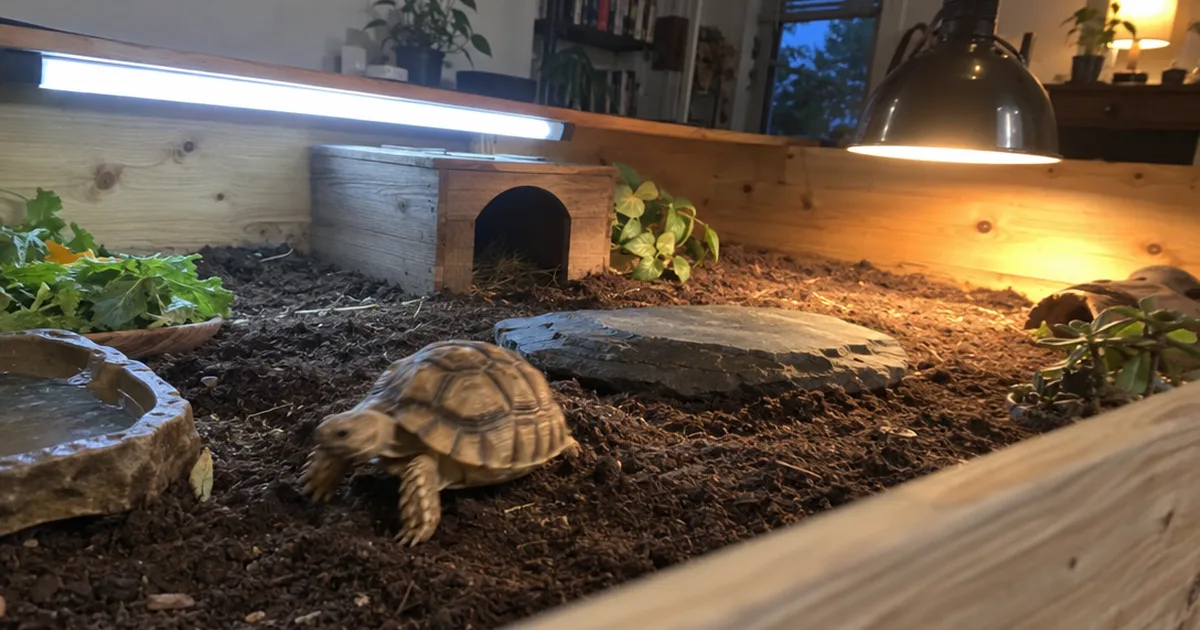
Then add 2 hide boxes, one on the warm side and one on the cool side, so your tortoise can rest at either temperature. Those hides anchor the rest of the Russian tortoise habitat you build around them.
Step 2: Set Up a Heat Gradient
Heat one end of the pen to a 95°F basking spot and keep the cool end at 75 to 85°F. At night, 70 to 75°F is right.
Those ReptiFiles numbers give your tortoise a range to move through as it warms and cools.
Here’s how to set it up:
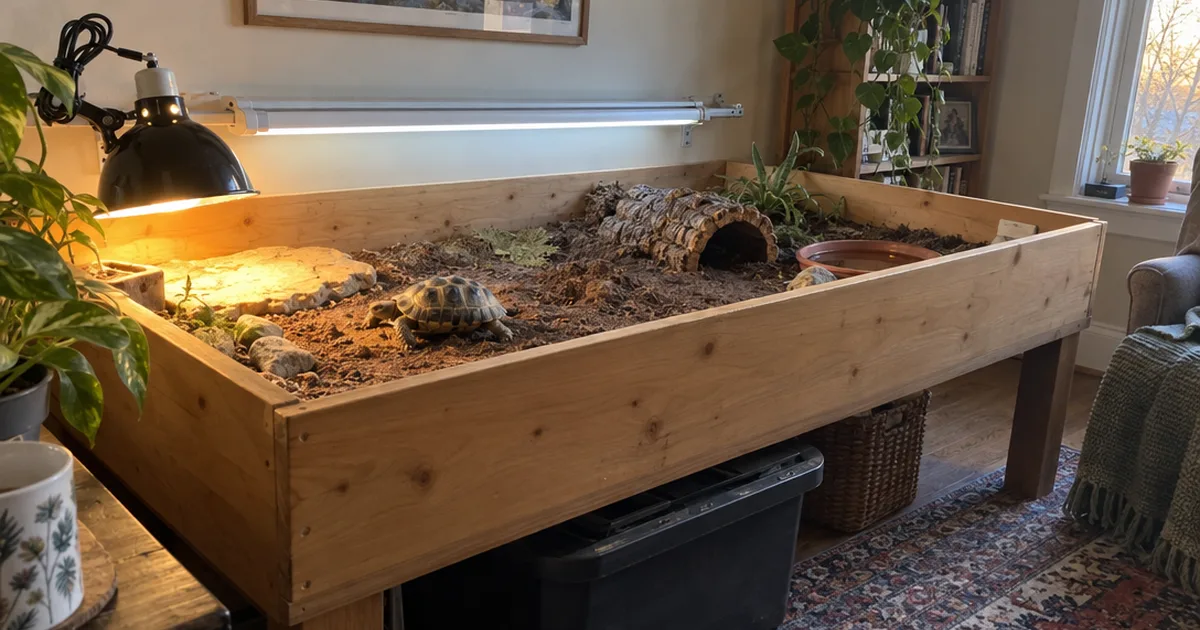
Hang a 50-watt halogen bulb in a dome fixture over one end, using 2 bulbs for an adult. Put a digital probe thermometer on the basking surface and a second one at the cool end.
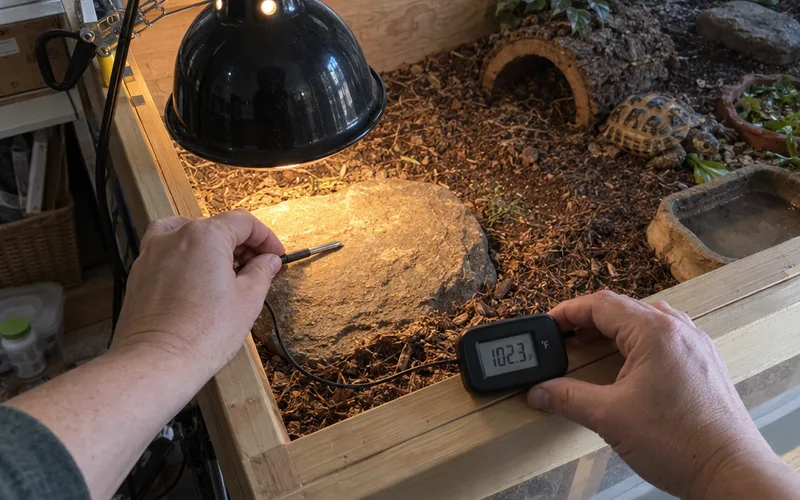
If the basking spot runs hot, drop the wattage. If it runs cool, go higher instead of using a dimmer, which cuts the bulb’s useful infrared output.
Step 3: Add UVB Lighting for 10 to 14 Hours a Day
A Russian tortoise kept indoors needs a UVB tube on for 14 hours a day in summer and 10 in winter, per ReptiFiles.
Without that ultraviolet light, your tortoise can’t use calcium well, which leads to metabolic bone disease.
Use a T5 HO tube, such as the Arcadia 12% or Zoo Med ReptiSun 10.0. Pick one about a third as long as the pen and mount it over the warm side.
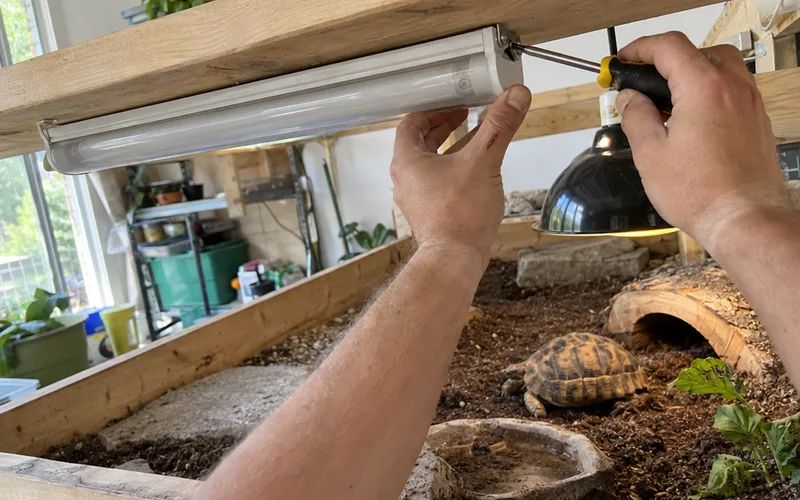
Aim for a UV index of 3.0 to 4.0 at the basking spot, which a Solarmeter 6.5 can measure.
Replace the bulb every 6 to 12 months, even if it still lights, says a care sheet from Chicago Exotics Animal Hospital. Turn all lights off at night.
Step 4: Lay Down Deep, Diggable Substrate
Russian tortoises need a loose, natural substrate at least 4 inches deep for juveniles and 6 inches for adults, so they can burrow.
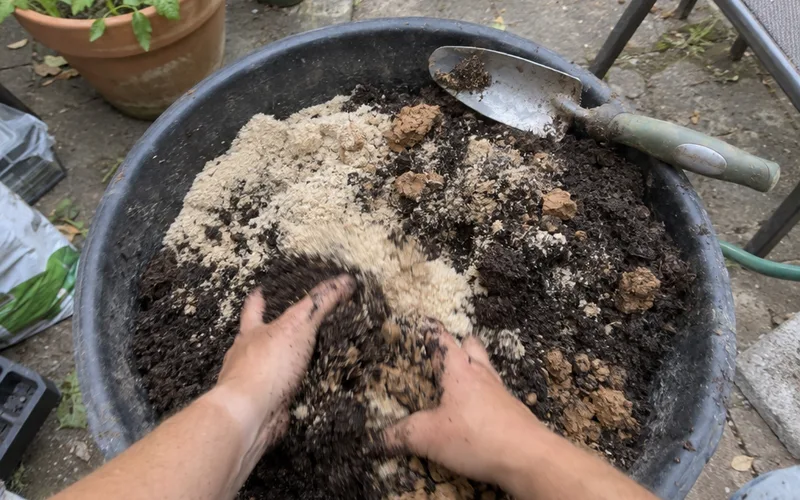
One mix ReptiFiles suggests is 40% organic topsoil, 40% play sand and 20% excavator clay. Keeper Joe Heinen of RussianTortoise.org uses a 50/50 mix of sand and soil, swapping in coconut coir for the soil.
Never let it go bone dry.
Remove waste every day, and replace indoor substrate completely every 3 to 6 months. Whichever Russian tortoise substrate you choose, it should hold a burrow and stay slightly damp.
Step 5: Keep Humidity Moderate, With a Humid Hide
Keep enclosure humidity around 40 to 50%, the range Chicago Exotics Animal Hospital gives, with a moist dig box or humid hide near 70%.
Why the wetter spot? Wild Russian tortoises spend much of their time in burrows, which Heinen says reach up to 70% humidity even in dry country.
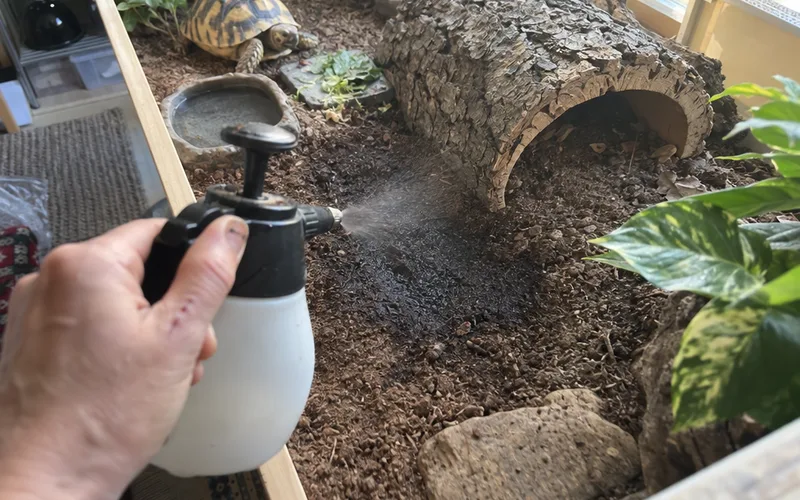
ReptiFiles allows 40 to 75% overall, lower by day and higher at night, with juveniles kept on the humid side. Mist the substrate each morning with a pressure sprayer, not the tortoise.
Step 6: Feed Weeds, Greens and Flowers
Feed your Russian tortoise a high-fiber, low-protein, low-sugar diet of weeds, leafy greens and grasses.
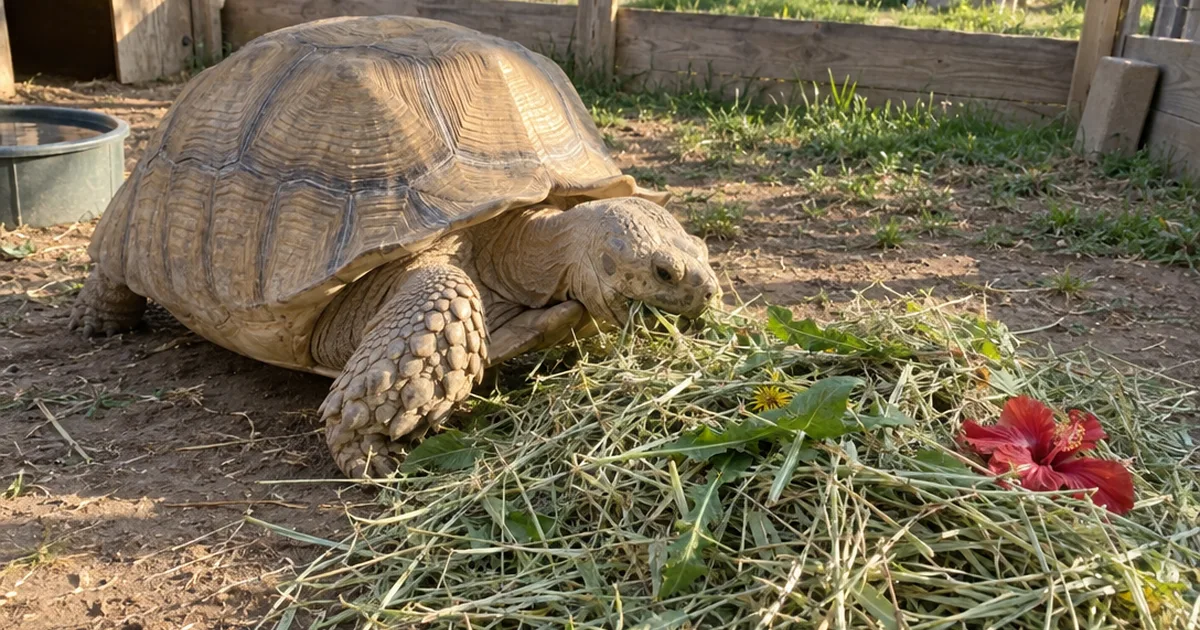
Good daily food includes dandelion greens, plantain, clover, endive, turnip greens, romaine lettuce and timothy grass or timothy hay. Dandelion tends to be the favorite, and early morning is the best time to feed, per Chicago Exotics.
Save spinach, kale, collards, cabbage and broccoli for rare meals.
Skip fruit entirely, because it can cause bloat. Flowers such as hibiscus and roses make better treats.
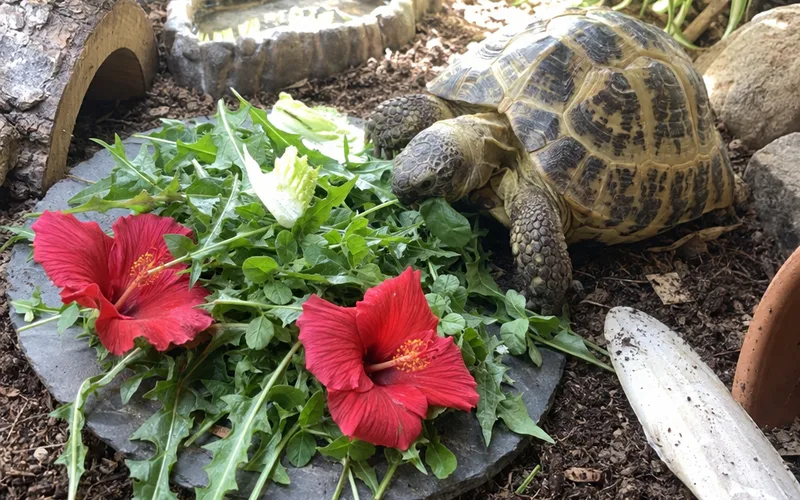
As for portions, growing tortoises can eat all they want each day, but near-adults get a pile about the size of their shell.
Serve food on a plate so your tortoise doesn’t swallow substrate, and dust it with a reptile multivitamin. Leave a cuttlebone in the enclosure as a calcium supplement that also wears down the beak.
Above all, rotate as many different plants as you can, because variety is what balances a Russian tortoise diet over time.
Step 7: Give Fresh Water and Regular Soaks
Keep a shallow dish of clean water in the enclosure at all times, no deeper than your tortoise’s knees, and change it daily.
A sunken plant saucer works well, and it needs a scrub with animal-safe disinfectant every week.
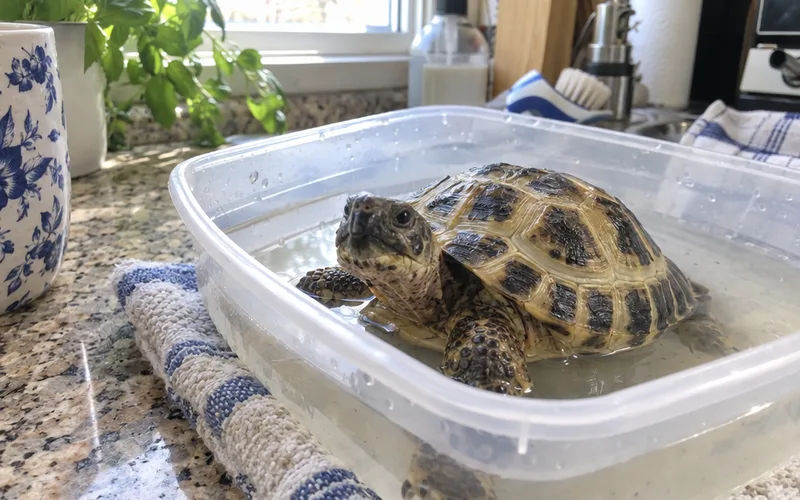
Soak juveniles in shallow, lukewarm water for 10 to 15 minutes twice a week, per ReptiFiles. If your dish is too small to soak in, Chicago Exotics suggests 10-minute soaks 2 to 3 times a week for any age.
Step 8: Book a Vet Check and Watch for Illness
Take every new Russian tortoise to a reptile veterinarian, as Heinen advises. Ask the vet to weigh and measure it and check a stool sample for parasites.
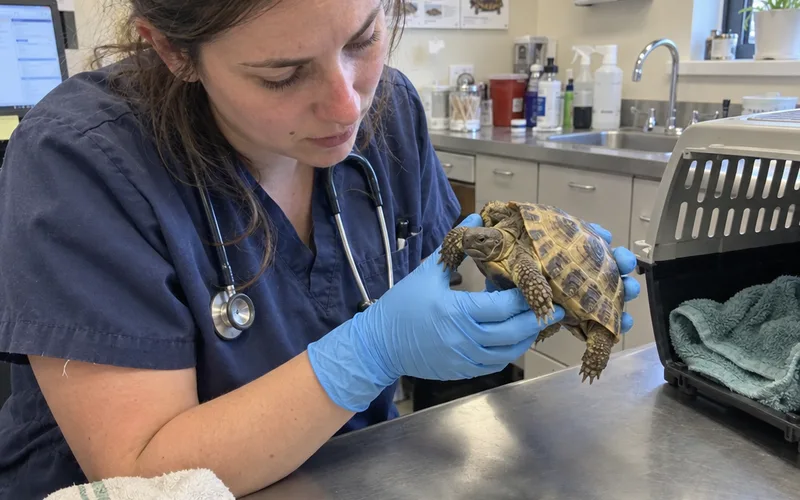
That check matters because most Russian tortoises in the U.S. pet trade are wild caught and imported, according to Chicago Exotics Animal Hospital.
After that, watch for these warning signs:
- Lethargy or no appetite for more than 2 to 3 days
- Bubbles from the nose or wheezing
- Swollen or closed eyes
- Loose stools
- A soft shell or abnormal shell or beak growth
Any one of them means a vet visit, since each can point to one of the common tortoise health problems.
Russian Tortoise Care at a Glance
Here are the core numbers from the steps above, for an adult kept indoors:
| Need | Target |
|---|---|
| Floor space | 7 x 3.5 ft (24.5 sq ft) |
| Basking spot | 95°F |
| Cool side | 75-85°F |
| Night | 70-75°F |
| UVB | 10-14 hours a day |
| Humidity | 40-50%, humid hide near 70% |
| Substrate | 6 inches deep |
Print it and tape it near the enclosure, so you can check your thermometer and timer against it each week.
Can a Russian Tortoise Live Outside?
Yes, a Russian tortoise can live outside, and ReptiFiles calls a secure outdoor pen the ideal home wherever winters stay above 25°F.
Your tortoise gets natural sunlight there, so it doesn’t need artificial heat or lighting.
The pen needs smooth walls sunk at least 12 inches into well-draining soil, sun and shade, and a mesh top to keep out predators. Most outdoor tortoise enclosure ideas start from those same 3 features.
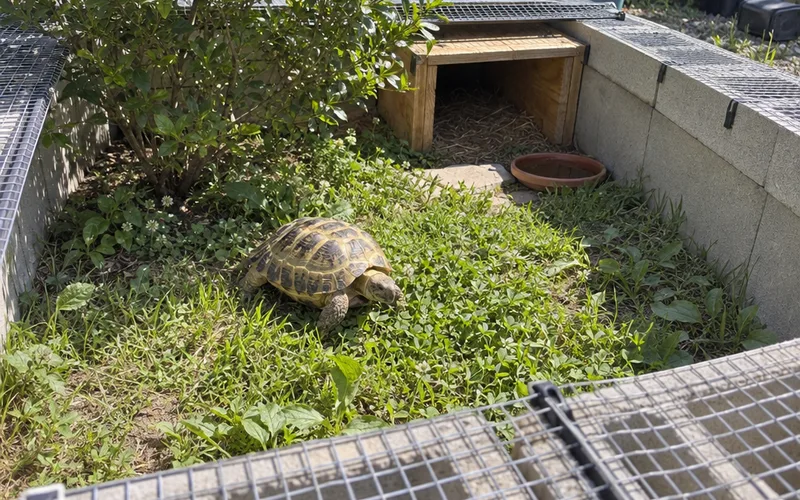
So how cold is too cold? Below 50°F at night, your tortoise needs a shelter heated to 60°F with a heater that gives off no light.
And once winter drops below 25°F, bring it inside for the cold part of the year.
Do Russian Tortoises Hibernate?
Yes, Russian tortoises hibernate for up to 9 months a year in the wild. Heinen reports that pet tortoises seem to gain from as little as 8 weeks.
Hibernation is optional for a pet, though, and it carries real risk.
Heinen kept his own tortoises awake for their first 5 years and says it isn’t worth trying if you’re unsure. Get a vet check first, and skip it if your tortoise has parasites or is too light.
If you do go ahead, plan the cool-down and temperatures with the tortoise hibernation basics before your first winter.
Are Russian Tortoises Hard to Take Care Of?
Russian tortoises are hardy, but ReptiFiles calls them a fairly high-commitment pet because of their 50-year lifespan and their space, heat and UVB needs.
The daily work is light: feeding, fresh water and spot cleaning.
The hard parts come up front, building a 24.5-square-foot enclosure and getting the lighting right, and then lasting for decades. See how that compares with other species among the best pet tortoises for beginners, and check the realistic Russian tortoise lifespan before you commit.
Keeping other shelled pets too? The wider turtle and tortoise care section covers each species.
Frequently Asked Questions
Do Russian tortoises dig holes?
Yes, Russian tortoises dig burrows, which is why the ReptiFiles care sheet tells you to sink outdoor pen walls at least 12 inches into the soil. Indoors, give adults 6 inches of diggable substrate so they can burrow without escaping.
What is the average lifespan of a Russian tortoise?
A Russian tortoise is likely to live up to 50 years or more with excellent care, according to ReptiFiles. Plan for that commitment before you buy, including who will care for the tortoise if you can’t.
Can Russian tortoises eat fruit?
No, Russian tortoises should skip fruit, because Chicago Exotics Animal Hospital warns it can cause bloat. Offer pesticide-free flowers such as hibiscus or rose petals as treats instead.
Do Russian tortoises need a heat lamp at night?
No, a Russian tortoise needs no light at night, and Chicago Exotics Animal Hospital advises against it. If your room drops below about 70°F, add heat that gives off no light, such as a ceramic heat emitter.
Final Thoughts
Russian tortoise care comes down to a few numbers: about 24.5 square feet of floor, a 95°F basking spot, a UVB tube on 10 to 14 hours a day and a weeds-and-greens diet with no fruit.
Get those right before your tortoise comes home, then book its first vet check this week.