So, what do crested geckos eat? In this guide, you’ll learn exactly what to put in your pet gecko’s dish, how often to feed it and which foods to keep out of its enclosure.
Why does that matter? Feeding is where most new keepers second-guess themselves, and online advice jumps between fruit, bugs and brand names with little explanation.
Here’s what we’ll cover:
- The complete powdered diet that should make up most meals
- The live insects worth buying, and the ones to skip
- Where fruit fits, plus a feeding schedule by age
Let’s dive right in.
What Do Crested Geckos Eat? The Short Answer
A pet crested gecko eats three kinds of food: a complete powdered diet, live insects and the occasional piece of fruit. The powder is the base of the menu, and everything else is a supplement or a treat.
Pangea, which makes one of the popular crested gecko diets, describes three ways keepers feed them:
- Powdered diet only. The simplest option, since these diets are built to cover the gecko’s needs on their own.
- Powdered diet plus insects. The approach Pangea recommends for best condition, with dusted, gut-loaded insects added each week.
- Fruit, insects and custom blends. The old-school approach, which Pangea says should be left to advanced hobbyists.
For most owners, option two works best. It’s easy to keep up, and it gives your gecko the live prey it would chase in nature.
What Crested Geckos Eat in the Wild
Crested geckos come from New Caledonia. Pangea’s care sheet places them in southern Grande Terre and on at least one small nearby island, the Isle of Pines.
They’re semi-arboreal, which means they spend most of their time in small trees and low shrubs. Pangea says they feed on both insects and fruits there.
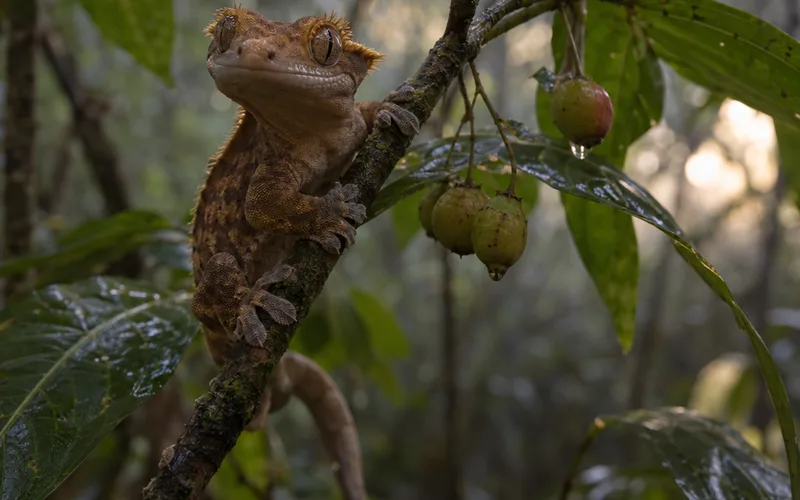
Reptile Centre, a UK reptile shop, groups crested geckos with day geckos as fruit-eating species that also enjoy nectar. That’s the key difference from many pet lizards.
The same shop notes that most gecko species, including leopard geckos and African fat-tailed geckos, are insectivores that live mainly on insects. So a crested gecko’s wild diet blends sweet plant foods with small prey, and a good crested gecko diet in captivity copies that balance in a more measured form.
A Complete Powdered Diet: The Staple Food
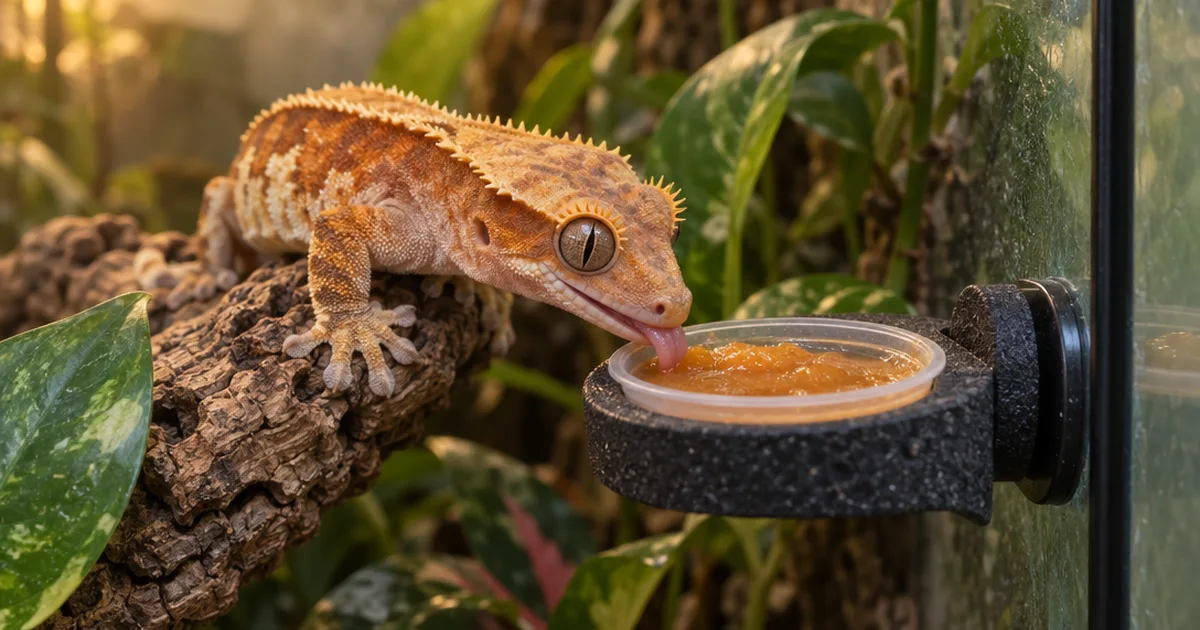
Ask keepers what to feed crested geckos and you’ll hear about powdered diets first. They’re dry mixes you stir with water into a smooth paste.
Pangea says its crested gecko diets contain all the essential fats, proteins, minerals and vitamins that crested geckos need. In fact, a crested gecko can be kept on this diet alone.
That’s a big deal. Before these diets existed, Pangea explains, keepers fed dusted crickets and fruit baby food and had to guess at calcium, phosphorus and vitamin levels.
Getting those amounts wrong can be dangerous. Pangea warns that too much or too little of these nutrients can be deadly, especially fat-soluble vitamins like vitamin A and vitamin D3.
The best part? A complete diet takes that guesswork away.
How to Serve It
Mix the powder with water to the texture the label describes. Then put it in a shallow dish your gecko can reach from a perch or ledge.
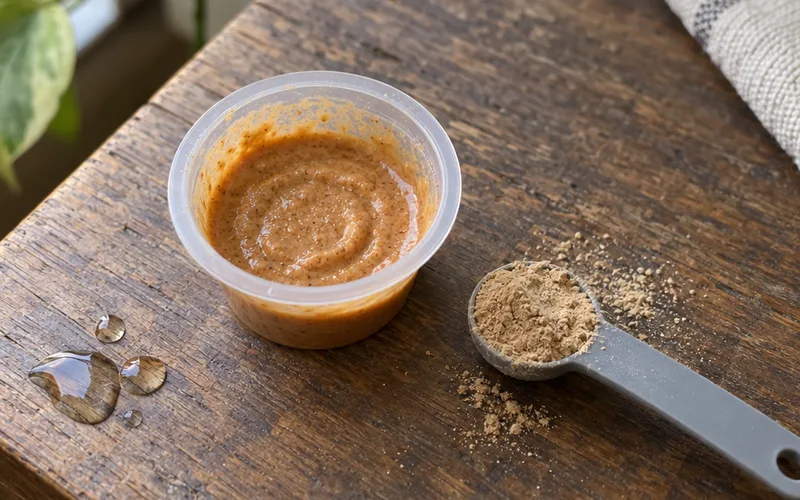
Pro Tip: Feed in the evening. Reptile Centre says most geckos are nocturnal or crepuscular, so the afternoon or evening is the best time to put food out.
Remove old food the next day. The shop advises clearing leftovers so they don’t spoil, which also keeps the enclosure clean.
Rotating Flavors and Brands
You don’t have to stick with one flavor forever. Keepers on the MorphMarket forum say they rotate several Pangea and Repashy flavors.
That variety can help a fussy eater. One owner’s gecko ate more after they added Repashy Banana Cream Pie, which they call a mix-in rather than a full diet.
Others in the thread use bee pollen to tempt slow eaters, but two of them warn it can be “addictive” if offered too often. Keep it as an occasional topper.
Still choosing a powder? Compare the main crested gecko food brands first, and make sure the one you buy is labeled as a complete diet.
Live Insects: What Crested Geckos Can Eat Live
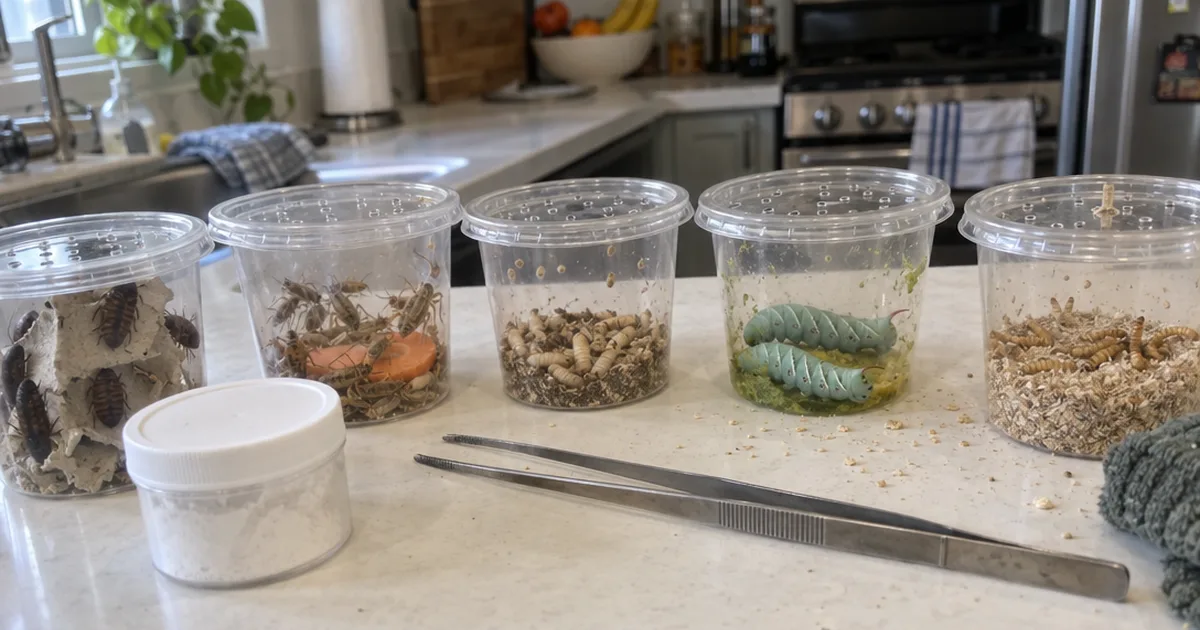
Crested geckos can eat live crickets and feeder roaches, plus the odd waxworm as a treat. Those insects add protein and a bit of hunting to your gecko’s week.
Reptile Centre notes that geckos rely on sharp eyesight to spot moving prey, then catch it with a quick strike or a slow stalk.
The Best Feeder Insects
Pangea’s care sheet names two top choices: crickets and feeder roaches. Reptile Centre adds that crickets are easy to find and high in nutrition, and as a UK shop it also lists locusts as a common feeder.
Dubia roaches stand out, too. The same guide says they’re easy to digest thanks to their low chitin content, the tough material in an insect’s outer shell.
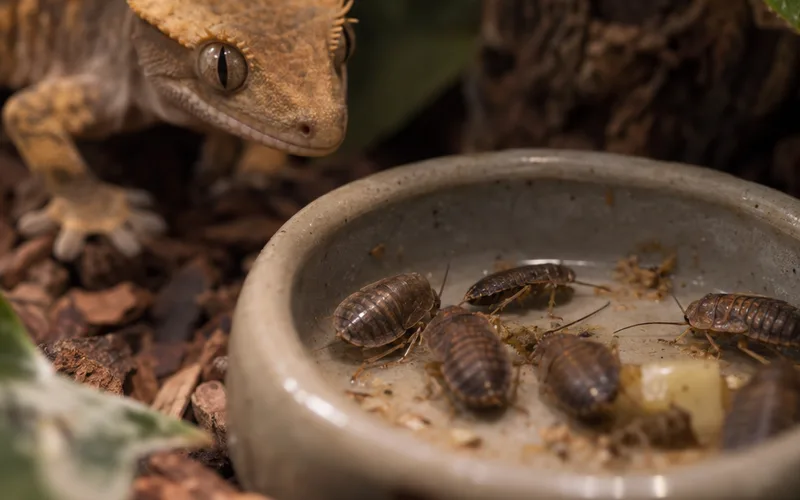
Owners like crickets as well. One MorphMarket keeper calls crickets “GREAT for Cresties” and feeds them two or three times a week.
For the smallest babies, Reptile Centre notes that small geckos may prefer tiny prey like fruit flies. Bigger juveniles and adults can move up to larger crickets and roaches.
Treat Insects and Ones to Skip
Some insects belong in the “now and then” column. Pangea says crested geckos will sometimes eat waxworms or mealworms, but it’s cautious about both.
Here’s how they stack up:
- Waxworms: A forum keeper calls them fatty and best as a treat. The shop’s guide also lists waxworms as an occasional treat, not a main food.
- Mealworms: Pangea skips them because of a possible impaction risk. The shop adds that their higher fat content calls for moderation.
- Superworms: One MorphMarket keeper stopped feeding them after some passed through undigested. That’s one owner’s report, but it’s reason for caution.
Key Takeaway: build the menu around crickets and roaches, and keep fatty worms as rare extras.
Size Every Insect Correctly
This rule matters more than which insect you choose. Pangea says any insect should be no larger than the distance from your gecko’s nose to its eye.
Picture a young gecko with a small head. A full-size adult cricket can be too big to swallow comfortably, and the shop’s guide warns that oversized prey can cause choking or trouble eating.
So check the size label before you buy, and size down when you’re unsure.
Do Crested Geckos Need Insects?
Short answer: no, but they do better with them. If you’ve wondered, “Do I have to feed my crested gecko insects?”, Pangea says crested geckos can be kept on a complete powdered diet alone.
The catch is condition. For optimum health, Pangea recommends also feeding dusted, gut-loaded insects once or twice a week.
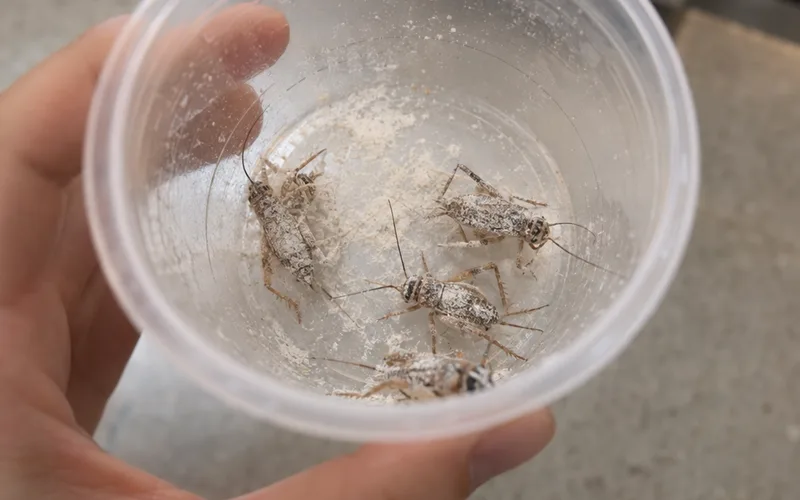
That also answers “Do crested geckos have to have crickets?” Not crickets specifically, since Pangea lists feeder roaches as an equally good choice.
In the MorphMarket thread, one owner’s baby gecko didn’t care for insects but loved its powder. If yours ignores bugs, keep offering them now and then, as long as it eats its powder and holds its weight.
How to Feed Crickets to a Crested Gecko
Feeding crickets well takes a little prep. Here’s a simple routine built on the care sheets’ advice:
- Gut load them. Pangea says insects should eat a high-quality gut-load diet for at least 24 hours first, and you can add fish flakes, leafy greens or carrots.
- Dust them. Coat them lightly with a calcium and vitamin D3 powder right before feeding.
- Offer them in the evening. Reptile Centre suggests feeding live prey in the afternoon or evening, and a shallow dish keeps crickets from scattering.
Pangea says gut loading boosts an insect’s nutritional value substantially. The same routine for gut loading feeder insects works for roaches as well as crickets.
Afterward, remove any crickets your gecko doesn’t eat, since uneaten insects should be cleared to avoid spoilage and keep the tank clean.
Fruit: A Treat, Not the Main Meal
Are crested geckos fruit eaters? Yes, and Reptile Centre calls them frugivorous, meaning fruit is a natural part of what they eat.
Its diet guide lists fruits such as mangoes, peaches and papayas for vitamins and hydration. It also says to cut fresh fruit into small pieces and make sure it’s pesticide-free.
Here’s the problem with leaning on fruit, though. It doesn’t balance calcium and vitamins the way a complete diet does, which is the exact guesswork Pangea warns about.
That’s why I recommend fruit as a once-in-a-while extra. Keep the portion tiny and the powder as the main meal, and you get variety without the risk.
Grapes, Bananas, Blueberries and Other Fruits
Owners often ask whether crested geckos can eat blueberries, bananas, apples or strawberries. The diet guides behind this article don’t rate fruits one by one, so I won’t pretend they do.
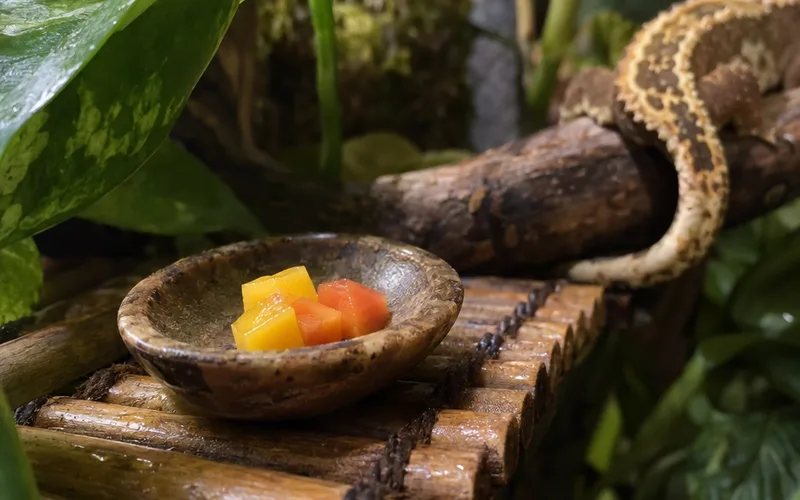
The general rules apply to every fruit: tiny pieces, pesticide-free and only now and then. For fruit-by-fruit answers, see the breakdowns on grapes for crested geckos and which fruits geckos can eat.
What About Vegetables?
Vegetables don’t really show up as gecko food in the care sheets. Pangea mentions leafy greens and carrots only as gut load for feeder insects.
So the easiest way to “feed” vegetables is through your crickets. Your gecko gets the benefit secondhand, without the guesswork.
Calcium, Vitamin D3 and Supplements
Calcium is the mineral to watch. Reptile Centre explains that it keeps bones strong and helps prevent metabolic bone disease, a common problem for pet geckos in captivity.
Vitamin D3 matters because it helps the body absorb calcium. That’s why Pangea says all feeder insects should be dusted with a calcium and vitamin D3 powder.
The good news? A complete powdered diet already contains vitamins and minerals, so you mainly need supplements for the insects you add.
Note: Don’t pile extra supplements on top of a complete diet. Pangea’s warning about vitamin A and D3 cuts both ways, since too much can be as harmful as too little.
Check the Calcium Sacs
Crested geckos have a built-in gauge. Pangea explains that they store calcium in small pouches on the roof of the mouth, called endolymphatic sacs.
Pangea suggests checking these reserves now and then, especially in breeding females, and recommends monthly checks for breeders. If a female’s sacs look small or empty, it suggests separating her from the male and adding a pinch of calcium without D3 to her food.
Crested Gecko Feeding Schedule by Age
How often should you feed a crested gecko? It depends on its age and on how you mix powder and insects.
Here’s a simple crested gecko feeding guide based on the care sheets and keeper reports.
Babies and juveniles: Reptile Centre says young geckos need food every day because they’re growing fast. One MorphMarket owner reported a baby eating about half a teaspoon of Pangea a day.
Enclosure size can affect a baby’s appetite. Pangea says young geckos in large cages may not eat well, so it keeps babies under 12 weeks in cages no bigger than 8 x 8 x 12 inches.
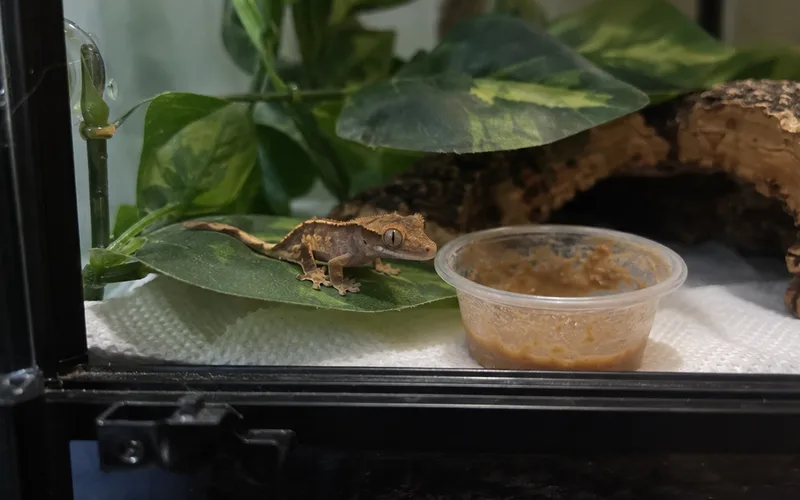
That’s one reason the right enclosure size changes as your gecko grows. A small space keeps food easy to find.
Adults: For the powder-plus-insects method, Pangea suggests its complete diet three to four times a week and insects two to three times a week. A MorphMarket keeper lands in a similar place, with crickets two or three times a week and Pangea every other day.
Breeding females: Pangea says breeding geckos need plenty of high-quality food, including gut-loaded insects and a complete diet, plus close watch on their calcium.
So, how often should you feed your crested gecko Pangea or another powder? For an adult, every other day is a solid default, with insects on two or three of the other nights.
What Crested Geckos Drink
Food is only half of it. Pangea says crested geckos usually drink water droplets from the sides of their enclosure and from plants or decor.
That’s why daily misting matters. Pangea also recommends a small dish of clean water in the enclosure at all times.
Keepers’ habits vary here. One MorphMarket owner offers water bowls to every gecko, while another stopped after their geckos ignored the bowl or dug mud into it.
If you add a dish, keep it shallow. A forum member suggests choosing surface area over depth, around a quarter inch deep or less.
Humidity ties into all of this. Pangea says it shouldn’t drop below 50 percent, so keep a humidity and temperature plan alongside the menu.
Foods and Insects That Can Hurt Your Gecko
Fireflies are the clearest danger, and wild-caught bugs, oversized prey and fatty worms need limits too. Here’s the full list, based on the care sheets:
- Fireflies (lightning bugs): Reptile Centre warns they’re toxic to geckos.
- Insects caught outside: the same guide says they may carry pesticides or parasites.
- Oversized insects: anything bigger than the gap between your gecko’s nose and eye.
- Mealworms and superworms: given the impaction and digestion concerns above.
- Fruit treated with pesticides
- Homemade fruit blends, unless you’re an experienced keeper
That last one needs a quick word. Pangea says custom blends require frequent checks of calcium sacs and weight, which is why it calls them a method for advanced hobbyists only.
Is Your Crested Gecko Eating Enough?
Start with the dish. Compare what you offered with what’s left the next morning, and note whether crickets disappear overnight.
A gram scale helps, too. Members of the MorphMarket thread discuss buying one, and a scale turns “she looks thin” into a number you can track.
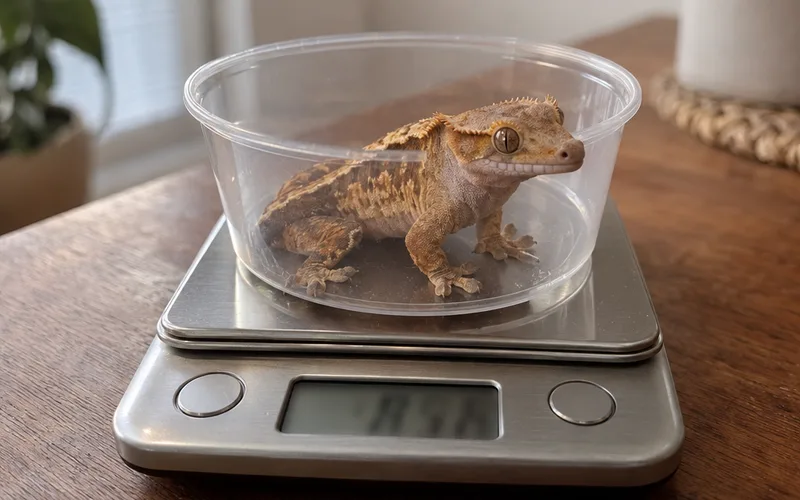
Pangea’s advice for custom diets is to check for weight loss and other signs of declining health. The same habit works for any diet.
Temperature matters here as well. Pangea recommends 70 to 78°F for most of the year and warns that 82°F or warmer stresses geckos, which could lead to illness or death.
On the cool side, a forum keeper says 65 to 70°F during the day is too cold and that heat affects growth. If your gecko keeps losing weight or refuses food for a long stretch, book a visit with a reptile vet.
Crested Geckos vs. Leopard Geckos: Different Menus
Don’t follow a leopard gecko care sheet for a crested gecko. Reptile Centre says insectivores like leopard geckos shouldn’t eat fruit or vegetables, and shouldn’t get powdered diets or dried insects.
Crested geckos are the opposite on both counts, which is why a leopard gecko’s menu looks so different. If you keep other gecko species, plan each species’ menu separately.
The Bottom Line
Crested geckos do best on a complete powdered diet, backed up by gut-loaded, dusted insects once or twice a week, with fruit as a small treat. Size insects carefully, skip fireflies and wild-caught bugs, and keep an eye on weight.
Feeding is one part of keeping a crestie healthy, so pair this pet care plan with the everyday care basics like heat, humidity and space.
Which change are you going to make to your gecko’s menu first?
Frequently Asked Questions
What can crested geckos eat live?
Crickets and feeder roaches such as dubia roaches are the best live foods, according to Pangea’s care sheet. Waxworms work as an occasional fatty treat, and very small geckos can handle tiny prey like fruit flies.
Can crested geckos have grapes?
Treat grapes like any fresh fruit: a small, occasional extra, cut into small pieces and free of pesticides. The complete powdered diet stays the main food.
What is the best food for crested geckos?
A complete powdered crested gecko diet is the best staple, because it’s made to cover the nutrients these geckos need. Many keepers rotate brands such as Pangea and Repashy and add dusted insects once or twice a week.
What do baby crested geckos eat?
Babies eat the same complete powdered diet as adults, plus small dusted insects, such as fruit flies or small crickets, no bigger than the space between their nose and eye. Keep them in a small enclosure at first, since Pangea says young geckos in large cages may not eat well.
What makes a crested gecko happy?
Steady eating and a stable weight are the most practical signs that your gecko’s setup suits it. Pangea’s care sheet points to temperatures of 70 to 78°F, a tall enclosure to climb in and a one to two week settling-in period before handling.
How do I care for a crested gecko as a beginner?
Start with a tall enclosure sized for its age, temperatures between 70 and 78°F, daily misting and a complete powdered diet. Add dusted insects once or twice a week and check its weight now and then.