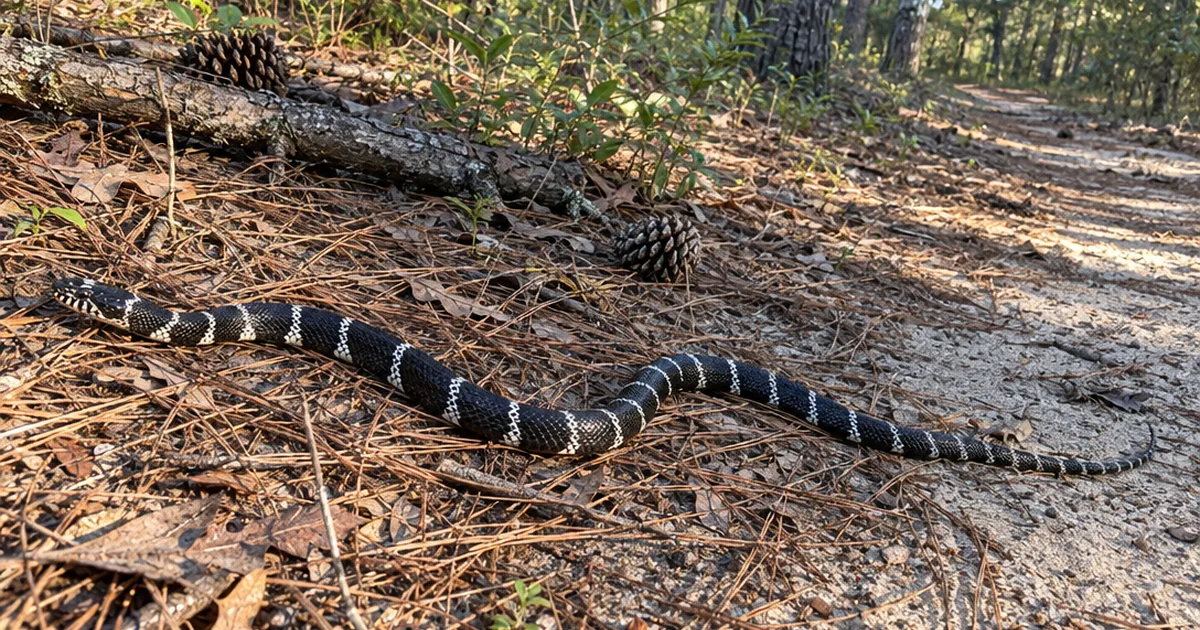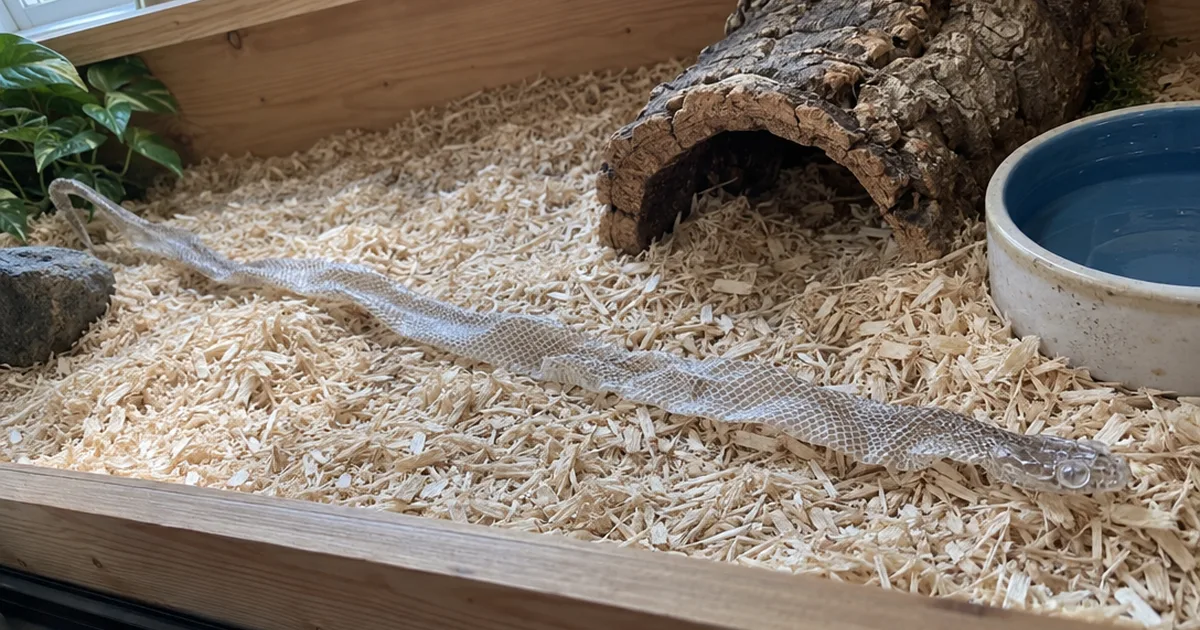
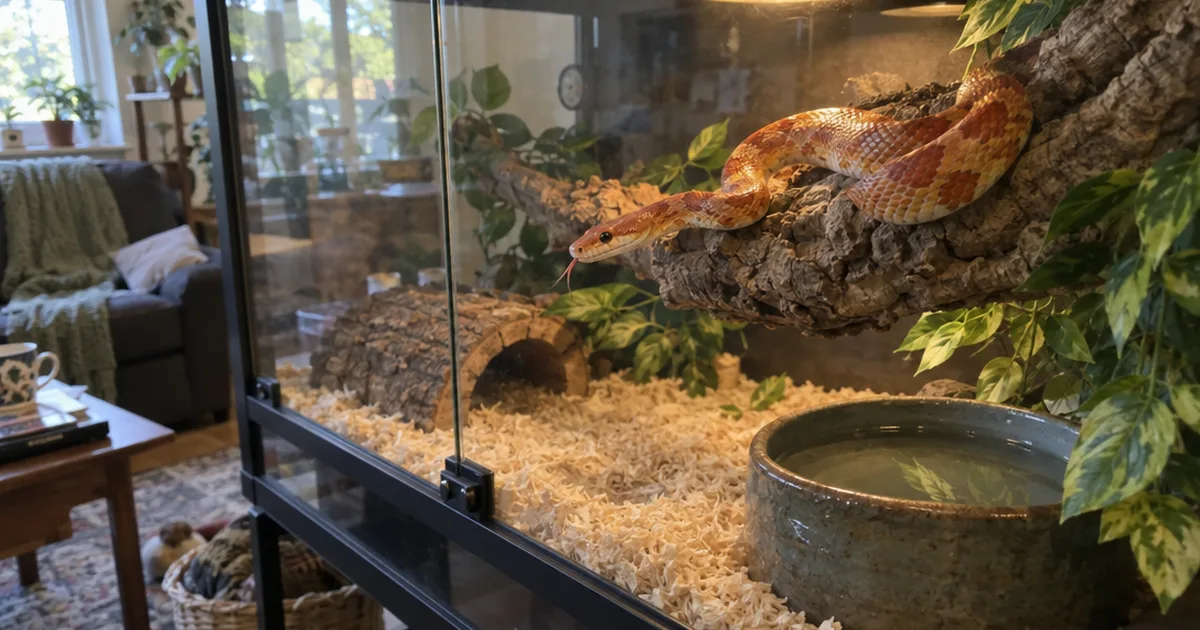
A sick snake can’t cough. So the first sign of a chest infection is often a bubble at the nostril, or a snake resting with its mouth open, and plenty of owners walk right past it.
Snakes hide illness well, and that’s the real challenge of snake health. Most problems also start in the enclosure rather than with a germ, from heat that’s too low to bedding that stays dirty.
You can catch nearly all of them early with a few minutes of looking each week, once you know what normal looks like. Start with the picture of a healthy snake, then use the weekly check to spot changes and the vet section to tell which signs can’t wait.
What a Healthy Snake Looks Like
A healthy snake has clear eyes, clean nostrils, a closed mouth at rest, smooth skin and a firm, rounded body. It also keeps a steady routine of eating, shedding and passing droppings.
That routine matters most, because a change in it is usually the first thing you’ll notice.
Here’s what normal looks like:
- Breathing: slow and silent, with the mouth closed.
- Eyes and nose: clear and dry, with no crust, bubbles or discharge.
- Mouth: pale pink gums with no red patches, swelling or cheesy yellow spots.
- Skin: smooth, with no patches of old shed, sores or moving specks.
- Body: firm muscle over the spine and ribs, with no lumps, kinks or fat rolls.
- Behavior: alert tongue flicks when it’s out and about, and normal interest in food.
“Normal” also changes with your species.
A ball python sits still far more than a busy corn snake, so compare your snake against itself, not against someone else’s.
How to Give Your Snake a Quick Health Check
A snake health check is a short look at breathing, eyes, mouth, skin, body, droppings and weight. Do it at the same time each week so changes stand out.
Start hands-off, so you see natural behavior before handling changes it:
- Watch first. See how your snake breathes and moves before you open the enclosure.
- Check the head. Look at the eyes, nostrils and mouth edge for bubbles, crust or swelling.
- Feel the body. Run a hand along it for lumps, kinks or a sunken feel, and look at the belly scales.
- Inspect the skin. Check around the eyes and under the chin, where mites like to hide.
- Look at the last dropping. Note the color and shape of the waste and the white urates.
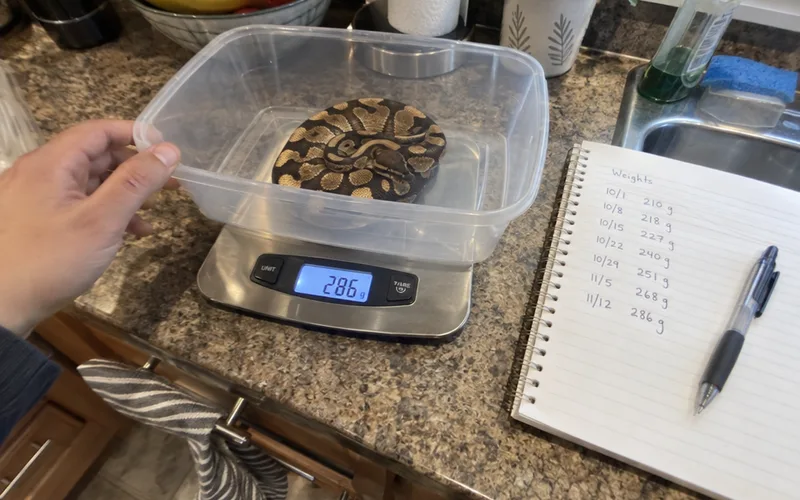
- Weigh and log it. Put your snake on a kitchen scale and write down the grams and the date.
That log is the most useful tool you can own.
A slow slide on a weight log shows up weeks before you can see the change by eye.
Add meals, sheds and anything odd to the same log, so you can hand your vet a clear history.
Common Signs of Illness in Snakes
The common signs of illness in snakes are open-mouth breathing, wheezing and discharge at the nose or eyes. Others include a swollen mouth, stuck shed, mites, repeated regurgitation, odd droppings, weight loss and lethargy.
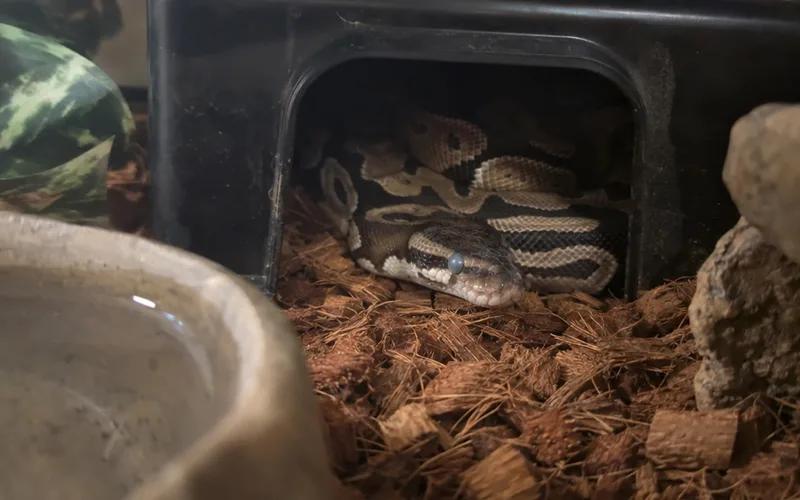
Some behaviors look scary but are often normal:
- Skipping meals is common right before a shed and during breeding season.
- Hiding more can simply mean the snake is in blue, the cloudy pre-shed stage.
- Long soaks can mean the enclosure is too hot, or that mites are bothering it.
Many snakes also eat less and hide more when temperatures drop.
That slowdown is called brumation, and how brumation differs from hibernation explains why it’s often normal.
But if a skipped meal comes with weight loss, discharge or odd droppings, treat it as a health problem.
Common Snake Health Problems and What Causes Them
Most common snake health problems start with the enclosure. Heat that’s too low, humidity that’s off, or dirty bedding and water cause most respiratory infections, mouth rot, mites, stuck shed and scale rot.
So the first fix is nearly always the same.
Check your temperatures and humidity with a digital thermometer and hygrometer, then clean.
Respiratory Infections
A respiratory infection in a snake shows up as wheezing, bubbles or mucus at the nostrils, and breathing with the mouth open. Snakes cannot cough to clear their airways, so watch for these signs instead.
These infections tend to follow a cool or damp enclosure.
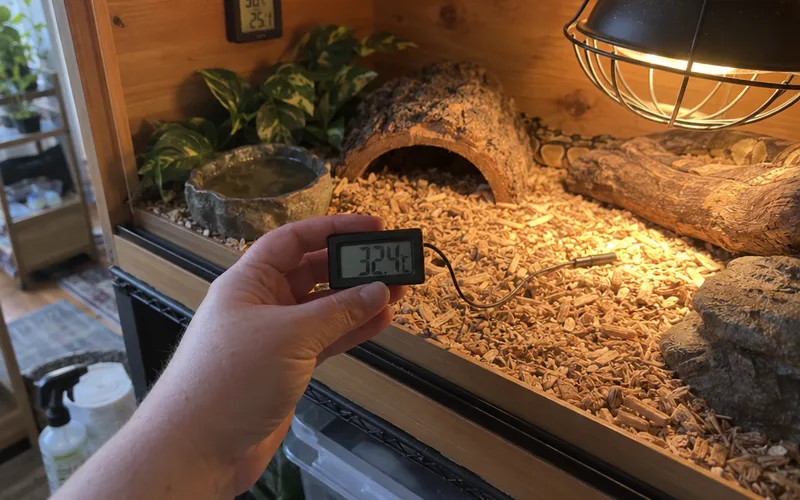
Ball python owners can read the setup fixes under ball python respiratory infection.
A breathing problem always needs a vet, who may prescribe antibiotics for snakes after an exam.
Mouth Rot (Infectious Stomatitis)
Mouth rot, or infectious stomatitis, is a mouth infection. It shows as redness, swelling, cheesy yellow material on the gums, drooling and a snake that stops eating.
It often starts with a small wound, such as a bite from live prey or a scrape on enclosure decor.
Feeding frozen-thawed prey removes that risk.
Left alone, mouth rot can spread toward the eyes, where swelling can look like a snake eye infection. See a vet as soon as you spot it.
Snake Mites and Other Parasites
Snake mites are tiny black or red specks that feed on a snake’s blood. They gather around the eyes and under the chin, and a heavy infestation can cause anemia.
You might spot them on your hands after handling, or floating in the water bowl.
Treat the whole enclosure, since mites hide in bedding and decor; mites across reptiles covers that cleanup.
Ask your vet before using any mite product, including ivermectin for snake mites, because the wrong product or dose can harm a snake.
If you notice itchy bites on your own arms, snake mites on humans explains what’s going on.
Internal parasites are quieter.
They can cause weight loss, poor appetite and smelly droppings, so a fecal test for reptile parasites belongs in your snake’s first vet visit.
Stuck Shed and Retained Eye Caps
Stuck shed, or dysecdysis, is old skin that comes off in patches instead of one tube. It most often means the enclosure’s humidity is too low.
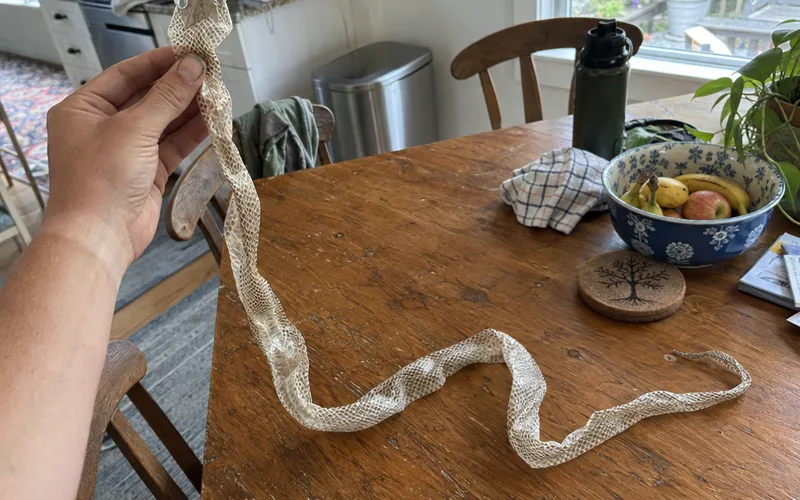
A healthy shed peels off in one piece, eye caps included.
Snakes have no eyelids.
A clear scale called a spectacle covers each eye instead, and a retained one can damage the eye if it builds up.
Never pull stuck skin off yourself, because you can tear the skin underneath.
A humid hide with damp moss usually helps, and the fix for stuck shed and eye caps walks through gentle soaking.
If the timing seems off, compare it with how often snakes shed at your snake’s age.
Scale Rot and Burns
Scale rot is an infection of the belly scales that makes them dark, swollen, blistered or soft. It usually comes from bedding that stays wet or dirty.
Change damp bedding promptly, and keep water in the bowl.
Burns look similar but come from a heat source that’s too hot or unguarded.
Put every heater on a thermostat, and see a vet for blistered scales.
A snake biting its own tail is another cue to check your hot spot right away.
Regurgitation
Regurgitation is when a snake brings up a partly digested meal. The usual causes are prey that’s too large, an enclosure too cool for digestion, or handling too soon after eating.
For a one-off, leave the snake alone, check your warm side, and let its gut settle before offering a smaller meal.
Repeated regurgitation can point to stress, parasites or infection.
Read up on snake regurgitation, and book a vet visit if it happens again.
Obesity
Obesity in snakes shows up as a round, puffy body, fat rolls near the tail, and pale skin visible between stretched scales. It nearly always comes from feeding too often or too much.
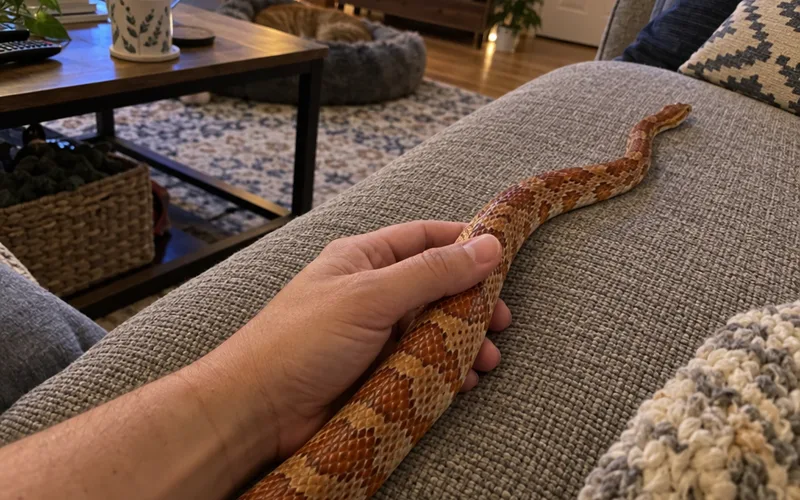
Some owners think it looks cute, but extra fat is unhealthy and can shorten a snake’s life.
Feed one prey item about as wide as your snake’s midsection, and use the plan for obese snakes to slim down safely.
Inclusion Body Disease (IBD)
Inclusion body disease, or IBD, is a serious viral disease of boas and pythons. It attacks the nervous system and causes wobbling, head twisting and loss of balance.
There is no cure, so prevention is everything.
Quarantine every new snake in a separate room with its own tools, and never share enclosures or equipment until a vet clears it.
If you see these signs, separate the snake at once and read about IBD in snakes before your vet visit.
What Healthy Snake Poop and Urates Look Like
Healthy snake poop is a soft brown or black log with a white, chalky lump of urates. It may also hold a little liquid, mucus or bits of fur.
Snakes have no bladder.
Waste leaves through one opening, the cloaca, and urates replace liquid urine to save water.
Here’s how to read what you find:
- White, soft, chalky urates are normal.
- Hard, dry or yellow urates can point to dehydration, which can lead to impaction.
- Runny or foul-smelling droppings can mean diarrhea or parasites.
- Blood in the droppings needs a vet right away.
Timing depends on meal size, since a snake only poops once a meal is fully digested.
For more detail, see what snake poop should look like and how to read snake urates.
How to Tell if Your Snake Is a Healthy Weight
A snake at a healthy weight feels firm, with muscle over the spine and ribs. You can still feel the bones, and the belly feels soft with no hard lumps.
An underweight snake shows a sharp spine and ribs, sunken eyes and loose folds of skin.
An overweight snake looks rounded and lumpy, with stretched skin between the scales.
Sunken eyes and wrinkled skin can also mean dehydration, so check the water bowl and humidity too.
A thirsty snake may also spend long stretches in its bowl, so give it a large, stable one it can drink from and soak in.
That’s where your weight log earns its keep.
Weigh growing or sick snakes more often than healthy adults, and act on any steady drop.
When to Take Your Snake to the Vet
Take your snake to an exotics vet right away for open-mouth breathing, discharge, mouth swelling, bloody droppings, wobbling, lumps or burns. Book a visit within days for weight loss or refused meals that a fixed enclosure doesn’t solve.
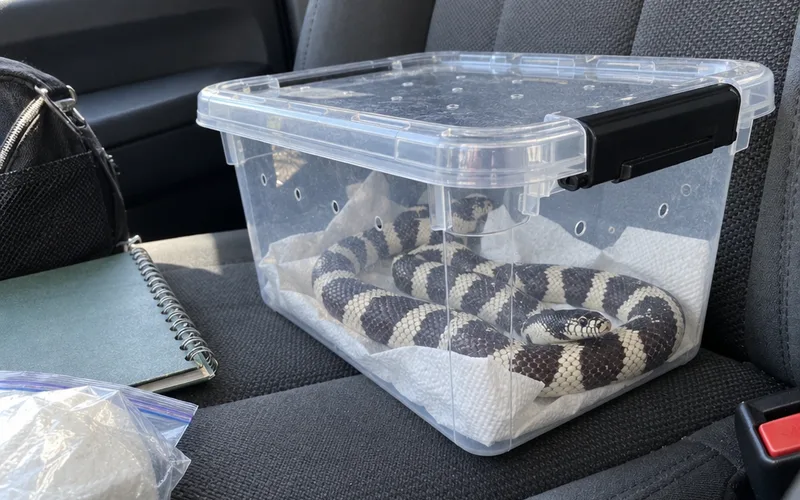
When in doubt, call.
An exotics vet can tell you on the phone whether a sign can wait.
Book a first checkup within a few weeks of bringing a snake home, too.
That visit sets a healthy baseline weight, runs a fecal test, and gives you a vet you know before an emergency.
Bring these to any visit:
- Your weight and feeding log.
- Photos of the enclosure and your temperature and humidity readings.
- A fresh dropping in a sealed bag, if you have one.
- Any stuck shed, so the vet can see whether the eye caps came off.
Then ask the vet what to watch for at home, and write the answer in your log.
How to Keep a Pet Snake Healthy
The way to keep a pet snake healthy is good husbandry, the daily care and setup you provide. That means a warm side and a cool side, the right humidity, clean water, hides, frozen-thawed prey and quarantine for new snakes.
Exact temperatures and humidity differ by species.
So set yours from a care guide for your snake, such as ball python care, corn snake care or kingsnake care.
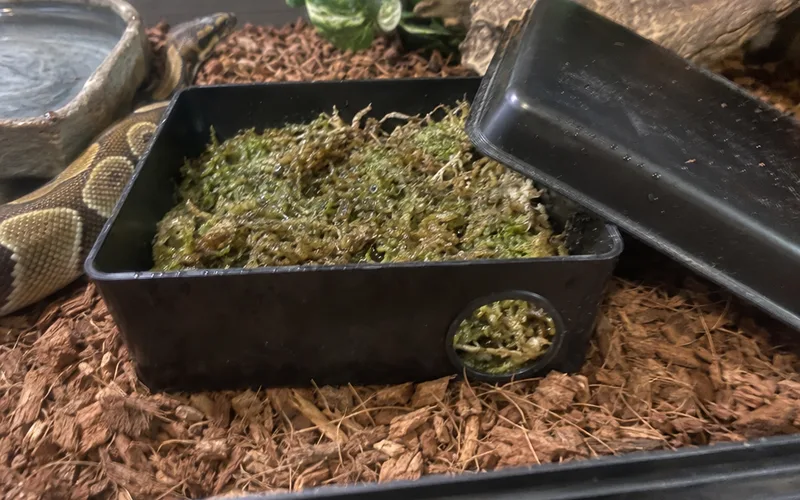
Then build these habits:
- Spot-clean waste as soon as you see it.
- Refresh the water bowl daily.
- Check temperatures with a digital thermometer, not a stick-on dial.
- Wash your hands before and after handling.
Older snakes slow down, with longer gaps between sheds and slower digestion.
Adjust meals and handling as yours ages; how long pet snakes live shows what to expect by species.
For the bigger picture, start with the snake care basics.
Why the Snake Is a Symbol of Health
The snake is a symbol of health because of the Rod of Asclepius, a single snake wrapped around a staff. It’s named for Asclepius, the Greek god of healing.
Wikipedia’s entry on the Rod of Asclepius calls it the predominant symbol for medicine and health care in modern times.
The same entry notes that one reading ties the snake’s shedding of skin to renewal and rejuvenation.
Snakes even played a part in that medicine, since a non-venomous rat snake was often used in healing rituals at temples of Asclepius.
People often mix it up with the caduceus, and Wikipedia notes the two-snake, winged staff is sometimes misused for that purpose.
The Habit That Catches Problems Early
Weighing and logging your snake every week or two catches most health problems before they turn serious.
This week, buy a kitchen scale, weigh your snake in grams, and start the log.
Frequently Asked Questions
What are the common symptoms of illness in snakes?
The common symptoms of illness in snakes are open-mouth breathing, nasal discharge, a swollen mouth, stuck shed, mites, repeated regurgitation, odd droppings and weight loss. Check the enclosure’s heat and humidity first, then call an exotics vet if the sign doesn’t clear.
What is the most common health issue in pet snakes?
Respiratory infections, mites and stuck shed are the snake health problems keepers see most, and all three usually trace back to heat, humidity or hygiene. See a vet for any breathing problem.
Is my snake in good health?
Your snake is likely healthy if it breathes with its mouth closed, eats on schedule, sheds in one piece and passes formed droppings with white urates. A slow drop on your weight log is the earliest warning.
What are the essentials for taking care of a pet snake?
A pet snake needs a secure enclosure with a warm side and a cool side, the right humidity for its species, clean water, hides and frozen-thawed prey sized to its body. Book a vet check soon after you bring it home.
Why is my snake throwing up its food?
A snake usually throws up its food because the prey was too big, the enclosure was too cool, or it was handled too soon after eating. If it happens more than once, book a vet visit.
What do snakes have to do with healing?
Snakes are tied to healing through the Rod of Asclepius, a single snake around a staff that Wikipedia describes as the predominant modern symbol for medicine and health care. The two-snake caduceus is sometimes misused for the same purpose.